
After Ocean Casino Pipe Burst, What Property Coverage Applies?
Analyzes whether the July 27, 2026 Ocean Casino Resort fire-suppression pipe burst — which caused a lobby ceiling collapse, water damage, and a 24-hour gaming-floor shutdown — triggers first-party property and business interruption coverage under standard commercial insurance forms, and distinguishes this physical-damage scenario from the COVID-19 coverage denial in AC Ocean Walk v. American Guarantee.
- Jurisdiction
- New Jersey
- Court
- New Jersey Supreme Court
- AI tool named
- none
- Ruling date
- Jan 1, 2024
- Source document
- View primary court order ↗
- Last verified
- Jul 30, 2026
Lex Machina Review is an independent risk-tracking and reference resource. Nothing on this site is legal advice, and using it does not create an attorney-client relationship. Every record is reviewed against primary sources but may not reflect the most current status of a matter — always verify directly against the cited court order, rule text, or a licensed attorney before relying on it.
Companion explanation — secondary to the source document above
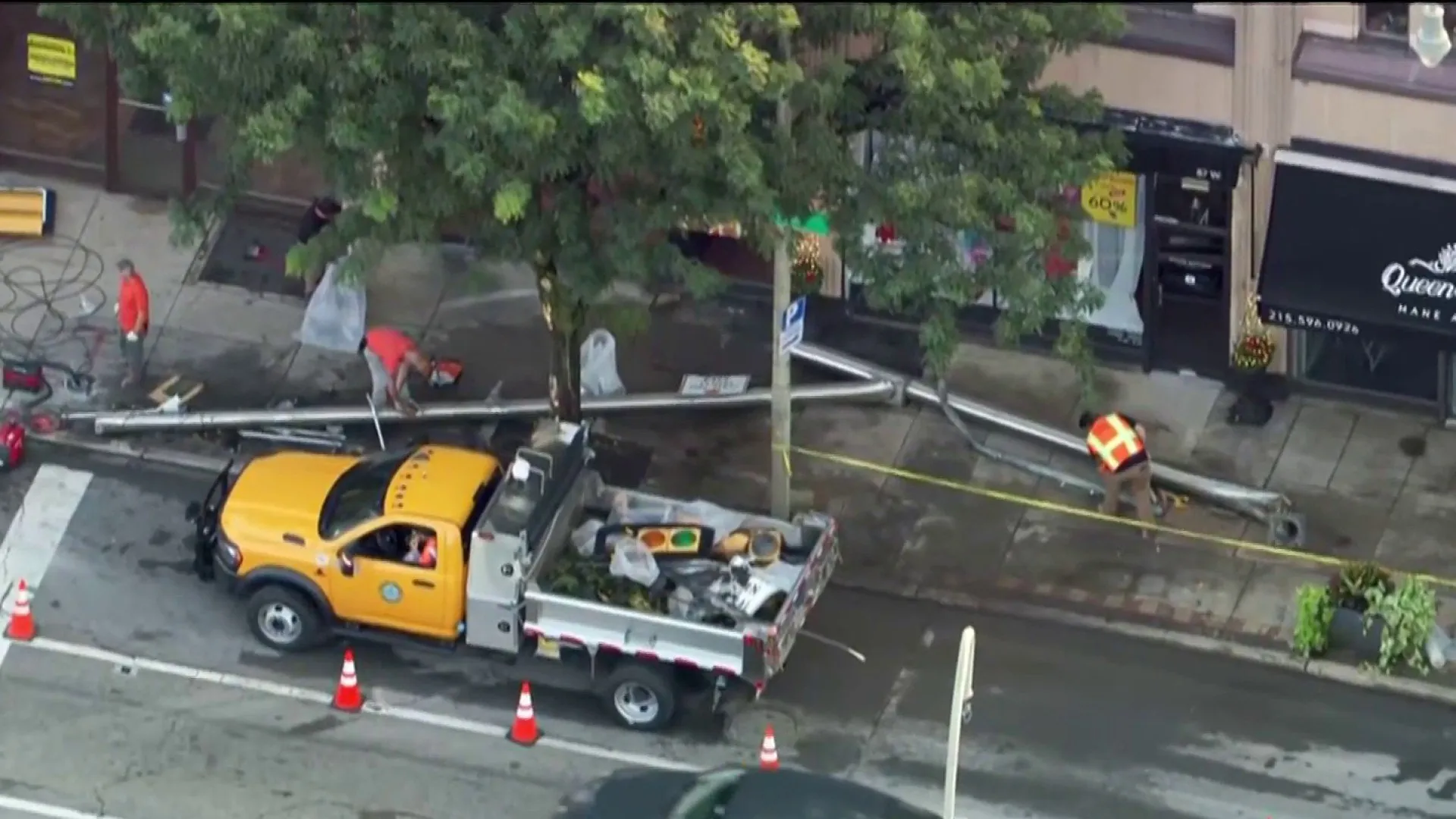
The Ocean Casino Resort pipe-burst coverage question starts, for now, without a lawsuit. As of July 30, 2026, the public facts describe a first-party property claim waiting to be adjusted: an 11th-floor linen-room fire around 11 a.m. on July 27, automatic sprinkler activation, a burst fire-suppression supply pipe above the lobby, water moving through elevator shafts and back-of-house areas, lobby ceiling damage, no reported injuries, and a gaming-floor shutdown that lasted roughly 24 hours.[1]
That sequence matters more than the casino-drama shorthand. The operative coverage fact is not that the property was Ocean Casino, or that Atlantic City was in peak summer season. It is that water allegedly damaged building components and interfered with gaming operations. Because Ocean’s current property policy is not public, the analysis below assumes standard commercial property wording, including the familiar trigger of “direct physical loss of or damage to” covered property. AC Ocean Walk is useful only as a comparator, not as a template.
The claim turns on damaged property, not casino headlines
A burst fire-suppression supply pipe is usually not a difficult starting point under standard commercial property coverage. If water escapes from the system and damages ceilings, walls, elevators, electrical systems, gaming infrastructure, flooring, or back-of-house equipment, the claim has the physical alteration that property policies require. The ceiling characterization dispute may matter at the margins, but it does not make the water event disappear.
Ocean reportedly disputed the fire department’s description that part of the ceiling “collapsed,” saying instead that the ceiling was intentionally removed for repairs.[1] That is the sort of wording disagreement a claims handler should preserve rather than ignore. A collapse characterization can affect scope, code issues, emergency mitigation, repair sequencing, and whether additional hidden damage is suspected. But if the ceiling was removed because water intrusion made it unsafe, inaccessible, or in need of repair, the coverage analysis still starts with physical damage to covered property.
The more disciplined question is narrower: what property was wet, broken, removed, powered down, inspected, dried, repaired, replaced, cleaned, or tested before operations could resume? A gaming-floor closure by itself does not prove the amount of insured loss. It does, however, point directly to the policy’s time-element machinery if the suspension was caused by damage to insured property.
Why standard property coverage should respond
Under standard commercial property forms, the insuring agreement is built around covered property, a covered cause of loss, and direct physical loss of or damage to that property. On the public facts, the stronger coverage path is straightforward: a fire-suppression pipe burst, water escaped, building components were damaged, and the casino’s gaming operations were suspended while the affected areas were addressed.
Water from a broken pipe is different from surface flood, seepage, humidity, or an abstract loss of use. The reported damage involved water released from a building system after a fire event and sprinkler activation. Unless Ocean’s policy contains a specific exclusion, limitation, protective-safeguard condition, or endorsement changing the ordinary result, this is the kind of physical loss commercial property insurance is built to handle.
| Coverage question | What the public facts appear to show | Why it matters |
|---|---|---|
| Was there physical damage? | Reported burst supply pipe, water intrusion, lobby ceiling damage, and affected back-of-house and elevator areas. | Supports the threshold requirement of direct physical loss of or damage to covered property. |
| Were operations suspended? | Gaming operations were reportedly closed for roughly 24 hours. | Connects the property damage to business interruption coverage. |
| Was the closure tied to repair or restoration? | The casino’s ceiling characterization dispute suggests repair work was underway or required. | Determines the covered period of restoration and the recoverable time-element loss. |
| Was an authority involved in stopping operations? | The public record does not yet establish whether the gaming-floor closure was ordered by authorities or implemented by the casino. | May affect civil-authority coverage, but physical-damage business interruption is the cleaner route. |
The adjustment should still be exacting. The insurer will want photographs, mitigation invoices, drying logs, engineering notes, elevator inspections, electrical testing, slot-machine diagnostics, surveillance-system checks, repair estimates, payroll records, gaming-revenue records, and a timeline showing when each area was safe and functional again. The casino will want the same record because the difference between a covered 24-hour suspension and an overbroad claimed interruption is usually proved in the hour-by-hour restoration file.
Business interruption follows the repair clock
The business interruption issue is not simply, “How much money did Ocean usually make in July?” It is whether the necessary suspension of operations resulted from covered physical damage and lasted through the period reasonably required to repair, replace, or restore the damaged property. On the reported timeline, the gaming floor was closed for roughly 24 hours after the pipe burst.[1]
The scale is still worth noting. Ocean’s July 2025 gross gaming revenue was reported at $43.1 million, which works out to roughly $1.4 million per day as a simple daily average.[3] That number is not the covered loss. It is a starting marker. A time-element calculation would still require the policy’s definition of business income, continuing expenses, ordinary payroll treatment, saved expenses, actual loss sustained, any waiting period, and the casino’s actual performance during the affected period.
The postponed $30,000 slot tournament gives the interruption a more concrete operational face.[3] It may support an extra-expense or business-income presentation if the postponement caused measurable loss or additional cost. But the tournament should not become a proxy for the claim. In a casino loss, the covered time element is built from the suspension of covered operations caused by property damage, not from the most visible canceled event.
The period-of-restoration file will be especially important because the shutdown was short. A one-day closure may look simple from the outside, but the adjustment still has to separate emergency response, safety clearance, drying, ceiling work, elevator service, gaming-system verification, regulatory readiness, and management’s own decision to reopen. If part of the 24-hour pause was required by damaged property and part was precautionary, the allocation should be made in the claim file rather than argued later from memory.
Why AC Ocean Walk does not decide this pipe-burst claim
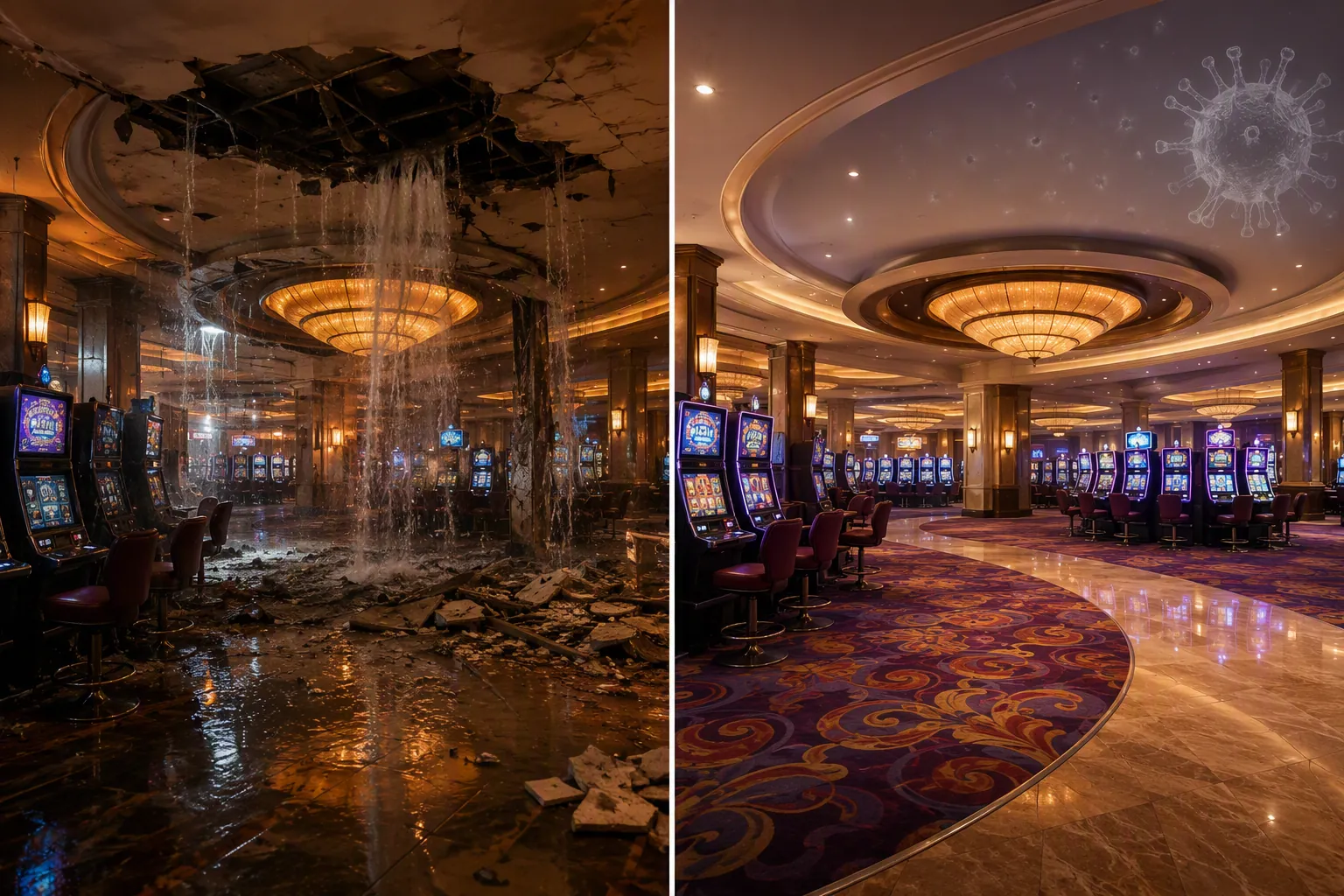
Ocean’s earlier COVID-19 coverage fight is easy to overread. In AC Ocean Walk v. American Guarantee, the New Jersey Supreme Court rejected Ocean’s pandemic-related coverage claim, holding that COVID-19 contamination did not cause direct physical loss of or damage to property under the policy language at issue. The court also concluded that a contamination exclusion barred coverage for the virus and pathogen risk in any event.[4][5]
That ruling matters because it explains what was missing in the pandemic claim: physical alteration of property. It does not stand for the broader proposition that Ocean Casino losses are disfavored, or that business interruption coverage is unavailable whenever a casino shuts down. A viral-contamination theory and a burst-pipe water-damage claim are not the same risk.
The physical-damage distinction should do most of the work here. COVID-era coverage litigation often turned on whether invisible or transient contamination changed property in a physical way. The July 2026 incident, as publicly described, involves a building system failure, water movement, ceiling damage, and operational impairment tied to repair activity. That is the missing fact in the pandemic case.
The exclusion distinction is just as important. The contamination exclusion discussed in the AC Ocean Walk coverage dispute addressed virus and pathogen risk.[4][5] Fire-suppression water is not a virus or pathogen. Ocean’s current policy could contain other exclusions, sublimits, conditions, or endorsements, and those words would control. But importing the COVID contamination exclusion into a pipe-burst water claim would be a category error unless the current policy says something much broader than the public materials indicate.
Civil authority is possible, but not the lead theory
Civil-authority coverage could become relevant if a fire department, gaming regulator, or other public authority prohibited access to the gaming floor because of the incident. That would require proof of the order, its scope, the property condition prompting it, and the policy’s waiting period and duration limits. On the public facts available three days after the loss, that is an alternate or supplemental path, not the center of the claim.
The stronger route remains ordinary physical-damage business interruption. If Ocean could not operate the gaming floor because water damaged covered property or because repairs and safety checks were needed to restore that property, the claim does not need a civil-authority theory to get started.
Liability questions can wait for the cause investigation
The cause of the linen-room fire remains under investigation.[1] That may matter later. If maintenance failures, contractor work, product defects, inspection lapses, or employee negligence are identified, Ocean and its insurers may have liability, subrogation, indemnity, or risk-control questions to sort out.
Those questions should not be allowed to distort the first-party property analysis. Commercial property coverage generally responds to covered physical loss first and then leaves causation, subrogation, and exclusions to be developed through the adjustment. Negligence in causing a fire or pipe failure is not automatically a bar to first-party coverage. A policy exclusion, protective-safeguard breach, intentional act, misrepresentation, or other specific policy defense would have to be identified in the actual wording.
The absence of reported injuries also keeps the present focus on property and time-element loss.[1] That could change if guests, employees, vendors, or regulators later assert injury, evacuation, access, or contractual claims. But as of now, the visible insurance problem is a damaged-property claim with a short operational shutdown, not a developed liability lawsuit.
A new owner inherits an old-fashioned risk file
Ilitch Gaming assumed full ownership of Ocean Casino in June 2026, about one month before the pipe-burst incident.[2] That timing does not change whether water damage is covered. It does make the claim a useful early test of the property program the new owner inherited or placed: building limits, business-income limits, extra-expense treatment, deductibles, waiting periods, equipment-breakdown coordination, protective-safeguard conditions, and casino-specific endorsements.
For a hospitality and gaming property, the risk-management lesson is not exotic. Fire-suppression systems, elevator shafts, ceiling cavities, electrical rooms, slot operations, surveillance infrastructure, and back-of-house corridors are operationally connected. A small origin point can create a disproportionately wide restoration map. The policy needs to match that map before the water starts moving.
Provisional coverage view
On the facts now public, the July 27 Ocean Casino pipe-burst incident looks like a covered first-party property and business interruption loss under standard commercial property forms. The reported water intrusion, ceiling damage, and impairment to casino operations supply the physical-damage trigger that Ocean’s COVID-19 coverage case lacked. The roughly 24-hour gaming-floor shutdown fits naturally within a period-of-restoration analysis if it was required to repair, replace, dry, inspect, or safely restore damaged covered property.
That conclusion remains provisional because the actual Ocean policy is not public. Final coverage depends on the policy wording, the damage documentation, the repair timeline, the reason operations stayed closed, any civil-authority orders, and any exclusions or conditions not yet visible. But this is not another pandemic-contamination claim in different clothing. It is a water-damage and time-element claim arising from a fire-suppression system failure, and standard property insurance is designed for that kind of loss.
References
- Report on July 27, 2026 Ocean Casino Resort fire-suppression pipe burst — NBC Philadelphia — July 2026.
- Ocean Casino ownership and July 2026 incident reporting — PlayNJ — 2026.
- Ocean Casino July 2025 gaming revenue and postponed slot tournament reporting — Casino.org — 2026.
- AC Ocean Walk v. American Guarantee coverage analysis — Post & Schell — 2024.
- AC Ocean Walk v. American Guarantee New Jersey Supreme Court coverage analysis — Tyson Mendes — 2024.
Related records
Tool profile
Browse tool evaluations →Governing regulation
Browse the obligations tracker →Preventive workflow
Browse verification workflows →
Report a correction or tip
Spotted an outdated figure, a misstated fact, or a ruling this case record should reflect? Public comments are disabled for this content given the professional cost of a misreported case outcome, penalty amount, or rule text — use the structured correction channel instead.
Report a correction or tip for this record →