
Greg Brockman's $50M Donations Create Legal Risk for OpenAI Users
An analysis of the fiduciary, reputational, and ethical risks that Greg Brockman's $50 million political donations pose for OpenAI and the law firms that rely on its tools, and what risk managers should do about it.
- Jurisdiction
- US-Federal
- Court
- U.S. District Court for the Northern District of California
- Judge
- Yvonne Gonzalez Rogers
- AI tool named
- ChatGPT
- Ruling date
- May 1, 2026
- Source document
- View primary court order ↗
- Last verified
- Jul 25, 2026
Lex Machina Review is an independent risk-tracking and reference resource. Nothing on this site is legal advice, and using it does not create an attorney-client relationship. Every record is reviewed against primary sources but may not reflect the most current status of a matter — always verify directly against the cited court order, rule text, or a licensed attorney before relying on it.
Companion explanation — secondary to the source document above
For a law firm using ChatGPT or OpenAI’s API in client work, the first question is not whether Greg Brockman’s politics are agreeable. It is whether a senior officer’s publicly reported $50 million political commitment changes the vendor-risk file. The answer is yes, but not because the available record points to a simple campaign-finance violation. The more durable issue is whether OpenAI’s “personal capacity” firewall is strong enough for legal buyers to rely on when the company’s own governance, employee conduct, lobbying posture, and pending charitable-trust litigation are all part of the same risk picture.
The available public record should be scoped carefully. OpenAI said in June 2026 that Brockman’s donations were made “in a personal capacity.” No enforcement action is identified in the materials reviewed here. Individuals may generally make unlimited contributions to super PACs, while corporate contributions are restricted under federal law. This is therefore not a claim that OpenAI users face derivative liability because Brockman wrote checks. It is a corporate-governance, reputational, fiduciary, procurement, and client-disclosure problem for organizations that have embedded OpenAI tools into legal workflows.

The donation number is the trigger, not the whole risk
Brockman, OpenAI’s president and cofounder, reportedly gave $25 million to MAGA Inc. in September 2025 and $25 million to Leading the Future, with WIRED reporting an additional $25 million pledge for 2026 based on a person with direct knowledge. The 2026 pledge should be treated differently from filed contribution data because it is reported, not yet independently FEC-verified in the materials provided here. Still, the public commitment is large enough to force a governance question: when a president of a mission-origin AI company becomes a mega-donor at this scale, what controls separate the officer’s private political spending from the company’s enterprise risk profile? [1][2]
That distinction matters for law firms because vendor due diligence rarely stops at strict illegality. Firms ask whether a tool provider can protect client confidences, maintain reliable controls, withstand regulatory attention, and avoid foreseeable reputational blowback. A senior officer’s personal giving may be lawful and still be material if clients, courts, opposing parties, recruits, or firm partners reasonably ask whether use of the vendor now carries political, ethical, or fiduciary baggage.
Campaign-finance law removes the wrong theory of liability
Federal campaign-finance law draws a hard line between individual political spending and corporate political spending. The FEC’s public guidance permits individuals to contribute to political committees, while federal law restricts contributions by corporations under 52 U.S.C. § 30118. Super PACs may accept unlimited contributions from individuals, provided the spending remains independent and does not become prohibited coordination with candidates or campaigns. Coordination questions are fact-specific, and the public record identifies no filed enforcement action against Brockman or OpenAI over the donations. [3]
That is why the cleaner risk memo should not strain to turn the donations themselves into a presumed FECA violation. The better memo says: facial legality does not answer whether OpenAI has adequate officer political-activity controls, whether its public distancing is credible, whether employees are internally aligned, or whether legal customers now need better disclosures before using OpenAI systems in client-facing work.
The “personal capacity” firewall is under practical strain
OpenAI’s June 2026 distancing statement does important legal work for the company, but it does not close the governance file for customers. The harder facts sit around the statement. WIRED reported that Chris Lehane, OpenAI’s global affairs chief, helped set up Leading the Future and generally consulted Brockman on his political giving. If accurate, that does not automatically convert a personal donation into a corporate contribution. It does, however, weaken the operational comfort of a simple “personal capacity” answer when the company’s senior public-policy apparatus is reportedly adjacent to the donor’s activity. [1][2]
The employee response compounds the issue. WIRED separately reported that seven current OpenAI employees donated more than $215,000 to Guardrails Alliance, a rival super PAC formed to oppose Leading the Future, and that research engineer Juan Felipe Cerón Uribe gave $200,000 of that amount. Internal disagreement is not misconduct. In a vendor-risk review, though, it is evidence that the donation controversy is not merely an external press cycle. It has reached employees who are willing to fund an opposing political vehicle. [4]
The missing control is just as important as the visible conflict. The public record identifies no board-adopted OpenAI political-contributions policy for senior officers. That absence is awkward for a company that spent $1.76 million on federal lobbying in 2024, nearly seven times its prior level according to the Transformer tracker. Lobbying is not the same as political giving, and a company may lawfully lobby while officers donate personally. But a risk committee will ask a narrower and fairer question: who at OpenAI reviews senior-officer political activity when that activity foreseeably affects enterprise customers, public trust, and the company’s mission claims? [5]
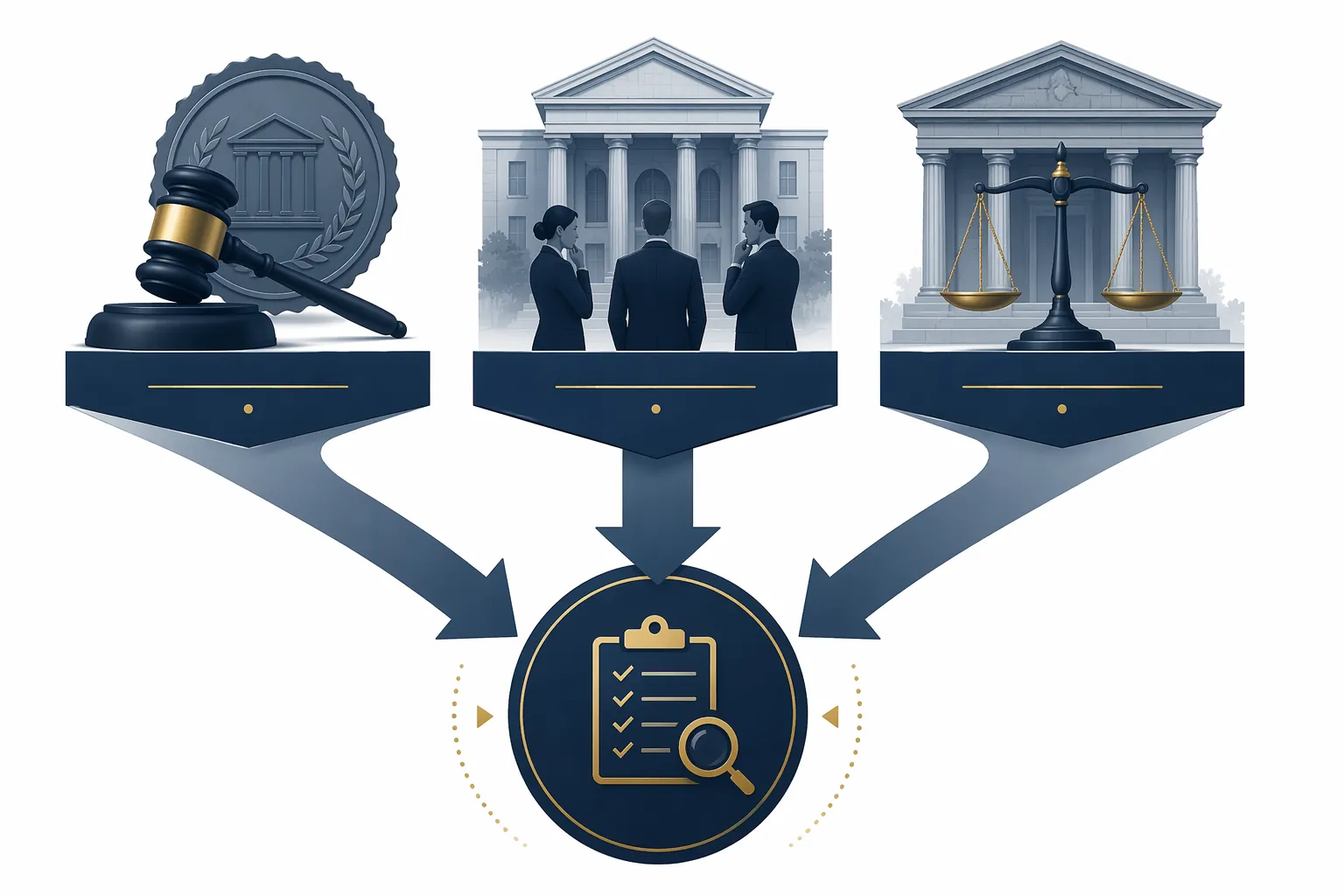
This is the seam legal buyers should care about. A company does not need to have violated contribution limits for its controls to look improvised. A senior officer’s donation, a global-affairs executive’s reported involvement, employee counter-donations, and no identified board-level officer policy together create a governance fact pattern that procurement teams can reasonably escalate.
Why Musk v. Altman makes these facts heavier
The charitable-trust litigation does not prove that Brockman’s donations are unlawful. It matters for a different reason: it places OpenAI’s mission-origin structure, officer incentives, and alleged departures from charitable purpose before a court at the same time the donation controversy is unfolding.
In May 2026, NPR reported that an advisory jury found for Elon Musk on a breach-of-charitable-trust claim against OpenAI, with Judge Yvonne Gonzalez Rogers’ final ruling still pending. The advisory verdict is not the final judgment, and remedies such as disgorgement or officer removal remain uncertain. That distinction should be preserved; the precedent is unsettled. But the verdict is still a serious signal for anyone assessing the governance environment around OpenAI. [6]
Brockman’s own trial testimony supplies the kind of material that plaintiffs and critics can use to tell a mission-drift story. Reports from the trial described questioning over a 2017 diary entry reading “What will take me to $1B?”, a reported $30 billion personal stake, and an unfulfilled $100,000 personal donation promise to OpenAI’s charity, including the message “I asked Sam when I should donate this.” Those facts do not establish liability by themselves. They are evidentiary fragments in a broader dispute over whether a charitable-origin AI project was redirected toward private benefit. [7][8]
For law-firm users, the trial changes the weight of the donation controversy. If OpenAI were an ordinary software vendor with a conventional corporate history, the governance issue might be easier to cabin as officer conduct. OpenAI is not that. Its nonprofit origins and capped-profit structure mean that officer incentives and public-purpose claims are already contested in court. In that setting, personal political spending by the president can become part of a fiduciary-risk narrative even when campaign-finance law is not the principal source of exposure.
Customer backlash is a risk signal, not proof of causation
The boycott and market-share materials should be handled with discipline. Everything-PR reported that the QuitGPT campaign collected more than 700,000 pledges and cited a ChatGPT market-share decline from 87% to 65%. Those figures are relevant to customer-risk assessment because they show organized user backlash and potential market sensitivity. They do not prove that Brockman’s donations caused a business decline. OpenAI does not publicly disclose consumer subscription metrics, and competition from Anthropic, Google, and Perplexity may also contribute to share movement. [9]
A law firm does not need perfect attribution to act on the signal. If a major vendor becomes associated with a public boycott, client questions may arrive before any analyst can isolate causation. The question for a firm’s AI committee is not “Did the boycott reduce OpenAI revenue by a provable amount?” It is “Can we explain why we continue to use this vendor, for which tasks, under which controls, and with what client-facing disclosures if asked?”
What changes for law firms using OpenAI tools
The practical exposure depends on how the firm uses OpenAI. A closed internal experiment carries different risk from a practice group using OpenAI’s API to support document review, drafting, due diligence, research, or client deliverables. The more the tool affects legal work product or client-facing advice, the more the firm needs a documented answer for vendor provenance, model selection, supervision, confidentiality, and reputational review.
| Use case | Risk question after the donations | Likely internal owner |
|---|---|---|
| General productivity or brainstorming | Whether the firm has approved the tool and limited confidential inputs | Knowledge management or IT risk |
| Drafting, research, or summarization for legal work | Whether lawyers understand the technology and supervise outputs before use | Practice-group leadership and professional responsibility counsel |
| Client-facing workflows using OpenAI API | Whether clients should be told which AI vendor supports the workflow | Engagement partner, client relationship partner, and risk committee |
| Firmwide legal-tech procurement | Whether OpenAI can provide adequate governance and officer-conduct disclosures | Procurement, information security, and general counsel |
ABA Model Rule 1.1 Comment 8 is not a vendor-political-activity rule, and no bar opinion in the provided materials applies it to this fact pattern. It does, however, require lawyers to keep abreast of the benefits and risks associated with relevant technology. A reasonable professional-responsibility reading is that law firms using generative AI should know enough about tool provenance, supervision, and material vendor risks to answer client questions accurately. That interpretation should be treated as risk guidance, not as a formal ethics holding.
The questions to put to OpenAI now
The useful response is not a rushed ban and not a passive shrug. Firms that continue using OpenAI should refresh the vendor file and ask questions that distinguish legal formalities from governance controls.
- Ask whether OpenAI has adopted, or will adopt, a board-approved political-contributions or political-activity policy for senior officers.
- Request a description of how OpenAI separates personal officer political activity from company lobbying, public-affairs strategy, PAC relationships, and enterprise-customer communications.
- Ask whether any OpenAI personnel, resources, vendors, or strategic advice were used in connection with Leading the Future beyond personal-capacity activity.
- Document whether the firm’s OpenAI use is internal, client-facing, or embedded in deliverables, and identify where client notice or consent may be prudent.
- Update AI-use policies so they cover vendor governance and reputational risk alongside confidentiality, privilege, cybersecurity, accuracy, and hallucination controls.
Those questions are not accusations. They are the ordinary consequence of using a high-profile AI vendor whose president’s personal political spending has become entangled with public-affairs reporting, employee dissent, customer backlash, and pending charitable-trust scrutiny.
The risk memo should be narrower than the headline
A careful memo to partners should separate three conclusions. First, the available materials do not establish that Brockman’s personal donations are unlawful under campaign-finance rules. Second, OpenAI’s “personal capacity” position does not, by itself, resolve the governance concern for enterprise legal customers. Third, because OpenAI tools may sit inside legal workstreams, law firms should treat the controversy as a material vendor-governance risk until they have current disclosures and an internally approved use rationale.
The immediate work is concrete: obtain governance disclosures, preserve a source-aware record of tool decisions, revisit client-disclosure language where OpenAI supports legal services, and brief partners that reputational and fiduciary-risk questions now sit beside accuracy, confidentiality, and cybersecurity. Continued use may still be defensible. Undocumented continued use is harder to defend.
References
- OpenAI Distances Itself From Cofounder Brockman's Political Donations, Business Insider
- OpenAI's President Gave Millions to Trump. He Says It's for Humanity, WIRED
- Who can and can't contribute, FEC.gov
- OpenAI Staffers Are Funding a Rival Super PAC to Take on Their Boss, WIRED
- OpenAI — Political Donations (FEC tracker), Transformer
- OpenAI's Sam Altman takes the stand to fend off Elon Musk's accusations he stole a charity, NPR
- OpenAI President Greg Brockman grilled over embarrassing diary entries, NY Post
- 5 things you missed as Greg Brockman took the stand at the OpenAI trial, AOL / Business Insider
- OpenAI Prez Gave Trump $25M — ChatGPT Users Revolt, Everything-PR
Related records
Tool profile
How to Read Legal AI Benchmarks Ahead of the OpenAI IPOGoverning regulation
Browse the obligations tracker →Preventive workflow
Browse verification workflows →
Report a correction or tip
Spotted an outdated figure, a misstated fact, or a ruling this case record should reflect? Public comments are disabled for this content given the professional cost of a misreported case outcome, penalty amount, or rule text — use the structured correction channel instead.
Report a correction or tip for this record →