
Osan White Phosphorus Leak and the SOFA Cleanup Gap
The July 28, 2026 white phosphorus leak at Osan Air Base exposes a structural liability gap in the US-ROK Status of Forces Agreement: Article IV and the 2001 KISE amendment block cleanup accountability, leaving South Korean authorities and residents to absorb health risks and remediation costs — a pattern confirmed at every base returned to Seoul since the provision took effect.
- Jurisdiction
- South Korea
- Court
- U.S.-ROK SOFA Joint Committee
- AI tool named
- None
- Ruling date
- Jul 28, 2026
- Source document
- View primary court order ↗
- Last verified
- Jul 29, 2026
Lex Machina Review is an independent risk-tracking and reference resource. Nothing on this site is legal advice, and using it does not create an attorney-client relationship. Every record is reviewed against primary sources but may not reflect the most current status of a matter — always verify directly against the cited court order, rule text, or a licensed attorney before relying on it.
Companion explanation — secondary to the source document above
The white phosphorus leak at a U.S. base in South Korea has legal implications that turn less on the chemistry alone than on who can force cleanup if the chemistry later proves worse than first reported. On July 28, 2026, South Korean authorities said white phosphorus leaked inside Osan Air Base in Pyeongtaek after an incident involving two munitions; the emergency alert was lifted after roughly 36 minutes, and U.S. military officials characterized the public-health and environmental risk as low.[1] Anadolu reported the material as 80%-diluted white phosphorus, a detail not independently resolved in the other public accounts available as of July 29.[2]
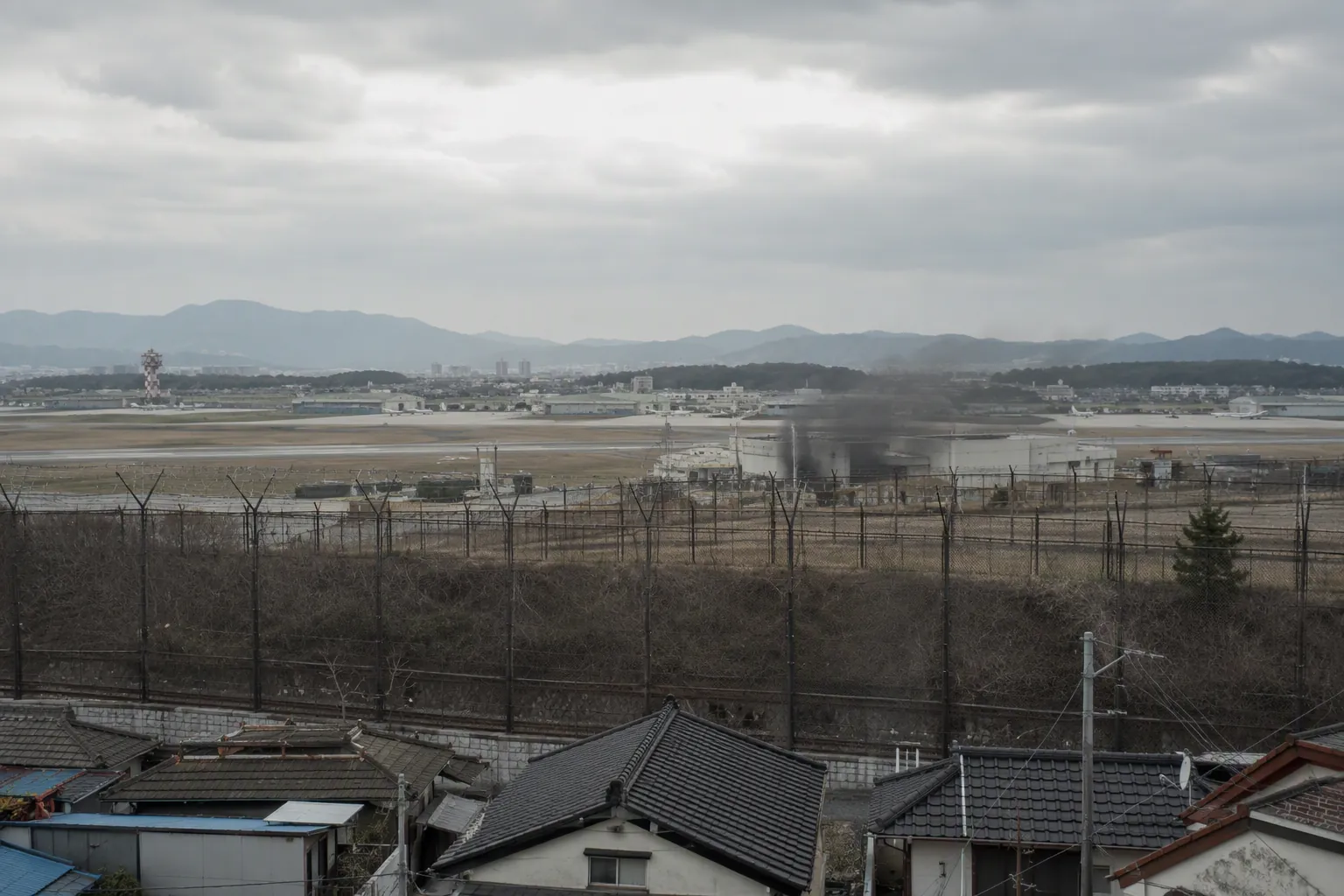
That is the public record. The risk record is narrower and more stubborn. The quantity leaked has not been disclosed. The public reports do not establish whether residue remained on the depot floor, entered soil, reached drainage pathways, or migrated beyond the installation. They do not show whether independent sampling occurred, who selected sampling points, or whether South Korean local authorities had direct access to the affected area. As of July 29, 2026, no formal legal claim, lawsuit, or SOFA Joint Committee proceeding specific to the Osan leak has been publicly reported.
Those missing facts matter because a low-risk incident statement is not the same thing as a legal release. It answers, at most, the authority's present risk assessment. It does not answer which cleanup standard controls if later sampling finds contamination, whether the host government can compel work inside an active installation, or whether the United States bears any cost if contamination is confirmed.
The Clause That Does the Heavy Work
In ordinary environmental practice, a hazardous-material leak invites a familiar sequence: secure the source, identify the release volume, sample the affected media, remediate to the applicable standard, and allocate cost. The U.S.-ROK Status of Forces Agreement interrupts that sequence at the allocation stage. Article IV provides that the United States is not obliged, when returning facilities and areas, to restore them to their original condition or compensate South Korea instead of restoration.[3]
That sentence is not an evidentiary rule. It is a cost-allocation rule. If read at face value, it prevents the host government from turning contamination discovered on a U.S. facility into a straightforward restoration bill. The problem for a South Korean city, landowner, or resident outside the fence is that the person exposed to the practical risk is not necessarily the person with operational control, access to records, or authority to order sampling.
The 2001 environmental arrangement is usually described as the qualification to that rule. It introduced the U.S. commitment to remedy contamination that presents a "known, imminent and substantial endangerment to human health," commonly shortened to KISE.[3] But KISE does not create a general polluter-pays obligation. It creates a narrow exception whose operative words do most of the limiting: the endangerment must be known, imminent, substantial, and tied to human health.
That formulation leaves several doors closed unless the facts are unusually strong. Unknown contamination does not qualify. Contamination that may migrate later is harder to place inside an imminent-endangerment frame. Ecological injury or soil contamination, standing alone, may not be enough if the formulation is applied as a human-health threshold. And if sampling access is incomplete, the party outside the base perimeter may be unable to generate the very record needed to show the threshold has been met.
The 2013 Department of Defense interpretation described in the available analyses tightened the exception further by reading "substantial impact" to require exposure exceeding U.S. federal standards within a three-to-five-year period.[3][4] That is not the same inquiry as whether Korean soil standards are exceeded, whether cleanup is prudent, or whether a local government will eventually bear remediation cost. It asks whether a high, time-bound exposure condition is recognized under the U.S. side's reading of the arrangement.
For Osan, this is the hinge. A white phosphorus release can be operationally serious without automatically becoming an enforceable U.S. cleanup obligation under SOFA. If public facts remain limited to an on-base leak, an undisclosed quantity, a short evacuation, and an official low-risk characterization, the KISE threshold is not visibly satisfied. If later facts show off-site migration or exposure, the legal question does not disappear; it becomes whether those facts are strong enough, timely enough, and accessible enough to overcome a treaty structure built around non-restoration.
Why the Returned-Base Record Matters
The Osan leak is not a returned-base case. Osan remains operational, and that distinction matters. Still, the returned-base record is the closest public test of how Article IV and KISE have worked when contamination is no longer theoretical. It shows a pattern in which cleanup responsibility did not follow contamination back to the United States.
Camp Hialeah is the blunt example. The available chronology reports groundwater petroleum contamination at 481 times the Korean legal limit, yet the United States did not pay for decontamination under KISE.[4] Camp Long and Camp Market sit in the same sequence of returned installations where Korean authorities inherited contamination disputes rather than a conceded U.S. restoration obligation.[4]
Yongsan Garrison is the larger institutional example. The record described in the available materials includes petroleum hydrocarbons exceeding Korean standards by more than 8,000 times and inspection access denied for more than a decade.[4] Those are not minor exceedances, and they are not merely aesthetic restoration complaints. They show how a treaty threshold can turn even severe contamination findings into a dispute about access, timing, and whether the agreed exception has been triggered.
Camp Carroll adds a different access problem. The cited investigation described volatile organic compounds at 900 times safe levels and Korean inspectors restricted to less than 10 feet of depth despite allegations of buried materials at 20 to 30 feet.[4] A sampling limitation of that kind is not a procedural footnote. It can decide whether the factual record ever becomes strong enough to support a remedy.
The cost record explains why this is not an abstract sovereignty dispute. South Korean authorities estimated cleanup costs of roughly 110 billion won, about $93.9 million at the time, for four returned bases in 2019.[5] A broader estimate for 59 returned camps placed total cleanup costs at more than $500 million.[4] Those figures measure the practical effect of Article IV: when the exception does not operate, remediation becomes a Korean budget item.
| Installation | Publicly reported issue | Legal significance |
|---|---|---|
| Camp Hialeah | Groundwater petroleum contamination reported at 481 times the Korean legal limit | Contamination did not produce a conceded U.S.-funded cleanup obligation |
| Camp Long and Camp Market | Returned-base contamination disputes described in the same KISE chronology | Shows the pattern was not confined to one installation |
| Yongsan Garrison | Petroleum hydrocarbons reported at more than 8,000 times Korean standards, with inspection access denied for more than 10 years | Illustrates how access and threshold disputes can outlast the contamination finding |
| Camp Carroll | VOCs reported at 900 times safe levels; inspectors reportedly limited to less than 10 feet despite buried-material concerns at 20 to 30 feet | Shows how sampling depth can control whether a record can be built |
White Phosphorus Matters, but Exposure Still Has to Be Proved
White phosphorus is not a benign substance. ATSDR describes it as a waxy solid that can ignite spontaneously in air and cause serious burns; exposure can occur through inhalation, ingestion, or skin contact depending on the release conditions.[6] The World Health Organization likewise treats white phosphorus as a hazardous substance associated with severe thermal and chemical injury.[7] A 2025 public-health review discusses acute and longer-term health concerns associated with white phosphorus exposure, while also underscoring that health conclusions depend on exposure route, dose, and duration.[8]
That last qualification is important. The present Osan record does not disclose the release quantity, environmental sampling results, or any off-site exposure pathway. It would be legally careless to treat the incident as proof of resident injury on the current facts. It would be equally careless to treat the absence of disclosed injury as proof that no remediation issue exists. The missing middle is the evidence that only controlled access, sampling, and disclosure can supply.
What a South Korean Authority Can and Cannot Do From Outside the Fence
A local government near Osan can issue alerts, coordinate emergency response, receive public complaints, and press national authorities for information. It may be able to sample public land, drainage channels, or private property outside the installation. Those steps can matter if contamination later appears beyond the perimeter.
What it cannot obviously do, under the public record, is order U.S. forces to conduct a full site investigation inside an active depot, select the internal sampling grid, compel disclosure of munition-handling records, or invoice the United States for restoration merely because a hazardous material leaked. Those powers would have to come through the SOFA machinery, a separate political concession, or facts strong enough to force the KISE conversation.
For residents, the gap is harsher. A person outside the base perimeter may experience the alert, smell smoke, see emergency activity, or worry about soil and water, yet still lack a direct claim mechanism against the party controlling the source area. If later testing on Korean land shows contamination, the immediate practical respondent may be the Korean authority responsible for public health and remediation, not the foreign military operator whose facility generated the concern.
For counsel advising companies, landowners, or institutions near U.S. installations in Korea, the lesson is not to overstate a lawsuit that has not been filed. The more useful exercise is documentary: preserve the alert record, identify any sampling done outside the base, track which agency requested access, record whether access was granted or denied, and separate Korean regulatory exceedances from the narrower KISE standard. Those categories may point in the same moral direction, but they do not carry the same legal force.
The Joint Committee Has Not Closed the Gap
The SOFA Joint Committee remains the place where these issues are supposed to be managed between governments, but its recent public record does not show a solution to the cleanup allocation problem. At a December 12, 2025 meeting, the committee discussed protection of U.S. bases and related operational concerns; the reported outcome did not resolve the environmental cleanup dispute embedded in Article IV and KISE.[9]
That matters because ambiguity is not costless. It may serve diplomatic management while an installation is operating, but it becomes a remedy problem when contamination is alleged. If the Joint Committee does not clarify access, standards, disclosure, and cost-bearing before the next release, those questions reappear after the incident, when evidence may be incomplete and public authorities are already under pressure to reassure residents.
The Legal Implication of Osan
On the present public facts, Osan does not prove off-site contamination, resident exposure, or a compensable injury. It does show why those findings, if they later appear, may still fail to produce a meaningful U.S. cleanup obligation. Article IV starts from non-restoration. KISE supplies only a narrow exception. The 2013 interpretation described in the public materials makes that exception more difficult to satisfy. The returned-base record shows that the exception has not functioned as a practical remedy in the cases most likely to test it.
The legally uncomfortable point is therefore limited but serious. Osan is significant less because it already establishes environmental harm than because it exposes how little remedy may exist if environmental harm is later found. Unless the treaty changes, the Joint Committee concedes a broader obligation, or the facts become strong enough to satisfy KISE as interpreted, the downstream consequence is likely to be familiar: risk disclosure, constrained access, disputed thresholds, and a remediation burden that falls on South Korea rather than on the United States.
References
- White phosphorus leak inside US air base in South Korea, Seoul says, Reuters, July 28, 2026.
- South Korea issues emergency alert over suspected white phosphorus leak at US air base, Anadolu Agency, July 28, 2026.
- Environmental Contamination at U.S. Military Bases in South Korea and the Responsibility to Clean Up, Environmental Law Reporter.
- The U.S. Military's Toxic Legacy in Korea, Korea Policy Institute.
- News Focus: USFK base returns rekindle controversy over contamination cleanup costs, The Korea Herald.
- ToxFAQs for White Phosphorus, Agency for Toxic Substances and Disease Registry.
- White phosphorus, World Health Organization.
- White phosphorus exposure and public health review, Frontiers in Public Health, 2025.
- S. Korea, U.S. hold SOFA Joint Committee meeting, Yonhap News Agency, December 12, 2025.
Related records
Tool profile
Browse tool evaluations →Governing regulation
Browse the obligations tracker →Preventive workflow
Browse verification workflows →
Report a correction or tip
Spotted an outdated figure, a misstated fact, or a ruling this case record should reflect? Public comments are disabled for this content given the professional cost of a misreported case outcome, penalty amount, or rule text — use the structured correction channel instead.
Report a correction or tip for this record →