
How the Penn EEOC Subpoena Exposed Employer Data Risks
The EEOC v. Penn subpoena dispute reveals how commissioner-initiated Title VII charges can force employers to disclose sensitive employee data with minimal court scrutiny. This article translates the case into actionable compliance guidance for employers facing similar demands.
- Jurisdiction
- US Federal - Eastern District of Pennsylvania
- Court
- U.S. District Court for the Eastern District of Pennsylvania
- Judge
- Gerald Pappert
- AI tool named
- None
- Ruling date
- Mar 31, 2026
- Source document
- View primary court order ↗
- Last verified
- Jul 24, 2026
Lex Machina Review is an independent risk-tracking and reference resource. Nothing on this site is legal advice, and using it does not create an attorney-client relationship. Every record is reviewed against primary sources but may not reflect the most current status of a matter — always verify directly against the cited court order, rule text, or a licensed attorney before relying on it.
Companion explanation — secondary to the source document above
The practical shock in the Penn EEOC subpoena dispute is not that the University of Pennsylvania refused everything. It did not. Penn had already produced roughly 900 pages in response to the EEOC’s antisemitism investigation and resisted only the production of employees’ personal contact information without consent. The agency later withdrew the subpoena-enforcement fight on July 23, 2026, but that withdrawal came after a district court had already ordered Penn to disclose names and contact information under a relevance standard many employers will find uncomfortably low. [1]
This is a Risk Digest entry, not legal advice. It is current as of July 24, 2026. The immediate appellate dispute has been mooted by the EEOC’s withdrawal, but the underlying investigation has not been reported as closed. For employers, the useful lesson is procedural: cooperation, privacy objections, and a voluntary-contact compromise may narrow a subpoena fight, but they may not defeat it.
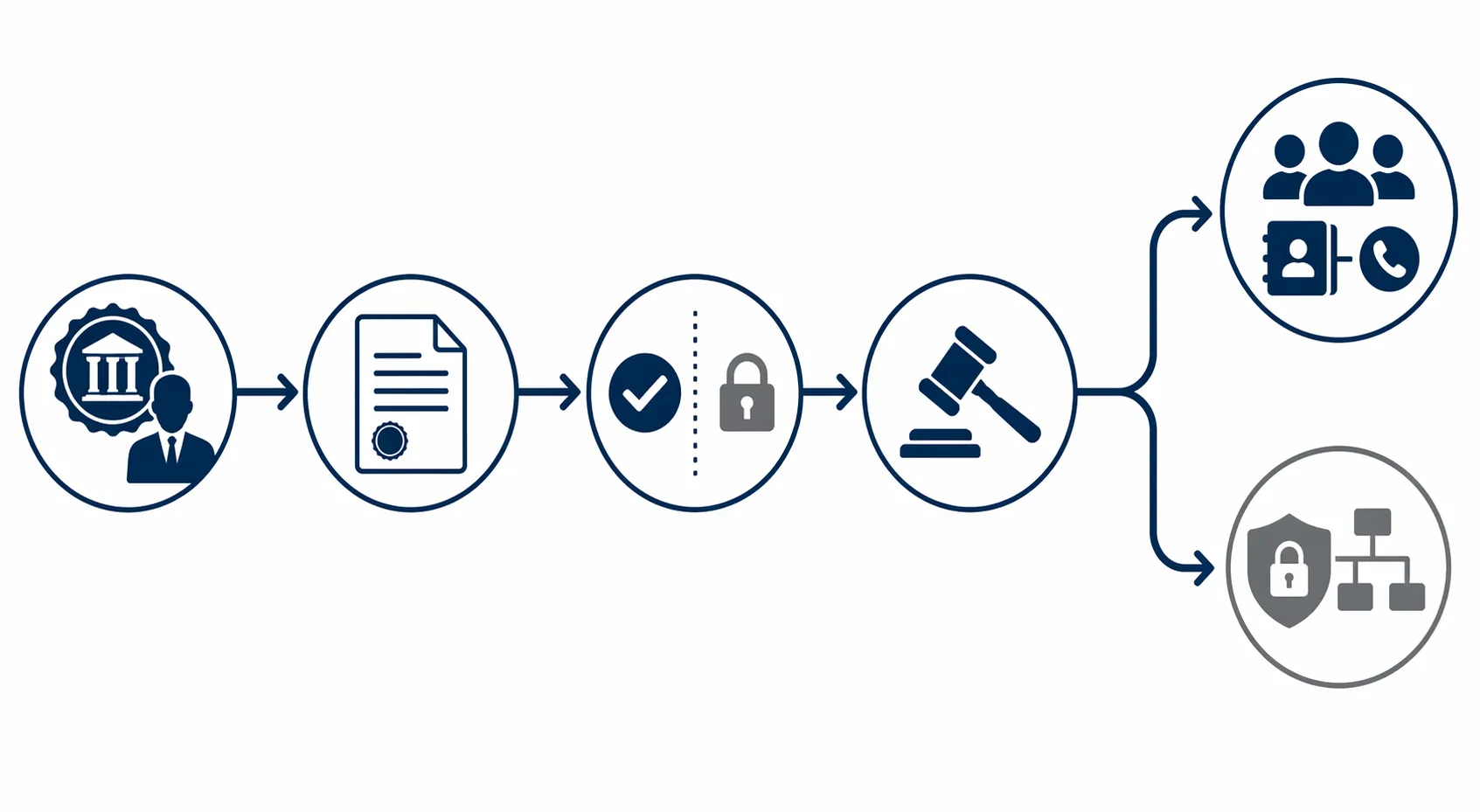
Where Penn’s Compromise Failed
The charge began without an individual employee complaint. EEOC Commissioner Andrea Lucas issued the December 2023 charge on her own initiative, based on publicly available information, alleging that Penn had discriminated against Jewish employees by failing to address antisemitic harassment on campus. [2]
The subpoena sought categories that were operationally awkward and personally sensitive: names of employees who reported antisemitic harassment, members of Jewish-related organizations, employees in Jewish Studies, attendees of listening sessions, recipients of an antisemitism survey, and personal contact information. [3]
Penn’s proposed alternative was the kind of compromise many compliance offices would reach for first. The university offered to notify employees and provide them with EEOC contact information so they could come forward voluntarily. Judge Gerald Pappert rejected that alternative as insufficient when enforcing the subpoena. [2]
That sequence matters more than the political framing around the case. Penn did not simply stonewall. It produced documents, identified a consent problem, proposed an employee-autonomy route, and still lost on the core demand for personal contact information. An employer facing a similar commissioner-initiated charge should assume that a good-faith production history helps credibility, but does not by itself control the enforceability question.
| Event | Compliance Significance |
|---|---|
| Commissioner-initiated charge based on public information | No employee charge was needed to start the Title VII investigation. |
| Subpoena requested names, categories, and contact information | The demand reached beyond ordinary policy documents into employee-identifying data. |
| Penn produced roughly 900 pages and refused contact data without consent | Partial cooperation did not eliminate enforcement risk. |
| Penn offered voluntary employee contact | The court did not treat notice-and-volunteer procedures as an adequate substitute. |
| District court enforced the subpoena with a carveout | Names and contact information could be compelled, but specific organizational affiliations were excluded. |
| EEOC withdrew enforcement on appeal | The immediate fight ended without an appellate ruling or public explanation. |
Why the Court Treated the Demand as Enforceable
Pappert applied the familiar low relevance bar for EEOC administrative subpoenas. On that standard, the agency did not have to prove the charge; it had to show that the requested information was relevant to the investigation. The court found the subpoena enforceable, found no undue burden, and rejected Penn’s First Amendment and RFRA objections. [3][2]
For risk teams, the hard part is that relevance and sensitivity are different inquiries. A list of employees connected to Jewish organizations or antisemitism-related campus activity may feel more like associational intelligence than routine personnel data. But the court’s analysis treated names and contact information as investigative access points, not as a merits finding or a command that employees cooperate.
The ruling also shows why broad constitutional rhetoric can become counterproductive in subpoena enforcement. Pappert dismissed Nazi-Germany comparisons as “unfortunate and inappropriate,” writing that they “obfuscate the Court’s limited role and the discrete legal issues before it.” [4]
That does not make the privacy concern trivial. It means the objection must be framed with the precision the subpoena posture requires: what data field is being compelled, why that field is unnecessary or overbroad, what substitute would still allow the agency to investigate, and what protective limits should attach if production is ordered.
The Carveout That Still Matters
The most useful part of the ruling for employers is not the loss. It is the line the court did draw. Pappert’s order did not require Penn to disclose employees’ specific organizational affiliations, even while it compelled names and contact information. [3][2]

That distinction should shape the first draft of an employer’s response. Do not treat “employee identity,” “contact information,” “religious affiliation,” “ethnic association,” “academic program,” and “event attendance” as one undifferentiated privacy category. Courts may be more willing to compel some fields than others. If an employer collapses them together, it may lose the chance to preserve the narrowest defensible objection.
A more disciplined response separates the data into layers:
- Names: identify whether the agency seeks employees as witnesses, alleged victims, comparators, or category members.
- Contact information: specify whether business contact information, personal email, home address, and phone number are being treated differently.
- Category labels: object separately to production that would disclose religious, ethnic, academic, or associational ties.
- Source documents: distinguish existing records from a newly created list that aggregates sensitive attributes.
- Protective terms: request limits on use, redisclosure, retention, and contact protocols if production is compelled.
The point is not to invent a privilege that may not exist. The point is to avoid handing the court an all-or-nothing dispute when the strongest argument may concern only the affiliation labels, the personal-contact fields, or the creation of a consolidated list.
Employee Autonomy Survived, But Only After Disclosure
Pappert noted that employees could refuse to participate once contacted by the EEOC. That matters, but it is a limited protection. The subpoena compelled Penn’s disclosure; it did not compel employees to answer questions, provide statements, or become agency witnesses. [2][4]
For employees, the distinction may feel thin. The disclosure itself can be the harm they were trying to avoid. Religious, ethnic, academic, or organizational associations may carry meaning far beyond ordinary employment records, particularly when routed into a government investigation tied to a public campus controversy.
For the employer, however, the distinction is operationally important. If a court orders production, the employer should not imply that employees must cooperate with the agency. Any communication to affected employees should separate three things: the employer’s legal obligation to produce specified information, the employee’s ability to decide whether to speak with investigators, and the employer’s non-retaliation commitments.
A careful employee notice would avoid both reassurance and alarmism. It would identify the category of information produced, state who compelled the production, describe any protective limits, provide agency contact information if appropriate, and tell employees that participation in an interview or follow-up contact is their decision unless they receive separate legal process.
What to Preserve in the Objection Record
The Penn record suggests a practical playbook for employers that receive an EEOC subpoena seeking sensitive employee-identifying data. The first move is not a press statement. It is a clean record.
- Document cooperation: track productions, rolling responses, custodians searched, and categories already provided.
- Object by field: challenge personal contact information, affiliation labels, and newly created aggregated lists separately.
- Offer narrower alternatives: propose employee notice, agency contact information, business-contact channels, phased production, or redacted lists where appropriate.
- Avoid overstatement: do not argue as if every name is constitutionally immune from disclosure if the better argument concerns affiliation labels or personal-contact details.
- Ask for protective limits: preserve requests for use restrictions, confidentiality treatment, retention limits, and redisclosure controls.
- Prepare employee communications early: decide who will notify affected employees, what rights will be described, and how questions will be routed.
One mistake is to make the dispute sound larger than the court is likely to see it. Another is to make it too small. A subpoena that requires an institution to assemble names and personal contact information from religiously or ethnically defined campus categories is not ordinary payroll reporting. The employer’s filing should explain that sensitivity without asking the court to decide the entire social meaning of the underlying controversy.
Intervenors Changed the Posture, Not the Standard
Five Penn-affiliated groups intervened to oppose the subpoena: AAJR, JLSA, AAUP, AAUP-Penn, and PASEF. They were represented by the ACLU of Pennsylvania, Democracy Defenders Fund, and Hangley Aronchick. [5]
Their presence made visible a problem employers cannot fully own on their employees’ behalf. The institution may be the subpoena recipient, but the privacy and associational interests belong in significant part to the people and groups whose information is being disclosed. In a fast-moving enforcement dispute, those interests can diverge: the employer may need to reduce contempt or enforcement risk, while employees and affiliated groups may want to prevent disclosure altogether.
Employers should assume that affected groups may seek their own counsel, intervene, or speak publicly. That is not necessarily a breakdown. It may be the only way to ensure the court hears interests the employer can describe but not perfectly represent.
The Withdrawal Is a Pause, Not a Safe Harbor
On July 23, 2026, the EEOC withdrew its subpoena-enforcement effort through a joint stipulation in the Third Circuit. The withdrawal was filed without explanation, and reporting noted that the underlying investigation remains active. [6][1]
That timing prevents a Third Circuit ruling that could have affirmed, narrowed, or rejected Pappert’s approach. It also prevents treating the withdrawal as a substantive retreat on the agency’s legal authority. The public record supports only the narrower conclusion: this subpoena-enforcement fight ended, without an appellate decision and without a stated reason.
Some reporting noted that the withdrawal came shortly after the administration’s July 22, 2026 move to end mandatory EEO-1 workplace demographic data reporting. [7] That coincidence may be relevant background, but it does not explain the filing. Unless the agency says more, employers should not build a compliance judgment around a guessed motive.
Nor should employers treat the district court opinion as national doctrine. It is a district court decision from the Eastern District of Pennsylvania. Other courts could analyze First Amendment, associational-privacy, RFRA, burden, or narrowing arguments differently, especially on a different record or under a differently drafted subpoena.
The Working Assumption for Employers
For now, the prudent assumption is that a commissioner-initiated Title VII investigation can seek employee-identifying data tied to sensitive religious, ethnic, academic, or associational categories, and that a court may enforce at least names and contact information if the agency clears the low relevance bar. The better defense is usually not refusal in the abstract; it is disciplined narrowing.
That means preserving objections to affiliation labels, resisting unnecessary creation of consolidated sensitive lists, proposing consent-based or phased alternatives, requesting protective limits, and communicating clearly that employees retain control over voluntary participation. It also means treating any agency withdrawal as a procedural development, not a promise that the investigation or the data risk has gone away.
References
- US agency drops bid to force Penn to provide names in antisemitism probe, Reuters, July 23, 2026.
- University of Pennsylvania Ordered to Create List of Jewish Employees and Provide to EEOC: What You Need to Know, Archer & Greiner.
- Federal Court Enforces EEOC Subpoena to UPenn in Antisemitism Probe, Bond Schoeneck & King.
- Judge orders Penn to give Trump administration list of Jewish employees, The Guardian, March 31, 2026.
- EEOC v. University of Pennsylvania, ACLU of Pennsylvania.
- Trump administration drops subpoena for list of Jews at Penn, Politico, July 23, 2026.
- Penn, EEOC resolve subpoena dispute over names of Jewish faculty, staff, The Daily Pennsylvanian, July 2026.
Related records
Tool profile
Browse tool evaluations →Governing regulation
Browse the obligations tracker →Preventive workflow
Browse verification workflows →
Report a correction or tip
Spotted an outdated figure, a misstated fact, or a ruling this case record should reflect? Public comments are disabled for this content given the professional cost of a misreported case outcome, penalty amount, or rule text — use the structured correction channel instead.
Report a correction or tip for this record →