
YouTuber Charged in $250K Fragrance Return Fraud Scheme
Chicago YouTuber Philip Carter faces three counts of state mail fraud and three misdemeanor theft-by-deception charges for an alleged luxury fragrance return scheme. Investigators used his own YouTube content to establish the scope of the recovered $250,000 collection.
- Jurisdiction
- Illinois, US
- Court
- Circuit Court of Cook County, Illinois
- Judge
- James Costello
- AI tool named
- None
- Ruling date
- Jul 23, 2026
- Source document
- View primary court order ↗
- Last verified
- Jul 27, 2026
Lex Machina Review is an independent risk-tracking and reference resource. Nothing on this site is legal advice, and using it does not create an attorney-client relationship. Every record is reviewed against primary sources but may not reflect the most current status of a matter — always verify directly against the cited court order, rule text, or a licensed attorney before relying on it.
Companion explanation — secondary to the source document above
Verified posture before the July 29 hearing
Risk Digest record, last verified July 27, 2026, UTC: the charges in the YouTuber luxury fragrance return fraud scheme are pending in Illinois state court, not federal court. Philip Carter, a Chicago fragrance YouTuber, was arrested July 22, 2026; charges were approved July 23; he faces three Illinois state mail-fraud counts and three misdemeanor theft-by-deception counts; Judge James Costello ordered pretrial release with conditions barring proximity to Nordstrom and Ulta Beauty; and the next listed court appearance is July 29, 2026.[1][2]
That posture matters because “mail fraud” is doing more work in the headlines than it should. The Cook County Sheriff’s Office described state-level charges, with the state mail-fraud counts carrying up to five years each.[3] This is not a prosecution under federal 18 U.S.C. § 1341, the federal mail-fraud statute, which carries a different baseline maximum penalty of up to 20 years.[4] The charging authority identified in the public record is local, through Cook County, not the U.S. Attorney.
Everything else in the case should be read against that procedural limit. The public materials describe allegations and investigative findings; they do not establish a conviction. The record is also young. With a hearing scheduled two days after this verification check, the posture may change quickly.
The alleged mechanics were simple enough to make the mail element visible
The alleged scheme was not described as an online resale ring or a counterfeit-import case. Investigators say Carter ordered luxury fragrances from Nordstrom, removed or replaced the contents, put modeling clay or used bottles into the packaging, resealed boxes with a heat gun, and returned the packages by mail for refunds.[5] The mail-based return path is the practical feature that turns an ordinary refund-abuse fact pattern into the filed state mail-fraud theory.
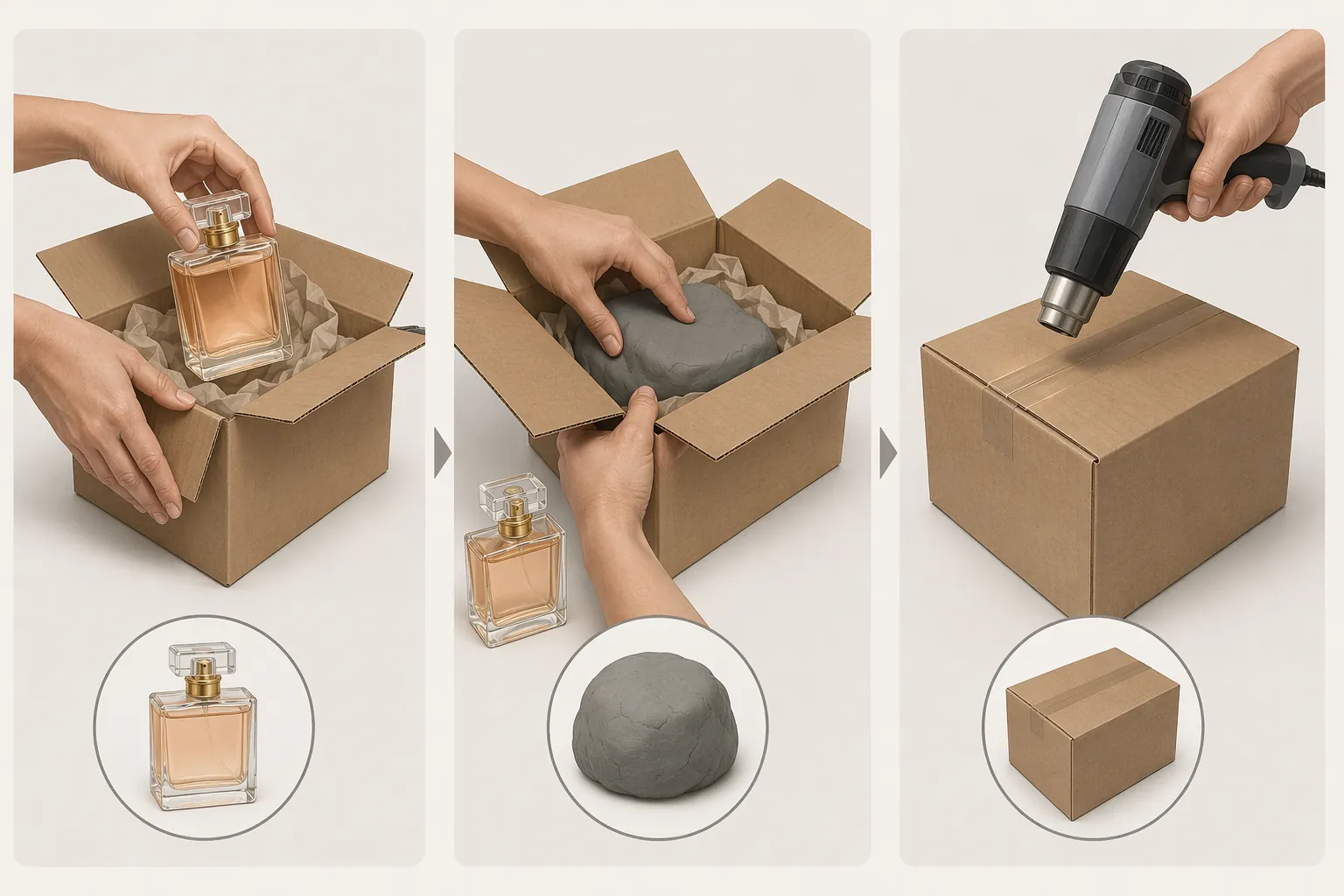
The modeling clay detail is easy to treat as the story’s novelty. For litigation-risk purposes, its more important function is evidentiary. A returned box with clay where a bottle should be is a physical mismatch. A resealed package can be preserved. A return label, refund record, order history, and shipping trail can then be tied to a specific transaction. That is the bridge from a suspicious return to a criminal referral.
Nordstrom’s Organized Retail Crime Unit is the first institutional actor worth noticing. CBS Chicago reported that the unit flagged the pattern after clay was found in returned boxes.[5] That detail places the case outside routine customer-service friction. It suggests a retailer-side review capable of linking multiple returns, preserving altered packaging, and presenting the pattern in a form investigators could act on.
From altered boxes to a $250,000 recovered collection
After the return pattern was identified, investigators executed a search warrant at Carter’s Chicago apartment. CWB Chicago reported that the search recovered 714 fragrance bottles valued at about $250,000, along with resealed boxes, a heat gun, glue, and packaging materials.[6] Those items matter in different ways. The bottles speak to scale. The boxes and tools speak to method. Together, they make the alleged return process harder to dismiss as an isolated dispute over a few packages.
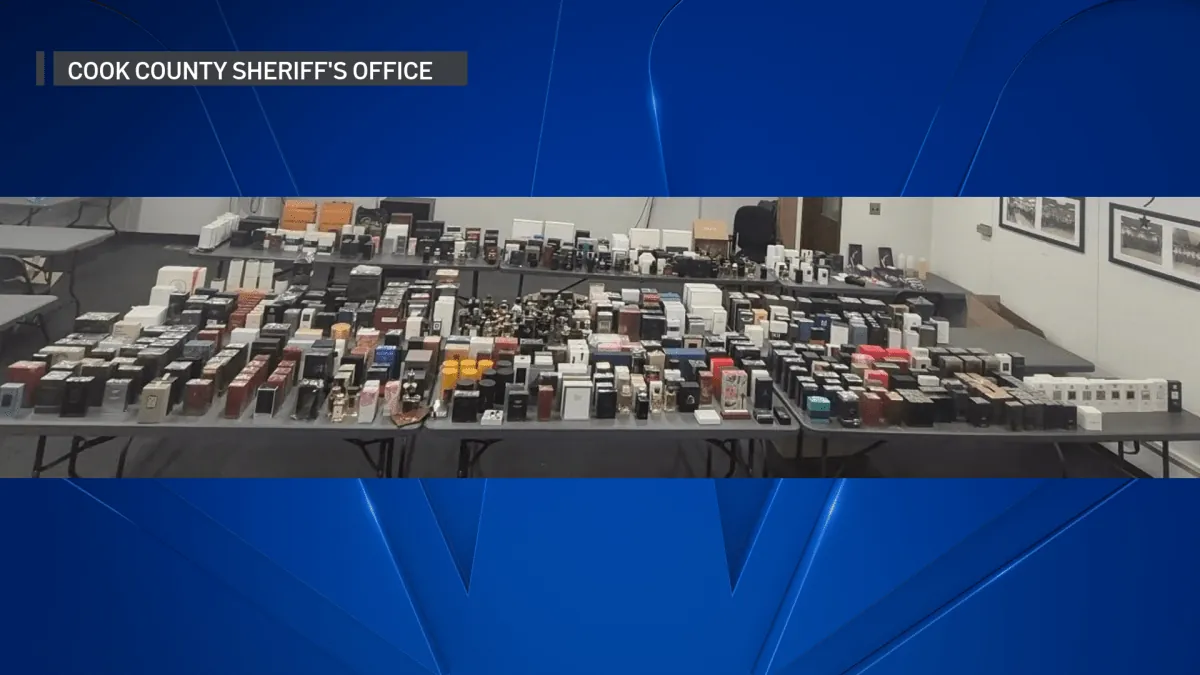
The YouTube piece enters here, and it should not be overstated. Carter’s channel is relevant because the Cook County Sheriff’s Office said investigators used his posted fragrance content to help confirm the scope and value of the collection.[3] That is a narrower proposition than saying online collecting is inherently suspicious, or that a large visible collection proves fraud. In this record, the channel appears to have functioned as an inventory aid and corroborating source after investigators were already pursuing a retail-return pattern.
That is still a meaningful investigative development. Social-media content can be a self-authored catalog: what was displayed, when it was displayed, how extensively it was discussed, and whether the displayed goods appear consistent with property recovered under warrant. In a niche like fragrance, where bottles are visually distinctive and collectors often display shelves, hauls, and comparisons, the evidentiary value is not in personality or popularity. It is in the publicly visible inventory.
The unresolved numbers gap is the case’s main risk signal
The clean headline number is $250,000. The documented direct-loss number is much smaller. CBS Chicago reported Nordstrom’s loss as just under $15,000, while CWB Chicago reported 714 recovered fragrance bottles valued at $250,000.[5][6] Those two figures do not measure the same thing.
The Nordstrom figure appears to describe the retailer’s documented loss from the transactions identified in the public reporting. The $250,000 figure describes the estimated value of inventory recovered during the search. The public sources do not close the gap. They do not prove that every recovered bottle came from Nordstrom, that every bottle was obtained through fraud, or that the full recovered value corresponds to chargeable loss in the current case.
But the gap is exactly where counsel and loss-prevention teams should slow down. A recovered inventory many times larger than the documented Nordstrom loss may point to additional victim retailers, a longer time period, lawful purchases mixed with allegedly fraudulent acquisitions, or some combination the public record has not yet separated. The conditions of release barring proximity to both Nordstrom and Ulta Beauty show that at least one other retailer name entered the court’s release restrictions, but the current charges and public loss reporting should not be expanded beyond what the sources support.[1]
Why state mail fraud, not federal mail fraud, is the operative distinction
Mail-based return fraud naturally invites federal associations because 18 U.S.C. § 1341 is familiar to lawyers, compliance teams, and investigators. It is not the charge here. The public charging description is Illinois state mail fraud, approved in Cook County, paired with misdemeanor theft-by-deception counts.[2][3] That distinction changes who is prosecuting, what statutory exposure is being described, and how the case should be compared to other fraud matters.
The narrow lesson is not that every shipped return now belongs in federal court. The better reading is that state prosecutors may use mail-fraud tools where the alleged deception is carried through return shipping, especially when a retailer’s organized retail crime unit has already assembled a transaction pattern and physical packaging evidence. The mailing is not decorative. It is part of how the alleged refund was obtained.
For retailers, that means the return channel itself is an evidence channel. Order records, refund approvals, carrier scans, package weights, warehouse intake photographs, exception notes, and preserved contents can become the structure of a criminal referral. For defense counsel, it means the fight may move quickly to transaction-level proof: which package, which refund, which contents, which account, which device, and which statutory mail-fraud elements the state can actually establish.
What this case signals before the record changes
This prosecution is useful because it shows three enforcement behaviors converging. First, a retailer’s Organized Retail Crime Unit identified an allegedly repeatable return pattern, rather than treating each refund as a standalone service problem. Second, investigators used social-media content as an evidentiary inventory source alongside warrant evidence, rather than as mere background color. Third, local prosecutors brought state mail-fraud counts without invoking the federal mail-fraud statute.
Those are modest conclusions, but they are stronger than the spectacle version of the story. The public record does not support a full account of where every recovered bottle came from. It does not identify all possible victims. It does not establish guilt. It does show that a return-fraud investigation can move from clay in boxes to a search warrant, from a visible online collection to valuation evidence, and from retailer loss-prevention work to filed state fraud charges.
As of the July 27 verification check, the case remains before the July 29, 2026 hearing. Any assessment after that date needs a fresh docket and charging review.
References
- Chicago man arrested in alleged $250K fragrance return fraud scheme — NBC Chicago
- Chicago fragrance YouTuber stocked luxury cologne collection through mail fraud scheme — Chicago Sun-Times
- You could say this fraud case is scent-sational... — Cook County Sheriff's Office
- 18 U.S. Code § 1341 — Cornell Legal Information Institute
- Chicago YouTuber charged with swapping luxury perfumes for modeling clay — CBS Chicago
- YouTube fragrance expert built $250K collection through Nordstrom refund fraud: sheriff — CWB Chicago
Related records
Tool profile
Browse tool evaluations →Governing regulation
Browse the obligations tracker →Preventive workflow
Browse verification workflows →
Report a correction or tip
Spotted an outdated figure, a misstated fact, or a ruling this case record should reflect? Public comments are disabled for this content given the professional cost of a misreported case outcome, penalty amount, or rule text — use the structured correction channel instead.
Report a correction or tip for this record →