
How Police Reality TV Arrests Create Civil Rights Liability
Police reality TV shows face growing civil rights liability when arrests are staged for entertainment. This article maps the legal framework, key case law, and regulatory gaps every litigator needs to assess exposure.
- Jurisdiction
- US-TN
- Court
- U.S. District Court for the Eastern District of Tennessee
- AI tool named
- None
- Ruling date
- Jun 1, 2026
- Source document
- View primary court order ↗
- Last verified
- Jul 28, 2026
Lex Machina Review is an independent risk-tracking and reference resource. Nothing on this site is legal advice, and using it does not create an attorney-client relationship. Every record is reviewed against primary sources but may not reflect the most current status of a matter — always verify directly against the cited court order, rule text, or a licensed attorney before relying on it.
Companion explanation — secondary to the source document above
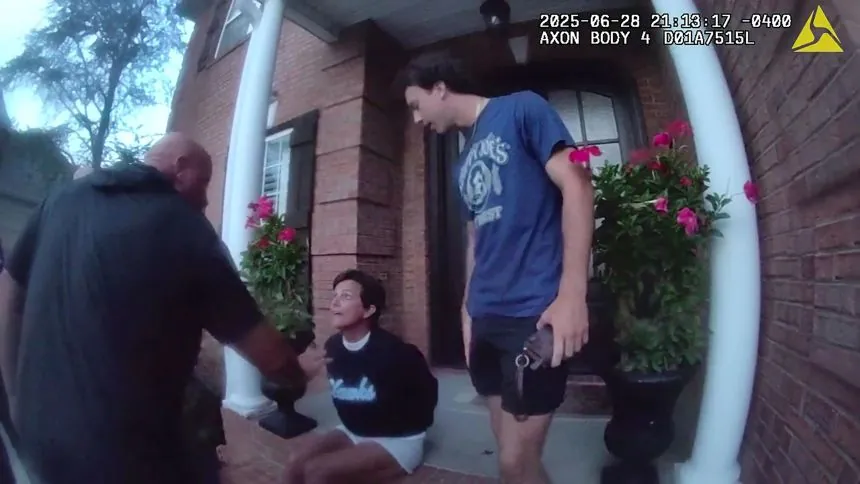
The legality question in a police reality TV arrest lawsuit starts with custody, not airtime. Donna Dillon’s complaint against Knox County, filed in June 2026 and reported on July 25, 2026, is still pending; the allegations are not findings. But the pleaded fact pattern is the one municipal lawyers should read first: a 61-year-old grandmother, a felony warrant, a non-exigent service, a camera crew from “On Patrol: Live,” more than 40 minutes in handcuffs, and an alleged permanent shoulder injury after officers turned warrant execution into a filmed event. [1]
That is not mainly a publicity-rights case dressed up for television coverage. Dillon alleges Fourth Amendment false arrest and excessive force, Fourteenth Amendment substantive due process violations, and state-law assault and battery. Knox County later ended its participation in “On Patrol: Live” in June 2026 without a public explanation. Those facts matter because the legal risk does not arise simply from being embarrassed on screen; it arises from the allegation that the presence and needs of a television production changed how state actors used custody, restraint, and force. [1]
The arrest file, not the broadcast, carries the first liability question
A Section 1983 assessment begins with who acted under color of law and what constitutional right is alleged to have been violated. In Dillon, the answer is not abstract. Officers allegedly served a felony warrant when there was no exigency, allowed a television crew to be present, kept Dillon handcuffed for more than 40 minutes, and caused a shoulder injury. The complaint’s force is procedural: it asks whether the sequence of law-enforcement decisions was shaped by ordinary warrant execution or by a filmed production schedule. [1]
For a county, that sequence creates a reconstruction problem. Who approved the production’s presence? Who decided when the warrant would be served? Was there any operational reason to execute the warrant in the manner alleged? Who placed the handcuffs, who checked their duration, and who had authority to remove them? Where was the television footage stored, who reviewed it, and what did the participation agreement say about access to raw recordings? Those are not media-relations questions. They are liability and evidence questions.
The pleaded Fourteenth Amendment theory also matters, even if it ultimately rises or falls on a narrower doctrinal path. It signals that the plaintiff is not merely contesting a bad edit or unwanted exposure. She is alleging that state power was used in a way that made her body and home part of a performance. Whether that theory survives is for the court, but its presence changes the risk memo: the county is defending police conduct, not just a decision to cooperate with a show. [1]
Ambler is the settlement and regulation benchmark
The Javier Ambler matter explains why these cases do not stay inside privacy law. Ambler died in 2019 after a Williamson County deputy tased him during a traffic stop filmed for “Live PD.” The sheriff’s office withheld video for eight months. Reported resolutions included a $2.5 million settlement involving Williamson County and a $5 million settlement for Ambler’s family from the sheriff’s office, and the case directly prompted the Texas Javier Ambler Act in May 2021. [2]
Ambler supplies the hard version of the exposure. The harm was death, not reputational injury. The evidence issue was not whether a subject signed a release; it was delayed access to video of state violence. The institutional consequence was not a network apology; it was a state statute barring law-enforcement agencies in Texas from partnering with reality shows. For counsel advising a sheriff’s office, that is the benchmark because it connects the television arrangement to force, records retention, public access, settlement value, and legislative response. [2]
The available quantitative signal should be used carefully. Research analyzing 124 use-of-force reports from one police agency found 43 incidents in 2017, before or without the relevant “Live PD” filming period, and 82 in 2019 during filming. That is a risk indicator, not a national finding. It does not prove that cameras caused each additional use of force. It does, however, give litigators a concrete reason to ask whether the presence of a production crew changed officer behavior, deployment choices, or supervisory review. [3]
The First Amendment defense has a lane
Networks and producers have a real First Amendment argument when the claim targets publication. Best v. Berard, a 2011 Northern District of Illinois decision involving the show “Female Forces,” held that the depiction of a woman’s arrest on truancy charges was protected speech even though she had not consented, the offense was minor, and the program was produced as entertainment. For right-of-publicity and privacy claims based on broadcast depiction, that is the network-side authority counsel will reach for first. [4]
But Best does not make the Fourth Amendment disappear. A defense to liability for broadcasting an arrest is not the same thing as a defense to an officer’s alleged false arrest, excessive force, or unreasonable seizure. Nor does it automatically answer municipal-liability questions about whether an agency’s policies, practices, or agreements invited performative enforcement. The First Amendment protects speech; it does not give officers a production exception to constitutional restraints.
| Dispute | Primary legal track | Exposure question |
|---|---|---|
| A show broadcasts an arrest without the arrestee’s consent | First Amendment, privacy, publicity rights | Whether publication is protected speech, as in Best v. Berard [4] |
| Officers allegedly detain, restrain, or use force because cameras are present | Section 1983, Fourth Amendment, Fourteenth Amendment | Whether state actors violated constitutional rights while acting under color of law |
| An arrestee alleges physical contact or injury during the filmed arrest | State tort law | Whether assault, battery, or related tort claims survive alongside constitutional claims |
| A cast member or participant sues a producer after signing releases | Contract and waiver law | Whether releases, arbitration clauses, or consent provisions bar the claim |
| Video is unavailable, delayed, edited, or retained by a third party | Evidence, public records, spoliation, municipal policy | Who controlled footage and whether delay or loss prejudiced the civil-rights claim |
Separate the civil-rights track from ordinary reality-TV disputes
The familiar celebrity-reality examples are usually distractions. If a participant in a reality franchise is later arrested for unrelated conduct, the show is not automatically part of the liability chain. If a participant sues a producer over how a program was made or edited, the case often turns on contracts, releases, waivers, and consent. Those disputes may be expensive, but they are not the same as a nonparticipant claiming that police power was exercised differently because a camera crew was present.
Dillon and Ambler sit in the more serious category because the claimant did not simply regret appearing on television. In both fact patterns, the alleged wrong arises from police conduct during an encounter filmed for a law-enforcement reality program. That distinction controls the analysis. A producer’s release form may matter for someone who agreed to be on a show; it does much less work for an arrestee who says officers used public authority to make content out of her custody.
The participation agreement is not enough
A county can have a signed agreement with a network and still face the wrong questions after a filmed arrest. The agreement may address access, indemnity, editing, confidentiality, or branding, but civil-rights exposure turns on the encounter itself. If officers serve a warrant at a particular time because the crew is available, bring cameras into a home without a law-enforcement need, extend detention for filming, or fail to preserve footage, the defense file cannot be built from the contract alone.
Before approving ride-along filming, counsel should be able to answer a short chain-of-custody and command-control checklist:
- Who decides whether a warrant service, traffic stop, or arrest may be filmed?
- Can a crew enter a home, curtilage, or restricted area without independent legal justification?
- Are officers prohibited from changing timing, tactics, or restraint decisions to accommodate filming?
- Who owns or controls raw footage, and how quickly can the agency obtain it after a use-of-force event?
- Does the public-records process cover third-party production footage?
- What happens when a subject demands video before the network episode airs?
The answers matter most when the underlying police action was not urgent. Non-exigency removes one of the practical explanations for why officers moved when they did. In Dillon, that is why the alleged felony-warrant service carries more risk than a chaotic emergency call: if the county had time to plan the arrest, it also had time to decide whether the crew should be there at all. [1]
The regulatory gap remains outside Texas
Texas is the only state in the materials with a statutory ban on police-reality-TV partnerships, enacted through the Javier Ambler Act. There is no federal analogue identified here. Outside Texas, exposure is governed by the ordinary but uneven tools of constitutional tort doctrine, state tort law, contracts, public-records duties, evidentiary obligations, and whatever local agreement the agency signed with the production company. [2]
That patchwork does not make police reality television unlawful across the board. Filmed arrests can be newsworthy, and publication can be protected speech. The risk changes character when the camera crew affects timing, access, force, restraint, evidence handling, or the performance of arrest. At that point, the show is no longer merely documenting police activity, and the First Amendment is no complete answer to civil-rights liability.
References
- A grandmother says deputies staged her arrest for a police reality show. Now she’s suing, CNN, July 25, 2026.
- Texas law bans reality shows from working with law enforcement, ABC News.
- Use-of-force research cited in NYU JIPEL article, NYU Journal of Intellectual Property & Entertainment Law.
- Right of Publicity Claim Involving Reality TV Show, Holland & Knight, April 2011.
Related records
Tool profile
Browse tool evaluations →Governing regulation
Browse the obligations tracker →Preventive workflow
Browse verification workflows →
Report a correction or tip
Spotted an outdated figure, a misstated fact, or a ruling this case record should reflect? Public comments are disabled for this content given the professional cost of a misreported case outcome, penalty amount, or rule text — use the structured correction channel instead.
Report a correction or tip for this record →