
The Pre-Litigation Deepfake Risk from the Nolan Wells Case
The Nolan Wells investigation saw AI-generated deepfakes impersonating witnesses and fabricating incident footage within days of body recovery, contaminating the pre-litigation evidence ecosystem before any complaint. This analysis pairs that event with the Mendones v. Cushman & Wakefield terminating-sanctions ruling to show litigators where the current risk framework falls short and how to prepare.
- Jurisdiction
- Mississippi
- Court
- Mississippi state court
- AI tool named
- Unspecified
- Ruling date
- Jul 27, 2026
- Source document
- View primary court order ↗
- Last verified
- Jul 28, 2026
Lex Machina Review is an independent risk-tracking and reference resource. Nothing on this site is legal advice, and using it does not create an attorney-client relationship. Every record is reviewed against primary sources but may not reflect the most current status of a matter — always verify directly against the cited court order, rule text, or a licensed attorney before relying on it.
Companion explanation — secondary to the source document above
The potential Nolan Wells parents lawsuit against friends is easiest to misunderstand if it starts at the courthouse. The more serious evidence problem started earlier, in the short interval when investigators were still trying to determine what happened, family members were trying to stop false material from spreading, and no judge had yet set the rules for preservation, authentication, or discovery.
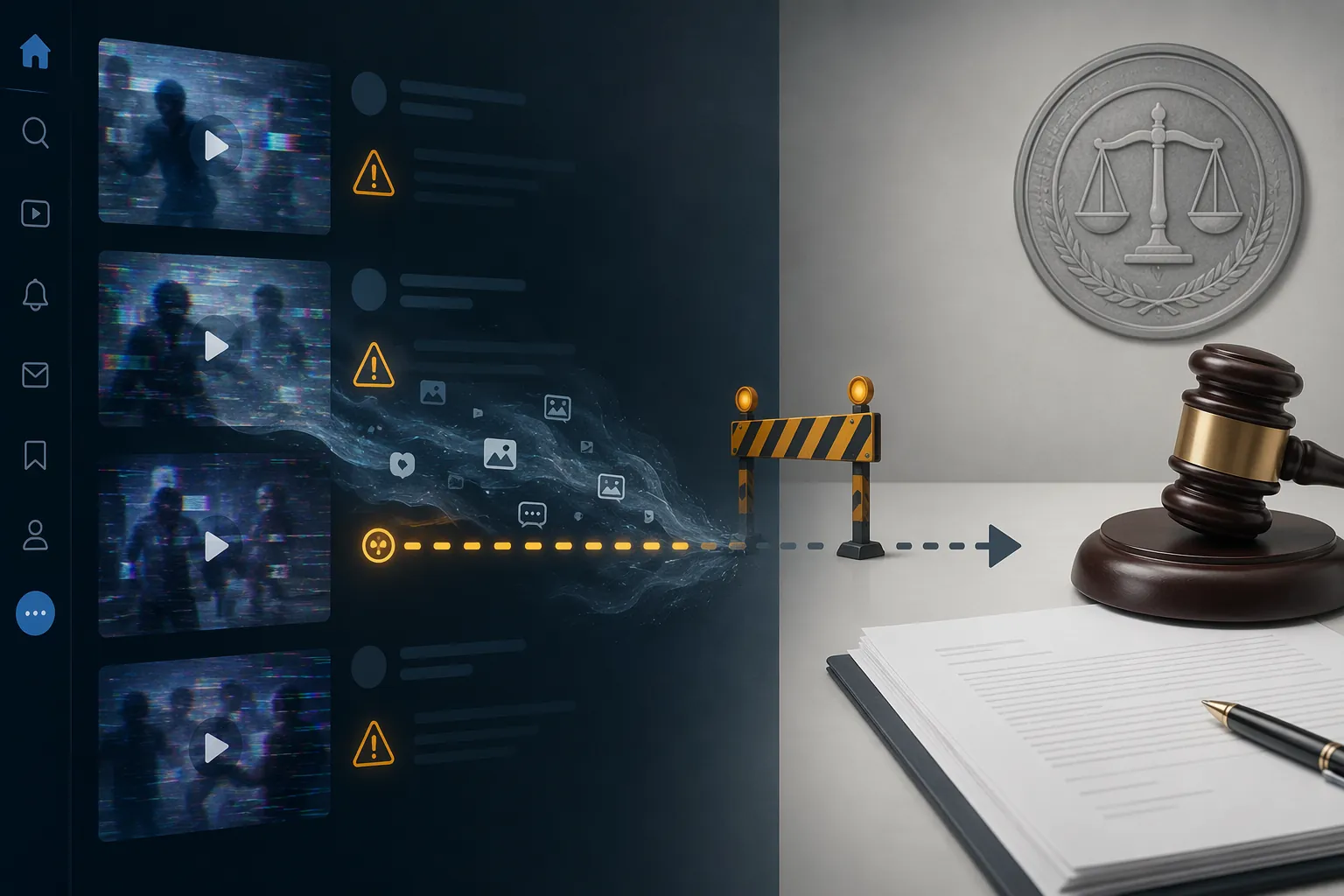
Within three days of Wells’s body being recovered, AI-generated videos were circulating on TikTok, including content that reportedly impersonated Christine Wonsley’s voice and videos purporting to show fabricated drowning or altercation footage. Wells’s mother publicly demanded that the material be taken down by July 9, 2026.[1] That timing matters. This was not an allegation that a party offered a deepfake exhibit at trial. It was synthetic media moving through the public and investigative environment before a complaint, before a discovery order, and before the ordinary machinery of evidentiary discipline could attach.
The sequence that should make litigators uneasy
The most useful way to read the Wells deepfake issue is as a chronology of contamination risk. Each event arrived before the legal system had a clean container for the evidence.
| Point in the sequence | What happened | Why it matters for later litigation |
|---|---|---|
| Within days of body recovery | AI-generated TikTok videos reportedly impersonated Christine Wonsley’s voice and fabricated incident footage.[1] | Synthetic material entered the public record while witnesses, family, and investigators were still absorbing basic facts. |
| By July 9, 2026 | Wells’s mother publicly demanded takedowns of the fake videos.[1] | The family’s cleanup burden began before any court could order removal, preservation, or platform disclosures. |
| July 11, 2026 reporting | The Jackson County Sheriff’s Office acknowledged social-media rumor and AI content as a “challenge” to the investigation.[2] | The problem was not only reputational. Law enforcement itself identified the information environment as an investigative complication. |
| July 20, 2026 | A 10-page spoliation and preservation letter was served on friends and their families, according to later reporting.[3] | Counsel moved into preservation posture after the public digital environment had already been disturbed. |
That sequence is why the Wells matter is a better risk template than a generic “AI evidence” warning. The legal concern is not limited to whether a judge can spot a fake video when it is offered as an exhibit. The concern is whether, by the time any exhibit is offered, witness recollections, investigative priorities, public assumptions, and counsel’s own provenance record have already been shaped by synthetic material that no one preserved in a disciplined way when it first appeared.
What has, and has not, happened legally
The legal posture should be kept narrow. Through the reporting available on July 27, 2026, the public record supported pre-suit preservation activity and estate-related filings, not a filed wrongful death complaint.[4] The July 20 notice was significant because it put potential parties and families on preservation notice, but it should not be treated as if it were a complaint, a judicial finding, or a court order.
That distinction is more than formalism. A complaint starts deadlines, claims, defenses, jurisdictional fights, discovery conferences, and eventually evidentiary rulings. A preservation letter does something different: it warns recipients not to destroy relevant material and often signals where counsel believes the evidentiary fight will be. In the Wells matter, that warning arrived after deepfakes and rumor had already been visible enough for the family and sheriff’s office to address publicly.
The broader Wells timeline, autopsy context, digital-forensics questions, and media-amplification issues belong in their own lanes. For this risk analysis, the relevant point is narrower: the synthetic-content problem arose in the pre-litigation interval, when there was no shared protocol for capturing the fake posts, separating them from authentic witness material, or documenting who saw what before being interviewed.
Why this is not the usual authentication problem
Courtroom authentication rules are built for a later moment. Federal Rule of Evidence 901, often used as the baseline shorthand in authentication discussions, asks whether the proponent has produced evidence sufficient to support a finding that an item is what the proponent claims it is. Proposed Federal Rule of Evidence 707 has been discussed as a more AI-specific response to deepfakes in court, including heightened attention to generated or altered media.[5]
Those frameworks matter, but they do not solve the Wells problem. First, Wells is a Mississippi state-court matter, not a federal case. Second, even if federal authentication concepts are useful by analogy, they mostly activate when a party wants to use evidence in litigation. The Wells deepfakes appeared earlier, in a social-media stream where no party had yet been ordered to produce, authenticate, or explain anything.
The National Center for State Courts has warned courts about AI-generated evidence and public trust, including practical judicial guidance for handling such material.[6] That guidance is important at the bench level. It helps judges ask better questions once suspect media reaches a courtroom. But a judge cannot retroactively prevent a witness from having watched a fake video before an interview, cannot easily reconstruct every repost that shaped public belief, and cannot assume that platform content will remain available in the form counsel later needs.
Mendones shows the sanction endpoint, not the Wells answer
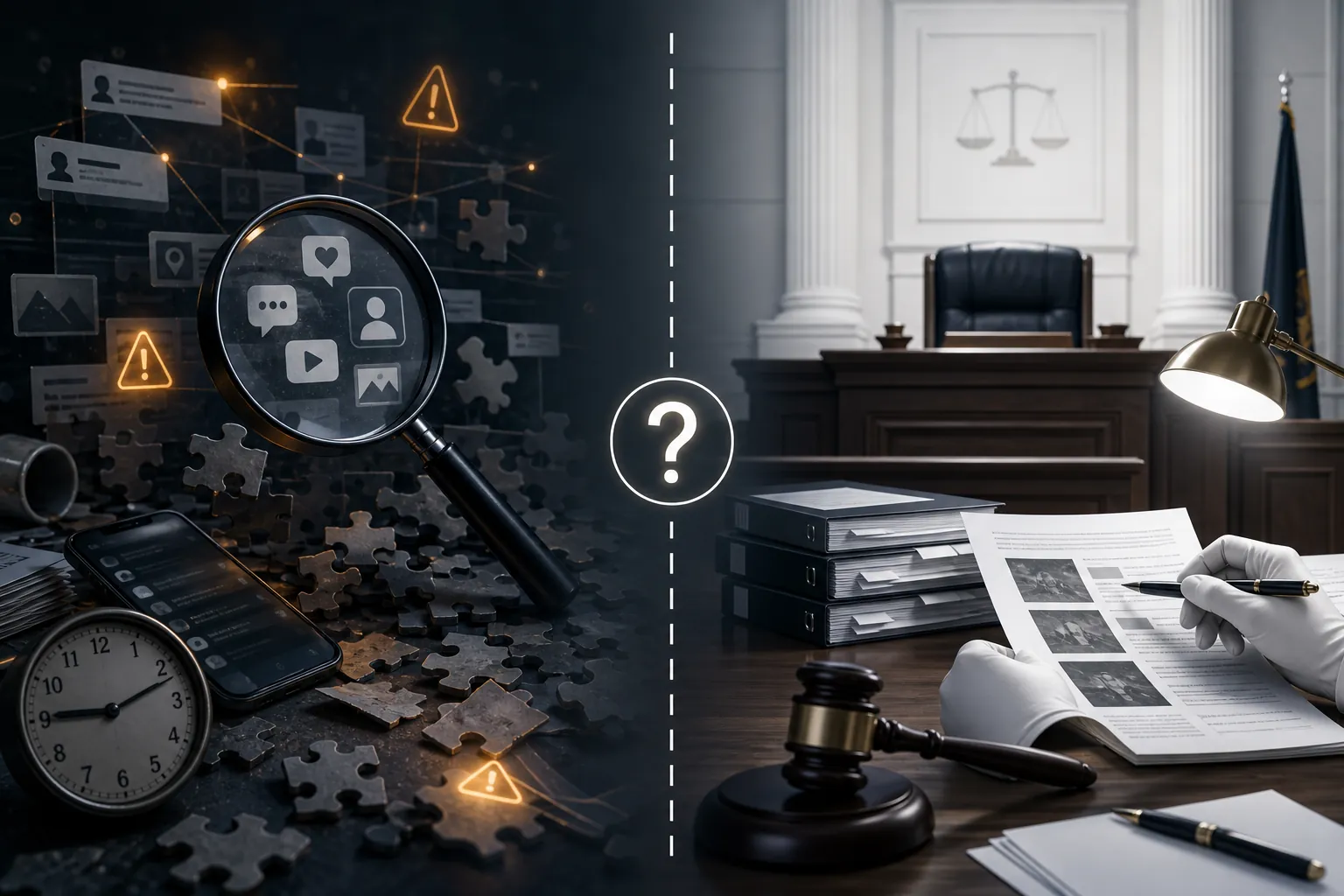
The closest recent cautionary case is Mendones v. Cushman & Wakefield, a California state-court matter reported in September 2025. There, the court imposed terminating sanctions after finding that plaintiffs had submitted deepfake videos and altered images in litigation.[7][8] It is a stark case because it shows what can happen once fabricated media enters the formal record: the court can treat the misconduct as case-ending, not merely as a credibility issue for cross-examination.
Mendones should not be overread. It is not binding Mississippi authority, and it involved alleged submission of fabricated material inside litigation. Wells presents the harder earlier-stage question: what happens when synthetic material circulates before anyone files suit, before the parties are locked into discovery obligations, and before a court has occasion to decide whether the material is admissible, sanctionable, or simply noise?
That procedural difference is the point. Mendones gives litigators the sanction endpoint. Wells supplies the contamination fact pattern. Between the two sits the operational problem that many AI-evidence discussions skip: how counsel can prove, months later, that they preserved the digital environment responsibly when the first pollution occurred outside the courthouse.
The pre-filing contamination problem
Pre-litigation deepfakes can affect a case without ever becoming trial exhibits. A fabricated clip can reach a witness before a recorded statement. A voice impersonation can harden a public theory before counsel has obtained device extractions. A false incident video can generate investigative leads that consume time even if law enforcement later dismisses them. Viral posts can also create a pool of potential jurors who believe they have already seen something probative, even if what they saw was generated.
The hardest part is provenance. In a conventional digital-evidence dispute, counsel may fight over a phone, a message thread, metadata, deletion, chain of custody, or extraction method. With viral synthetic content, counsel may also have to reconstruct an unstable social-media event: original upload, reposts, duets or stitches, captions, comments, takedown timing, screen recordings, algorithmic spread, and whether any witness viewed the content before giving a statement.
Detection tools do not eliminate that burden. A tool may help evaluate whether a specific file shows signs of generation or manipulation. It does not, by itself, establish who encountered the file, whether an investigator acted on it, whether a witness’s memory was influenced by it, or whether an earlier version disappeared before counsel preserved it. The evidentiary question is not only “is this video fake?” It is also “what did this fake video do to the case record before we captured it?”
That is why the sheriff’s acknowledgment of rumor and AI content as an investigative challenge carries more legal weight than a general statement that deepfakes are harmful.[2] It places the synthetic-content issue inside the investigation’s working environment. Once that happens, later counsel cannot safely treat the online material as mere background chatter.
What counsel should preserve earlier than usual
The practical lesson is not to wait until pleadings are filed to build the AI-evidence record. In an active investigation with viral synthetic content, preservation has to begin while the social-media event is still observable. That does not mean every rumor deserves equal treatment. It means counsel should create a defensible record of what was known, what was collected, what was requested, and what could not be recovered.
| Risk area | Record counsel should try to build | Reason it matters later |
|---|---|---|
| Synthetic posts and reposts | URLs, account names, timestamps visible on capture, screenshots, screen recordings, captions, comments, and takedown requests | Later authentication disputes may require proof of what circulated, not just whether one saved file is fake. |
| Witness exposure | Whether key witnesses saw, shared, discussed, or reacted to the synthetic material before interviews or statements | A witness’s later certainty may be challenged if their memory developed after exposure to fabricated media. |
| Law-enforcement interaction | Any public statements, requests, or investigative references to AI content or rumor | If investigators treated the material as a challenge, counsel needs to know whether it affected leads, interviews, or resource allocation. |
| Platform and device evidence | Prompt preservation requests to platforms and device owners, including ephemeral or deleted content where legally available | The most useful provenance data may disappear before ordinary discovery begins. |
For in-house counsel, the same lesson applies outside death investigations. A product incident, executive accusation, workplace injury, protest, security event, or customer death can produce synthetic media before the company receives a demand letter. If counsel waits for litigation to become formal, the most important question may already be unanswerable: who saw the fake version before giving the real version?
For law-firm risk teams, Wells also changes how early intake should work. A new matter involving viral video should not be opened with the assumption that social media is merely public-relations background. Intake should ask whether generated or altered content is circulating, whether family members or witnesses have demanded takedowns, whether law enforcement has commented on misinformation, and whether anyone has preserved the posts in a way that can later be explained.
The risk template Wells leaves behind
Wells does not yet offer a deepfake ruling, a discovery order, or a sanctions opinion. That is precisely why it is useful. It shows the moment before the legal system catches up, when the public evidence environment is already being altered and counsel must decide whether to treat that alteration as litigation-relevant.
Mendones shows what a court can do once fabricated media is submitted in litigation. Wells shows why that endpoint is too late for some cases. The unresolved space between them is now the working zone for litigators: early preservation, provenance documentation, witness-exposure tracking, and verification records created before conventional discovery practice would normally begin.
References
- Fake videos, deepfakes spread amid Nolan Wells investigation, Mississippi teen death — Clarion Ledger, July 9, 2026
- Nolan Wells investigation — CNN, July 11, 2026
- On the Day of His Funeral, Nolan Wells’ Parents Sent Notice to His Friends and Their Families of Intention to Sue Them — Magnolia Tribune, July 27, 2026
- Exclusive: First Court Documents Filed in Nolan Wells Case — GC Wire
- Deepfakes in the Courtroom: Problems and Solutions — Illinois State Bar Association, March 2025
- AI-Generated Evidence Threatens Public Trust in Courts — National Center for State Courts
- Court Throws Out Case After Finding Plaintiffs Submitted Deepfake Videos and Altered Images — Reason.com, September 25, 2025
- Deepfake Videos and Images Lead to Terminating Sanctions: eDiscovery Case Law — eDiscovery Today, September 25, 2025
Related records
Tool profile
Browse tool evaluations →Governing regulation
Browse the obligations tracker →Preventive workflow
Browse verification workflows →
Report a correction or tip
Spotted an outdated figure, a misstated fact, or a ruling this case record should reflect? Public comments are disabled for this content given the professional cost of a misreported case outcome, penalty amount, or rule text — use the structured correction channel instead.
Report a correction or tip for this record →