
How to Qualify for the Costco $14M Class Action Settlement
A $14 million settlement over allegedly misleading promotional emails from Costco highlights the litigation risk under Washington's anti-spam law. Learn who qualifies for a payout, how the settlement works, and what compliance takeaways corporate counsel should heed.
- Jurisdiction
- Washington (state)
- Court
- King County Superior Court
- Judge
- Not applicable
- AI tool named
- Not applicable
- Ruling date
- Jun 23, 2026
- Source document
- View primary court order ↗
- Last verified
- Jul 29, 2026
Lex Machina Review is an independent risk-tracking and reference resource. Nothing on this site is legal advice, and using it does not create an attorney-client relationship. Every record is reviewed against primary sources but may not reflect the most current status of a matter — always verify directly against the cited court order, rule text, or a licensed attorney before relying on it.
Companion explanation — secondary to the source document above
To qualify for the Costco class action settlement in 2026, the threshold question is narrow: whether you were in Washington and received Costco promotional emails during the settlement class period, June 2, 2021, through July 7, 2026. The settlement in Aaland v. Costco Wholesale Corp. concerns allegedly misleading promotional email subject lines, not a product defect, membership pricing issue, or general refund program. The case has been preliminarily approved, but it is not final; a final approval hearing is scheduled for October 2, 2026. [1]
The other point to clear up immediately: the often-repeated “$500” figure is not a promised settlement check. It refers to statutory damages available under Washington’s Commercial Electronic Mail Act for each unlawful commercial email. The settlement itself creates a $14 million non-reversionary fund, with payments to approved claimants made pro rata after approved deductions. The actual payment per claimant depends on how many valid claims are submitted and cannot be reliably predicted now. [2]
Who May Qualify
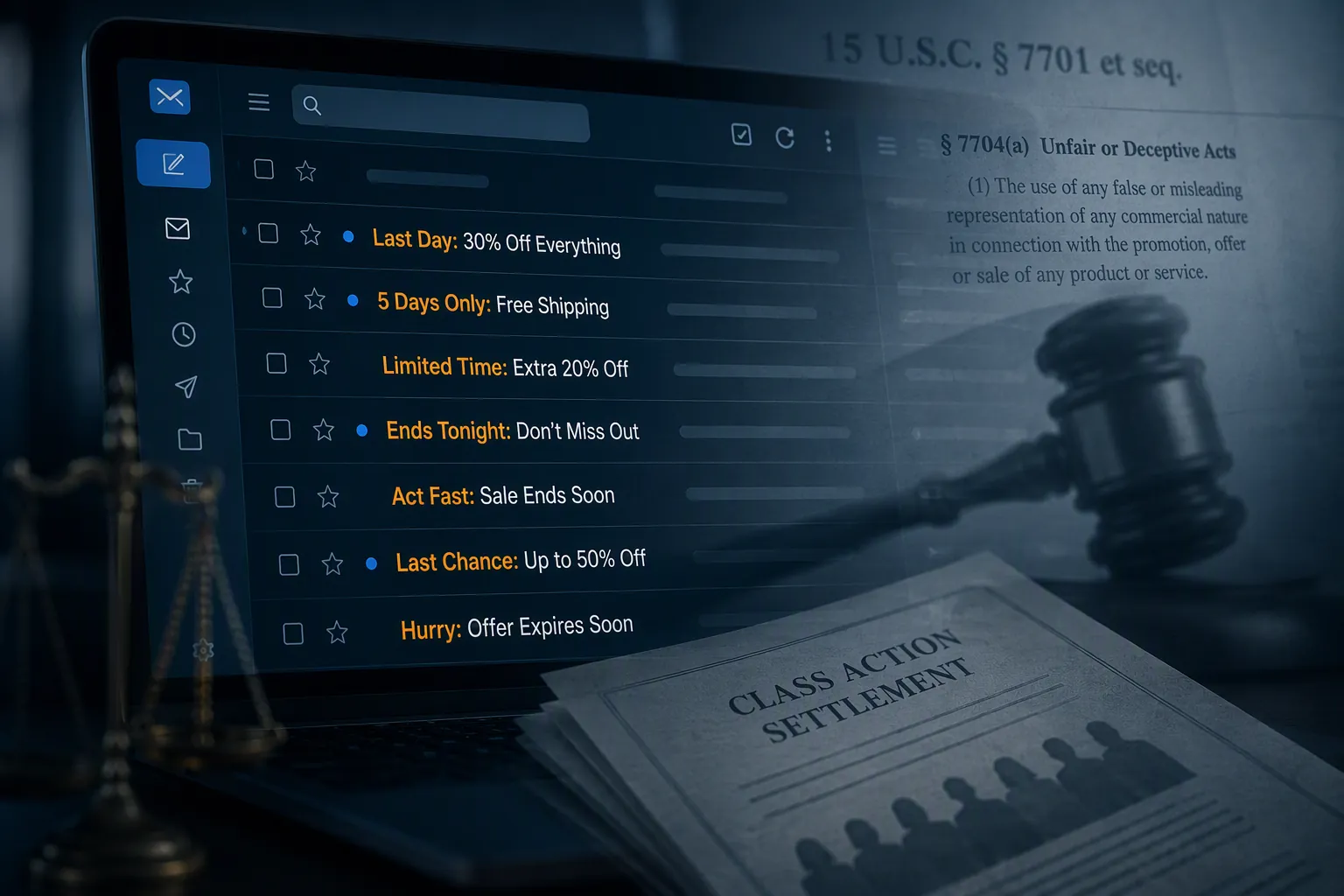
Based on the reported settlement terms, potential class members are Washington recipients who received Costco promotional emails during the June 2, 2021, to July 7, 2026 class period. Reports describe the emails as promotions with subject lines that allegedly created false urgency, including language such as “Today is the last day” or “5 Days Only,” where the promotion allegedly remained available after the stated deadline. [1][3]
| Question | Current Answer |
|---|---|
| Case | Aaland v. Costco Wholesale Corp., No. 25-2-16392-0, King County Superior Court |
| Class period | June 2, 2021, through July 7, 2026 |
| Geographic connection | Washington recipients of covered Costco promotional emails |
| Settlement amount | $14 million non-reversionary fund |
| Approval status | Preliminarily approved; final approval hearing scheduled for October 2, 2026 |
| Payment estimate | Pro rata distribution; no fixed claimant amount can be known before claims are processed |
Claim filing is expected to run through the settlement process, using the settlement website identified in claims-administration reporting. Claimants should rely on the official claim form and notices for deadlines, payment elections, and any documentation requirements, because those mechanics can matter as much as eligibility. [4]
Costco denies wrongdoing. The settlement resolves the dispute without a trial finding that Costco violated Washington law, and the current posture is preliminary approval rather than final judgment. That distinction matters for consumers trying to understand payment timing and for companies trying to read the case as a risk signal rather than a merits ruling. [1][2]
Why the $500 Figure Is Easy to Misread
Washington CEMA provides $500 in statutory damages for each unlawful commercial email, and Washington’s Consumer Protection Act can add treble damages up to $250. Those figures describe litigation exposure, not the settlement distribution formula. In a class settlement, the fund is normally reduced by court-approved fees, expenses, service awards, administration costs, or other approved deductions before the remainder is distributed to eligible claimants under the approved plan. [2]
Here, reported settlement terms include a $14 million non-reversionary fund, attorneys’ fees capped at $4.62 million, and a proposed $2,500 service award. “Non-reversionary” means the unclaimed portion does not simply return to Costco; reports describe unclaimed funds as subject to redistribution to claimants or donation under the settlement structure. [2][4]
That is why a headline suggesting Washington shoppers “may receive up to $500” needs a careful read. A claimant might understandably see the statutory number and assume a fixed check. The settlement materials instead point to a pro rata process, where participation levels and court-approved deductions drive the final amount. [4][5]
How Ordinary Email Copy Became Aggregate Exposure
The alleged conduct is not exotic. Promotional calendars routinely use urgency: final hours, last day, weekend only, limited time, five days only. The legal problem alleged in this case is that the urgency language did not match the actual availability of the promotion. Reports describe emails stating or implying a deadline when the deal allegedly continued past that date. [3][6]
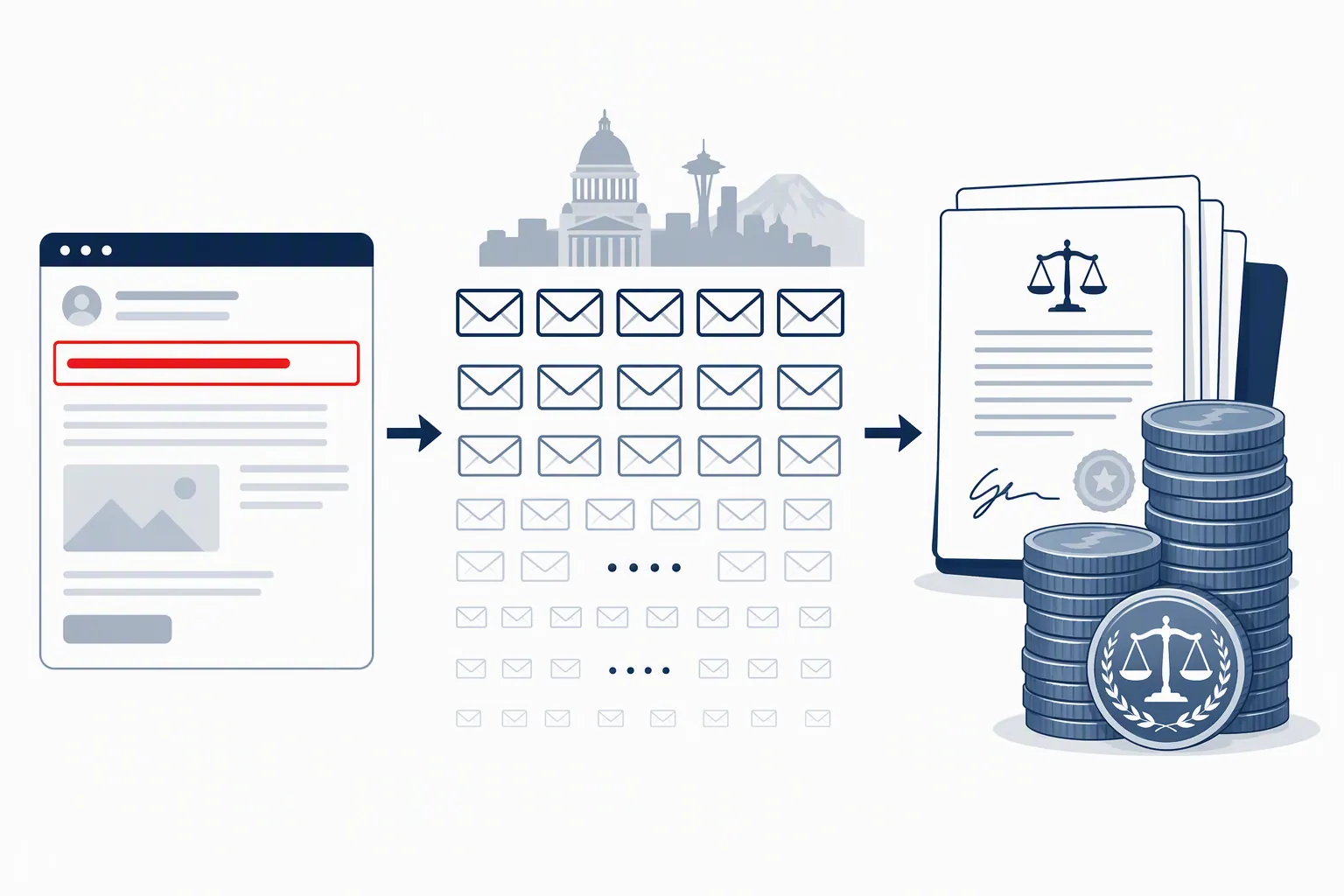
That is the part corporate counsel should not dismiss as a one-off consumer annoyance. A single subject-line template can be reused across segments, automatically resent, localized, or extended after a campaign changes. If the statute attaches damages to each allegedly unlawful email, then a small wording decision can scale with the mailing list rather than with the number of consumers who complain.
The settlement amount also has to be read against timing. The case was filed on June 2, 2025, and preliminary approval was granted on June 23, 2026. Reports indicate the settlement came before contested class certification and before summary judgment, which makes the $14 million fund a practical marker of assessed litigation risk rather than a post-trial damages calculation. [2]
There was also a procedural wrinkle. The original named plaintiff, Joseph Zydel, was reportedly replaced by Michael Aaland after Zydel’s Chapter 13 bankruptcy filing created settlement-approval risk. That detail does not change the alleged email-marketing conduct, but it is a useful reminder that class settlements are built from pleadings, representatives, releases, claims administration, fee requests, and judicial approval—not just a press-friendly dollar figure. [7]
What CEMA Changes for Marketing Review
For companies with Washington subscribers, the important compliance lesson is not that marketers should stop using deadlines. It is that deadline language needs to be true when sent, traceable after the fact, and reviewed when business teams extend a promotion. The risk often sits in the gap between the campaign calendar and the subject-line library.
A useful review process would look at the operational points where the mismatch can occur:
- Reusable subject-line templates that say “last day,” “final hours,” “ending soon,” or “only” without tying the phrase to a verified campaign end date.
- Automation rules that resend urgency emails after inventory, merchandising, or revenue teams extend the promotion.
- A/B test variants where legal reviewed the main version but not the winning subject line later deployed at scale.
- Seasonal playbooks copied year over year without checking whether the actual deal structure changed.
- Suppression and segmentation logic that identifies Washington recipients only after the campaign has already been approved.
The audit trail matters because the defense file usually has to be reconstructed later. Counsel will want to know who approved the subject line, what promotion terms existed at approval, whether the offer was extended, who approved the extension, and whether any follow-up email corrected or clarified the timing. None of that requires a hostile view of marketing. It requires accepting that high-volume promotional systems create legal records whether anyone names them that way internally or not.
A Narrow Checklist Before the Next Washington Send
A CEMA-specific checklist should be short enough for campaign teams to use and specific enough for counsel to defend. At minimum, it should force a documented answer to these questions before urgency language goes live:
- Does the subject line state or imply a deadline, scarcity limit, or exclusive time window?
- Is that deadline accurate for every recipient segment receiving the message?
- What happens to the subject line if the promotion is extended after approval?
- Can marketing operations identify Washington recipients before send approval, not only after deployment?
- Is there a record showing the offer terms that existed when the subject line was approved?
The Costco settlement does not establish that every extended promotion violates Washington law. It does show why “we always use that subject line” is not a comforting answer. Repetition is precisely what can turn copy into classwide exposure when a statutory damages mechanism applies email by email.
Do Not Confuse This Settlement With Other Costco Cases
Search results for Costco class actions also surface separate lawsuits involving protein powder lead or arsenic allegations, rotisserie chicken salmonella allegations, and tariff pass-through theories. Those matters are not the same case and should not be used to determine eligibility for this settlement. The settlement discussed here is the Washington commercial-email case arising from allegedly misleading promotional subject lines.
Where the Case Stands in Q3 2026
As of July 29, 2026, the Costco email settlement is preliminarily approved and awaiting a final approval hearing on October 2, 2026. Any payments remain conditional on final approval and the absence or resolution of later appellate issues. For potential claimants, that means eligibility and payment timing should be checked against official settlement notices. For companies with Washington subscribers, the case is already useful in a narrower way: it identifies subject-line truthfulness, promotion-extension controls, and Washington-specific review as concrete compliance work rather than optional copy polish. [1][2]
References
- Some Costco shoppers could qualify for cash in settlement payout, USA Today, July 24, 2026
- $14M Costco Settlement Resolves Class Action Lawsuit Over Promo Emails With Allegedly Misleading Subject Lines, ClassAction.org
- Costco reaches $14 million settlement over misleading promo emails, Quartz
- Costco $14 Million Commercial Email Class Action Settlement, Claim Depot
- Costco $14M settlement: Washington shoppers may receive up to $500, Fox Business
- Costco Just Settled a $14 Million Lawsuit Over Its Emails. Are You Owed Cash?, Inc.
- Costco Agrees to $14 Million Settlement Over Allegedly Misleading Marketing Email Subject Lines, ClassActionU
Related records
Tool profile
Browse tool evaluations →Governing regulation
Browse the obligations tracker →Preventive workflow
Browse verification workflows →
Report a correction or tip
Spotted an outdated figure, a misstated fact, or a ruling this case record should reflect? Public comments are disabled for this content given the professional cost of a misreported case outcome, penalty amount, or rule text — use the structured correction channel instead.
Report a correction or tip for this record →