
Which Recalled Egg Brands from July 2026 Qualify You to Sue
This article identifies the five egg brands recalled by Midwest Poultry Services in July 2026, along with exact UPCs and plant codes, and explains the documented illness, proof-of-consumption, and damage thresholds a claimant must meet to file a viable Salmonella lawsuit.
- Jurisdiction
- US Federal
- Court
- State courts (potential)
- AI tool named
- None
- Ruling date
- Jul 24, 2026
- Source document
- View primary court order ↗
- Last verified
- Jul 25, 2026
Lex Machina Review is an independent risk-tracking and reference resource. Nothing on this site is legal advice, and using it does not create an attorney-client relationship. Every record is reviewed against primary sources but may not reflect the most current status of a matter — always verify directly against the cited court order, rule text, or a licensed attorney before relying on it.
Companion explanation — secondary to the source document above
Last verified: July 25, 2026. This is a legal-risk reference, not legal advice. For the July 2026 Midwest Poultry Services egg recall, buying a recalled brand is not the same thing as having a viable lawsuit. The first screen is narrower: did the eggs you bought or consumed fall inside the recalled brand-and-code universe, and can any later Salmonella illness be tied to that product with documents rather than memory?
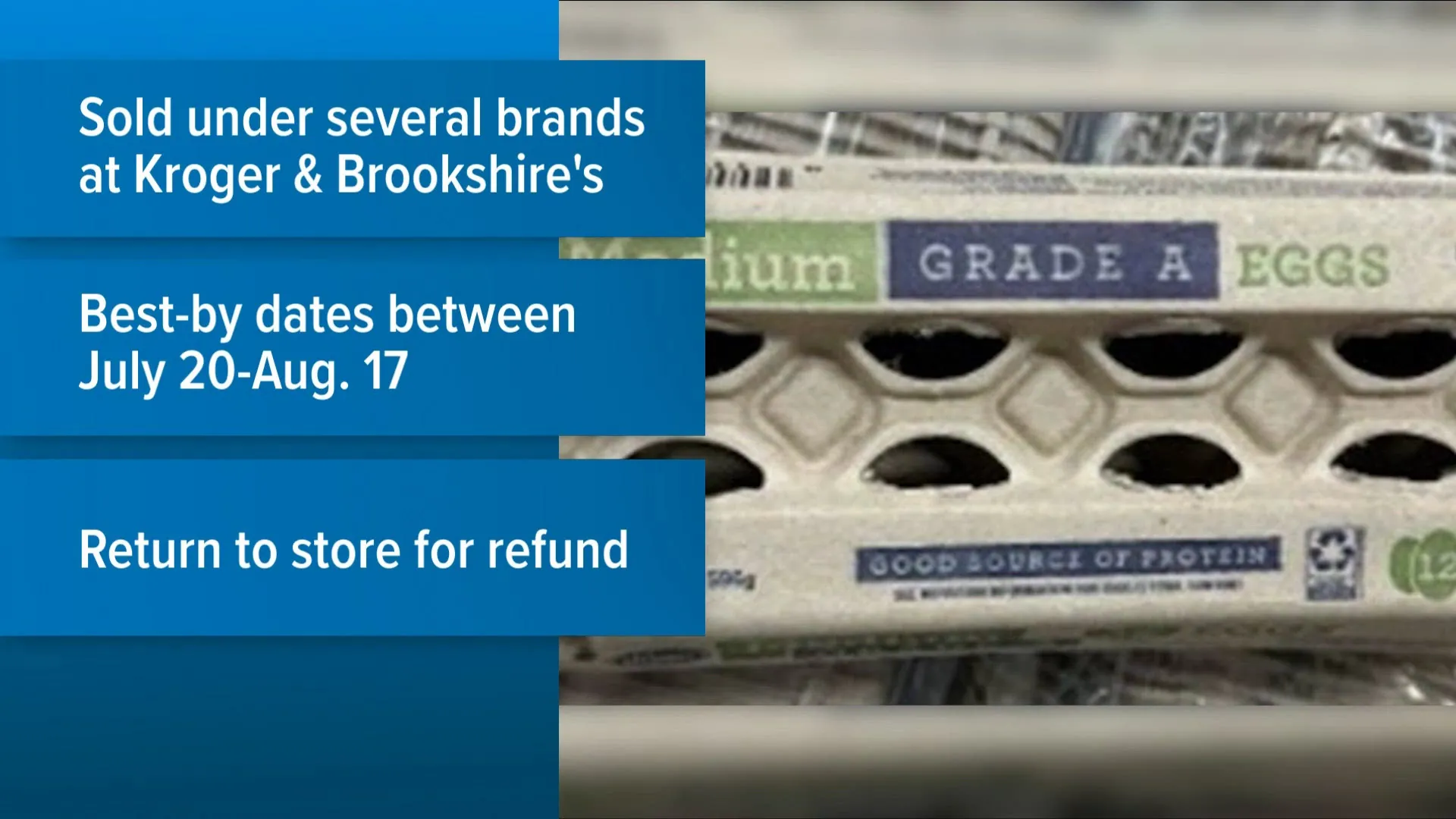
The recall covers 1,589,577 dozen shell eggs distributed under five brand names in Texas, Oklahoma, Louisiana, Arkansas, New Mexico, and Mississippi, according to the FDA recall notice issued for Midwest Poultry Services LP.[1] The identifiers matter more than the brand name alone.
Recalled Egg Brands and Codes To Check First
| Brand | UPC / package identifier | Plant codes | Julian dates | Sell-by dates | Distribution states |
|---|---|---|---|---|---|
| Kroger | Affected UPCs are identified in the FDA recall notice; match the carton or receipt record to the notice before treating the product as recalled. | P-1950; 0840962 | 157-184 | July 20-August 17, 2026 | TX, OK, LA, AR, NM, MS |
| Simple Truth | Affected UPCs are identified in the FDA recall notice; match the carton or receipt record to the notice before treating the product as recalled. | P-1950; 0840962 | 157-184 | July 20-August 17, 2026 | TX, OK, LA, AR, NM, MS |
| Brookshire's | Affected UPCs are identified in the FDA recall notice; match the carton or receipt record to the notice before treating the product as recalled. | P-1950; 0840962 | 157-184 | July 20-August 17, 2026 | TX, OK, LA, AR, NM, MS |
| Country Morning | Affected UPCs are identified in the FDA recall notice; match the carton or receipt record to the notice before treating the product as recalled. | P-1950; 0840962 | 157-184 | July 20-August 17, 2026 | TX, OK, LA, AR, NM, MS |
| Sunups | Affected UPCs are identified in the FDA recall notice; match the carton or receipt record to the notice before treating the product as recalled. | P-1950; 0840962 | 157-184 | July 20-August 17, 2026 | TX, OK, LA, AR, NM, MS |
If the carton is gone, the claim does not automatically collapse, but the proof burden gets heavier. A loyalty-card purchase history, grocery receipt, delivery order record, photograph of the carton, or refrigerator inventory photo can help reconstruct product proof. A statement that someone bought eggs at a Kroger-family store, without a date, brand, UPC, plant code, or package record, is a weak starting point.
The Three Gates for a Viable Salmonella Egg Claim
A serious claim usually has to pass three gates: infection proof, product proof, and damages. Those are not formal magic words; they are the practical intake screens that separate a recoverable food-poisoning file from an understandable but unprovable illness story.
1. Infection proof
The strongest file starts with a stool culture, blood test, or other medical record confirming Salmonella, and preferably confirmation that the isolate matches the outbreak strain. General gastrointestinal symptoms after eating eggs may justify medical attention, but symptoms alone do not prove a lawsuit. Marler Clark describes Salmonella compensation claims around confirmed illness and resulting losses, not merely exposure to a recalled food.[3] Pritzker Hageman similarly frames Salmonella lawsuits around proof of infection, source tracing, and damages.[4]
The medical record should answer basic questions cleanly: when symptoms began, when the patient sought care, what test was ordered, what organism was identified, and whether the health department or laboratory performed strain matching. If the person was never tested, the case may still deserve review in unusual circumstances, but it starts at a disadvantage.
2. Product proof
Product proof means more than remembering eggs were in the kitchen. The recalled universe is tied to five brands, the affected UPCs in the FDA notice, plant codes P-1950 and 0840962, Julian dates 157-184, and sell-by dates from July 20 through August 17, 2026.[1] A carton matching those identifiers is useful. A receipt plus store records may be useful. A discarded carton and a vague brand memory leave a lawyer trying to prove the most important fact without the object that proves it.
Consumption matters too. Someone who bought recalled eggs and threw them away may have a refund issue, not a Salmonella injury case. The litigation question is whether the person who became ill consumed eggs that can be connected to the recalled production identifiers.
3. Damages
The third gate is damages: emergency care, hospitalization, physician visits, lab testing, prescriptions, lost wages, missed work, childcare costs caused by the illness, or lasting symptoms that can be described and documented. Food-poisoning lawyers commonly evaluate recoverable losses through medical expenses, wage loss, pain and suffering, and related consequences of the confirmed infection.[3][4]
That does not mean every viable case involves a hospital stay. It does mean a claimant should be able to show something more concrete than anxiety after reading a recall notice. The person who was hospitalized, missed work, and now has lab results, discharge papers, and a grocery record is in a different position from the person who bought a recalled carton but never became ill.
What the FDA Outbreak Numbers Do and Do Not Prove
As of the FDA's July 24, 2026 outbreak update, investigators reported 98 confirmed Salmonella Enteritidis illnesses in 17 states, 26 hospitalizations, and no deaths. Illness onset dates ranged from November 21, 2025, through June 30, 2026, and 91% of interviewed ill people reported eating eggs before becoming sick.[2]
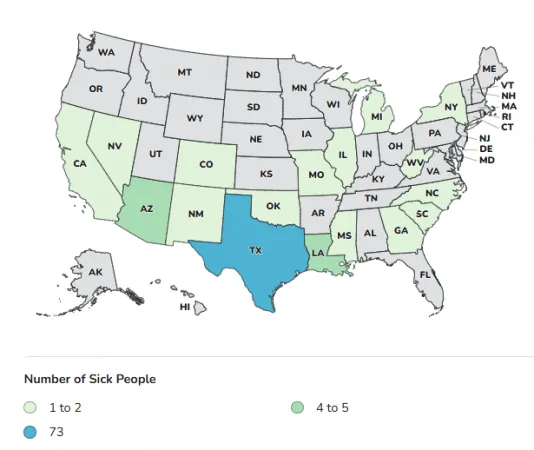
Those numbers explain why the recall has moved beyond ordinary refund administration. They do not prove that any one shopper's illness came from a Midwest Poultry carton. Outbreak counts are population-level evidence. Lawsuit eligibility still turns on the individual file: the patient's lab result, the eggs consumed, the timing, and the losses.
The 91% egg-consumption figure is also not the same as proof that every interviewed patient ate a recalled Kroger, Simple Truth, Brookshire's, Country Morning, or Sunups product. It means most interviewed ill people reported egg exposure during the investigation window.[2] That is useful context for investigators and lawyers, but it still has to be narrowed to a product source.
The Causation Problem That Cannot Be Skipped
The FDA's caveat is important: Midwest Poultry Services "does not account for all the illnesses in this outbreak."[2] That sentence should stop anyone from treating the recall list as an automatic plaintiff list.
There is also a timing problem. The recalled production window runs from Julian dates 157-184, corresponding to June 6 through July 3, 2026, while the FDA lists illness onset dates beginning November 21, 2025.[1][2] Some reported illnesses therefore predate the recalled production window. Those earlier cases may be part of the outbreak investigation, but they are not automatically cases against the recalled Midwest Poultry products identified in the July 22 recall.
For screening purposes, that means timing must be tested, not assumed. A claimant who became sick before the recalled eggs could plausibly have been purchased faces a causation problem. A claimant who ate a coded carton within a medically plausible window before a lab-confirmed Salmonella Enteritidis illness has a cleaner file, though still not a guaranteed case.
Documents Worth Preserving Before a Lawyer Reviews the File
- Photographs of the carton showing brand, UPC, plant code, Julian date, and sell-by date.
- Receipts, grocery-app records, delivery confirmations, loyalty-card histories, or bank records showing the egg purchase.
- Medical records showing Salmonella testing, diagnosis, treatment dates, hospitalization, prescriptions, and discharge instructions.
- Health department communications, lab reports, or strain-matching notices if the isolate was linked to the outbreak.
- Employment records, pay stubs, or employer notes showing missed work and lost wages.
- A short timeline of egg purchase, egg consumption, symptom onset, medical care, test results, and recovery or continuing symptoms.
The timeline should be ordinary and exact. It does not need drama. It needs dates that can be compared against the recall window, the incubation period considered by medical reviewers, and the onset date in the medical chart.
Current Litigation Posture as of July 25, 2026
The litigation posture is still early. Schmidt Firm PLLC has opened intake for potential Kroger egg recall lawsuits tied to the Midwest Poultry recall, which signals that plaintiff-side screening has begun.[5] That intake page is not proof that any individual claimant qualifies, and it is not evidence that a class action has been certified.
No settlement, certified class, or universal filing deadline should be assumed from the present record. Statutes of limitation vary by state, and the FDA investigation remains open. The safer practical view is narrower: as of July 25, 2026, a claimant is not eligible to sue merely because they bought Kroger, Simple Truth, Brookshire's, Country Morning, or Sunups eggs. The viable file is the one where lab results, carton or purchase codes, timing, and damages can survive a causation review.
References
- Midwest Poultry Services LP Recalls Shell Eggs Due to Possible Salmonella Enteritidis Contamination, FDA.
- Outbreak Investigation of Salmonella: Eggs, July 2026, FDA.
- Who Can Seek Compensation from Salmonella Food Poisoning?, Marler Clark.
- Salmonella Lawsuit, Pritzker Hageman.
- Kroger Egg Recall Lawsuit, Schmidt Firm PLLC.
Related records
Tool profile
Browse tool evaluations →Governing regulation
Browse the obligations tracker →Preventive workflow
Browse verification workflows →
Report a correction or tip
Spotted an outdated figure, a misstated fact, or a ruling this case record should reflect? Public comments are disabled for this content given the professional cost of a misreported case outcome, penalty amount, or rule text — use the structured correction channel instead.
Report a correction or tip for this record →