
Why Did the Reflecting Pool Vandalism Case Collapse?
The Reflecting Pool case record explains why the felony indictment against David Hearn collapsed despite the public vandalism narrative: the government's dismissal motion admitted the pool liner was destroyed by a rushed, botched contractor installation, and its own grand jury witness could not tie Hearn to the damage or the $1,000 threshold. Readers get a verified, primary-source-linked account that separates what the court record shows from what was reported.
- Jurisdiction
- United States (District of Columbia)
- Court
- D.C. Superior Court
- AI tool named
- None
- Ruling date
- Jul 31, 2026
- Source document
- View primary court order ↗
- Last verified
- Aug 2, 2026
Lex Machina Review is an independent risk-tracking and reference resource. Nothing on this site is legal advice, and using it does not create an attorney-client relationship. Every record is reviewed against primary sources but may not reflect the most current status of a matter — always verify directly against the cited court order, rule text, or a licensed attorney before relying on it.
Companion explanation — secondary to the source document above
Case status and source checks
| Item | Verified record |
|---|---|
| Case | United States v. Hearn, D.C. Superior Court criminal case record. |
| Current posture | The U.S. Attorney’s Office moved on July 31, 2026, to dismiss the felony case; the court granted dismissal without prejudice. [1][2] |
| Charge analyzed here | One reported felony count of malicious destruction of property. The relevant D.C. malicious-destruction statute treats damage of $1,000 or more as the felony threshold and carries a maximum imprisonment term of 10 years. [1][3] |
| What dismissal means | Dismissal without prejudice ended this prosecution in its current form but did not adjudicate Hearn’s innocence or bar every possible later filing. [2] |
| Last verified | Aug. 2, 2026, UTC. |
| Record note | This is a non-AI companion case record included for confirmed-vs.-reported and evidence-verification purposes. |
The short answer is procedural before it is political: the felony case collapsed because the government could not prove that David Hearn caused the relevant damage or that any damage attributable to him met the $1,000 felony threshold. More damaging to the indictment, the government’s own dismissal motion said the decisive liner damage was “the result of a botched installation and not vandalism,” and that the Department of the Interior had provided “less than fulsome information.” The motion added that, had DOI been forthcoming, “the government would not have sought a grand jury indictment.” [1]
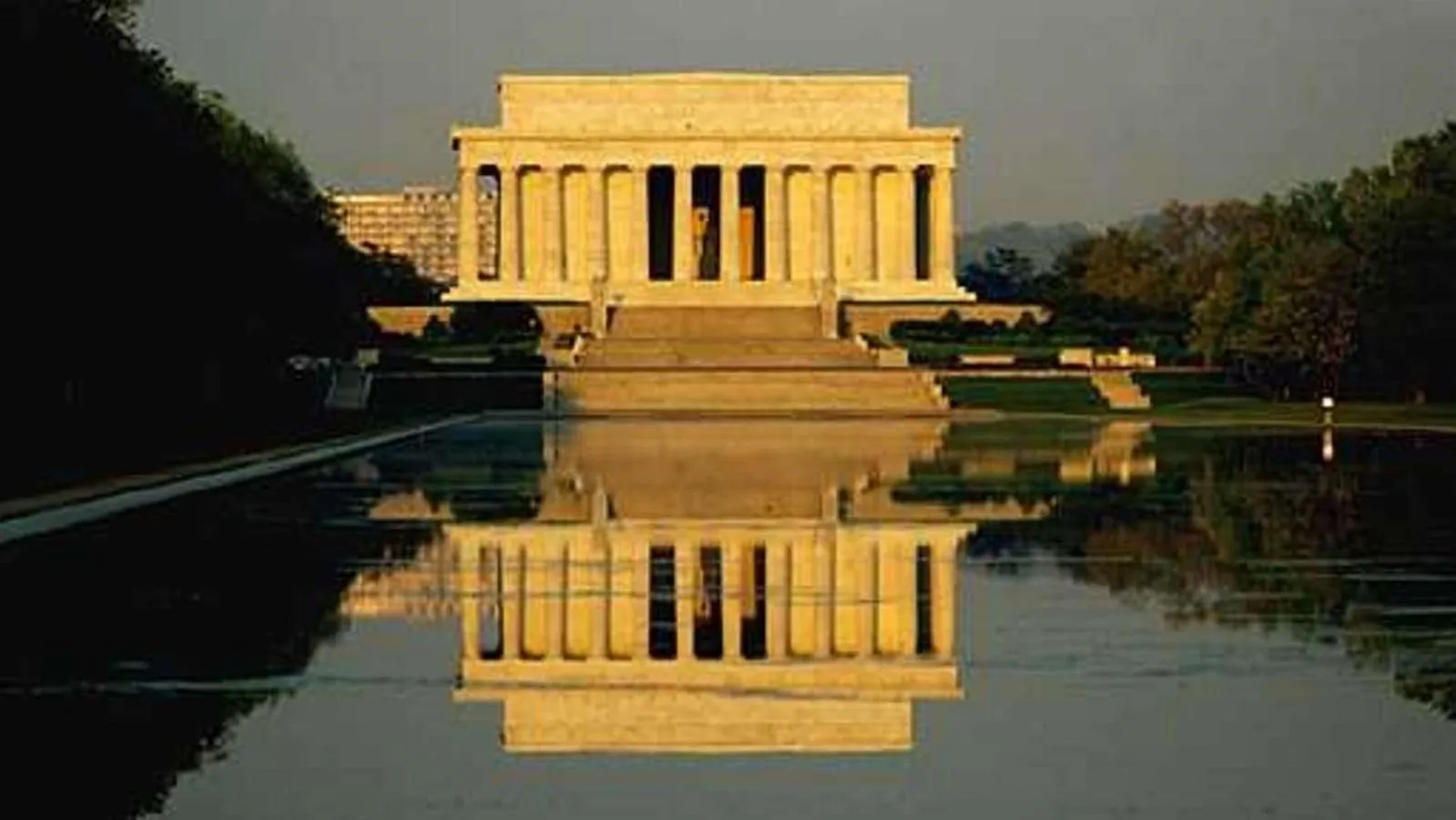
That is not an acquittal. It is not a judicial finding that Hearn did nothing. It is a record showing that a public vandalism narrative hardened before the charging agency’s account could survive the ordinary questions a felony property case has to answer: what was damaged, who damaged it, when did the damage occur, and how much damage can be attributed to the accused person.
The felony problem was causation, not publicity
A malicious-destruction charge does not become a felony merely because a public asset is important or because a repair bill is expensive. Under the D.C. provision at issue, the felony line turns on property damage of $1,000 or more. [3] For this indictment to hold, the government needed evidence tying Hearn to damage meeting that threshold.
The July 31 motion to dismiss said the government could not prove causation beyond a reasonable doubt. It described a Reflecting Pool liner that had been compromised by a rushed and defective installation, not by the act that had been publicly described as vandalism. The motion also noted damage “even in the middle of the pool, where a vandal would not likely attempt to peel the lining,” a detail that matters because it points away from a person standing at the accessible edge and toward a broader installation failure. [1]
The damage testimony created the same problem from another direction. Reporting on the grand jury record described the government’s damages witness, a National Park Service official, as acknowledging substantial preexisting damage and being unable to quantify any specific damage caused by Hearn. The official also testified, as reported, that repairs in the range of $6,000 to $15,000 would have been required regardless of what Hearn did. [4][5][6]
That distinction is the legal center of the case. The existence of damage to the Reflecting Pool is one proposition. Proof that this defendant caused felony-level damage is another. The government’s later filing effectively conceded that the second proposition was not provable on the evidence it had.
Why repairs that would have happened anyway mattered
The repair estimate was not enough by itself. If the pool liner already required repairs costing thousands of dollars, that does not automatically establish that Hearn caused thousands of dollars in additional loss. In a threshold felony case, the difference between “the repair cost was high” and “the defendant caused at least $1,000 in damage” is not a technicality; it is an element problem.
The defense filings attacked that gap directly. Hearn’s counsel sought grand jury materials and alleged irregularities, arguing that the indictment was difficult to explain in light of the damage testimony. Those are defense allegations, not judicial findings. The case was dismissed before the court resolved them. [7]
The timeline makes the collapse less surprising

The case did not fall apart because one late filing invented a new theory. The dates line up in a way that made the indictment vulnerable once the underlying documents surfaced.
| Date | Record significance |
|---|---|
| June 11, 2026 | An NPS engineer emailed colleagues about peeling liner more than a week before Hearn’s arrest, and on the same day fencing was removed, according to reporting on the records. [8][9] |
| June 19, 2026 | Hearn was arrested after touching a peeling piece of liner during a bike ride; AP reported he was detained for five hours and initially arrested on a misdemeanor destruction-of-government-property charge. [4] |
| July 2, 2026 | U.S. Attorney Jeanine Pirro announced the indictment at a press conference alongside Interior Secretary Doug Burgum. [10] |
| July 27–28, 2026 | Defense counsel filed motions seeking grand jury transcripts and alleging irregularities in the charging presentation. [7] |
| July 31, 2026 | The government moved to dismiss, saying DOI had not been fully forthcoming and that the damage was caused by a botched installation rather than vandalism; the court granted dismissal without prejudice. [1][2] |
The June 11 email is important because it predates the arrest. It does not, by itself, prove that Hearn caused no damage. It does show that the liner’s failure was already visible inside the government before the event became a criminal case against him.
The July 31 motion then supplied the missing institutional admission. The government did not merely say its proof had become inconvenient. It said the charging agency had failed to provide complete information and that the prosecution would not have sought the indictment had it received that information earlier. [1]
What the public vandalism account added, and what it could not prove
The case became publicly legible as vandalism before the court record could support that label. The July 2 press conference framed the matter as damage to a national landmark, and the setting — the Lincoln Memorial Reflecting Pool, a former Olympic athlete, a new U.S. attorney, and a cabinet secretary — made the charge easy to repeat. [10]
Public descriptions of the damage then moved faster than the proof. CNN reported shifting claims about long gashes, slashes, and possible tools, while the later dismissal motion focused on liner failure, installation problems, preexisting damage, and an inability to attribute felony-level loss to Hearn. [9][1]
The public account matters here only to the extent that it shows the distance between “reported vandalism” and “provable felony.” A press conference can announce a charge; it cannot supply causation. A repair bill can show that something needed fixing; it cannot, without attribution, satisfy the statutory threshold against a particular defendant.
Nor was Hearn the only person swept into the broader Reflecting Pool enforcement story. CNN reported on July 8 that three additional people had been charged with misdemeanors related to alleged damage at the pool. Their cases do not resolve Hearn’s felony record, and the status of those matters is outside the proof that caused this indictment to collapse. [11]
The grand jury issue remains an allegation, not a ruling
The defense’s grand jury challenge should not be inflated into a judicial holding. Hearn’s lawyers alleged that the grand jury presentation was misleading or irregular and sought transcripts to test what prosecutors had presented. The dismissal arrived before the court adjudicated those allegations. [7]
That unresolved posture matters because the strongest available record is still the government’s own dismissal motion, not an order finding misconduct. The motion is enough to explain why the felony case could not proceed: the government acknowledged incomplete information from DOI, preexisting and installation-caused damage, and a causation gap that made proof beyond a reasonable doubt unavailable. [1]
What is left unresolved
The dismissal order ended the indictment without prejudice. That posture leaves several things unproved or undecided: no final merits ruling on Hearn’s innocence, no adjudication of the defense’s grand jury allegations, no resolved contractor liability, and no sourced conclusion about any civil remedy Hearn might pursue. [2][7]
The reliable conclusion is narrower and more useful. The record does not prove Hearn was innocent. It shows that the government’s felony case was not provable on the evidence it had, and that the public vandalism narrative had traveled well beyond the primary record before the case was dismissed.
References
- Hearn dismissal motion — DocumentCloud
- Motion to Dismiss - United States v. Hearn, incl. order granting dismissal without prejudice — MS Now
- D.C. Code § 22-303 — D.C. Law Library
- Ex-Olympian charged with damaging Reflecting Pool sees 'irregularities' in grand jury proceedings — AP News
- Reflecting Pool damaged before Olympian allegedly entered it, witness testifies — USA Today
- Reflecting Pool case: Witness conceded damage before Olympic canoeist Davey Hearn touched water — NBC News
- Hearn filing — DocumentCloud
- How the Reflecting Pool Vandalism Case Fell Apart — The Atlantic
- Justice Dept. admits Reflecting Pool renovation was 'hasty and botched,' drops case against former Olympian — CNN
- U.S. Attorney Jeanine Pirro announces charges related to vandalism of Reflecting Pool — C-SPAN
- Three people charged with damaging Reflecting Pool — CNN
Related records
Tool profile
Browse tool evaluations →Governing regulation
Browse the obligations tracker →Preventive workflow
Browse verification workflows →
Report a correction or tip
Spotted an outdated figure, a misstated fact, or a ruling this case record should reflect? Public comments are disabled for this content given the professional cost of a misreported case outcome, penalty amount, or rule text — use the structured correction channel instead.
Report a correction or tip for this record →