
Rogoff v. Trump tests presidential firing power over U.S. attorneys
This verified case record documents the complete details of Rogoff v. Trump, the first lawsuit challenging the president's authority to fire a court-appointed U.S. attorney. It provides the factual timeline, legal claims, procedural posture, and related cases for practitioners assessing DOJ leadership risk.
- Jurisdiction
- US Federal
- Court
- U.S. District Court for the Western District of Washington
- Judge
- Stanley A. Bastian
- AI tool named
- None
- Ruling date
- Jul 21, 2026
- Source document
- View primary court order ↗
- Last verified
- Jul 25, 2026
Lex Machina Review is an independent risk-tracking and reference resource. Nothing on this site is legal advice, and using it does not create an attorney-client relationship. Every record is reviewed against primary sources but may not reflect the most current status of a matter — always verify directly against the cited court order, rule text, or a licensed attorney before relying on it.
Companion explanation — secondary to the source document above
Verified Case Posture
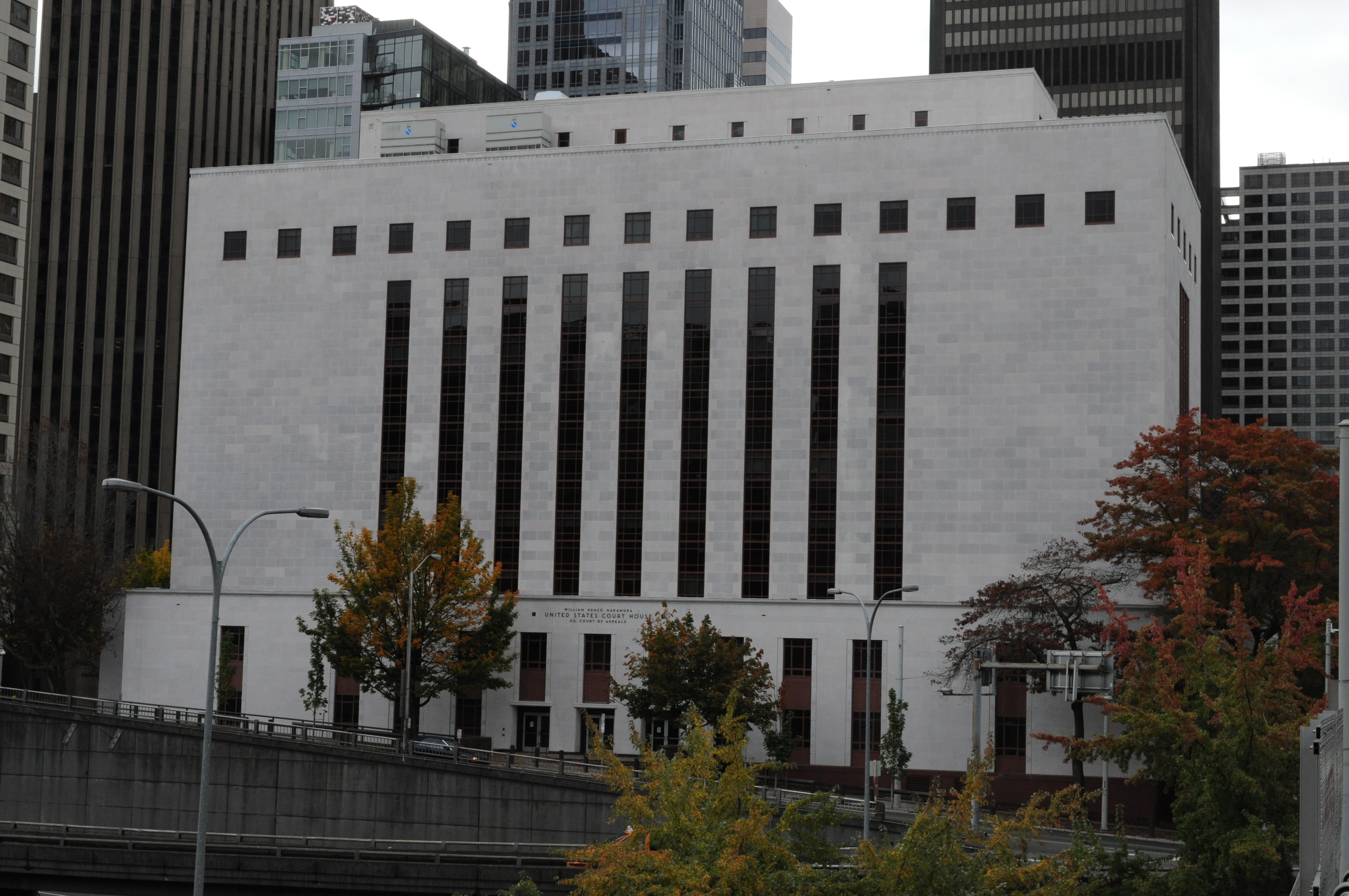
The case people are searching for as the “Roger Rogoff lawsuit against Todd Blanche” is captioned Rogoff v. Trump, No. 2:26-cv-02566, in the U.S. District Court for the Western District of Washington. It was filed on July 21, 2026. The defendants are Donald J. Trump in his personal capacity, the U.S. Department of Justice, and Todd Blanche in his official capacity as Acting Attorney General—not Blanche personally and not Blanche as the sole defendant.[1]
| Item | Verified record as of July 25, 2026 |
|---|---|
| Case | Rogoff v. Trump, No. 2:26-cv-02566, W.D. Wash.[1] |
| Filed | July 21, 2026.[1] |
| Plaintiff | Roger Rogoff, former court-appointed U.S. Attorney for the Western District of Washington.[1][2] |
| Defendants | Donald J. Trump, personal capacity; U.S. Department of Justice; Todd Blanche, official capacity as Acting Attorney General.[1] |
| Initial judge | Judge Ricardo S. Martinez, W.D. Wash.; recused July 22, 2026.[1] |
| Current judge | Judge Stanley A. Bastian, E.D. Wash., sitting by Ninth Circuit general designation.[1] |
| Pending motion | Motion for preliminary injunction filed July 21, 2026; noting date August 18, 2026.[1] |
| Current status | No preliminary-injunction ruling reflected in the verified record as of July 25, 2026.[1] |
The source hierarchy matters here. The docket supplies the case number, party structure, assignment history, motion filing, and noting date. The complaint and supporting materials are available through the docket, but the complaint PDF and the six supporting declarations with more than 40 exhibits were not machine-readable in the reviewed materials. For that reason, the legal-claim descriptions below rely on the docket for filing posture and on contemporaneous reporting that described the complaint’s allegations.[1][3]
The 54-Minute Sequence
The factual sequence is short enough to look theatrical and formal enough to create a serious appointment problem. On July 15, 2026, the district judges of the Western District of Washington unanimously appointed Rogoff as U.S. Attorney after the district had gone without a Senate-confirmed U.S. Attorney since 2023. He was sworn in and, according to the Associated Press account, fired by email from the White House Presidential Personnel Office within 54 minutes—before he could reach his office.[2]
That timing is not just a color fact. It is the event that makes the statutory question concrete: once the 120-day interim period had expired and the district judges used 28 U.S.C. § 546(d) to make a court appointment, could the president terminate that court-appointed U.S. Attorney immediately, leaving executive leadership to substitute a different arrangement?
Blanche’s public posts are part of why the case has drawn attention, but they should be read as public statements of the government’s position, not as a substitute for briefing. Before the firing, The Hill reported that Blanche posted on X that candidates without “the support of POTUS” would “suffer the same fate as others have.” After the firing, he posted: “District court judges can appoint a temporary U.S. Attorney, and POTUS can fire them.”[4] PBS NewsHour also reported Blanche’s post-firing statement and Rogoff’s discussion of the episode.[5]
DOJ’s public position was similarly direct. A spokesperson told AP that, “consistent with other firings of this type, this is wholly within the President’s authority.”[2] That is the government theory the preliminary-injunction record will have to support in legal terms.
Docket Timeline
| Date | Event | Why it matters |
|---|---|---|
| 2023 | Western District of Washington had no Senate-confirmed U.S. Attorney from this point forward, according to AP’s account. | The absence of a confirmed U.S. Attorney sets up the statutory pathway under 28 U.S.C. § 546.[2] |
| July 15, 2026 | Western District of Washington judges unanimously appointed Rogoff as U.S. Attorney. | This is the court appointment the complaint says the president could not nullify.[2] |
| July 15, 2026 | Rogoff was sworn in and fired by White House Presidential Personnel Office email within 54 minutes. | The compressed firing sequence is the operative factual trigger, not merely a political anecdote.[2] |
| Before and after firing | Blanche posted on X that candidates without POTUS support would suffer the same fate and later that district judges can appoint a temporary U.S. Attorney and POTUS can fire them. | The posts give unusually plain public language for the executive-branch authority position.[4][5] |
| July 21, 2026 | Rogoff filed suit in W.D. Wash. and moved for a preliminary injunction. | The case became a live challenge to the firing rather than a personnel dispute resolved inside DOJ.[1] |
| July 22, 2026 | Judge Ricardo S. Martinez recused. | The recusal removed the initial W.D. Wash. judge from the case.[1] |
| After July 22, 2026 | Judge Stanley A. Bastian of the Eastern District of Washington was reassigned under a Ninth Circuit general designation. | A judge outside the Western District now controls the preliminary-injunction schedule.[1] |
| August 18, 2026 | Preliminary-injunction motion noting date. | As of July 25, the motion is pending and no ruling has issued.[1] |
The reassignment deserves more attention than the usual early-case housekeeping note. In a case about district judges’ statutory appointment power, the initial recusal by a Western District judge and reassignment to Judge Bastian reduce one obvious institutional tension. They do not decide the merits. They do, however, affect how practitioners should read the next docket event: the August 18 noting date is the operative near-term marker, not any public statement by the parties.
What Rogoff Says the Firing Violated
The complaint is reported to plead four main theories: violation of the Vacancies Act, violation of the Appointments Clause, separation of powers, and due process. USA Today described the complaint as alleging that the president lacked statutory authority to nullify a district court’s appointment under 28 U.S.C. § 546(d), that the firing circumvented Senate advice and consent, that it eliminated a judicial-branch appointment function Congress assigned to the district court, and that the action was arbitrary and capricious.[3]
The statutory theory is the first practical issue. Section 546 allows the Attorney General to appoint an interim U.S. Attorney for a limited period. When that interim period expires without a Senate-confirmed successor, subsection (d) allows the district court to appoint a U.S. Attorney to serve until the vacancy is filled. Rogoff’s position, as reported, is that once the judges acted under that provision, the president could not erase the court’s appointment by immediate firing and thereby defeat the statutory sequence Congress created.[3]
The Appointments Clause theory addresses a different but related defect. If the executive can repeatedly bypass Senate confirmation, use interim appointments, wait out the statutory period, and then fire the court-appointed officer who follows, the ordinary advice-and-consent channel may become less meaningful in practice. That is a structural claim, not simply Rogoff’s employment grievance.
The separation-of-powers claim is the one most likely to matter outside Washington state. Congress gave district judges a defined appointment role for a specific vacancy condition. Rogoff’s case asks whether the president’s removal power includes the power to make that judicial appointment role functionally ineffective. If the answer is yes, the court appointment is temporary in a much thinner sense than many lawyers have assumed. If the answer is no, executive-branch leadership decisions made after the 120-day period may require a different statutory footing.
The due-process theory is narrower in the immediate record. Reporting describes it as an arbitrary-and-capricious challenge to the firing decision.[3] Without readable access to the full complaint text and declarations, it would be too strong to say how much independent work that claim will do at the preliminary-injunction stage.
Why Federal Litigators Should Track It
This record belongs in litigation-risk tracking because the remedy question can reach beyond one officeholder. The research materials identify eight districts currently without confirmed U.S. Attorneys. If a court concludes that a presidential firing of a court-appointed U.S. Attorney was unlawful, the next questions will be what happens to indictments, subpoenas, plea papers, civil enforcement filings, notices of appeal, settlements, and internal authorizations signed or supervised under the disputed leadership structure.
That does not mean every federal filing in those districts is automatically defective. Appointment challenges usually turn on the officer, the act taken, the source of delegated authority, the timing, the remedy sought, and whether a party preserved the objection. But the work product risk is real enough that defense counsel and civil litigants will be expected to ask basic docket questions now, not after a merits ruling makes the issue obvious.
- Identify whether the relevant district has a Senate-confirmed U.S. Attorney, an Attorney General interim appointee, or a court-appointed U.S. Attorney.
- Check the date the interim term began and whether the 120-day period had expired before the disputed action.
- Record who signed or authorized the indictment, subpoena, complaint, settlement, appeal, or declination-related filing.
- Separate public statements about presidential authority from filed legal arguments and docket orders.
- Preserve objections without overstating what Rogoff has already decided; as of July 25, 2026, it has decided nothing on the merits.
The pending preliminary-injunction motion is therefore not just a personnel remedy request. It is the first scheduled point at which a federal court may address whether a court-appointed U.S. Attorney remains protected from immediate presidential displacement after the interim appointment period has run.
Relief Sought and Legal Team
Rogoff moved for a preliminary injunction on the day he filed the complaint. The docket reflects six supporting declarations and more than 40 exhibits associated with the preliminary-injunction materials, with the motion noted for August 18, 2026.[1] Law360 also reported on the preliminary-injunction posture and the broader practitioner concern that DOJ leadership disputes can spill into challenges to the validity of prosecutions and civil filings.[6]
The plaintiff’s team includes Jason Rittereiser as local counsel and Donald B. Verrilli Jr., the former U.S. Solicitor General, with Munger Tolles & Olson.[1] That composition does not predict the outcome, but it is a useful signal that the case has been framed as a structural federal-courts dispute rather than only a wrongful-removal narrative.
Adjacent Authority Disputes
Rogoff is not developing in isolation. The complaint cites other disputes over U.S. Attorney authority, including the Eastern District of Virginia dismissal of charges against James Comey and Letitia James based on the alleged unlawful appointment of Lindsey Halligan, the Third Circuit’s ruling in Habba v. Trump, and the Northern District of New York ruling involving Sarcone.[7][8]
Those matters are adjacent, not interchangeable. Halligan, Habba, Sarcone, and Rogoff all concern authority to occupy or exercise U.S. Attorney functions, but Rogoff presents the narrower firing question after a court appointment under § 546(d). The distinction matters because a court could accept or reject the Rogoff theory without resolving every challenge to interim U.S. Attorney service in other districts.
The Washington Post material available for review was truncated, so it is used here only for the limited point that the complaint placed those related disputes in the same field of appointment-authority litigation.[7] It is not treated as an independently verified account of the full case analysis.
What Is Still Undecided
As of July 25, 2026, Judge Bastian has not ruled on the preliminary-injunction motion. The docket posture is early: complaint filed, preliminary-injunction motion filed, initial judge recused, case reassigned, motion noted for August 18.[1] No merits ruling should be inferred from the speed of the firing, Blanche’s posts, DOJ’s public statement, or the reassignment.
The cleanest current characterization is also the most useful one for lawyers: Rogoff v. Trump is the first live test of whether the president may fire a U.S. Attorney appointed by district judges under 28 U.S.C. § 546(d) after the interim period expires without Senate confirmation. Until the preliminary-injunction record moves, the risk is not a holding; it is an unresolved challenge to the authority behind federal litigation decisions in districts without confirmed U.S. Attorneys.
References
- CourtListener docket for Rogoff v. Trump, CourtListener.
- AP News report on Rogoff firing and DOJ position, AP News, July 21, 2026.
- USA Today report on Rogoff filing and legal claims, USA Today, July 21, 2026.
- The Hill report on Todd Blanche posts and Rogoff lawsuit, The Hill, July 21, 2026.
- PBS NewsHour report and transcript on Rogoff interview and Blanche statement, PBS NewsHour, July 21, 2026.
- Law360 analysis on Rogoff preliminary injunction and practitioner risk, Law360, July 21, 2026.
- Washington Post report on related U.S. Attorney authority disputes, The Washington Post, July 21, 2026.
- ABC News report on Habba and Sarcone related appointment rulings, ABC News.
Related records
Tool profile
Browse tool evaluations →Governing regulation
Browse the obligations tracker →Preventive workflow
Browse verification workflows →
Report a correction or tip
Spotted an outdated figure, a misstated fact, or a ruling this case record should reflect? Public comments are disabled for this content given the professional cost of a misreported case outcome, penalty amount, or rule text — use the structured correction channel instead.
Report a correction or tip for this record →