
Which product liability claims stick in the Rohto eye drops recall?
This analysis evaluates the strongest product liability theories for the Rohto eye drops recall — manufacturing defect, failure-to-warn, and design defect — and discusses procedural hurdles including jurisdiction, statute of limitations, and the first-mover window created by the absence of any filed class action or MDL as of late July 2026.
- Jurisdiction
- United States
- Court
- Federal court
- AI tool named
- None
- Ruling date
- Mar 31, 2026
- Source document
- View primary court order ↗
- Last verified
- Jul 30, 2026
Lex Machina Review is an independent risk-tracking and reference resource. Nothing on this site is legal advice, and using it does not create an attorney-client relationship. Every record is reviewed against primary sources but may not reflect the most current status of a matter — always verify directly against the cited court order, rule text, or a licensed attorney before relying on it.
Companion explanation — secondary to the source document above
Start with the posture, not the headline number
Anyone arriving through a “rohto eye drops recall product liability law 2025” search should start with the corrected record posture: the public materials worth pleading now concern the 2026 Rohto Cooling Eye Drops recall, and they do not yet look like an eye-drop mass tort with confirmed infection counts. The recall is large — reported at roughly 12.46 million bottles nationwide — and the lot-number marker “V” points to Vietnam-manufactured product, but the FDA classification described in public recall coverage is Class II, meaning the agency is treating the risk as one involving temporary or medically reversible adverse health consequences rather than the most severe recall tier.[1]
That combination matters. A lack of sterility assurance is a serious manufacturing record, especially for an ophthalmic product that consumers place directly into the eye. But as of July 30, 2026, the public recall materials reviewed here identify a risk and recall posture, not confirmed Rohto-specific infections or injury reports.[1][2]
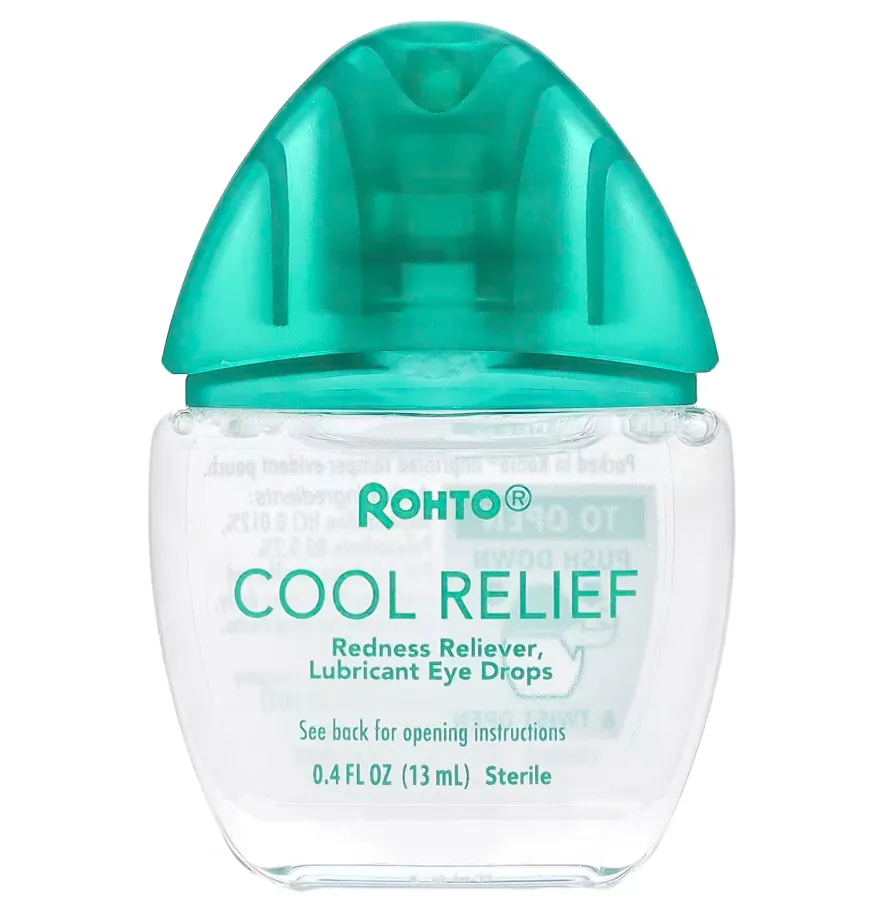
The timeline is not perfectly clean in the public record. Some coverage describes a recall initiated March 3, 2026, and classified March 31, 2026; the California State Board of Pharmacy posted a recall subscriber alert dated July 21, 2026.[2][3] That may reflect a rolling recall, a later alert, or differences in how sources captured the FDA record. For pleading purposes, counsel should not treat those dates as interchangeable. They can affect notice allegations, limitations arguments, class-period drafting, and the moment a reasonable consumer or medical provider could have learned of the issue.
The other important absence is procedural. As of late July 2026, reviewed public law firm materials were still using broad contaminated-eye-drop or 2026 recall investigation language rather than announcing a Rohto-specific filed class action, MDL petition, or consolidated docket.[4][5] That is not proof that no lawyer has a client, no injury will emerge, or no complaint is being drafted. It is a market signal: the first complaint that is carefully sourced, medically coherent, and jurisdictionally sound may have more room to define the case than it would after a docket is already crowded.
Manufacturing defect is the cleanest fit
The strongest Rohto product liability theory on the present record is strict-liability manufacturing defect. The reason is ordinary and powerful: the recall turns on lack of assurance of sterility, and sterility is not a marketing preference for eye drops. It is part of what the product is supposed to be.
A manufacturing-defect complaint does not need to argue that all cooling eye drops are conceptually unsafe, or that the product should have had a different active ingredient, bottle shape, or use instruction. It can allege that the recalled units deviated from the product’s intended manufacturing condition because the manufacturer could not assure sterility for lots identified by the recall. That maps naturally onto the defect element in a way design-defect and warning theories do not.
A durable pleading would separate the defect record from the injury record. On defect, the plaintiff points to the recall, the Class II classification, the Vietnam-origin lot marker, and the stated sterility-assurance concern.[1][2] On injury, the plaintiff still has to plead product use, exposure, diagnosis or testing, causation, and damages. The first half is comparatively strong. The second half is where the current public record is thin.
- For an infection plaintiff, the complaint would need medical facts tying the condition to use of the recalled product rather than to another exposure, preexisting eye disease, contact-lens practice, surgery, or unrelated medication.
- For a purchaser-only plaintiff, the complaint would likely sound in economic loss, refund, diminished value, or consumer-protection theories, and those theories will rise or fall by state law and the available warranty or misrepresentation record.
- For a medical-monitoring plaintiff, the complaint needs more than worry. It needs a jurisdiction that recognizes the remedy, a plausible exposure pathway, and a medically reasonable monitoring program tied to the recalled product.
The Class II label does not defeat manufacturing defect. It does, however, discipline damages expectations. A Class II recall can still involve a defective product, but the recall classification supports a less catastrophic risk profile than cases involving confirmed deaths, permanent blindness, or surgical eye removal. That distinction will matter in demand packages, mediation, class-certification briefing, and any early effort to centralize cases.
Failure to warn has a path, but the 2014 history has limits
Failure to warn is plausible, but it is more fact-sensitive than manufacturing defect. The tempting fact is the 2014 Mentholatum recall of Vietnam-made Rohto drops for potential sterility issues. The American Academy of Ophthalmology’s notice described that earlier recall as precautionary and also stated that there was no evidence indicating the product did not meet specifications.[6]
That prior event can still matter. It predates the 2026 recall, so it is not the same problem as a defendant’s later corrective action being offered to prove negligence under Federal Rule of Evidence 407. A plaintiff would use the 2014 recall as a notice fact: the company had encountered sterility concerns before in Vietnam-made Rohto eye drops and therefore had reason to monitor, audit, warn, or control that risk more aggressively before another sterility-assurance recall occurred.
The limitation is just as important. The 2014 source caveat weakens any attempt to portray the earlier recall as proof that Mentholatum or Rohto knew its products were actually contaminated, actually nonconforming, or actually injuring consumers. A complaint that treats the 2014 recall as a smoking gun invites an avoidable credibility problem. The better version is narrower: the 2014 recall is potential notice of a recurring sterility-control concern, not conclusive proof of prior contamination.
That distinction affects admissibility and pleading tone. Prior recalls may be relevant to knowledge, foreseeability, control systems, or the reasonableness of warnings. But they still face Rule 403 fights over unfair prejudice, confusion, and mini-trials about an older event. If the plaintiff has an actual eye infection, the warning claim becomes easier to justify as part of a full liability package. If the case is economic-loss-only, the warning theory may look more like an effort to stretch a recall into a disclosure case.
Design defect is the weak claim
Design defect should not carry this case unless later facts change the theory. The problem identified in the public recall record is not that eye drops, as designed, are inherently defective because they are sterile products. It is that the manufacturer lacked assurance that recalled units met the sterility condition expected of the product.[1][2]
That makes alternative-design pleading awkward. A plaintiff can always say a manufacturer should have used better controls, better testing, better supplier oversight, or better release procedures. Those are manufacturing-quality and negligence concepts. They do not turn a sterility-assurance failure into a coherent design-defect theory. Unless discovery reveals a product architecture that predictably compromised sterility even when made as intended, design defect is the count most likely to distract from the stronger claim.
EzriCare shows what this case is not — at least on the public record
The EzriCare contaminated-eye-drop litigation is the comparison everyone reaches for, and it is useful only if kept in its lane. Public law firm summaries of that litigation describe a catastrophic injury profile, including 81 confirmed infections, 4 deaths, and multiple eyeball removals.[4][5] That is the kind of fact pattern that creates MDL gravity, large individual damages, urgent causation work, and a settlement environment driven by permanent injury.
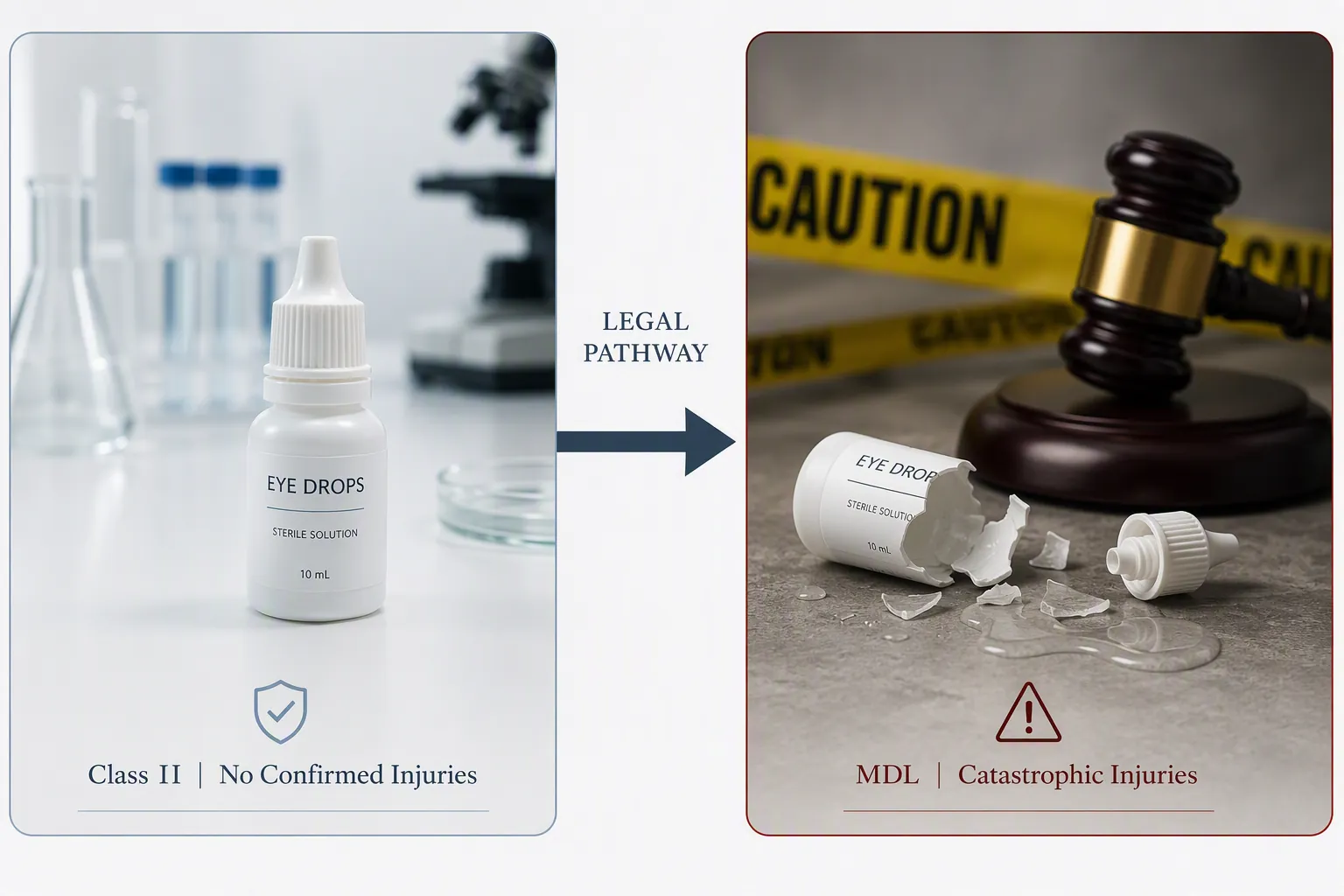
Rohto does not have that posture in the public materials reviewed as of July 30, 2026. A sterility-assurance recall may support defect allegations before injuries are confirmed, but it does not supply the infection cases, death cases, vision-loss cases, or surgical-removal cases that drove the contaminated-eye-drop litigation template. Importing EzriCare’s damages into Rohto pleadings would be a mistake unless a plaintiff can plead Rohto-specific medical facts.
K.C. Pharmaceuticals is another comparison that should stay separate. Public commentary described a March 2026 recall of 3.1 million store-brand eye drops under a Class II posture tied to GMP failures, and also described a 2023 FDA warning-letter backdrop for that manufacturer.[7][8] That is not the Rohto record. It may help show that eye-drop manufacturing controls were receiving regulatory attention in 2026, but it does not establish Mentholatum’s enforcement history or prove Rohto-specific contamination.
Damages are where the case narrows
A large recall can create a large affected population without creating large recoverable damages. That is the central damages problem here. Roughly 12.46 million recalled bottles may support numerosity and market scope, but the absence of confirmed Rohto-specific injuries in the reviewed public sources keeps the settlement value of the present record constrained.[1][2]
| Damages theory | What would make it stronger | Current constraint |
|---|---|---|
| Personal injury | Documented infection, vision injury, treatment, culture or diagnostic support, and product-use history tied to recalled lots | No confirmed Rohto-specific infection reports located in reviewed public materials as of July 30, 2026 |
| Medical monitoring | A recognized state-law basis, meaningful exposure facts, and a medically justified monitoring protocol | Consumer anxiety alone will not carry the remedy |
| Economic loss or refund | Proof of purchase, recalled lot identification, warranty or consumer-protection theory, and state-law support | Often lower-value and vulnerable to state-by-state variation |
| Punitive damages | Evidence of conscious disregard, repeated ignored warnings, or severe internal control failures | The public record currently supports notice questions, not a developed punitive record |
The plaintiff with the strongest potential case is not the consumer who merely saw a recall notice and became understandably alarmed. It is the consumer who used an identified recalled bottle, developed a medically documented condition in a plausible time window, ruled out competing causes as much as possible, preserved the bottle or purchase record, and can connect the injury theory to the sterility-assurance failure. Without that kind of plaintiff, the litigation may remain mostly in refund, monitoring, and consumer-protection territory.
Procedure may be harder than the caption suggests
The first-mover window is real because no Rohto-specific class action or MDL has appeared in the reviewed public law firm materials by late July 2026.[4][5] But first mover does not mean easy mover. Counsel still has to decide whom to sue, where to sue, how to serve, and how to plead jurisdiction without turning the complaint into a collection of corporate names.
The corporate map matters. Rohto is a Japanese brand, the recalled lot marker points to Vietnam-manufactured product, and The Mentholatum Company is the U.S.-connected entity appearing in the Rohto recall history.[1][6] Public sources reviewed here do not identify a specific Vietnam factory name or location. A complaint that names the Japanese parent, a U.S. affiliate, and unknown manufacturing actors will need a service and personal-jurisdiction theory for each defendant, not just a shared brand narrative.
Removal and consolidation strategy also depends on the damages profile. A personal-injury case with serious vision harm may create a different federal-court posture than a putative class action seeking refunds for purchasers across multiple states. An economic-loss class may face predominance, reliance, warranty, and choice-of-law fights before any defendant feels meaningful settlement pressure. An injury case may avoid some class problems but will require individual causation work immediately.
Limitations analysis should start with the date ambiguity rather than ignore it. If some sources identify March recall activity and others identify a July 21 state-board alert, defendants may argue earlier public notice, while plaintiffs may argue later discovery, rolling expansion, or delayed access to lot-specific information.[2][3] That dispute is manageable, but only if intake forms capture purchase date, use date, symptom onset, recall-notice date, and the lot number or packaging evidence.
Which claims stick
| Theory | Present strength | Reason |
|---|---|---|
| Strict-liability manufacturing defect | Strongest | Lack of sterility assurance maps directly to a deviation from the product’s intended condition. |
| Negligent manufacture or quality control | Plausible | The same sterility-assurance facts support questions about manufacturing controls, audits, release testing, and supplier oversight. |
| Failure to warn | Plausible but fact-sensitive | The 2014 Mentholatum Vietnam recall can support notice arguments, but its precautionary/no-specification-failure caveat limits overstatement. |
| Design defect | Weak | The central issue is sterility assurance, not an alternative design for eye drops. |
| Economic-loss class claims | Possible but state-dependent | Large recall scope may support numerosity, but damages, warranty law, reliance, and choice-of-law issues can narrow value. |
On the present record, the Rohto recall is legally interesting because the defect theory is clean, not because the damages record is already large. Manufacturing defect is the claim most likely to survive early scrutiny if pleaded with product-identification and recall facts. Failure to warn is worth preserving, especially if discovery develops prior-knowledge evidence beyond the limited 2014 record. Design defect should be treated as marginal unless later facts reveal something more than a sterility-control failure.
The practical opportunity is narrow but real. A plaintiff firm willing to verify lot evidence, screen for actual medical injury, respect the Class II/no-confirmed-injury posture, and do the jurisdictional work before filing can still shape the first Rohto complaint. A firm that simply recycles contaminated-eye-drop MDL language risks pleading a case the public record does not yet support.
References
- 12 Million Rohto Eye Drops Recalled Nationwide, FDA Warns — Prevention
- California State Board of Pharmacy - Recall Subscriber Alert — California State Board of Pharmacy, July 21, 2026
- FDA Recalls 12 Million Over-the-Counter Eye Drops Nationwide — AOL
- Contaminated Eye Drops Lawsuit | 2026 Update & Guide — TorHoerman Law
- Eye Drop Recall 2026 Lawsuits — Meyers & Flowers
- Nation-wide eye drop recall — American Academy of Ophthalmology
- Massive Eye Drop Recall Reflects Ongoing Issues with Manufacturing and FDA Inspections — UConn Today
- 3.1 Million Eye Drops Recalled. The GMP Crisis Nobody Fixed. — DeepCeutix
Related records
Tool profile
Browse tool evaluations →Governing regulation
Browse the obligations tracker →Preventive workflow
Browse verification workflows →
Report a correction or tip
Spotted an outdated figure, a misstated fact, or a ruling this case record should reflect? Public comments are disabled for this content given the professional cost of a misreported case outcome, penalty amount, or rule text — use the structured correction channel instead.
Report a correction or tip for this record →