
FBI's Ransom-Note Test in Savannah Guthrie Mother Case
Explains how the FBI used a cryptocurrency-deposit test and forensic analysis to authenticate ransom notes in Nancy Guthrie's kidnapping, and details the prosecution of Derrick Callella for sending a false interstate ransom demand, with implications for evidence authentication in criminal proceedings.
- Jurisdiction
- US Federal
- Court
- U.S. District Court
- AI tool named
- none
- Ruling date
- Jul 2, 2026
- Source document
- View primary court order ↗
- Last verified
- Jul 28, 2026
Lex Machina Review is an independent risk-tracking and reference resource. Nothing on this site is legal advice, and using it does not create an attorney-client relationship. Every record is reviewed against primary sources but may not reflect the most current status of a matter — always verify directly against the cited court order, rule text, or a licensed attorney before relying on it.
Companion explanation — secondary to the source document above
Searches for “savannah guthrie mother kidnapping case updates 2025” start with the wrong year. The abduction and the ransom-note developments in the available reporting are 2026 events. As of July 28, 2026, Nancy Guthrie’s kidnapping investigation remains open, no suspect has been charged in the actual abduction, three ransom notes have been treated as fake, and Derrick Callella has pleaded guilty to sending false interstate ransom demands in a separate federal prosecution. Reuters reported the FBI’s findings on the fake notes, including the cryptocurrency test and forensic linkage; NBC News reported the Callella plea and sentencing posture. [1][2]
That distinction matters. A fake ransom demand can be criminal, evidentially useful, and deeply disruptive without proving who kidnapped Nancy Guthrie. This piece is therefore being treated as a Risk Digest criminal-evidence authentication case study, not as a standard Lex Machina Review AI-sanctions record or a celebrity-family update.
The available record is also narrower than a case file. The account below relies on news reporting of FBI statements and court-reporting details. Primary court filings, full FBI reports, and the underlying forensic materials were not independently obtained. That is not a cosmetic caveat; it defines how far the conclusions can responsibly go.
The FBI’s problem was authentication before accusation
The useful legal question is not whether ransom notes sound frightening. It is whether a particular communication can be tied to a person with actual knowledge, control, or participation. In an active kidnapping investigation, every false note can redirect attention, consume time, and create fresh pressure on the family. It can also become its own criminal case.
Reuters reported that two notes were received in February 2026 and that the FBI later determined they were fake. The agency linked those first two notes to the same sender through forensic methods that were not disclosed in the reporting. A third fake note arrived in late June 2026. After that third note, the FBI’s Phoenix office stated that some other communications “may potentially be legitimate and are still being investigated as such.” [1]
That public wording is careful, and it should be read carefully. The FBI was not announcing that all ransom communications were hoaxes. It was separating communications into categories: some had been classified as fake, while others remained under investigation. That is the kind of uncomfortable middle ground that often disappears in public summaries but matters in court.
Why the Bitcoin deposit test mattered
The most concrete authentication step reported by Reuters was the FBI’s handling of a Bitcoin address included in the first ransom note. Agents deposited a small amount into the demanded address and watched whether the funds moved. The funds were never moved, and Reuters reported that this supported the FBI’s conclusion that the note was fake. [1]
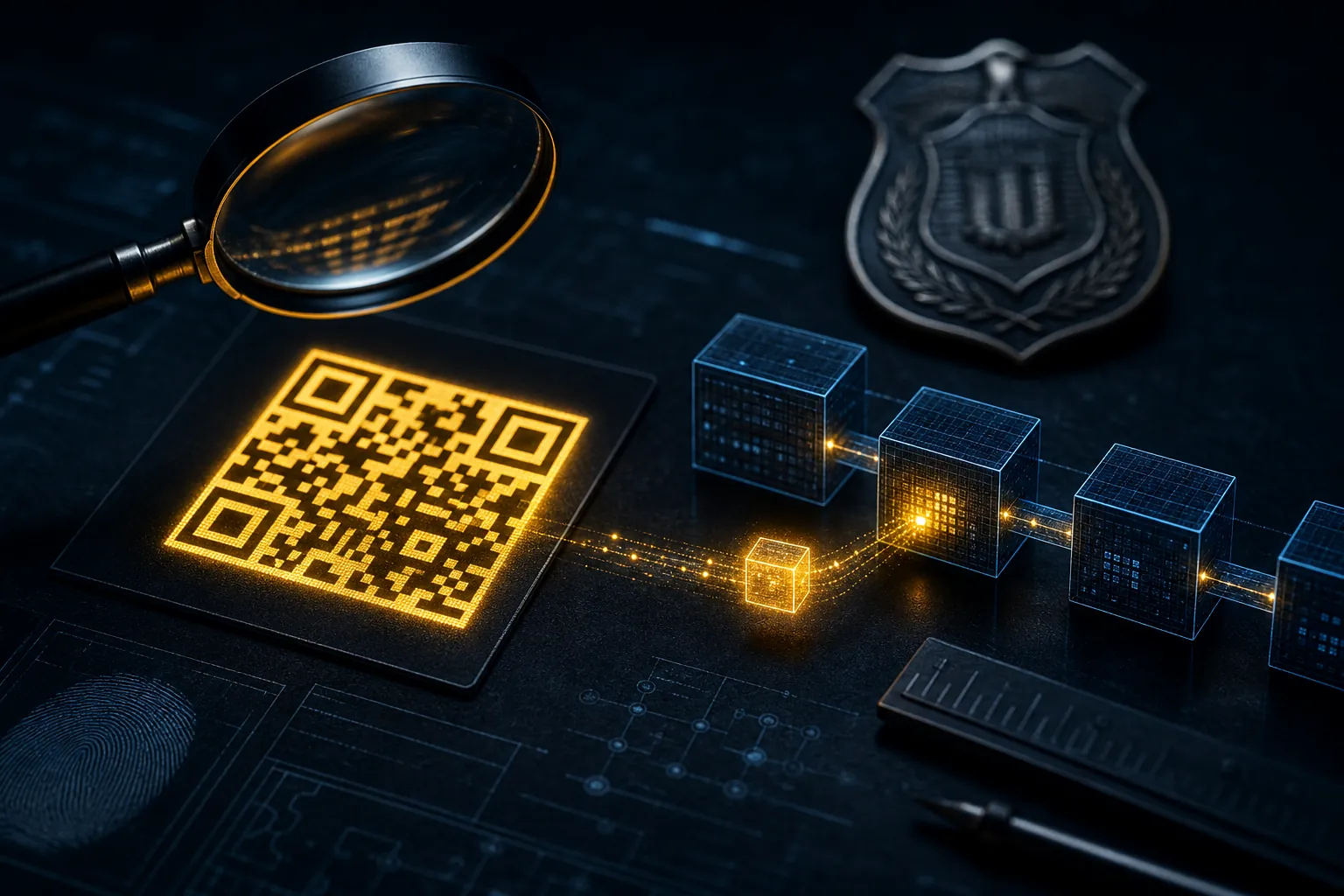
That is not magic blockchain dust. It is a behavioral authentication check. If the sender controlled or monitored the wallet and was genuinely trying to collect the ransom, movement of even a small deposit could have generated an observable signal: someone saw the incoming funds, had access to the address, and took action. If nothing moved, that did not prove the sender had no relationship to the kidnapping in every conceivable sense. It did, however, support the more limited proposition that this ransom demand was not behaving like an operative demand from someone prepared to receive payment.
The test is valuable because it turns a threat into a traceable event. A note can be copied, exaggerated, or invented. A wallet address can be observed. A deposit creates a timestamped transaction. The absence of movement is not as strong as a signed confession or a recovery of the victim, but it is more useful than an agent merely saying the note “looked fake.”
In a later evidentiary fight, the details would matter: how the address was extracted from the note, how the deposit was made, how monitoring was documented, and how investigators preserved the relationship between the note and the transaction. The available reporting does not provide those chain-of-custody details. It only supports the narrower conclusion that the FBI used a small deposit into the demanded Bitcoin address and treated the untouched funds as one basis for finding the first note inauthentic. [1]
That narrower conclusion is still important. It means the FBI did not rely only on tone, suspicion, or the celebrity profile of the family. It tested whether the sender’s demand connected to wallet behavior. For authentication, that is a meaningful move from assertion to observation.
The forensic link was separate from the wallet test
Reuters also reported that the FBI linked the first two fake notes to the same sender using forensic methods, but the methods were not disclosed. [1] That leaves a gap the reader should not fill with assumptions. The reporting does not say whether the link involved metadata, writing patterns, delivery method, digital traces, physical evidence, or some combination of techniques.
Still, the sequence of the FBI’s reported approach is worth noticing. The cryptocurrency test supplied one kind of behavioral evidence. The undisclosed forensic link supplied a separate reason to treat the first two notes as connected to the same source. The late-June third note then forced a public clarification: three notes had been classified as fake, but the universe of communications had not been fully closed. [1]
That is procedurally modest, and it is stronger for being modest. “This note is fake” is not the same claim as “the kidnapping is solved.” It is a classification decision about a communication. It can help investigators triage leads, protect the family from manipulation, and support a separate prosecution. It does not identify the kidnapper unless additional evidence ties the fake-note sender to the abduction.
Callella’s plea shows the separate exposure for false ransom demands
NBC News reported that Derrick Callella, 42, of Torrance, California, pleaded guilty on July 2, 2026, to two felony counts for transmitting a false ransom demand across state lines under 18 U.S.C. § 875. The same report states that the plea agreement includes five years of probation, that inpatient substance-abuse treatment was ordered before sentencing, and that sentencing is set for September 10, 2026. [2]
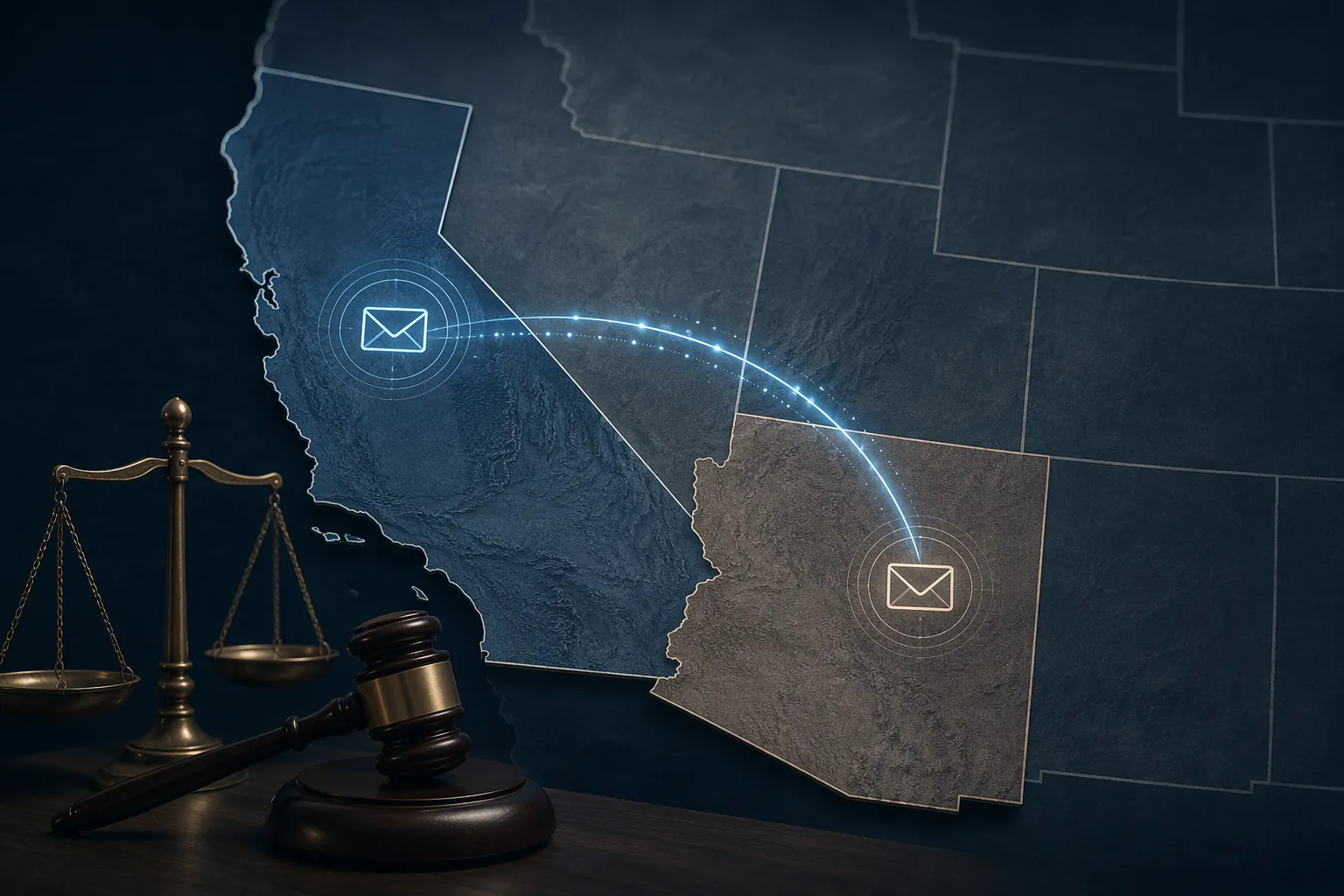
The plea details should be handled with the same source discipline as the forensic details. NBC News reported the court developments, including plea-agreement terms, but the primary docket and plea agreement were not independently reviewed for this article. [2]
The legal point is straightforward. A person does not need to have committed the underlying kidnapping to create felony exposure by sending a false ransom demand across state lines. The charged conduct is the interstate transmission of the demand itself. That is why Callella’s case can be real and consequential while still not answering who abducted Nancy Guthrie.
For lawyers, that separation is not academic. Prosecutors can pursue the false-demand case without proving the full kidnapping. Investigators can use the prosecution to deter or punish opportunistic communications. Defense counsel would still care about the exact wording of the demand, the interstate element, the sender identification evidence, and the factual basis for the plea. None of those questions should be collapsed into the unresolved abduction investigation.
The family’s public plea belongs near the status update, not at the center of the proof
On July 27, 2026, Savannah Guthrie released a new public video six months into the search for her mother, offering the family’s $1 million reward and noting the FBI’s $100,000 reward. [3] Those figures locate the present posture of the case: the family is still searching, federal authorities are still seeking information, and the investigation has not been closed by the fake-note findings.
That evidence appears to have supplied reliable grounds to classify early ransom notes as fake. Callella’s guilty plea shows that false interstate ransom demands can carry felony consequences. The actual kidnapping investigation remains open.
References
- FBI determines Nancy Guthrie kidnapping notes to be fakes, source says, Reuters, July 1, 2026.
- Nancy Guthrie: FBI investigating notes as legitimate extortion demands, NBC News.
- Savannah Guthrie Records New Video Six Months Into Search for Mother, The New York Times, July 27, 2026.
Related records
Tool profile
Browse tool evaluations →Governing regulation
Browse the obligations tracker →Preventive workflow
Browse verification workflows →
Report a correction or tip
Spotted an outdated figure, a misstated fact, or a ruling this case record should reflect? Public comments are disabled for this content given the professional cost of a misreported case outcome, penalty amount, or rule text — use the structured correction channel instead.
Report a correction or tip for this record →