
Sha'Carri Richardson went 104 mph in her super speeder case
Verified record of Sha'Carri Richardson's Florida super speeder case: 104 mph on SR 429 (39 mph over the posted limit), charged under Fla. Stat. § 316.1922(1)(b), and resolved by no-contest plea with adjudication of guilt — with primary-source links and reported-vs-confirmed flags where reporting conflicts.
- Jurisdiction
- US-FL
- Court
- Orange County Court, Florida
- AI tool named
- None
- Ruling date
- Jul 30, 2026
- Source document
- View primary court order ↗
- Last verified
- Aug 2, 2026
Lex Machina Review is an independent risk-tracking and reference resource. Nothing on this site is legal advice, and using it does not create an attorney-client relationship. Every record is reviewed against primary sources but may not reflect the most current status of a matter — always verify directly against the cited court order, rule text, or a licensed attorney before relying on it.
Companion explanation — secondary to the source document above
Last verified: Aug. 2, 2026, UTC. The verified speed in Sha’Carri Richardson’s Florida super speeder case is 104 mph on State Road 429 near Stoneybrook Parkway, where the posted limit was 65 mph. That made the allegation 39 mph over the limit and above Florida’s 100-mph criminal threshold for dangerous excessive speeding. The case was filed under Fla. Stat. § 316.1922(1)(b), and it was resolved July 30, 2026, by a written no-contest plea with adjudication of guilt, fines and court fees, and a driving course.[1][2][3]
Confirmed-vs-reported note: 104 mph is the figure supported by the reported arrest affidavit and by the main case reporting. FOX 35’s later article contains “over 110 mph” language; that is treated here as a reported conflict traceable to that outlet, not as the verified speed.[4]
| Record field | Verified or reported status |
|---|---|
| Driver | Sha’Carri Richardson |
| Date of stop | Jan. 29, 2026 [1] |
| Stable location identifier | State Road 429; outlet naming varies around Stoneybrook/Stoney Brook Parkway [1] |
| Speed | 104 mph [1] |
| Posted limit | 65 mph [1] |
| Amount over limit | 39 mph |
| Charge | Dangerous excessive speeding under Fla. Stat. § 316.1922(1)(b) [2] |
| Booking | Orange County Jail, $500 bond [1] |
| Initial plea | Not guilty, Feb. 2, 2026 [1] |
| Disposition | Written no-contest plea, adjudication of guilt, fines and court fees, and driving course on July 30, 2026 [3] |
| Conflicting speed report | FOX 35 reported “over 110 mph”; not treated as the verified figure here [4] |
Why 104 mph is the legal number
Florida’s dangerous excessive speeding statute does not turn every high-speed citation into the same kind of case. The relevant prong covers driving “at a speed of 100 miles per hour or greater” in a way that exceeds the posted speed limit by at least 30 miles per hour.[2] On the reported facts, 104 mph in a 65-mph zone clears both parts: it is over 100 mph, and it is 39 mph over the posted limit.
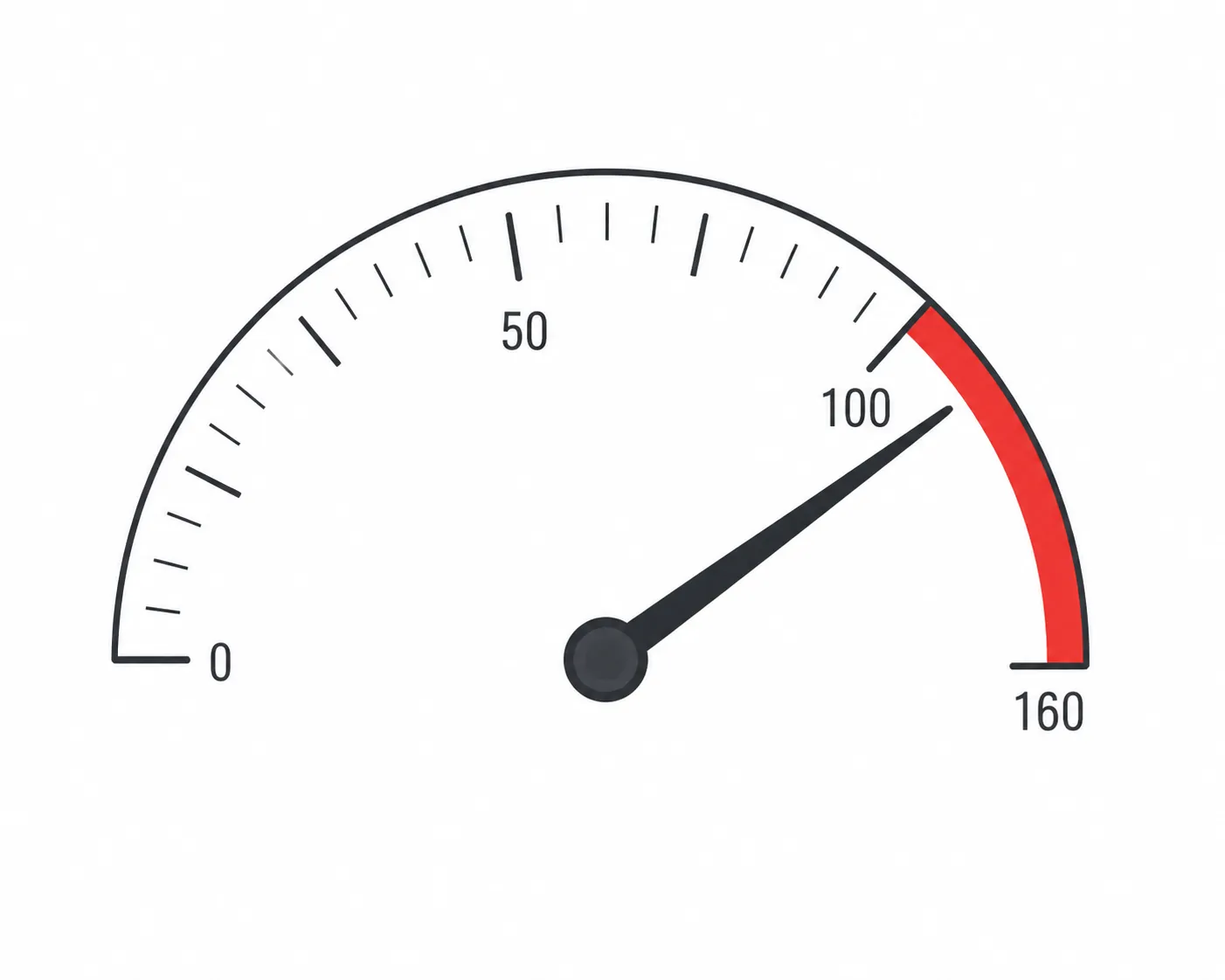
That is the reason the exact number matters. A reader looking only for “how fast was Sha’Carri Richardson going” might treat 104 mph and “over 110 mph” as rough equivalents. In a courthouse record, they are not equivalent. The verified figure is enough to satisfy the statutory threshold reported in the charge; the higher figure is an unresolved media conflict.
The statute itself was created through Florida’s dangerous excessive speeding legislation. The Florida Senate bill page for HB 351 identifies the measure as “Dangerous Excessive Speeding,” and the operative text is now codified in § 316.1922.[5][2] For a fuller statutory walk-through, see the site’s separate explainer on the super speeder law behind Richardson’s plea. This record stays with the case file: speed, charge, dates, and outcome.
The stop allegations belong in the file, not ahead of the charge
The arrest-affidavit account reported by NBC News gives the stop context: Sgt. Gerald McDaniels allegedly observed a gray Aston Martin on SR 429 traveling 104 mph in a 65-mph zone, tailgating, making repeated lane changes, flashing lights at other vehicles, and passing on the inside shoulder. Richardson reportedly told the deputy that the car was new and that a back tire was underinflated.[1]
Those allegations explain why the stop was not written up as a bare number on a roadside citation. Still, the legal hinge remains the speed-and-statute match. The record does not need a celebrity frame, and it does not need a comparison between sprinting and driving. It needs the number, the road, the limit, and the subsection.
The same stop also involved other athletes. Christian Coleman and Twanisha Terry appear in the surrounding reporting: Coleman was reported in connection with resisting arrest and a drug-paraphernalia citation, and Terry was reported as cited for stopping on a limited-access highway.[1] Those matters help identify the broader scene, but they are not parallel dispositions of Richardson’s speeding case.
Procedure: arrest, plea, continuance, written disposition

The procedural path is short, but the labels matter. Richardson was booked into the Orange County Jail on Jan. 29, 2026, on a $500 bond after the SR 429 stop.[1] She entered a not-guilty plea on Feb. 2, 2026.[1] A later hearing was continued from April to June, according to WESH’s case reporting, before the matter was resolved by written plea in late July.[3]
On July 30, 2026, Richardson entered a written no-contest plea. The reported court disposition included adjudication of guilt, fines and court fees, and a driving course.[3] That last phrase—adjudication of guilt—is the practical divider for anyone reading the file for risk, licensing, employment, immigration, media, or litigation purposes. This was not merely a fine-only traffic outcome.
For a narrower disposition-only entry, see the site’s case note on Richardson’s no-contest speeding-case plea. The important point here is that the July 30 written plea did not erase the criminal-traffic character created by the charged statute and the adjudicated disposition.
What is confirmed, what is only reported, and what conflicts
| Item | Treatment in this record | Why |
|---|---|---|
| 104 mph | Confirmed for article purposes | Consistent with OCSO-linked reporting and the reported arrest affidavit [1] |
| Over 110 mph | Reported-conflicting | Appears in FOX 35’s language; not harmonized with the 104-mph figure [4] |
| SR 429 | Stable location identifier | Outlet wording varies around Stoneybrook/Stoney Brook Parkway; SR 429 is the useful constant [1] |
| 100 hours of community service | Reported-but-unconfirmed here | Reported by ClickOrlando; not treated as verified without the primary order [6] |
| 8-hour class | Reported-but-unconfirmed here | Reported by ClickOrlando; the verified disposition is stated more generally as a driving course [6] |
The ClickOrlando report adds that the plea involved 100 hours of community service and an 8-hour driving class.[6] Those details may be accurate, but they are kept in the reported-but-unconfirmed column here because the primary court order has not been independently verified for this record. That is not a statement that the details are wrong; it is a boundary on what this article can responsibly label as confirmed.
FOX 35’s “over 110 mph” wording is handled differently. It conflicts with the 104-mph figure used in the reported affidavit account and other major coverage.[4][1] Because the charge fits the statute at 104 mph, there is no need to inflate the number or smooth the conflict away.
The case inside Florida’s first-year super speeder enforcement
Richardson’s case landed during the first year of Florida’s super speeder enforcement regime. Spectrum News 13 reported on July 9, 2026, that the Florida Highway Patrol had made more than 4,000 arrests statewide under the law, that the Orange County Sheriff’s Office had made 323 arrests, and that the fastest recorded speed was 150 mph.[7]
That context keeps the case proportional. The public name made the file travel farther, but the legal structure is the same one appearing across Florida traffic dockets: a speed at or above 100 mph, at least 30 mph over the posted limit, a criminal traffic charge, and a court disposition. For county-level consequences beyond this case, see the site’s Clay County super speeder enforcement context.
On the present record, the answer is narrow and legally consequential: Sha’Carri Richardson was going 104 mph, not a verified “over 110 mph,” and the July 30 no-contest plea with adjudication of guilt makes the resolved case a criminal conviction rather than a routine paid speeding ticket.
References
- Sha’Carri Richardson pleads not guilty to ‘super speeding’ after arrest in Florida, NBC News, Feb. 4, 2026
- Chapter 316 Section 1922 - 2025 Florida Statutes, Online Sunshine
- Olympic track star Sha’Carri Richardson takes plea deal in Florida super speeder case, WESH
- Olympic gold medalist Sha’Carri Richardson arrested in Orange County for excessive speeding, FOX 35 Orlando
- CS/CS/HB 351: Dangerous Excessive Speeding, Florida Senate
- Olympic runner Sha’Carri Richardson pleads no contest in Florida super speeder case, ClickOrlando, July 31, 2026
- 1 year of super speeder law sends hundreds to jail in Orange County, Spectrum News 13, July 9, 2026
Related records
Tool profile
Browse tool evaluations →Governing regulation
Browse the obligations tracker →Preventive workflow
Browse verification workflows →
Report a correction or tip
Spotted an outdated figure, a misstated fact, or a ruling this case record should reflect? Public comments are disabled for this content given the professional cost of a misreported case outcome, penalty amount, or rule text — use the structured correction channel instead.
Report a correction or tip for this record →