
Who consents to dementia GPS tracking after a Silver Alert?
Four Silver Alerts hit Los Angeles County in four days, all involving older men with cognitive impairment — and none appeared enrolled in the county's free L.A. Found GPS program. The barrier is legal authority, not cost: consent to GPS-tracking a person with dementia turns on Penal Code 637.7, capacity, power of attorney, conservatorship, and guardianship.
- Jurisdiction
- Los Angeles County, California
- Court
- Superior Court of California, County of Los Angeles
- AI tool named
- Theora GPS smartwatch
- Ruling date
- Aug 2, 2026
- Source document
- View primary court order ↗
- Last verified
- Aug 3, 2026
Lex Machina Review is an independent risk-tracking and reference resource. Nothing on this site is legal advice, and using it does not create an attorney-client relationship. Every record is reviewed against primary sources but may not reflect the most current status of a matter — always verify directly against the cited court order, rule text, or a licensed attorney before relying on it.
Companion explanation — secondary to the source document above
Risk Digest record posture
Jurisdiction: Los Angeles County, California. Last verified: Aug. 3, 2026. This record is for legal-risk and public-safety analysis, not legal advice. Before publication or client reliance, re-check the current CHP alert status for each reported Silver Alert, confirm the current L.A. Found enrollment terms and device options with Los Angeles County, and verify Penal Code 637.7 against official California code text.
- Fresh incident trail: TechTimes’ Aug. 2, 2026 report on four Los Angeles County Silver Alerts in four days.
- Alert rules: California Highway Patrol Silver Alert activation criteria and CHP ENTAC role.
- Program mechanics: Los Angeles County and Aging & Disabilities Department pages for L.A. Found, including RF bracelets and GPS smartwatch tracking.
- Legal authority: Penal Code 637.7 consent analysis, capacity, and substitute decision-making through a valid power of attorney, conservatorship, guardianship, or other recognized authority.
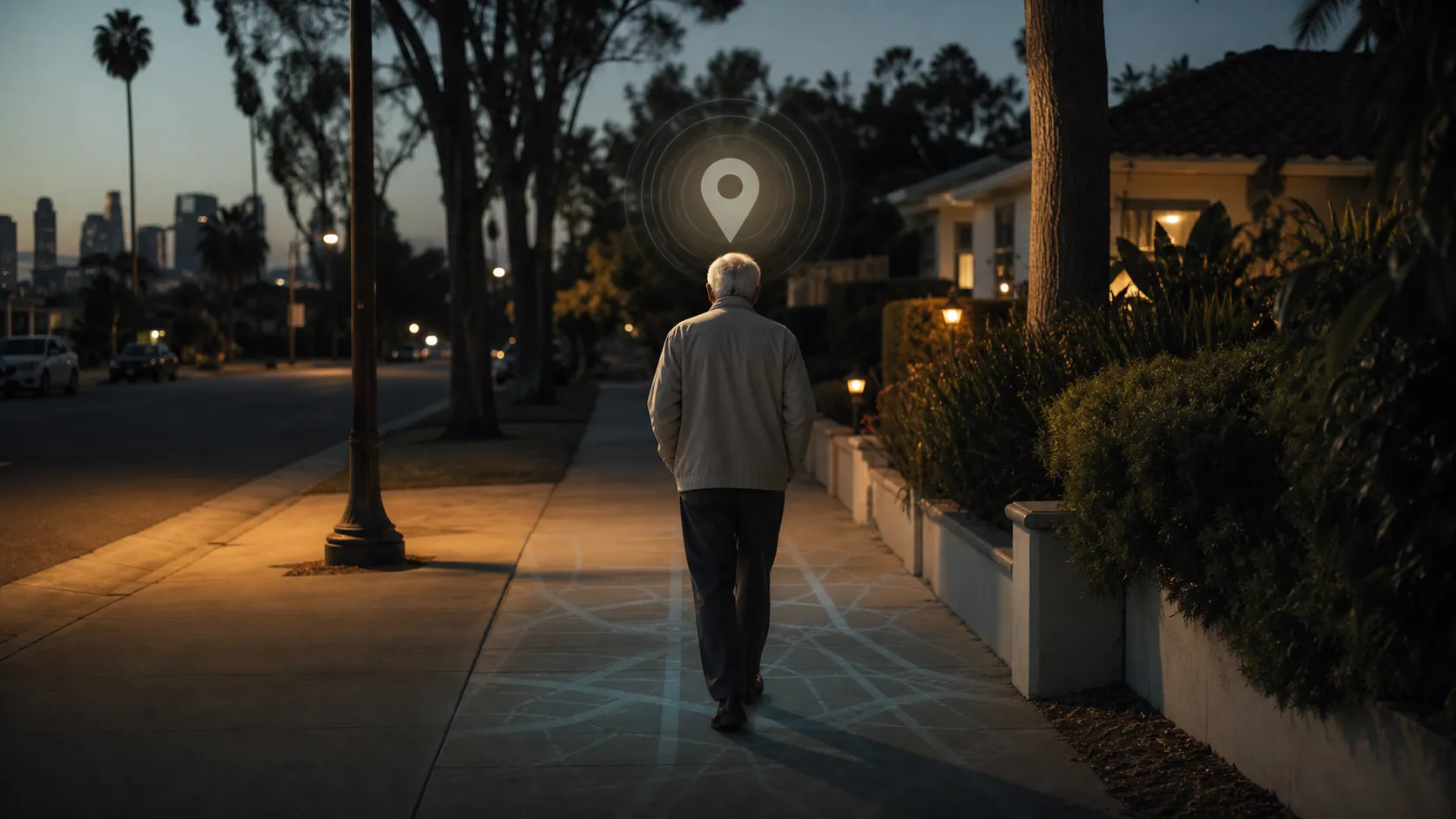
The immediate Los Angeles question is not whether dementia wandering is frightening. It is who may legally authorize GPS tracking before the next Silver Alert.
TechTimes reported on Aug. 2, 2026 that four Silver Alerts had hit Los Angeles County in four days, involving men ages 77 to 85 in Culver City, South Los Angeles, Inglewood, and Lawndale, with confirmed or implied cognitive impairment and each believed to be on foot; the same report said none appeared to be enrolled in L.A. Found, the county’s free tracking program, based on available reporting rather than an official enrollment audit.[1]
That last qualification matters. “None appeared enrolled” is not the same as a county certification that no one was enrolled. But the pattern is still enough to expose the practical hinge: the active tool may exist, and the family may want it, but the person being tracked still has legal interests of his own.
Silver Alert is the backstop, not the tracking plan
California’s Silver Alert system is built for public broadcast after a disappearance is already underway. CHP describes eligibility as covering a missing person who is 65 or older, developmentally disabled, or cognitively impaired; local law enforcement must have used all available local resources; the disappearance must be unexplained or suspicious; law enforcement must believe the person is in danger; and there must be information available that can be shared with the public.[2]
For Los Angeles-area requests, the system still runs through law enforcement. CHP says its Emergency Notification and Tactical Alert Center issues Silver Alerts when local agencies, including LASD or LAPD, make qualifying requests.[2]
That structure makes Silver Alert powerful but late. A family member, facility, or deputy still needs a last known location, a description, a belief that the person is at risk, and enough shareable information to justify a public alert. The alert then depends on witnesses, media distribution, roadside signs where available, and luck. None of that is a criticism of CHP’s criteria. It is simply the difference between broadcasting a disappearance and locating a wearable device.
What L.A. Found actually changes
Los Angeles County’s L.A. Found program was approved by the Board of Supervisors in February 2018 after the disappearance of Nancy Paulikas, and the county later reported more than 1,800 RF bracelets and GPS smartwatches distributed and 29 reunions through the program.[3]
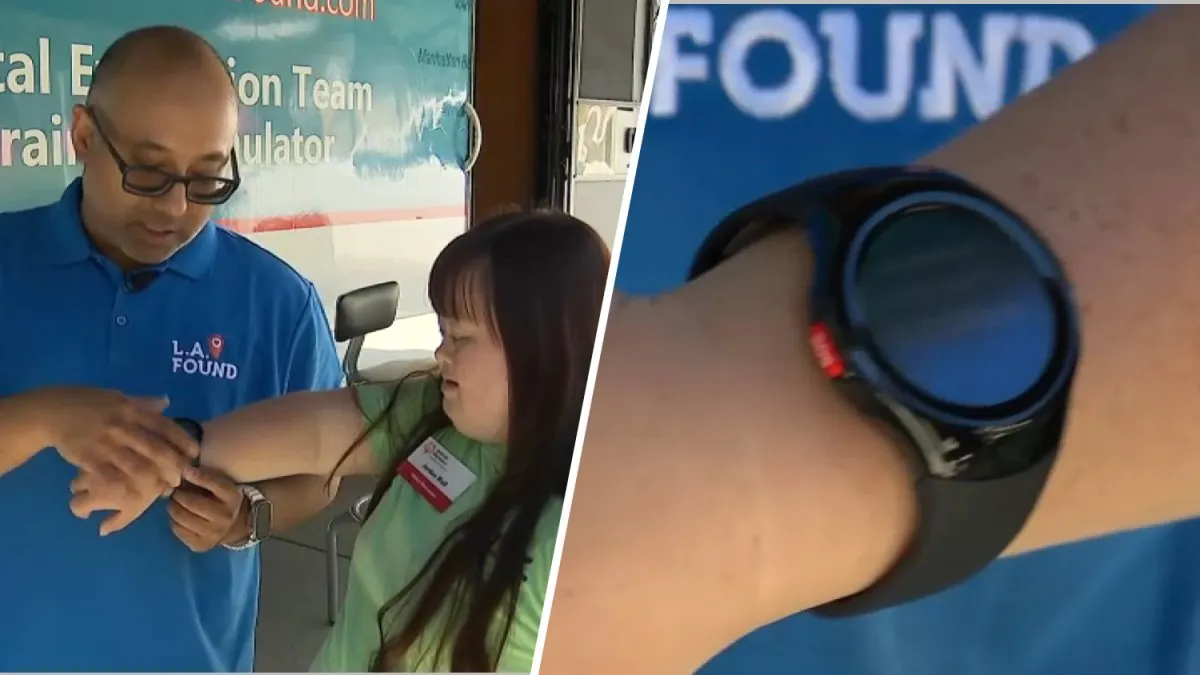
The program is not one technology. County materials describe radio-frequency bracelets and GPS smartwatches, with different operating consequences. The RF bracelet is passive: it is not monitored until a missing-person report is filed, at which point trained responders can use tracking equipment to search for the bracelet. The Theora GPS smartwatch adds real-time caregiver-app tracking and geofence alerts, which can notify a caregiver when the participant leaves a designated area.[3][4]
Enrollment is described as voluntary and tied to a qualifying diagnosis, including Alzheimer’s disease, dementia, autism, or another cognitive condition that creates wandering risk.[4]
| Tool | What it does | Legal significance |
|---|---|---|
| Silver Alert | Public alert after law enforcement determines the statutory criteria are met | No enrollment consent issue at the front end, but it begins after the person is already missing |
| L.A. Found RF bracelet | Passive wearable used by responders after a missing-person report | Still requires voluntary enrollment and authority to place the device on the person |
| L.A. Found GPS smartwatch | Caregiver-app location access and geofence alerts | Creates the clearest consent-authority issue because location monitoring can occur before an emergency |
For a family that has already seen wandering, the GPS option is the obvious operational improvement. It can move the first search step from “Where might he have gone?” to “Where is the device reporting?” But that improvement is exactly why the consent question cannot be brushed aside. Real-time location tracking is more intrusive than a drawer full of emergency contact cards.
The enrollment barrier is authority, not price
The county describes L.A. Found as a free program. Cost is therefore not the central legal barrier for many eligible families. Authority is.
A caregiver’s motive may be protective and still not answer the legal question. California Penal Code 637.7, as summarized in a 2025 Bulldog Law explainer, bars use of an electronic tracking device to determine a person’s location without consent and describes misdemeanor exposure of up to six months in jail and a $1,000 fine, along with potential civil damages.[5]
Because the available source is a legal explainer rather than official statutory text, the statute should be verified against the official California code before anyone treats those elements or penalties as publication-ready. The risk point, however, is already plain enough for intake and planning: GPS tracking is not converted into lawful tracking merely because a daughter, spouse, sibling, facility employee, or hired caregiver is frightened for good reason.

This is where dementia cases become harder than ordinary consumer-location cases. Some patients can understand the tracking proposal, weigh the privacy tradeoff, and agree. Others can agree on a good morning and resist on a bad afternoon. Others cannot meaningfully consent at all. Treating all three as the same person, legally speaking, is the shortcut that creates the problem.
The capacity question comes first
The first decision is not which device to order. It is whether the person can consent to the tracking being proposed.
| Capacity posture | Who should decide | Risk if skipped |
|---|---|---|
| The person understands the device, the location sharing, who sees it, and when it is used | The person should consent directly, with documentation appropriate to the setting | Family convenience may replace the patient’s own decision |
| Capacity is uncertain or fluctuating | Counsel or clinicians may need to help determine whether consent is valid for this decision at this time | A form signed on a confused day may not carry the authority everyone assumes it carries |
| The person lacks capacity to consent | A valid substitute decision-maker must be identified before enrollment | Protective tracking may become unauthorized surveillance |
The available legal commentary states the narrower rule in practical terms: when a loved one cannot consent because of cognitive issues, a legal guardian must make the tracking decision.[6]
For California elder-law practice, that sentence should not be read as a magic label. The actual authority may turn on a durable power of attorney, a conservatorship order, a guardianship where applicable, an advance directive, facility admission paperwork, court limits, and the scope of the decision being made. A document authorizing help with banking is not automatically consent to continuous location monitoring. A family member who is “the one who handles things” is not automatically the legal substitute decision-maker.
What a careful intake should establish
- What diagnosis makes the person potentially eligible for L.A. Found.
- Whether the person has wandered before, and whether police, EMS, neighbors, or facility staff were involved.
- Whether the proposed device is an RF bracelet used after a missing-person report or a GPS smartwatch with caregiver-app monitoring and geofence alerts.
- Whether the person can presently understand and consent to that specific device and monitoring arrangement.
- If not, which document or court order gives someone else authority to decide.
- Who will receive alerts, who will respond, and when law enforcement will be called.
That last point is not paperwork trivia. A GPS watch that alerts only a burned-out spouse who sleeps through the notification is not the same risk plan as a watch monitored by two adult children with a written escalation rule. Device consent and response responsibility belong in the same conversation.
Why the law-enforcement GPS cases do not answer the family-enrollment question
The Supreme Court’s GPS decision in United States v. Jones is a useful boundary marker, but only a boundary marker. In Jones, the Court held that warrantless physical installation of a GPS device on a vehicle to monitor its movements was a Fourth Amendment search.[7]
L.A. Found enrollment is a different model. The ordinary question is not whether police need a warrant to attach a tracker to a suspect’s car. It is whether a vulnerable adult, or someone legally empowered to act for that adult, has consented to a wearable device used for safety. Importing the wrong constitutional frame can obscure the more immediate California problem: consent under the tracking statute and valid substitute authority.
The risk runs in both directions
Unauthorized tracking creates one kind of exposure. It can put a family or facility on the wrong side of a tracking-device statute, invite privacy claims, and poison later disputes among siblings, spouses, stepchildren, or professional caregivers.
Under-tracking creates another. Once wandering is known, repeated, or severe enough to generate police involvement, it becomes harder to treat location technology as a speculative luxury. A facility that waits for staff to notice an exit, or a family that delays calling 911 because everyone is searching by car, may face different questions after a preventable harm than before it.
The answer is not to track first and justify later. It is to identify authority before the emergency. That is the part families often discover too late, when the person is already missing and everyone is arguing over who should have done what.
A publication-ready verification posture
For counsel, caregivers, and risk staff reviewing an L.A. Found enrollment after a Silver Alert or near-miss, the practical sequence is short but not optional:
- Confirm the current Silver Alert status with CHP or the requesting local agency, especially where secondary reporting gives incomplete or changing status information.
- Confirm L.A. Found eligibility, available device type, enrollment requirements, and monitoring responsibilities with Los Angeles County or the Aging & Disabilities Department.
- Verify Penal Code 637.7 against official California code text before relying on a summarized statement of elements, penalties, or exceptions.
- Determine whether the person can consent to the specific tracking arrangement being proposed.
- If the person lacks capacity, identify the valid power of attorney, conservatorship, guardianship, court order, advance directive, or other recognized substitute authority that covers this decision.
- Document who receives alerts, who responds, and when a missing-person report or 911 call is required.
The four Los Angeles County alerts reported between late July and Aug. 2, 2026 make the issue concrete, but not because they prove family fault. They show the gap that opens when a broadcast-only search is the first fully activated system, while a free local tracking program sits behind an unresolved consent question.
References
- Silver Alert Cluster Hits Los Angeles: Free GPS Tracking Program Most Families Miss, TechTimes, Aug. 2, 2026.
- Silver Alert, California Highway Patrol.
- L.A. County Launches New GPS Smartwatch to Protect Alzheimer’s and Autism Communities, Los Angeles County, Oct. 15, 2025.
- L.A. Found Tracking Technology, Los Angeles County Aging & Disabilities Department.
- California Penal Code Section 637.7: Electronic Tracking Devices, The Bulldog Law, 2025.
- Can I use a GPS tracker to monitor my loved one’s safety?, Abramson Smith Waldsmith LLP, Jan. 13, 2025.
- United States v. Jones, 565 U.S. 400 (2012), Cornell Legal Information Institute.
Related records
Tool profile
Browse tool evaluations →Governing regulation
Browse the obligations tracker →Preventive workflow
Browse verification workflows →
Report a correction or tip
Spotted an outdated figure, a misstated fact, or a ruling this case record should reflect? Public comments are disabled for this content given the professional cost of a misreported case outcome, penalty amount, or rule text — use the structured correction channel instead.
Report a correction or tip for this record →