
Sophie Cunningham on the Title IX ruling's school impact
Sophie Cunningham's recent comments on transgender athletes in women's sports underscore the practical import of the Supreme Court's June 2026 ruling. This article explains what the ruling actually requires of schools and athletic conferences, what it leaves unresolved, and the compliance and litigation risks that institutions now face in a divided state-law landscape.
- Jurisdiction
- U.S. Supreme Court
- Ruling date
- Jun 30, 2026
- Source document
- View primary court order ↗
Lex Machina Review is an independent risk-tracking and reference resource. Nothing on this site is legal advice, and using it does not create an attorney-client relationship. Every record is reviewed against primary sources but may not reflect the most current status of a matter — always verify directly against the cited court order, rule text, or a licensed attorney before relying on it.
Companion explanation — secondary to the source document above
Sophie Cunningham’s July 22 comments landed because they translated a Supreme Court decision into the language athletic departments are already hearing from boards, parents, boosters, legislators, and plaintiffs’ lawyers. In an ESPN interview and follow-up reporting, the Indiana Fever guard defended “protecting women’s sports” as a matter of common sense, not as a technical Title IX argument.[1][2] That distinction matters. Public arguments can be simple; institutional obligations rarely are.
For a school, conference, or state association, the question after the Supreme Court’s June 30, 2026 decisions in West Virginia v. B.P.J. and Little v. Hecox is not who won the cultural debate. It is narrower and more consequential: what does the ruling require, what does it merely permit, and where does it leave exposure?
What the Court actually decided
The Court held that states may exclude transgender girls and women from girls’ and women’s sports without violating Title IX. That part of the judgment was unanimous. The Court also rejected the Equal Protection challenge by a 6-3 vote, with Justices Gorsuch, Barrett, Kavanaugh, Roberts, Thomas, and Alito in the majority.[3]
The Title IX holding is the operational center of the decision. The Court treated Title IX as allowing sex-separated athletic teams and concluded that a state does not violate the statute by defining girls’ and women’s teams by biological sex for eligibility purposes.[3] That is a permission ruling. It is not a nationwide command that every school must adopt a ban.
The Equal Protection holding matters differently. It gives states a constitutional path to defend exclusionary athletic-eligibility laws, but it does not erase every factual question that may arise under every policy. Justice Sotomayor’s dissent argued that the cases should have been remanded on whether athletes who never underwent male puberty were similarly situated to cisgender girls for competitive purposes.[3] That disagreement does not control the judgment, but it is a reminder that some factual disputes remain policy-sensitive even after the headline holding.
The Court also drew a line around Bostock v. Clayton County. Law firm analyses of the decision emphasize that the majority did not disturb Bostock’s Title VII rule protecting transgender employees from employment discrimination; instead, it held that the Title VII employment precedent does not control Title IX athletics.[4][5] For a university, that distinction is not academic. The same institution may be applying Title IX to student athletics, Title VII to employees, state civil-rights laws to both, and separate policies to facilities access.
| Question | Post-ruling answer in Q3 2026 |
|---|---|
| May a state ban transgender athletes from girls’ and women’s sports? | Yes, the Court held that such bans do not violate Title IX and rejected the Equal Protection challenge. |
| Must every school adopt a ban? | No. The ruling permits state bans; it does not impose a federal mandate. |
| Does Bostock now stop protecting transgender employees? | No. The decision distinguished Title IX athletics from Title VII employment. |
| Did the Court resolve bathrooms, locker rooms, or other facilities? | No. Facility-access questions remain separate and unresolved by this decision. |
| Did the Court decide whether the NCAA is directly bound by Title IX? | No. That funding-recipient question remains contested in pending litigation. |
Permission is not a compliance program
The ruling is easiest to misread in states that already have bans. There, the Court gives school districts, public universities, and state athletic associations much stronger footing to enforce state-law eligibility restrictions. But those institutions still need to look at the exact state statute, any implementing regulations, conference rules, injunction history, student-record procedures, medical-information handling, and the distinction between eligibility and access to other sex-separated spaces.
Schools in states without bans face the harder public conversation. ATIXA’s post-decision guidance put the point plainly: the ruling “does not answer the converse question” of whether Title IX prohibits inclusive policies.[6] That means a school in an inclusive-policy state cannot safely treat the Supreme Court decision as if it automatically invalidated its existing rule. The Court upheld state authority to exclude; it did not decide that inclusion is itself unlawful under Title IX.
The ACLU likewise emphasizes that the decision does not require bans and does not address bathrooms, locker rooms, or other facility-access questions.[7] Those are not small carveouts. Athletic eligibility decisions often reach the compliance desk together with travel-room assignments, locker-room supervision, privacy complaints, medical documentation, retaliation allegations, and student discipline. Treating the sports-team ruling as a facility-access ruling would import certainty the Court did not provide.
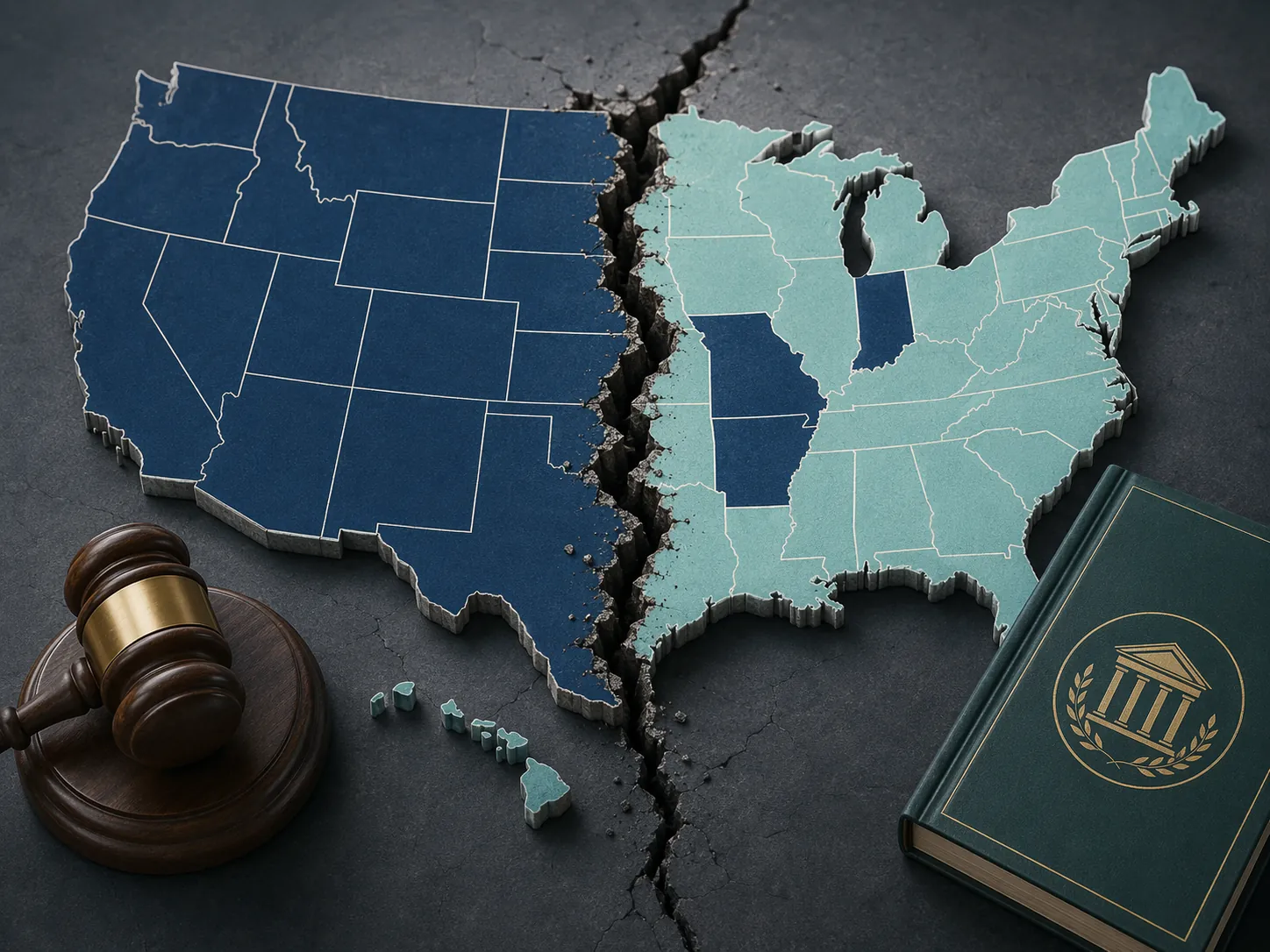
Multi-state conferences and national governing bodies are in the least comfortable position. A conference may include institutions in ban states, institutions in inclusive-policy states, private institutions with their own nondiscrimination commitments, and public institutions subject to state attorney general oversight. A neutral-sounding conference rule may still create unequal legal consequences once it is applied on campuses with different state-law obligations.
The count of states with transgender-athlete bans is not a stable legal input unless it is checked against live law. Current tallies put the figure at 27 states, but that number needs re-verification at publication because legislation and litigation move quickly. A compliance memo that relies on a stale state-count rather than current jurisdiction-by-jurisdiction authority is not much help to the administrator who has to decide whether an athlete may compete next week.
Federal enforcement risk is already concrete
The federal enforcement picture was not theoretical even before the Supreme Court ruled. On January 28, 2026, the Department of Education’s Office for Civil Rights action involving San José State required public apologies, restoration of individual athletes’ records, and adoption of biology-based sex definitions for athletic eligibility.[8] That remedial package is worth reading less as a one-campus story than as a preview of the kinds of corrective measures an agency may seek when it treats inclusive eligibility rules as a Title IX violation.
The Justice Department also sued California in Q1 2026, alleging that the state violated Title IX by denying girls athletic opportunities through inclusive athletic policies.[9] A school in California or another inclusive-policy state therefore cannot analyze risk by looking only at state law. It may be complying with one sovereign’s expectations while drawing enforcement attention from another.
That is the operational problem the public debate tends to flatten. After the Supreme Court’s decision, an institution may have stronger authority to follow a state ban, but it may also be in a state that affirmatively permits or expects inclusion. Federal agencies may treat some inclusive policies as unlawful denial of athletic opportunity. Private plaintiffs may seek damages for prior seasons. Employees remain protected under Title VII as Bostock stands. None of those propositions cancels the others.
The damages cases may be where the ruling travels next
For institutions that already lived through contested seasons, the most expensive question may not be what to do tomorrow. It may be whether prior decisions can be reframed as compensable injuries to women athletes’ records, placements, roster opportunities, or competitive experiences.
Pending cases including Gaines v. NCAA and Slusser v. Mountain West/San José State are the obvious pressure points. Reporting on those cases after the Supreme Court decision highlights plaintiffs’ argument that the ruling undermines a defense previously available to the NCAA, conferences, and member institutions: that Title IX required transgender-inclusive athletic policies.[10]
The quoted passage plaintiffs will likely keep returning to is Justice Kavanaugh’s statement that Title IX “expressly permits schools to maintain separate teams for members of each sex.”[10] If Title IX permits sex-separated teams, then defendants have a harder time saying the federal statute compelled them to adopt the challenged inclusive policies. That does not by itself prove damages, causation, class treatment, institutional liability, or retroactive application. It does remove some oxygen from the strongest form of the “we had no choice under Title IX” argument.
Bill Bock, an attorney associated with ICONS and quoted in the Fox News/OutKick report, framed the ruling in explicitly plaintiff-side terms, saying all nine justices agreed Title IX allows sex-separated teams and that the NCAA’s defense was “wrong on both counts.”[10] That assessment is useful because it shows how plaintiffs are likely to plead and argue the next phase. It should not be mistaken for a court’s resolution of the pending damages claims.
Two unresolved questions deserve more attention than they usually receive in quick explainers. First, whether the NCAA is itself a Title IX funding recipient remains contested; the Supreme Court did not resolve whether Title IX applies directly to the NCAA in the way it applies to federally funded schools. Second, the retroactivity question is unsettled. A ruling about what Title IX permits in 2026 does not automatically decide liability for seasons governed by prior agency guidance, conference rules, institutional advice, or state-law conditions.
That matters for campus defendants as well as national associations. A university may have followed the NCAA rule, a conference bylaw, state policy, OCR guidance then in effect, or a negotiated eligibility determination. Plaintiffs will argue that women athletes bore the competitive consequences. Institutions will argue that they acted under the governing legal and regulatory environment they had at the time. The Supreme Court’s decision strengthens some future-facing defenses for bans and weakens some past-facing defenses for inclusion, but it does not adjudicate every intervening reliance question.
K-12 and higher education should not be collapsed
The available litigation and enforcement materials are concentrated in higher education: NCAA policy, collegiate conference rules, San José State, Mountain West, and record-based claims by college athletes. K-12 districts should still read the Supreme Court decision closely, especially in ban states, but they should be careful about importing higher-education risk assumptions wholesale.
A K-12 district may face different privacy rules, parental-rights claims, state education-code provisions, student-record constraints, age-specific medical-information issues, and board-policy procedures. A college may face scholarship questions, NCAA eligibility, conference championships, transfer effects, and damages claims tied to standings or records. The same Supreme Court holding sits over both settings, but the compliance file should not look identical.
What institutions should separate before they act
A useful post-ruling review starts by separating questions that public commentary often merges. The first is athletic eligibility: who may compete on which team under state law, conference rules, and institutional policy. The second is facilities access: bathrooms, locker rooms, travel accommodations, and privacy procedures. The third is employment: coaches, staff, and student employees covered by Title VII and Bostock. The fourth is litigation exposure: past seasons, records, remedies, and damages claims.
Those categories are not a universal checklist; they are guardrails against bad legal shortcuts. A school may decide it has to change its eligibility rule because state law now controls. That does not answer what must happen in locker rooms. A conference may amend a championship policy. That does not settle whether member institutions have damages exposure for prior seasons. A university may cite Title IX for athletics. That does not permit it to ignore Title VII in employment.
Cunningham’s comments show why this will not stay inside legal memos. “Common sense” framing has institutional force because it travels quickly into trustee meetings, parent complaints, legislative hearings, donor emails, and pleadings. But common-sense language is not a substitute for jurisdiction-specific review. In Q3 2026, schools do not have one national answer. They have a permissions ruling, a divided state-law map, active federal enforcement, unresolved facility and NCAA-liability questions, and pending damages cases that may define the next phase.
The practical standard of care is narrower than the public argument: verify current state law, separate athletics eligibility from facilities access, preserve the Title IX and Title VII distinction, and do not treat a headline about who won the ruling as legal advice for the next roster decision.
References
- Indiana Fever’s Sophie Cunningham defends comments on transgender athletes in women’s sports, IndyStar, July 22, 2026
- Sophie Cunningham defends transgender athlete stance, The Hill
- Court rules that states can exclude transgender athletes from girls’ and women’s sports teams, SCOTUSblog, June 2026
- Supreme Court Upholds State Authority to Define Women’s Sports Teams by Biological Sex Under Title IX: Key Implications for Employers, Quarles
- Employment Implications of the Supreme Court’s Decision Impacting Transgender Athletes, Stinson LLP
- Therefore, What? The Supreme Court’s Decision on Transgender Athletes, ATIXA
- Your Questions Answered: What You Need to Know About the B.P.J. and Hecox Supreme Court Decision, ACLU
- U.S. Department of Education Finds University’s Transgender Student-Athlete Policies Violated Title IX, Ogletree, January 28, 2026
- Justice Department Sues California for Violating Title IX, Denying Girls Athletic Opportunities, U.S. Department of Justice
- SCOTUS Title IX ruling could impact lawsuits for damages from women impacted by trans athletes, Fox News/OutKick
Related records
Tool profile
Browse tool evaluations →Governing regulation
Browse the obligations tracker →Preventive workflow
Browse verification workflows →
Report a correction or tip
Spotted an outdated figure, a misstated fact, or a ruling this case record should reflect? Public comments are disabled for this content given the professional cost of a misreported case outcome, penalty amount, or rule text — use the structured correction channel instead.
Report a correction or tip for this record →