
SpaceX Lockup Expiration: Securities Law Implications for Affiliates
Lockup expiration does not mean free rein to sell. After each SpaceX lockup tranche unlocks, affiliates remain bound by Rule 144 volume limits, Form 144 filing thresholds, Section 16(a) reporting deadlines, and Section 16(b) short-swing profit exposure – obligations that many shareholders mistakenly think expire with the contractual lockup.
- Jurisdiction
- United States
- Court
- General
- AI tool named
- None
- Ruling date
- Jul 29, 2026
- Source document
- View primary court order ↗
- Last verified
- Jul 29, 2026
Lex Machina Review is an independent risk-tracking and reference resource. Nothing on this site is legal advice, and using it does not create an attorney-client relationship. Every record is reviewed against primary sources but may not reflect the most current status of a matter — always verify directly against the cited court order, rule text, or a licensed attorney before relying on it.
Companion explanation — secondary to the source document above
A SpaceX lockup expiration answers only one question: whether a contractual resale restriction still blocks the shares. It does not answer the securities-law questions that matter at the order ticket. For affiliates, the harder questions remain sale by sale: how many shares can be sold under Rule 144, whether Form 144 must be filed before the broker executes, whether a Form 4 clock has started, and whether a sale will be matched against an acquisition inside Section 16(b)’s six-month window.
That distinction is easy to lose in the scale of the SpaceX story. The reported first release is roughly 911.5 million shares, or 20% of eligible shares, with a reported market value of about $123 billion; secondary reporting also described SpaceX’s float as roughly 5% of total shares outstanding.[1][2][3] A tranche of that size sounds like supply. For an affiliate, it is more accurately the beginning of a clearance queue.

This discussion is general legal analysis, not advice about any particular SpaceX holder. The actual lockup language should be checked against SpaceX’s S-1, File No. 333-296070, and the applicable lockup agreements before anyone treats a release date, tranche percentage, or exception as operative.
The Post-Lockup Map
Once shares are no longer contractually locked, the affiliate analysis moves to the federal overlay. The principal checkpoints are familiar, but the timing is where mistakes become expensive.
| Issue | Practical question after a tranche unlocks | Compliance consequence |
|---|---|---|
| Rule 144 volume | How much can this affiliate sell in the applicable period? | For affiliates, sales remain subject to Rule 144(e)’s volume limit, calculated by reference to outstanding shares and, for exchange-traded securities, average weekly reported trading volume during the four calendar weeks preceding the filing of Form 144; the result can be small relative to the unlocked pool.[4] |
| Rule 144 manner of sale | How is the order being placed? | Equity sales by affiliates generally must be made in brokers’ transactions, directly with a market maker, or in riskless principal transactions, with restrictions on solicitation.[4] |
| Form 144 | Will the proposed sale exceed 5,000 shares or $50,000 in a three-month period? | If the threshold is crossed, Form 144 is filed when the sale order is placed, not after settlement.[4][5] |
| Section 16(a) | Is the seller an officer, director, or 10% beneficial owner subject to Section 16? | Most changes in beneficial ownership are reported on Form 4 within two business days.[6] |
| Section 16(b) | Has the insider bought, vested into, exercised, or otherwise acquired shares within six months of the sale? | Profits from any non-exempt purchase and sale, or sale and purchase, within less than six months may be recoverable by the issuer.[6] |
The contractual release and the regulatory clearance should not be collapsed into one approval. A lockup administrator may be finished with a tranche; the securities lawyer is not.
A Large Unlock Does Not Create Large Affiliate Capacity
Rule 144 is the first place where the SpaceX numbers become misleading. A release measured in hundreds of millions of shares can coexist with a narrow lawful channel for affiliate sales. The public headline describes the amount no longer blocked by the lockup. Rule 144 asks how much a control holder may sell without registration.
SEC Rule 144 materials describe the rule as a safe harbor for resales of restricted and control securities, and for affiliates it imposes conditions that can include current public information, holding-period requirements for restricted securities, volume limits, manner-of-sale limits, and notice on Form 144.[4] Those conditions do not fall away because an IPO lockup has expired.

The thin-float point matters because it changes the legal work. If reported float is only about 5% of total shares outstanding, and the first tranche alone is reported at roughly 911.5 million shares, the compliance problem is not simply whether there will be enough buyers.[1][2][3] It is whether affiliates, taken individually and in coordination with their brokers, have calculated the permissible amount under Rule 144 before a sale instruction is entered.
That calculation is not a mood check on market liquidity. Counsel needs the affiliate’s holdings, the issuer’s outstanding-share number, the relevant trading-volume data if applicable, prior Rule 144 sales during the period, aggregation with persons whose sales must be counted together, and any contractual or policy overlay that survived the tranche release. A holder who treats the lockup release as a blanket permission can violate Rule 144 even when the market could easily absorb the shares.
Form 144 Is Triggered Earlier Than Many Holders Expect
Form 144 deserves more attention than it usually gets in lockup-expiration coverage. The filing threshold is not calibrated to a billionaire founder’s or senior executive’s sense of materiality. The SEC describes the notice requirement as applying when the amount to be sold during any three-month period exceeds 5,000 shares or has an aggregate sales price greater than $50,000.[4] At a reported IPO price of about $135 per share and post-IPO trading described in secondary reports around $100 to $120 in late July 2026, a sale of roughly 400 to 500 shares could cross the dollar threshold.[2][3]
The timing is the part to underline. Form 144 is associated with the proposed sale, and secondary compliance materials describe it as filed at the time the sale order is placed, not after the trade settles.[5][7] A broker call that feels operational can therefore become the filing moment. If the form is prepared after execution because no one checked the threshold before order entry, the process is already out of sequence.
For SpaceX affiliates, the dollar threshold may be the more practical trap than the share threshold. The share threshold sounds small in comparison with the unlocked tranche; the dollar threshold may be smaller still in ordinary trading behavior. A modest diversification sale can require notice, and repeated sales inside the same three-month period must be monitored together rather than treated as isolated tickets.
The Six-Window Schedule Turns Reporting Into Calendar Control
Secondary reporting describes SpaceX’s lockup as staggered rather than single-date: an initial 20% release tied to an earnings-related trigger projected around August 6, 2026, followed by 7% releases at 70, 90, 105, 120, and 135 days after the IPO, and a final release at 180 days.[3][8] The August 6 date should be treated as projected, not settled, because SpaceX’s Q2 2026 earnings date had not been formally announced as of July 29, 2026.
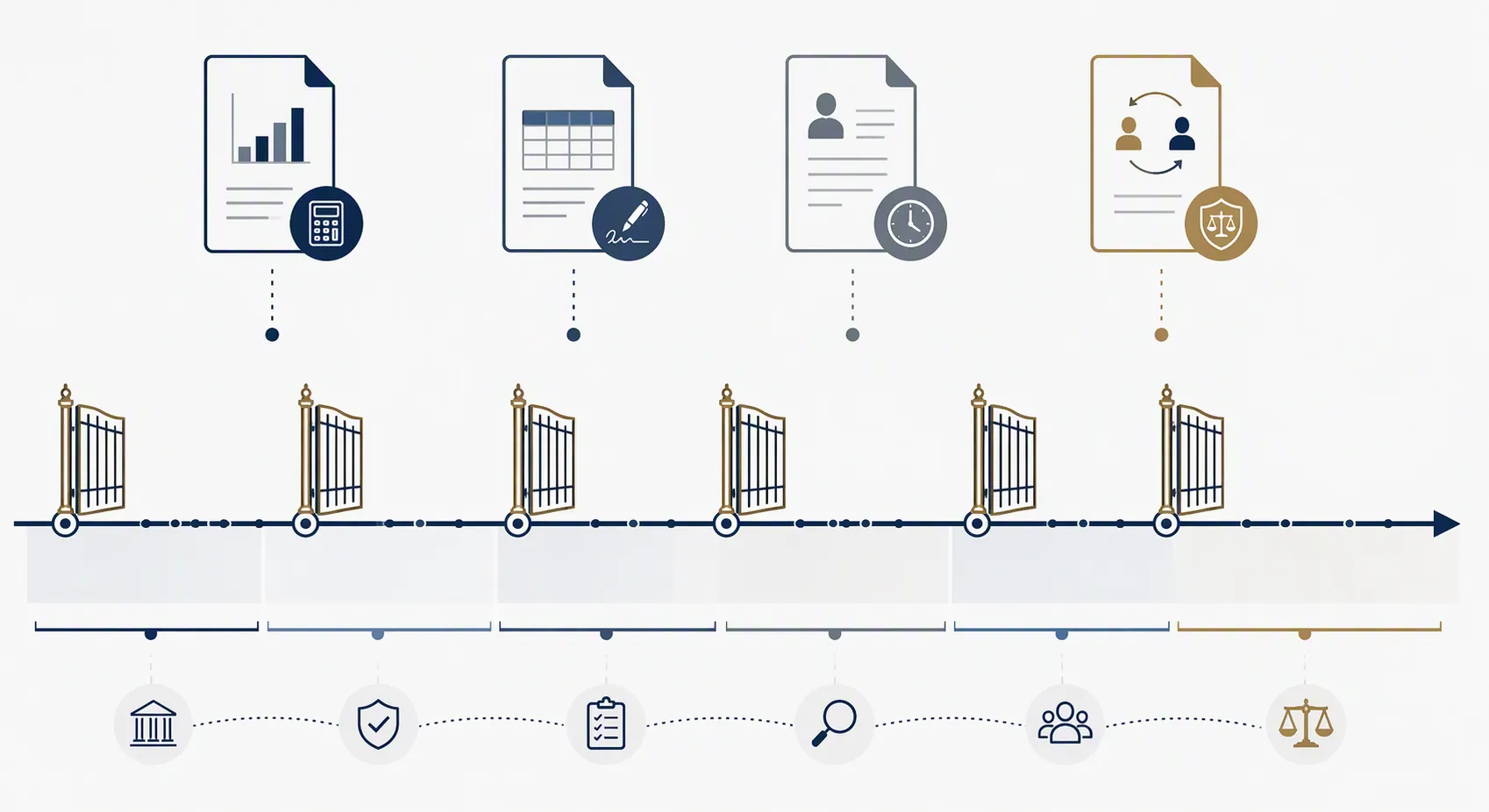
A staggered schedule is often discussed as market design: smaller releases may reduce the shock of a single cliff. For Section 16 and Rule 144 administration, it has a different consequence. It creates repeated decision points close enough together that prior sales, new acquisitions, trading-plan mechanics, Form 144 thresholds, and Form 4 deadlines can overlap.
A Section 16 insider who sells in every window may have a separate Form 4 deadline for each reportable transaction. The SEC’s Section 16 guide states that Form 4 is generally due within two business days after the transaction date.[6] That deadline does not wait for the next tranche, the next payroll cycle, or the next legal-team availability window.
The compressed schedule also makes Section 16(b) review harder to treat as an afterthought. Section 16(b) is a matching rule, not a scienter rule. The SEC’s investor guidance describes the statute as requiring insiders to return profits from any purchase and sale, or sale and purchase, of the issuer’s equity securities within a period of less than six months.[6] The classic problem is not that the insider meant to trade on confidential information. It is that the statute can match transactions mechanically.
For a SpaceX affiliate, the acquisition side may not look like an open-market buy. It may be RSU vesting, an option exercise, an employee stock purchase, or another equity event that has to be tested for Section 16 treatment. A sale after the first release can sit inside the same six-month period as a prior acquisition; a sale after a later 7% release can sit inside six months of both earlier sales and later acquisitions. The analysis has to run across the person’s transaction history, not just across the unlocked shares.
What the Clearance File Should Contain
A workable clearance file for an affiliate sale after a SpaceX tranche release should be built before the broker receives a sell order. At minimum, it should identify the shares proposed for sale, the tranche under which they became available, the seller’s affiliate and Section 16 status, and any company trading-window or preclearance conditions that remain separate from the IPO lockup.
- Confirm the actual lockup release mechanics in the S-1 and lockup agreements, including exceptions, early-release triggers, and any conditions tied to earnings or trading price.
- Calculate Rule 144 capacity before order entry, including prior sales and any required aggregation.
- Check whether the proposed sale, together with other sales in the same three-month period, exceeds 5,000 shares or $50,000.
- Prepare Form 144 so it can be filed when the order is placed if the threshold is crossed.
- Calendar the Form 4 deadline from the transaction date for any Section 16 reporting person.
- Review six months of acquisitions and sales for Section 16(b) matching risk before clearing the transaction.
The most dangerous file is the one that contains only the lockup release notice. That document may be necessary, but it is not enough to show that the sale was available under Rule 144, noticed on time, reported on time, and screened for short-swing profit exposure.
The Unsettled Part Is Not an Excuse to Ignore the Settled Part
The research materials identify no SEC no-action letter or judicial opinion specifically addressing Section 16(b) matching across six separate lockup releases in a compressed post-IPO schedule for a mega-cap issuer.[8][9] That absence should be described carefully. It does not mean Section 16(b) disappears, and it does not mean every match is inevitable. It means counsel cannot reduce the analysis to a generic lockup-expiration memo.
The settled duties still do most of the work. Rule 144 capacity must be calculated. Form 144 timing must be respected. Form 4 deadlines must be calendared. Section 16(b) history must be reviewed with the individual insider’s actual transaction data. The uncertainty sits around application to a particular sequence of transactions, exemptions, and facts; it does not suspend the review.
For SpaceX affiliates, each unlock opens a review queue, not an unrestricted exit. The public event is the release of contractual pressure. The legal event is narrower: a proposed sale in a specific amount, by a specific holder, through a specific method, on a specific date, with filings and six-month matching exposure checked before the order goes in.
References
- SpaceX selloff an ominous sign as lockup expiry looms, Reuters, July 16, 2026.
- SpaceX falls under IPO price, as lockup expirations loom, Axios, July 17, 2026.
- How SpaceX's Tiered Lockup Aims to Help Post-IPO Trading, Morningstar.
- Rule 144: Selling Restricted and Control Securities, SEC.gov.
- SEC Form 144 Explained, Investopedia.
- Officers, Directors and 10% Shareholders, SEC.gov.
- Rule 144 Explained: Conditions, Holding Periods, and Volume Limits, Carta.
- US IPO Guide, Latham & Watkins.
- Rule 144 – A Deep Dive – Part 1, securities-law-blog.com.
Related records
Tool profile
Browse tool evaluations →Governing regulation
Browse the obligations tracker →Preventive workflow
Browse verification workflows →
Report a correction or tip
Spotted an outdated figure, a misstated fact, or a ruling this case record should reflect? Public comments are disabled for this content given the professional cost of a misreported case outcome, penalty amount, or rule text — use the structured correction channel instead.
Report a correction or tip for this record →