
Who Can Sue Spectrum for the Kalamazoo 911 Outage?
An assessment of the regulatory, contractual, and tort liability Charter Communications faces from the July 23, 2026 Kalamazoo 911 outage, explaining which legal layer carries the most exposure and why individual claims face significant barriers.
Lex Machina Review is an independent risk-tracking and reference resource. Nothing on this site is legal advice, and using it does not create an attorney-client relationship. Every record is reviewed against primary sources but may not reflect the most current status of a matter — always verify directly against the cited court order, rule text, or a licensed attorney before relying on it.
Companion explanation — secondary to the source document above
For the Kalamazoo Spectrum 911 outage, the tight answer is this: residents and public agencies may be able to complain, report facts to regulators, arbitrate consumer disputes, or sue if a concrete injury can be tied to the outage. But the most certain liability channel is FCC enforcement, not a broad private consumer lawsuit. Individual damages claims would depend on proof that someone suffered actual injury or death because they could not reach emergency service during the outage window.
This assessment concerns the July 23, 2026 Charter/Spectrum outage in Kalamazoo County that reportedly disrupted 911 and 988 service. It is current as of July 28, 2026. No filed lawsuit, demand letter, or formal claim has been publicly identified in the materials reviewed for this analysis, and this is a legal-risk assessment, not legal advice. WWMT reported that planned maintenance by Charter caused a Spectrum outage that could prevent 911 calls in Kalamazoo County, while MLive reported disruption to both 911 and 988 service. [1][2]
The first fact to separate from the noise is not the existence of an outage. It is who had a legally enforceable duty to notify whom, and when. WWMT reported that the Kalamazoo County Dispatch Authority received an automated outage notification but, as of the report update, had not received a restoration notification. [1] Neither WWMT nor MLive reported the outage duration or the number of customers affected. [1][2]
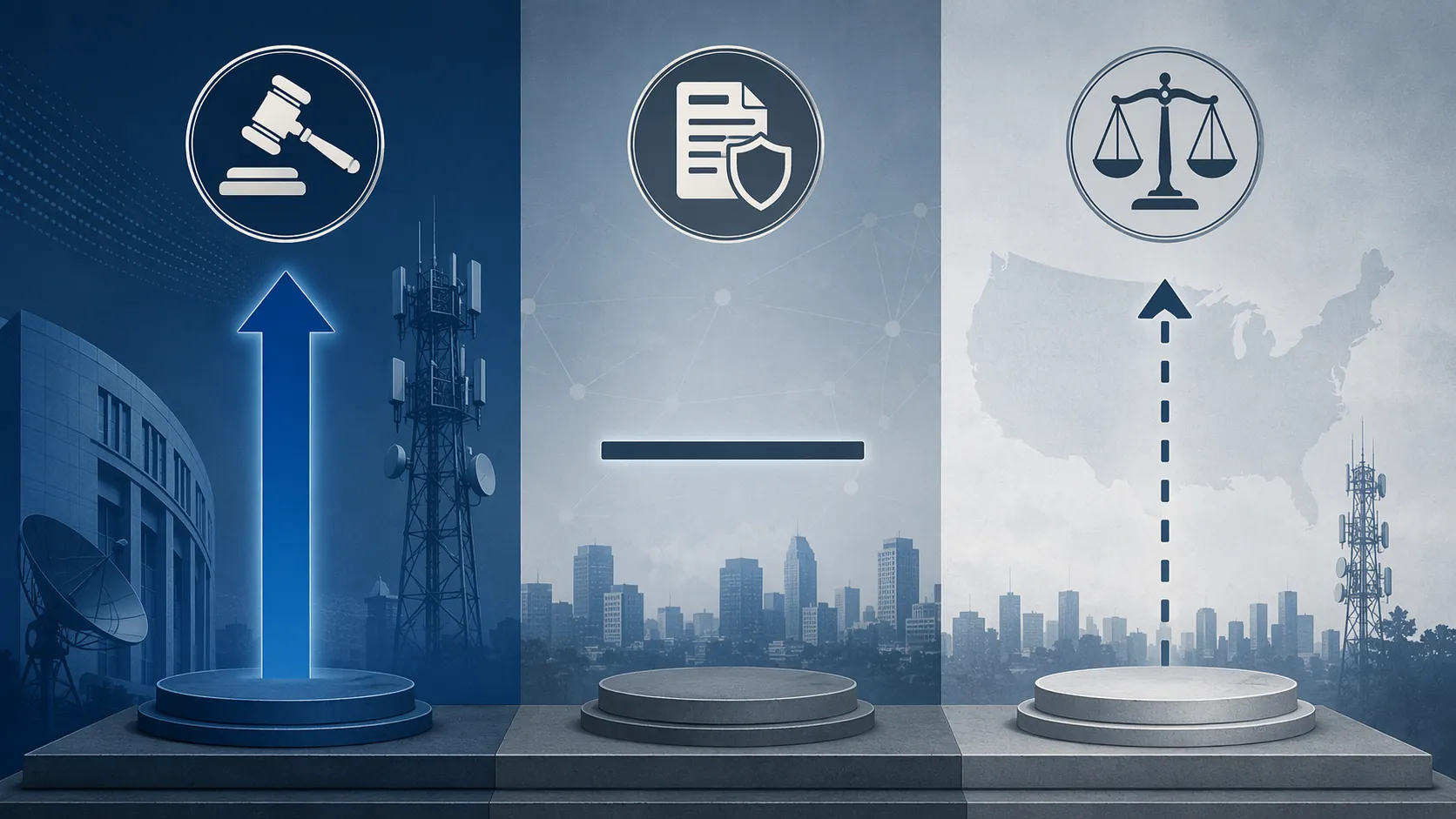
| Liability layer | Who can realistically act | What matters most |
|---|---|---|
| FCC regulatory enforcement | FCC, based on outage and PSAP notification rules | Discovery time, PSAP notice time, restoration notice, NORS reporting, and Charter’s existing compliance obligations |
| Consumer contract claims | Individual Spectrum customers, usually through arbitration rather than class litigation | Spectrum’s arbitration clause, class action waiver, and limitation of liability for interruptions |
| State tort claims | An injured person or estate, if an injury can be tied to inability to reach 911 | Duty, breach, causation, damages, gross-negligence arguments, and contractual defenses |
The FCC layer is the clearest source of exposure
The FCC has the cleanest enforcement path because it already has both the subject-matter rules and a recent Charter-specific record. In July 2024, Charter entered into a $15 million FCC consent decree after admitting failures to notify more than 1,000 public safety answering points and the FCC about VoIP 911 outages in 2023 and 2024. Charter also agreed to a three-year compliance plan that included automated PSAP notification, NIST cybersecurity measures, and Network Outage Reporting System obligations. [3]
That does not prove a violation in Kalamazoo. It does mean the FCC would not be looking at a first-contact fact pattern. If an agency inquiry follows, the immediate questions are procedural: when Charter discovered the Kalamazoo outage, when the PSAP was notified, whether the notice contained the required information, whether updates were sent, whether restoration was communicated, and whether Charter’s internal compliance plan functioned as promised.
The timing standard is sharper than it used to be. New FCC PSAP outage notification rules took effect April 15, 2025, requiring covered 911 service providers and originating service providers to notify PSAPs within 30 minutes of discovering a 911-affecting outage. [4] For Kalamazoo, that makes the reported automated outage notice useful but incomplete. The harder operational fact is the missing restoration notice reported by KCDA as of the update. [1]
Comparable FCC matters point the same way: these cases tend to become enforcement files before they become private damages cases. T-Mobile reached a $19.5 million FCC settlement over a 12-hour 911 outage in 2020. [5] AT&T reached a $950,000 FCC settlement over 2023 911 outage violations. [6] Those settlements were regulatory resolutions, not civil judgments awarding damages to individual callers.
FCC rules do not hand private plaintiffs a damages claim
The distinction matters. FCC 911 outage rules can create enforceable duties for the agency. They can also supply useful facts for a plaintiff trying to describe what a reasonable carrier should have done. But they do not automatically give Kalamazoo residents a private right to collect damages simply because a 911-affecting outage occurred.
That is why the regulatory file is more concrete than a consumer lawsuit at this point. The FCC can investigate notice failures even if no one has yet shown an individualized injury. A private plaintiff usually has to get further: an enforceable theory, a path around contract defenses, actual damages, and causation tied to the outage window.
Spectrum’s consumer terms create a gatekeeping problem
Ordinary consumer claims face a front-end contract problem. Spectrum’s residential service terms include binding individual arbitration, a class action waiver, and an express limitation of liability for failures or interruptions of service. [7] Its residential voice agreement is also part of the relevant contract architecture for voice-service customers. [8]
Those provisions do not make a 911 outage harmless. They change the forum, the scale, and the leverage of a claim. A customer seeking a service credit or other contract-based remedy may be pushed into individual arbitration. A putative class action over inconvenience, fear, or loss of service would have to deal with the class waiver before reaching the merits.
The limitation-of-liability language is also a damages barrier. Service-interruption clauses commonly aim to prevent ordinary outage claims from becoming consequential-damages litigation. The important caveat is gross negligence or comparable aggravated misconduct: contract terms are stronger against routine service claims than against claims alleging extreme disregard for known emergency-service obligations. Whether Kalamazoo facts could support that kind of allegation is not established by the public outage reports.
One source limitation should stay visible. The Spectrum policy pages returned minimal extractable text during collection for this assessment; the key barriers discussed here are the arbitration, class-waiver, and service-interruption limitations confirmed through the Spectrum policy materials and external review, rather than through a fully quoted page extraction. [7][8]
Tort liability depends on a missing injury record
The tort question is not “can consumers sue because 911 went down?” It is whether a specific plaintiff can prove duty, breach, causation, and damages from inability to reach emergency service during the outage. As of July 28, 2026, no public report reviewed for this assessment has established that a Kalamazoo resident suffered injury or death because a 911 call could not be completed during the Charter/Spectrum outage window.
That absence is not a technicality. Without a documented failed emergency call, a delayed dispatch, a worsened medical or safety outcome, and a time connection to the outage, civil tort exposure remains largely theoretical. A serious injury report would change the posture immediately, but it would not erase the need to prove causation against the carrier rather than against other parts of the emergency-response chain.
No reported U.S. decision identified for this analysis has held a telecom carrier civilly liable for damages from a 911 outage alone. That does not foreclose a novel claim, especially after a severe emergency failure. It does mean plaintiffs would be working without a direct carrier-liability precedent and against predictable defense arguments about contract limitations, lack of duty, remoteness, and causation.
The Sixth Circuit’s March 2026 911 case is a caution, not a carrier shield
The March 2026 Sixth Circuit ruling sometimes belongs in this discussion, but only with care. The court affirmed summary judgment for Michigan dispatch officials in a fatal 911 lawsuit, finding no constitutional-duty violation. [9] That case involved dispatch officials and governmental-immunity issues, not Charter, Spectrum, or a telecom carrier’s outage-notification duties.
Its relevance is atmospheric and procedural rather than controlling. It shows judicial caution in expanding liability around emergency-response failures in this circuit. It does not answer whether a private carrier can be liable for causing or mishandling a 911-affecting outage under state tort law.
Michigan law supplies context, not an easy private carrier claim
Michigan’s Emergency 9-1-1 Service Enabling Act regulates the state’s 911 system and PSAP structure, but the materials reviewed do not identify it as creating a private cause of action against telecom carriers for outage damages. [10] Michigan’s gross-negligence framework may matter if public actors are sued or if a plaintiff tries to defeat contractual limitations by alleging aggravated misconduct, but it does not by itself supply the missing injury and causation record.
If a later case emerges, the pleading will likely have to be narrower than “Spectrum had an outage.” The plaintiff would need facts such as an attempted emergency call, the call’s failure or misrouting, the timing of Charter’s discovery and notices, the timing of any restoration, what responders knew, what treatment or intervention was delayed, and what harm resulted from that delay.
The facts that would change the risk assessment
For now, the exposure map is narrow because the public record is narrow. The following facts would matter more than another general description of the outage:
- The exact outage start time, discovery time, and restoration time.
- The time and content of Charter’s notice to Kalamazoo County Dispatch Authority.
- Whether and when a restoration notice was sent.
- The number of affected customers and whether affected lines included residential voice, VoIP, business, or other service categories.
- Any failed 911 or 988 call records during the outage window.
- Any documented injury, death, delayed response, or worsened outcome tied to inability to reach emergency service.
- Any FCC inquiry, notice of apparent liability, consent-decree enforcement step, lawsuit, arbitration demand, or demand letter.
On the present public record, FCC enforcement remains the clearest exposure for Charter. Spectrum’s contract terms make broad consumer litigation difficult. Tort liability depends on a still-unreported injury and causation record. This assessment should be updated if lawsuits, demand letters, FCC action, outage-duration data, affected-customer counts, restoration-notice records, or injury reports become public.
References
- Charter Spectrum outage may prevent 911 calls in Kalamazoo County, WWMT
- Charter outage disrupts 911 service in Kalamazoo County, MLive
- FCC Settles 911 Rule Investigation with Charter for $15M, FCC, July 2024
- New FCC PSAP Outage Notification Rules Take Effect April 15, 2025, CommLaw Group, 2025
- FCC Reaches $19.5M Settlement with T-Mobile in 911 Outage Investigation, FCC
- FCC Settles AT&T 2023 911 Outage Violations for $950,000, FCC
- Residential General Terms and Conditions of Service, Spectrum
- Spectrum Residential Voice Services Agreement, Spectrum
- Sixth Circuit summary judgment 911 dispatch fatality, Michigan Lawyers Weekly, March 10, 2026
- Emergency 9-1-1 Service Enabling Act, Act 32 of 1986, Justia
Related records
Tool profile
Browse tool evaluations →Governing regulation
Browse the obligations tracker →Preventive workflow
Browse verification workflows →
Report a correction or tip
Spotted an outdated figure, a misstated fact, or a ruling this case record should reflect? Public comments are disabled for this content given the professional cost of a misreported case outcome, penalty amount, or rule text — use the structured correction channel instead.
Report a correction or tip for this record →