
State Department AI blunder apology carries no legal liability
This analysis examines whether the State Department's apology for its AI-generated map that mislabeled every African country creates legal liability. The FTCA's foreign country exception and discretionary function bar preclude any tort remedy, but the incident reveals a governance gap between the Department's new GenAI playbook and the absence of basic human review.
- Jurisdiction
- US Federal
- Court
- U.S. Department of State
- AI tool named
- OpenAI
- Ruling date
- Jul 30, 2026
- Source document
- View primary court order ↗
- Last verified
- Jul 31, 2026
Lex Machina Review is an independent risk-tracking and reference resource. Nothing on this site is legal advice, and using it does not create an attorney-client relationship. Every record is reviewed against primary sources but may not reflect the most current status of a matter — always verify directly against the cited court order, rule text, or a licensed attorney before relying on it.
Companion explanation — secondary to the source document above
The State Department’s apology for the AIDS 2026 map error did the work apologies often do in diplomacy: it acknowledged an obvious institutional failure, lowered the temperature, and told the people embarrassed in the room that the government would not pretend the slide was acceptable. It did not, by itself, create a damages claim. “Full responsibility” is a serious phrase in public affairs. It is not a waiver of sovereign immunity.
That distinction matters because the underlying incident was not a harmless typo. Reuters reported that a U.S. government map of Africa shown at the AIDS 2026 conference in Rio de Janeiro mislabeled every African country, with Nigeria made landlocked, Mozambique relocated to the Horn of Africa, and Côte d’Ivoire shifted to southern Africa. The map carried an OpenAI watermark, and the Department said a staffer had “hastily changed the slide deck before the event.”[1] The Washington Post separately reported the Department’s apology and its statement taking “full responsibility.”[2]
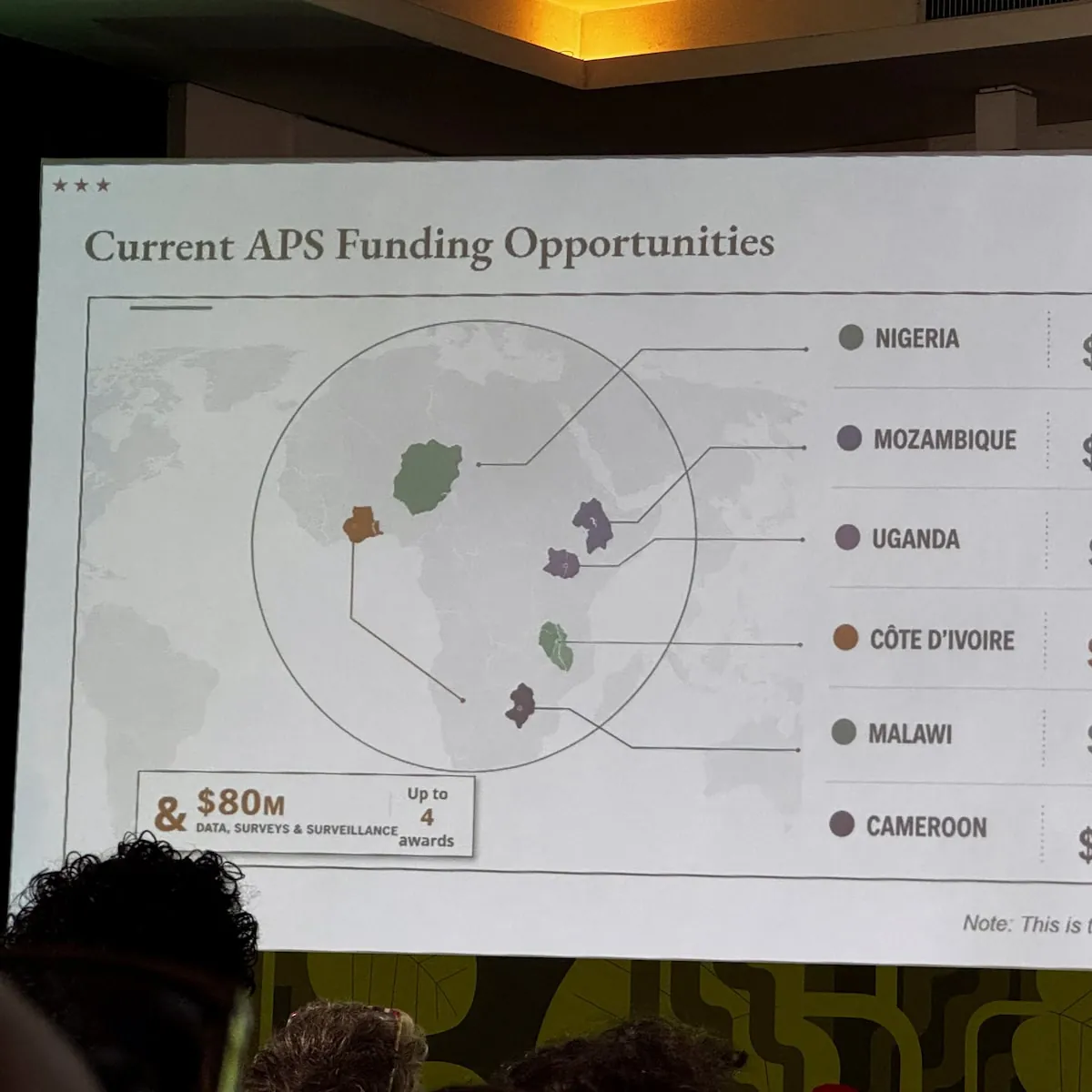
There is a clean legal question inside that messy public failure: does a State Department AI blunder apology carry legal responsibility under U.S. tort law? On the available facts, the answer is almost certainly no. The better reading is that the apology is institutionally significant but legally inert under the Federal Tort Claims Act.
Apology Does Not Waive Immunity
A private company can apologize and still contest liability. The federal government starts from a more basic position: it cannot be sued unless Congress has waived sovereign immunity. The FTCA is the ordinary route for tort claims against the United States, but it is a limited waiver, not a general invitation to convert official embarrassment into compensation. The Congressional Research Service describes the FTCA as authorizing certain tort suits against the United States while preserving statutory exceptions, including the foreign country exception and the discretionary function exception.[3]
That is the first place the apology loses legal force. A press statement accepting responsibility does not rewrite the FTCA. It does not identify a claimant, establish damages, choose a forum, waive an exception, or admit the elements of a cognizable tort. It may matter in congressional oversight, diplomatic repair, internal discipline, or public trust. It does not do the work Congress reserved for statute.
The injury theory would also be difficult to state with precision. Offense, embarrassment, and reputational insult are real-world harms, especially in a public health conference where U.S. diplomacy depends on geographic and political competence. But the FTCA is not a general remedy for being publicly disrespected by an official slide. A claimant would still need to identify a legally recognized tort, show cognizable damages, and fit within the waiver. The map’s obvious wrongness does not solve those requirements.
Foreign Country Exception Comes First
The most immediate statutory problem is location. The presentation occurred at AIDS 2026 in Rio de Janeiro, and any diplomatic or reputational harm from the public display would have arisen there. The FTCA’s foreign country exception, codified at 28 U.S.C. § 2680(k), excludes “[a]ny claim arising in a foreign country” from the statute’s waiver. CRS identifies that exception as one of the major limits on FTCA liability.[3]
That language is doing a great deal of work here. If the claim is framed around the presentation of an erroneous map at a conference in Brazil, the claim arises in a foreign country. The FTCA route closes before anyone reaches the more satisfying questions about AI use, staff review, or diplomatic negligence.
There is a possible pleading move, and it should not be ignored. A claimant might try to locate the negligent act in Washington, where the slide deck was prepared or altered, rather than in Rio, where the slide was shown. That is the kind of issue that can send lawyers into case law, including Sosa-type foreign-country analysis, rather than headlines. The research record here does not establish every step in the slide’s creation, and the line between domestic preparation and foreign injury is not always self-defining.
Even with that uncertainty, the stronger practical conclusion remains narrow and unfavorable to liability. The public-facing event was abroad; the alleged dignitary, reputational, or diplomatic injury occurred abroad; and the statutory text is written to prevent FTCA claims arising in foreign countries. The apology does not relocate the claim.
Discretionary Function Bar Comes Next
Assume, for a moment, that a claimant avoided the foreign country exception by characterizing the failure as domestic slide preparation. The discretionary function exception would still be waiting. CRS explains that the FTCA does not waive immunity for claims based on the exercise or performance, or the failure to exercise or perform, a discretionary function or duty by a federal agency or employee.[3]
That exception is not a compliment to the decision. It does not mean the government chose wisely. It means certain decisions remain insulated from tort review because they involve judgment of the kind the exception protects. In this setting, the government would likely characterize the challenged conduct as involving staffing, workflow, delegation, clearance, presentation preparation, resource allocation, and review procedures for official communications. Those are not attractive facts for the agency, but they are familiar discretionary-function facts.
The harder case would require a specific, mandatory rule that removed discretion: for example, a binding instruction that every externally presented AI-generated map must be independently verified by a named office before display. The research materials supplied for this incident do not identify such a rule. They identify a newly released GenAI playbook and a public mistake that seems to have bypassed the common-sense review that the situation demanded. That is bad governance. It is not automatically tort liability.
This is where legal responsibility and institutional responsibility part company. A person in the audience did not need a statute book to know the map was indefensible. A court, however, would need a waiver, a claim not barred by exception, and a theory of damages. The FTCA exceptions are designed to make many government errors noncompensable even when the error is visible and avoidable.
The AI Detail Matters, But Not In The Way The Headlines Suggest
The OpenAI watermark matters because it shows generated content entered an official deck. It does not, on its own, answer who generated the map, what tool settings were used, what review occurred, whether the staffer knew the map was generated, or whether any vendor had legal exposure. Reuters reported the watermark and the Department’s explanation that a staffer hastily changed the slide deck; the available record does not support a more elaborate vendor-liability story.[1]
Nor is this mainly a lesson about whether AI systems can draw maps. The more concrete failure is that a map purporting to label an entire continent reached an official diplomatic presentation without someone stopping at the most basic checkpoint: do the country labels correspond to the countries? AI made the error visible; human workflow let it become official.
That is also why comparisons to other AI hallucination episodes are useful only up to a point. In litigation, AI-generated fabrications can contaminate briefs, affidavits, or evidentiary submissions, as seen in disputes over hallucinated sources and professional review failures. The government-map incident belongs to the same verification family, but it sits in a different legal posture: diplomatic communication abroad, sovereign immunity, and FTCA exceptions. The risk pattern is shared; the remedy analysis is not.
A Governance Document Met A Pre-Publication Checkpoint
The sharper institutional problem is timing. Nextgov/FCW reported on July 24, 2026, that the State Department had released a generative AI playbook advising organizations to “first develop a foundational data and AI governance strategy” before deploying AI.[4] Two days later, according to the reported conference timeline, an AI-watermarked map that mislabeled every African country appeared in a PEPFAR-related presentation at AIDS 2026.[1][4]
That juxtaposition is not proof that the playbook was legally binding, nor proof that the staffer violated a particular rule. It is more prosaic and more damaging: the Department could articulate AI governance in public while missing the kind of operational review that governance is supposed to produce. A foundational strategy is not much comfort if an externally displayed map of Africa is not checked before use.
In public-sector practice, this is where polished policy often thins out. The document says governance; the calendar says the deck is due; a staffer makes a late change; review becomes assumed rather than performed. The problem is not that every slide needs a lawyer. The problem is that official material using generated geographic content needs a verification owner before it reaches a room full of foreign counterparts, public health officials, and advocates.
The AIDS 2026 setting made the lapse more conspicuous. Emily S. Bass’s account places the map within a conference and PEPFAR context, not a casual internal brainstorm.[5] That context does not create FTCA liability, but it does change the institutional stakes. A program built on health diplomacy cannot treat geographic accuracy as a decorative feature.
| Question | Likely Answer On Current Facts |
|---|---|
| Does the apology create liability? | No. It is not an FTCA waiver or admission establishing a compensable tort. |
| What is the first statutory barrier? | The foreign country exception, because the presentation and alleged harm occurred in Brazil. |
| What if the negligent preparation is framed as Washington-based? | That may create a case-law argument, but the discretionary function exception would likely remain a major barrier. |
| What does the AI watermark prove? | Only that generated content entered the deck; it does not establish vendor liability or a specific tort theory. |
| What is the strongest risk lesson? | AI governance failed at a basic pre-publication verification point. |
Why No Remedy Still Leaves A Risk Signal
NYU’s Compliance & Enforcement analysis of AI liability, published in May 2026, reflects the broader problem: AI-related harm often sits uneasily among existing liability frameworks, with responsibility distributed among deployers, developers, users, and institutions.[6] That background is useful, but it should not blur the government-specific answer. For federal tort exposure, the FTCA exceptions do most of the work.
Risk managers should still take the incident seriously precisely because litigation is the wrong measuring stick. A barred claim can coexist with a serious failure. The consequence may be diplomatic embarrassment, oversight attention, internal control changes, and reduced credibility in future AI governance claims rather than damages awarded by a court.
The minimum control here is not exotic. Generated maps, charts, legal citations, country names, agency seals, official quotations, and public-health figures need human verification before publication, with someone assigned to perform the check and someone senior enough to stop the release. The lesson from the map is not that every AI-assisted slide deck creates FTCA exposure. It is that a government can be legally protected from suit and still plainly fail the room.
So the legal conclusion is narrow: the State Department’s apology carries no independent legal effect under the FTCA, and the foreign country and discretionary function exceptions likely preclude a tort remedy. The operational conclusion is not narrow at all. The credibility damage happened at the exact checkpoint where a reasonably attentive human review should have caught the error.
References
- US government map of Africa mislabels every country at global conference, Reuters, July 30, 2026
- State Dept. apologizing for Africa map that mislabeled every country, The Washington Post, July 30, 2026
- The Federal Tort Claims Act: A Legal Overview, Congressional Research Service
- State Department releases playbook for generative AI, Nextgov/FCW, July 24, 2026
- The US State Department redraws the..., Emily S. Bass
- Untangling AI Liability, NYU Compliance & Enforcement, May 2026
Related records
Tool profile
Neither Codex nor Claude Code Is Safe for Legal AI AgentsGoverning regulation
Browse the obligations tracker →Preventive workflow
Browse verification workflows →
Report a correction or tip
Spotted an outdated figure, a misstated fact, or a ruling this case record should reflect? Public comments are disabled for this content given the professional cost of a misreported case outcome, penalty amount, or rule text — use the structured correction channel instead.
Report a correction or tip for this record →