
Taco Bell Cyclospora Outbreak Spawns Multiple Lawsuits
A structured record of every lawsuit filed in the 2026 Taco Bell cyclosporiasis outbreak, detailing defendants, jurisdictions, legal theories, and current procedural posture for litigators and in-house counsel evaluating filing strategy and exposure.
- Jurisdiction
- United States
- Court
- U.S. District Court for the Northern District of Ohio
- AI tool named
- None
- Ruling date
- Jul 17, 2026
- Source document
- View primary court order ↗
- Last verified
- Jul 25, 2026
Lex Machina Review is an independent risk-tracking and reference resource. Nothing on this site is legal advice, and using it does not create an attorney-client relationship. Every record is reviewed against primary sources but may not reflect the most current status of a matter — always verify directly against the cited court order, rule text, or a licensed attorney before relying on it.
Companion explanation — secondary to the source document above
This is a 2026 litigation record, last checked against the cited sources as of July 25, 2026. The search phrase “taco bell cyclospora outbreak liability lawsuits 2025” carries the wrong year for the docket cluster discussed here: the outbreak investigation and the lawsuits described in the available materials are 2026 events, with the CDC notice dated July 16, 2026 and filings following immediately after it.[1][2][3]
The working litigation universe is already larger than a single complaint. Within days of the CDC notice, public reporting and plaintiffs’ counsel announcements identified at least seven lawsuits across the Northern District of Ohio, Eastern District of Michigan, and Northern District of California. The pleadings and reports point to a three-tier defendant structure: franchisee or operator defendants such as Pacific Bells and Charter Foods; Taco Bell entities including Taco Bell Corp. and Taco Bell of America; and supplier or processor entities including Taylor Fresh Foods and Taylor Farms California.[2][3][4][5]
The procedural fact now carrying the most weight is not a merits ruling. It is the pending request for multidistrict centralization. A July 17, 2026 motion asked the Judicial Panel on Multidistrict Litigation to centralize cyclosporiasis outbreak actions against Taylor Farms and Taco Bell, with the matter set for the JPML’s July 30 session.[6]
Filed Cases And Reported Actions
The case inventory matters because the early filings are not all doing the same job. Some seek personal-injury recovery for alleged illness after Taco Bell meals. At least one seeks class-wide economic-loss relief. Some plead against restaurant operators first; others add Taco Bell corporate entities and Taylor produce entities. That spread is what makes the MDL motion consequential.
| Reported action | Court | Filing timing | Defendants identified in available materials | Theories or relief posture | Status as of July 25, 2026 |
|---|---|---|---|---|---|
| First reported individual personal-injury lawsuit by a hospitalized plaintiff identified in available materials as Ott | Northern District of Ohio | Filed after the CDC’s July 16, 2026 notice; public release describes it as the first lawsuit | Taco Bell operator and Taylor Farms/Taylor Fresh Foods entities are identified in reporting; operator-tier and supplier-tier defendants are central to the report | Personal-injury claims; the Ott complaint is reported as seeking compensatory damages exceeding $100,000 and punitive damages exceeding $500,000 | Pending; no merits ruling or centralization order identified in the available materials |
| Additional individual personal-injury suit reported within the initial filing wave | Northern District of Ohio | Reported within 72 hours of the CDC notice | Public reporting places the Ohio filing wave against Taco Bell-related and/or operator defendants, with Taylor entities also appearing in the broader defendant structure | Individual illness claim; available materials identify strict product liability and negligence theories in the litigation set | Pending; subject to possible effect of the JPML centralization request |
| Additional individual personal-injury suit reported within the initial filing wave | Eastern District of Michigan | Reported within 72 hours of the CDC notice | Taco Bell entities, franchisee/operator defendants, and Taylor Fresh Foods/Taylor Farms entities are identified across the reported litigation structure | Individual illness claim; available materials identify negligence and product-liability theories in the litigation set | Pending; no transfer order identified in the available materials |
| Additional individual personal-injury suit reported within the initial filing wave | Eastern District of Michigan | Reported within 72 hours of the CDC notice | Defendant tiering follows the same operator, franchisor, and supplier structure reported for the outbreak litigation | Individual illness claim; damages details not specified in the available record | Pending; centralization unresolved |
| Consumer economic-loss class action | Northern District of California | Reported within 72 hours of the CDC notice | Taco Bell and Taylor Farms/Taylor Fresh Foods defendants are identified in reporting on the centralization request and class-action filings | Consumer-protection and economic-loss posture; available materials identify Ohio CSPA and Michigan CPA claims in the broader litigation set | Pending; centralization motion filed July 17, 2026 seeks to coordinate consumer-protection class actions |
| Additional reported outbreak-related lawsuit | Northern District of California | Reported in the early post-notice docket cluster | Reported defendant pool includes Taco Bell entities and Taylor Farms/Taylor Fresh Foods entities | Available materials do not supply a full caption or damages demand; included here only as part of the reported seven-lawsuit universe | Pending; procedural handling may turn on JPML action |
| Additional reported outbreak-related lawsuit | One of the three reported federal districts: ND Ohio, ED Michigan, or ND California | Reported in the early post-notice docket cluster | Reported defendant pool spans operator, franchisor, and supplier tiers | Available materials do not supply a full caption, court-specific docket posture, or damages demand | Pending; unresolved centralization is the controlling procedural uncertainty |
That last caveat is not cosmetic. A filing matrix used for claims handling or partner briefing should not upgrade a news report into a docket sheet. The record here supports the jurisdictions, the minimum lawsuit count, the defendant tiers, and the principal theories. It does not supply full captions, docket numbers, judge assignments, or service posture for every reported case.
The Defendant Pattern Is Doing Most Of The Work
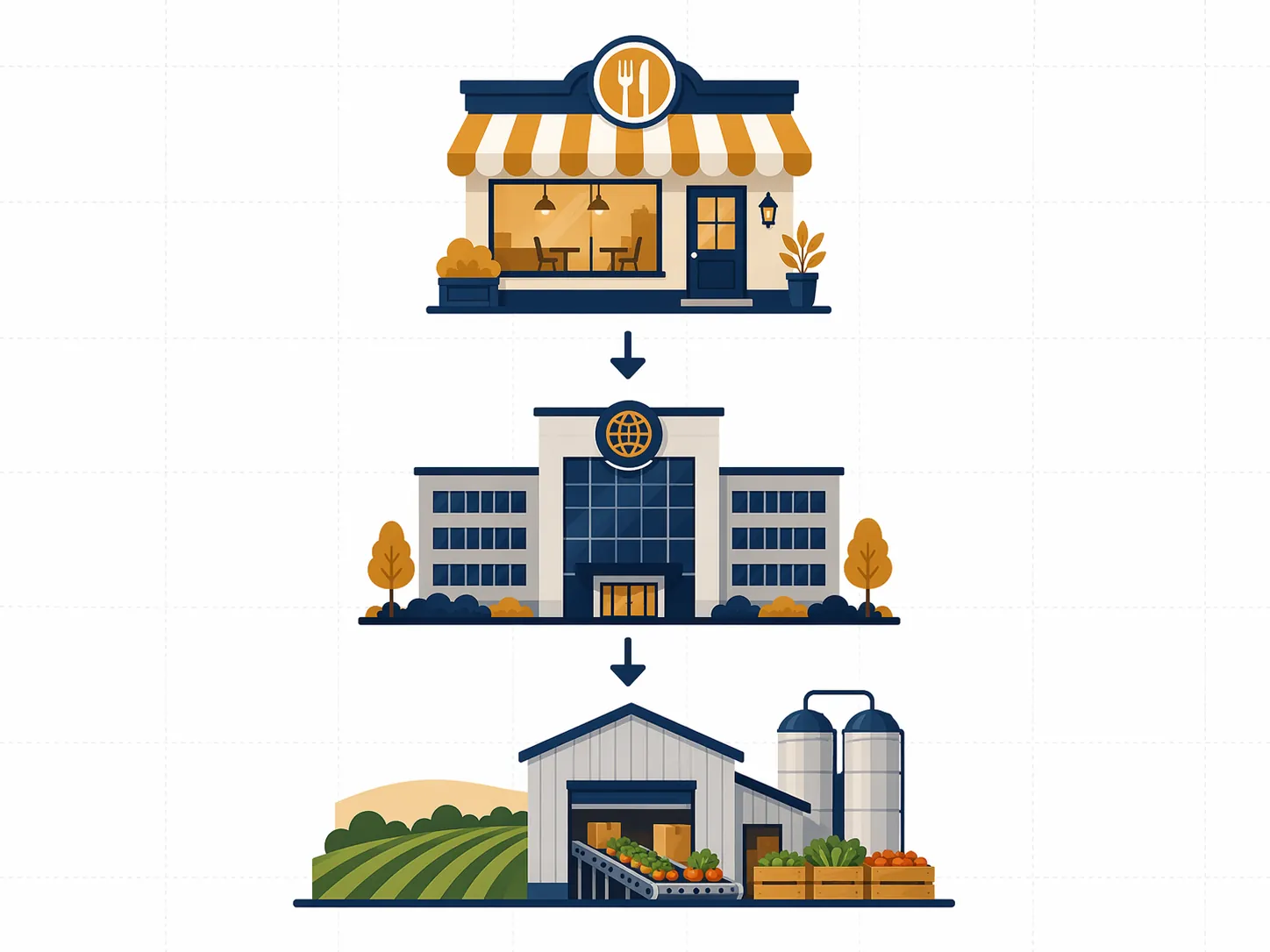
The early complaints and coverage do not frame this as a simple one-defendant restaurant exposure case. They divide risk across three places where control may be alleged: the restaurant operator that served the food, the Taco Bell system entities that allegedly shaped sourcing or menu operations, and the produce supplier or processor connected to the recalled lettuce supply.[4][5]
| Tier | Reported defendants | Why plaintiffs name the tier | Likely litigation pressure point |
|---|---|---|---|
| Franchisee/operator | Pacific Bells, Charter Foods | The alleged exposure occurs at restaurant locations where customers purchased or consumed Taco Bell food | Location-specific sales, ingredient handling, training, and whether the operator can be tied to the implicated lettuce stream |
| Franchisor/system | Taco Bell Corp., Taco Bell of America | The complaints and reports place Taco Bell entities in the case because the branded system allegedly connects menu design, sourcing expectations, and consumer-facing sales | How much control the Taco Bell entities exercised over sourcing, food-safety standards, supplier approval, and warnings |
| Supplier/processor | Taylor Fresh Foods, Taylor Farms California | The recall and reporting place Taylor entities in the alleged lettuce supply chain | Traceback, lot identification, testing history, recall communications, and the effect of the FDA’s false-positive retraction |
This tiering also explains why the legal theories are not interchangeable. Strict product-liability theories, including claims under the Ohio Product Liability Act, press on whether the food product was defective and caused illness. Negligence theories press on what each defendant did or failed to do. Consumer-protection theories, including Ohio CSPA and Michigan CPA claims identified in the available materials, move toward purchase, representation, and economic-loss questions. For a fuller treatment of the strict-liability theory rather than the docket map, see Taco Bell Cyclospora Lawsuits Test Strict Product Liability.
For defendants, the practical problem is allocation before discovery is centralized or separated. An operator may want the case treated as a supplier-contamination matter. A supplier may press for proof that its product reached the plaintiff’s meal and that the product was contaminated. Taco Bell entities may contest whether brand-system involvement is enough to create direct liability for a customer’s alleged exposure at a franchised or operated location. None of those positions can be resolved from the early reports, but all of them shape the first responsive pleadings and preservation demands.
Outbreak Counts Belong In The File, But Scope Matters
The CDC reported 1,947 outbreak-linked cyclosporiasis cases across 9 states, including 98 hospitalizations, as of July 24, 2026.[1] Those numbers are the outbreak-linked figures to use when describing the federal Taco Bell-associated investigation.
Michigan’s much larger surveillance number should not be dropped into a litigation memo as if it were the same denominator. CDC health-alert materials reported more than 4,312 state-confirmed Michigan cases in the broader surveillance context, but that figure is distinct from the Taco Bell-linked CDC outbreak count.[7] For pleading or removal strategy, that distinction matters: one number describes the identified multistate outbreak universe; the other describes a broader state surveillance environment.
The recall chronology is short but important. Taylor Fresh Foods recalled iceberg lettuce from Central Mexico on July 17, 2026 because of a possible health risk.[8] The next day, the FDA reported a positive Cyclospora sample on Taylor Farms lettuce, but retracted that result on July 19 as a false positive. As of the latest FDA update described in the available materials, no confirmed positive product sample exists.[9]
That retraction does not end the cases. Foodborne-illness litigation often proceeds on epidemiological and traceback evidence before every laboratory question is settled. But it does remove the cleanest product-sample sentence from the plaintiff-side narrative. Complaints and responses will likely spend significant time on what the epidemiology shows, what the traceback documents show, and whether either is strong enough for strict-liability and causation purposes.
Damages Signals Are Uneven
The strongest damages detail in the available materials is the Ott complaint. Food Poisoning News reported that Ott, described as a hospitalized Army veteran, sought compensatory damages exceeding $100,000 and punitive damages exceeding $500,000.[10] That is a pleaded demand in a reported case, not a valuation for the docket cluster.
The broader settlement context is also easy to overuse. Marler Clark has reported prior cyclospora settlements ranging from $25,000 to more than $1 million.[11] Those figures are useful as a reminder that cyclospora cases can have serious economic value, especially when hospitalization or prolonged illness is alleged. They do not establish the settlement value of any Taco Bell 2026 plaintiff, and they do not answer the causation questions created by the FDA sample retraction.
The complaints’ references to prior cyclospora history may eventually matter for notice, foreseeability, or punitive-damages arguments. That issue is better treated as a prior-outbreak liability question than as an item in this docket inventory; the companion analysis How a Past Cyclospora Outbreak Shapes Current Product Liability addresses that comparison directly.
Why The JPML Motion Is The Procedural Hinge
The July 17 centralization motion asks the JPML to bring related cyclosporiasis outbreak actions against Taco Bell and Taylor Farms into coordinated proceedings, with the motion scheduled for the JPML’s July 30 session.[6] Until the panel rules, counsel are briefing against a moving procedural background.
If centralization is granted, the practical center of the litigation shifts toward common discovery: supplier contracts, traceback records, recall communications, testing records, franchise and operator agreements, food-safety protocols, and communications between Taco Bell entities, operators, and Taylor entities. Individual injury facts would still matter, but the first major discovery fight would likely concern what evidence is common across the cases.
If centralization is denied or narrowed, the early forum choices matter more. The Northern District of Ohio, Eastern District of Michigan, and Northern District of California actions could develop different schedules, different motion practice, and different discovery timing. That would increase the burden on defendants trying to maintain a consistent causation and supply-chain position, and it would also affect plaintiffs deciding whether to file as individual injury plaintiffs, consumer class representatives, or both.
No cited source reports that the JPML has ruled. The correct posture, as of this article’s current date, is pending centralization with a scheduled July 30 session. Anything stronger would be prediction, not record.
Current Litigation Posture
As of Q3 2026, the Taco Bell cyclospora outbreak litigation is a multi-jurisdiction docket cluster rather than a single food-safety story. The verified record supports at least seven reported lawsuits in three federal districts, a three-tier defendant structure, and a mix of strict product-liability, negligence, and consumer-protection theories. The CDC-linked outbreak numbers, the broader Michigan surveillance figures, the July 17 recall, and the FDA’s false-positive retraction all belong in the file, but none replaces the docket question now in front of counsel: whether the JPML will centralize the cases and thereby set the first meaningful framework for filing strategy, discovery, and exposure analysis.
References
- Investigation of 5-state outbreak of Cyclospora illnesses linked to iceberg lettuce, CDC, https://www.cdc.gov/cyclosporiasis/outbreaks/07-26/investigation.html
- Taco Bell Hit With Federal Lawsuits Over Cyclosporiasis Infections, Forbes, July 17, 2026, https://www.forbes.com/sites/conormurray/2026/07/17/taco-bell-hit-with-federal-lawsuits-over-cyclosporiasis-infections/
- First Lawsuit in 2026 Multistate Cyclospora Outbreak Filed Against Taco Bell Operator in Ohio Federal Court, PR Newswire, https://www.prnewswire.com/news-releases/first-lawsuit-in-2026-multistate-cyclospora-outbreak-filed-against-taco-bell-operator-in-ohio-federal-court-302828073.html
- Taco Bell, Taylor Farms, franchisee sued over cyclosporiasis outbreak, Restaurant Dive, https://www.restaurantdive.com/news/taco-bell-taylor-farms-franchisee-sued-cyclosporiasis/825998/
- Taco Bell Customers Launch Lawsuits Over Cyclospora Outbreak, Newsweek, https://www.newsweek.com/taco-bell-customers-launch-lawsuits-over-cyclospora-outbreak-12217697
- JPML Asked To Centralize Cyclosporiasis Outbreak Actions Against Taylor Farms, Taco Bell, HarrisMartin Publishing, https://www.harrismartin.com/publications/27/MDL/articles/96429/jpml-asked-to-centralize-cyclosporiasis-outbreak-actions-against-taylor-farms-taco-bell/
- CDCHAN-00531, CDC Health Alert Network, https://www.cdc.gov/han/php/notices/han00531.html
- Taylor Fresh Foods Recalls Iceberg Lettuce from Central Mexico Because of Possible Health Risk, FDA, July 17, 2026, https://www.fda.gov/safety/recalls-market-withdrawals-safety-alerts/taylor-fresh-foods-recalls-iceberg-lettuce-central-mexico-because-possible-health-risk
- Investigation of 5-state outbreak of Cyclospora illnesses: iceberg lettuce, FDA, July 2026, https://www.fda.gov/food/outbreaks-foodborne-illness/investigation-5-state-outbreak-cyclospora-illnesses-iceberg-lettuce-july-2026
- First Lawsuit Filed in Taco Bell Cyclospora Outbreak: Hospitalized Army Veteran Sues Taco Bell and Taylor Farms, Food Poisoning News, https://www.foodpoisoningnews.com/first-lawsuit-filed-in-taco-bell-cyclospora-outbreak-hospitalized-army-veteran-sues-taco-bell-and-taylor-farms/
- The Cyclospora Outbreak Now Has Two Names on It: Taylor Farms and Taco Bell — Both Have Been Here Before, and So Have I, Marler Blog, https://www.marlerblog.com/case-news/the-cyclospora-outbreak-now-has-two-names-on-it-taylor-farms-and-taco-bell-both-have-been-here-before-and-so-have-i/
Related records
Tool profile
Browse tool evaluations →Governing regulation
Browse the obligations tracker →Preventive workflow
Browse verification workflows →
Report a correction or tip
Spotted an outdated figure, a misstated fact, or a ruling this case record should reflect? Public comments are disabled for this content given the professional cost of a misreported case outcome, penalty amount, or rule text — use the structured correction channel instead.
Report a correction or tip for this record →