
Who Is Really Named in the Tarek Mansour Kalshi Lawsuit?
The record behind the 'Tarek Mansour Kalshi lawsuit' search is New York's July 31, 2026 enforcement action against KalshiEX LLC — a pending filing that names the company, not Mansour individually, as defendant. It separates confirmed docket facts from reported figures, including the $36 billion exposure estimate, and confirms no AI tool is implicated in the case.
- Jurisdiction
- New York, United States
- Court
- New York Supreme Court, New York County
- AI tool named
- None
- Ruling date
- Jul 31, 2026
- Source document
- View primary court order ↗
- Last verified
- Aug 4, 2026
Lex Machina Review is an independent risk-tracking and reference resource. Nothing on this site is legal advice, and using it does not create an attorney-client relationship. Every record is reviewed against primary sources but may not reflect the most current status of a matter — always verify directly against the cited court order, rule text, or a licensed attorney before relying on it.
Companion explanation — secondary to the source document above
Safe answer for the search phrase “tarek mansour kalshi lawsuit”: the record to brief is New York v. KalshiEX, LLC, filed July 31, 2026, in New York Supreme Court, New York County. New York’s public announcement says the state sued KalshiEX LLC for allegedly running an illegal gambling operation, and the petition supplied by the Attorney General is captioned against KalshiEX, LLC—not against Tarek Mansour individually. As of Aug. 4, 2026, treat it as pending, not decided. Treat Mansour as a public executive identified in coverage, not as an individual defendant unless the petition’s party list says otherwise. No AI tool, AI-generated filing, hallucinated citation, or AI-sanction issue is implicated by this enforcement record. [1][2]
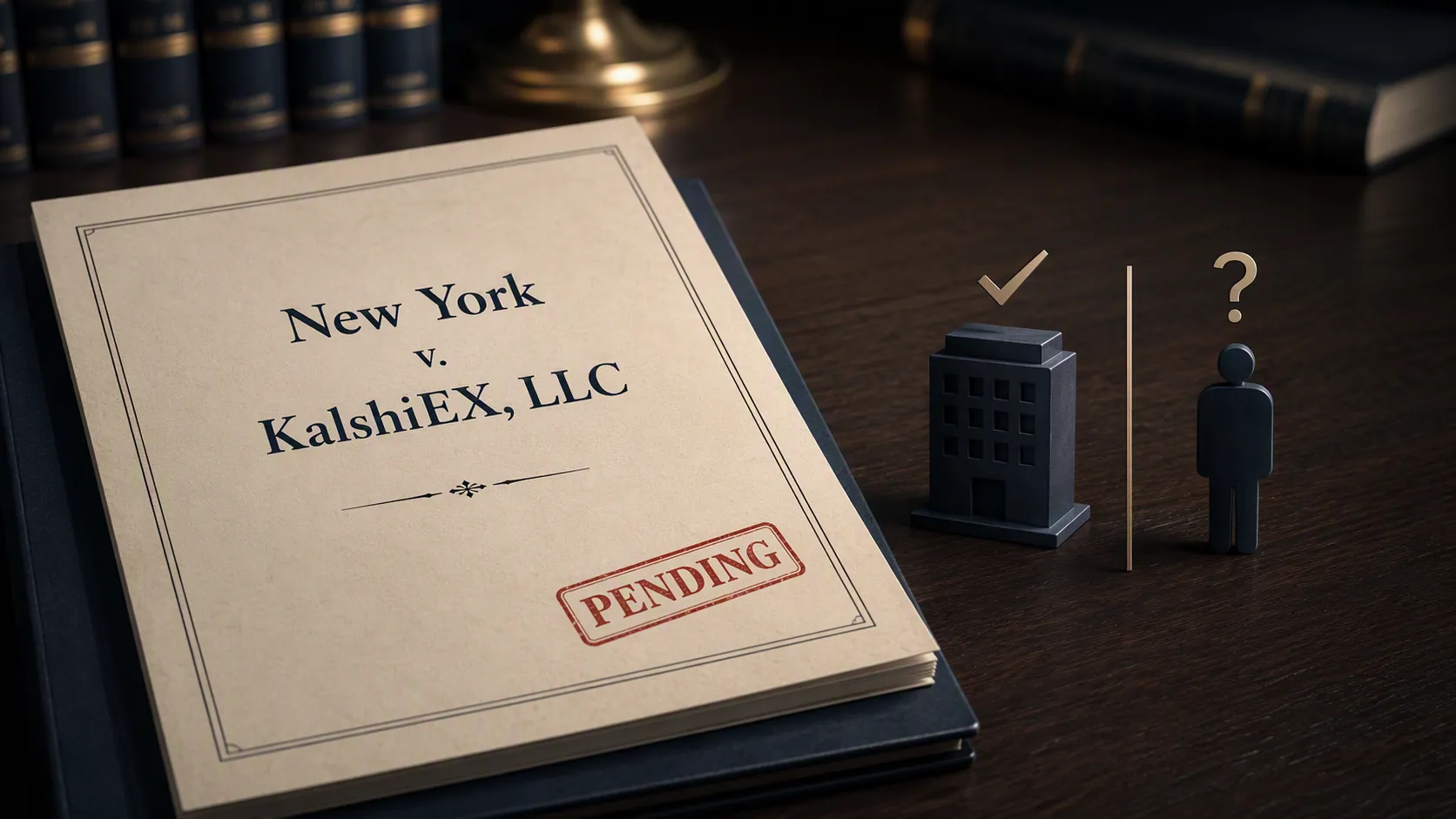
The sentence that can safely go into a quick client or partner note is narrower than most headlines: New York has sued KalshiEX LLC in a pending state enforcement action over alleged unlicensed gambling; Tarek Mansour has been identified in news coverage as Kalshi’s co-founder/CEO, but the entity—not Mansour individually—is the defendant confirmed here.
The docket fields to verify before anyone briefs this
| Field | Current verification posture |
|---|---|
| Record behind the search | New York v. KalshiEX, LLC. [2] |
| Filing date | July 31, 2026. [1][2] |
| Forum | New York Supreme Court, New York County. [2] |
| Plaintiff posture | State enforcement action announced by Governor Kathy Hochul and Attorney General Letitia James. [1] |
| Named defendant confirmed here | KalshiEX LLC / KalshiEX, LLC. [1][2] |
| Mansour status | Named in coverage as Kalshi’s co-founder/CEO; not treated here as an individual defendant absent confirmation from the petition’s party list. [3][4] |
| Theory | Alleged illegal, unlicensed gambling operation. [1][2] |
| Relief described in the materials | Permanent injunction, restitution to users, statutory penalties tied to sports-wagering offers, and treble damages. [2][3] |
| Status as of Aug. 4, 2026 | Pending; no decision on the merits identified in the supplied record. |
| AI flag | No AI tool or AI-content sanction issue identified in this enforcement record. |
The order of operations matters. A press release can tell you that the Attorney General announced a lawsuit. The petition controls the caption, parties, causes of action, requested relief, and the exact way the state pleads the theory. Before publishing a client alert, docket note, or internal risk item, open the petition PDF directly and check the caption and party list. For this record, the party question is not a stylistic point; it is the difference between “Kalshi was sued” and “Mansour was sued.”
What New York says it is suing over
New York frames the case as an enforcement action against an allegedly illegal gambling operation, not as a securities-fraud case, consumer class action, founder-liability case, or AI-misuse proceeding. The Attorney General’s announcement says Kalshi is accused of offering sports-event contracts that New York treats as unlawful gambling, and the petition is the document to read for the pleaded statutory route and relief demand. [1][2]
The relief package is also easy to overstate if it is pulled only from secondary coverage. The materials identify requests for a permanent injunction, restitution to affected users, a $100,000 penalty per sports-wagering offer, and treble damages. CNBC reported that the state’s estimate could total $36 billion. That number is too large to omit, but it should be carried as a reported exposure estimate unless the petition and any supporting calculation have been checked directly. [2][3]

That distinction is especially important because statutory-penalty arithmetic can look like a damages finding when it is not one. A requested penalty formula, an agency estimate, and a court-awarded amount are three different things. As of this verification posture, the case is at the filing stage; the cited materials do not establish that a court has awarded $36 billion or found Kalshi liable.
Where Mansour fits—and where he does not
Mansour’s name appears because news coverage identifies him as Kalshi’s co-founder and chief executive. CNBC and CNN both use his public role to explain the company and the dispute. That does not answer the docket question. A person can be quoted, profiled, criticized, or identified as CEO without becoming a named defendant in the case caption. [3][4]
For a legal-risk record, the safer phrasing is not “Tarek Mansour’s lawsuit” or “New York sued Mansour.” It is: “New York sued KalshiEX LLC; Mansour is relevant as the company’s publicly identified executive in coverage.” If later docket materials name him individually, that would be a separate verification event, not something to infer from the search query.
Reported context that should not be converted into docket fact
The New York filing sits inside a larger fight over prediction markets, sports-event contracts, state gambling enforcement, and federal preemption. CNBC, CNN, and the New York Post all present the suit against the backdrop of an escalating state-versus-Kalshi conflict. That background helps explain why the story drew attention, but it does not change the identity of the defendant in this New York petition. [3][4][5]
Related procedural developments—including federal preemption arguments, state enforcement efforts, and CFTC activity—belong in their own boxes unless the document being briefed is actually part of this New York Supreme Court case. The site’s separate Washington Kalshi preemption record is useful for that thread, but it should not be blended into the New York caption or relief request.
The same caution applies to separately reported private litigation involving different claims or different named parties. If the file is not New York’s July 31, 2026 petition against KalshiEX LLC, it is not the record that answers this search query. Keep those matters distinct until their own captions, forums, pleadings, and status can be checked.
No AI-sanction issue is hiding in this record
This belongs in a legal-risk digest as a regulatory enforcement record, not as an AI-litigation incident. The cited New York materials and coverage describe alleged unlicensed gambling, requested injunctive and monetary relief, and the state/federal fight over prediction-market regulation. They do not describe an AI tool, AI-generated pleading, fabricated citation, model output, discovery failure involving AI, or sanction order tied to generative AI. [1][2][3][4]
Kalshi may have other AI-adjacent public items, and prediction markets may be discussed in technology coverage. That is not enough to tag this docket as an AI case. The operative record here is New York v. KalshiEX LLC: a pending state enforcement action over alleged unlicensed gambling, with the entity named as defendant and Mansour’s individual party status not established by the coverage cited here.
References
- Governor Hochul and Attorney General James Announce New York Has Sued Kalshi for Running Illegal Gambling Operation — New York State Attorney General, July 31, 2026.
- New York v. KalshiEX, LLC — New York State Attorney General, 2026.
- New York sues Kalshi, claims it is illegal gambling operation — CNBC, July 31, 2026.
- New York sues Kalshi prediction market — CNN, July 31, 2026.
- NY sues Kalshi over alleged illegal gambling operation as prediction market war heats up — New York Post, July 31, 2026.
Related records
Tool profile
Browse tool evaluations →Governing regulation
Browse the obligations tracker →Preventive workflow
Browse verification workflows →
Report a correction or tip
Spotted an outdated figure, a misstated fact, or a ruling this case record should reflect? Public comments are disabled for this content given the professional cost of a misreported case outcome, penalty amount, or rule text — use the structured correction channel instead.
Report a correction or tip for this record →