
Medrano case exposes safety staffing failures in Tesla self-driving
The Javier Medrano wrongful-termination complaint provides documented evidence that Tesla knowingly understaffed its self-driving fleet safety operations, supporting a new organizational-negligence theory that complements product-defect claims from the Benavides case.
- Jurisdiction
- United States
- Court
- US District Court
- AI tool named
- Tesla Autopilot
- Ruling date
- Jul 27, 2026
- Source document
- View primary court order ↗
- Last verified
- Jul 30, 2026
Lex Machina Review is an independent risk-tracking and reference resource. Nothing on this site is legal advice, and using it does not create an attorney-client relationship. Every record is reviewed against primary sources but may not reflect the most current status of a matter — always verify directly against the cited court order, rule text, or a licensed attorney before relying on it.
Companion explanation — secondary to the source document above
Risk Digest note, last verified July 30, 2026, UTC. This analysis is not legal advice and treats newly filed allegations as allegations unless a court order, regulatory finding, or clearly attributed report supports more. The legal significance of Javier Medrano’s July 27, 2026 wrongful-termination complaint is narrow but important: it may give plaintiffs a supervision and organizational-negligence theory against Tesla that is distinct from the product-defect theory tested in Benavides.
Medrano’s complaint matters for autonomous vehicle liability because it starts with an internal staffing benchmark, not with a broad argument that autonomy is inherently unsafe. The complaint says Tesla’s Autopilot director set a 15:1 manager-to-operator baseline in May 2024, while the Houston fleet operated at 38:1.[1][2] That ratio is the load-bearing fact. It is not merely a plaintiff’s preferred staffing level; if the pleading is accurate, it is Tesla’s own alleged safety rule measured against Tesla’s own alleged field operation.
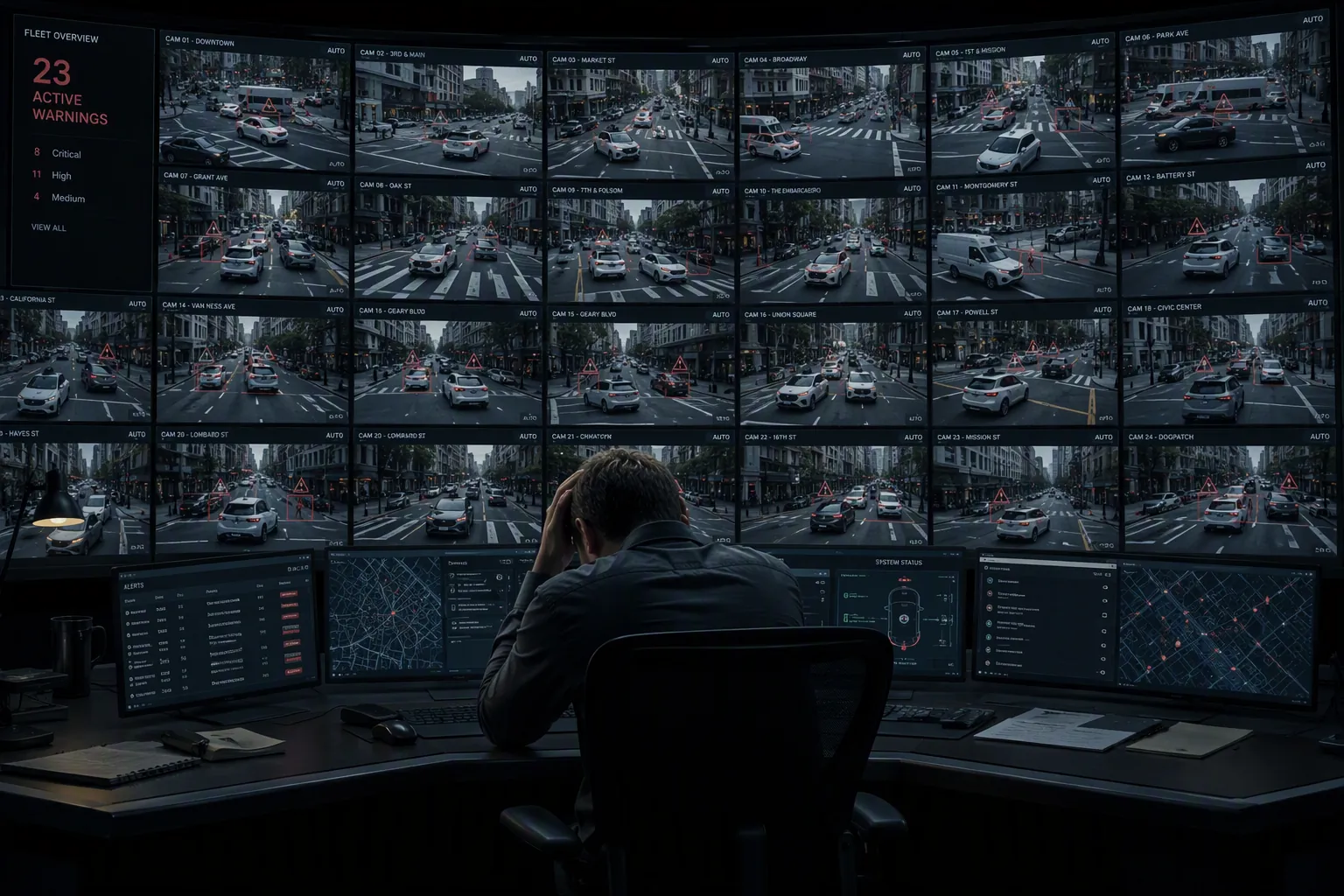
Medrano’s complaint then ties the staffing ratio to a specific event. It alleges that on March 30, 2025, during a crash involving a vehicle under his supervision, the sole operational safety manager processed the emergency call “while physically asleep.” The complaint characterizes that episode as “the direct, predictable symptom of intentionally defective public-road safety protocols and extreme understaffing.”[3] That detail is serious, but it should be handled carefully: the materials reviewed do not independently confirm the emergency-call account, and Tesla has not publicly answered the complaint in the sources available here.
Why the 38:1 allegation changes the pleading path
A conventional autonomous-vehicle crash complaint tends to move toward product design: the software failed, the driver-monitoring system failed, the warning language failed, or the vehicle operated somewhere it should not have operated. Medrano’s complaint points to a different layer. It alleges that the public-road validation and fleet-safety process was staffed in a way that made real-time supervision structurally fragile before any single crash occurred.
That distinction matters because an internal ratio can do work that a generalized “overworked team” allegation cannot. A plaintiff attorney can use an alleged 15:1 standard to ask who approved exceptions, how long the Houston fleet operated outside the baseline, whether safety managers reported fatigue or missed calls, and whether crash or near-miss records clustered around periods of thin coverage. The theory does not require a jury to dislike automated driving. It asks whether Tesla allegedly built a safety process that depended on a person doing the work of more than two people under the company’s own benchmark.
The post-termination staffing allegation is just as important as the ratio. Electrek reports that after Medrano was fired, Tesla promoted one subordinate and flew in two additional team leads from Dallas to cover the work.[1] If that fact survives discovery, it gives plaintiffs a sharper argument than “management should have hired more people.” It supports the inference that coverage could be expanded when the company chose to expand it.
For autonomous-vehicle litigation, the point is not merely headcount. The replacement pattern can be used to frame supervision as part of the safety design. The manager on the emergency call is not background administration; the manager is part of the risk-control system.
The discovery value
If crash plaintiffs later plead from the Medrano record, the likely discovery targets are not exotic. They are schedules, escalation logs, call records, staffing approvals, internal ratio documents, fleet expansion plans, fatigue reports, exception requests, and any communications explaining why Houston ran at the alleged level. Those materials would let a plaintiff test whether the March 30 crash was an isolated personnel failure or a foreseeable result of the way the fleet-safety operation was staffed.
The complaint’s value is therefore procedural as much as factual. It gives lawyers a concrete place to begin asking for documents. A pleading built only on public crash facts may struggle to reach the company’s internal safety architecture. A pleading that identifies an internal baseline, an alleged deviation, a crash-time operational failure, and immediate post-firing reinforcement has a more specific map.
How Medrano fits beside Benavides
Benavides remains the essential comparison because it shows what a product-defect theory against Tesla can look like after trial. On February 20, 2026, Judge Beth Bloom denied Tesla’s post-trial motion to overturn a $243 million Autopilot verdict, ruling that the evidence “more than supported” the jury’s finding that Autopilot was defectively designed.[4] The product-defect findings centered on three grounds: allowing use on roads for which the system was not designed, inadequate monitoring to ensure driver attention, and deceptive marketing.[4]
The numbers in Benavides are now part of the risk conversation, but they are not final in the sense that appellate proceedings are over. The jury assigned 33% liability to Tesla, awarded $129 million in compensatory damages, with Tesla’s share reported at $42.6 million, and added $200 million in punitive damages, producing the $243 million total.[4] Tesla brought in a high-powered appellate team, including two Gibson Dunn appellate partners and former U.S. Solicitor General Paul Clement, to fight the verdict.[5]
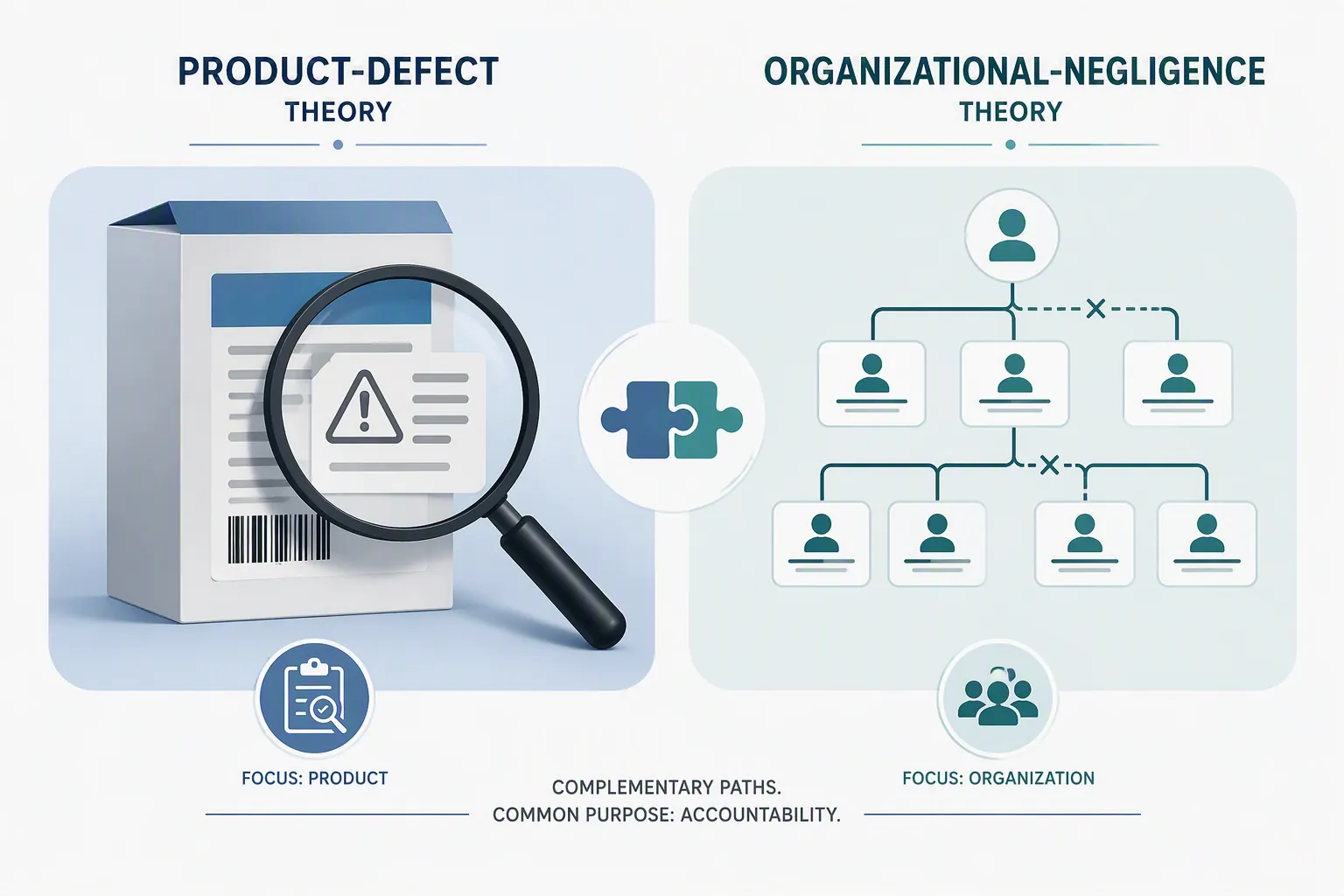
Medrano does not replace that product-defect frame. It potentially complements it. Benavides asks whether the product was defectively designed and marketed. Medrano asks whether the validation and fleet-safety structure around the product was allegedly understaffed by design. Those are different questions, and a plaintiff may want both.
The difference is especially important in cases where Tesla argues about driver responsibility, system capability, or warnings. An organizational-negligence theory can shift part of the inquiry to Tesla’s own public-road testing and monitoring choices. If a company deploys or validates autonomy using human supervisors as a safety backstop, the staffing of that backstop becomes a safety fact.
Why risk counsel will care before any Medrano ruling
Medrano is still an untested wrongful-termination complaint. No court has accepted its factual allegations, and the organizational-negligence theory has not yet been validated in an autonomous-vehicle crash case. But corporate risk counsel do not wait only for final appellate mandates. They look for records that can survive into discovery, shape settlement posture, and give opposing counsel a cleaner liability narrative.
The post-Benavides settlement pattern is part of that context. Electrek reported that Tesla had rejected a $60 million pre-trial settlement in Benavides and later settled at least six additional Autopilot or Full Self-Driving crash lawsuits on undisclosed terms rather than try them to additional juries.[6] The settlement amounts are not public, and undisclosed settlements should not be treated as admissions of liability. They do show, however, that tried verdict risk changed the negotiation environment.
Broader exposure estimates should be treated with even more caution. Electrek’s April 2026 aggregation estimated Tesla’s total litigation exposure at $2.7 billion on the conservative end and $14.5 billion on the high end across more than 21 active tracks; it separately estimated $1 billion to $5 billion in Autopilot and FSD crash exposure tied to roughly 50 or more fatal crashes, using Benavides as a benchmark.[7] That is Electrek’s analysis from public sources and NHTSA data, not an official liability reserve, audited figure, or court finding.
The regulatory backdrop also matters, but only as backdrop. Electrek reported that NHTSA Engineering Analysis EA26002, opened March 18, 2026, covered 3,203,754 vehicles and was described as one step from a recall order.[7] Separately, a December 2025 California DMV ruling found that “Full Self-Driving” was “actually, unambiguously false,” a finding that supports the broader failure-to-warn and marketing-risk environment around Tesla’s autonomy claims.[8]
Those outside materials explain why Medrano will draw attention, but they do not prove Medrano. The complaint’s real force remains the internal sequence it alleges: a 15:1 baseline, a 38:1 Houston operation, a crash-time emergency response handled by a manager allegedly asleep, and three people added after the employee who complained was terminated. If those allegations fail, the theory weakens quickly. If they survive testing, they give autonomous-vehicle plaintiffs a concrete way to argue that unsafe autonomy can be an organizational supervision failure, not only a defective-product failure.
References
- Tesla self-driving manager describes scary conditions in robotaxi testing — Electrek, July 28, 2026
- Tesla manager says self-driving vehicle team was so overworked that cars were "rolling hazards on public streets," lawsuit reveals — The Independent, July 28, 2026
- Fired Tesla Manager Says Full Self-Driving Cars Were "Rolling Hazards" — Engadget
- Tesla loses bid toss $243 million verdict fatal Autopilot crash suit — CNBC, February 20, 2026
- Tesla taps high-powered legal team to battle $243 million Autopilot verdict — Reuters, August 29, 2025
- Tesla settles lawsuit over fatal "Full Self-Driving" pedestrian crash — Electrek, June 26, 2026
- Tesla is facing up to $14.5 billion in lawsuits — and it's only getting worse — Electrek, April 16, 2026
- Tesla avoids 30-day California sales suspension after dropping misleading "Autopilot" marketing — Electrek, February 18, 2026
Related records
Tool profile
Browse tool evaluations →Governing regulation
Browse the obligations tracker →Preventive workflow
Browse verification workflows →
Report a correction or tip
Spotted an outdated figure, a misstated fact, or a ruling this case record should reflect? Public comments are disabled for this content given the professional cost of a misreported case outcome, penalty amount, or rule text — use the structured correction channel instead.
Report a correction or tip for this record →