
Texas SB6 Creates Mandatory Curtailment for AI Data Centers
Texas Senate Bill 6, the first U.S. law empowering a grid operator to remotely disconnect large-load data centers, establishes a new compliance category: curtailment liability. This digest maps the statutory framework, proposed interconnection fees under PUCT draft rule 25.194, and the 27-state legislative wave, and assesses the contractual and jurisdictional risks counsel must address.
- Jurisdiction
- Texas, United States
- Court
- Texas Senate
- AI tool named
- Not applicable
- Ruling date
- Jun 15, 2025
- Source document
- View primary court order ↗
- Last verified
- Jul 25, 2026
Lex Machina Review is an independent risk-tracking and reference resource. Nothing on this site is legal advice, and using it does not create an attorney-client relationship. Every record is reviewed against primary sources but may not reflect the most current status of a matter — always verify directly against the cited court order, rule text, or a licensed attorney before relying on it.
Companion explanation — secondary to the source document above
Texas SB6 draws the legal line at 75 MW. Once a data center or other large-load customer crosses that threshold in ERCOT territory, grid curtailment is no longer merely a scenario buried in a force majeure schedule or a utility-service assumption. The statute, signed in June 2025, places that load inside a compliance framework in which ERCOT may require curtailment, a shift to backup generation, or full disconnection on 24 hours’ notice, and the interconnection package is expected to include remote-disconnect capability, backup-generation obligations, study fees, and financial security requirements.[1]
That is the legal novelty. The problem is not that an AI data center might lose power. Infrastructure contracts have always had language for outages, delayed service, utility interruptions, and events outside a party’s control. The problem is that a grid operator’s interruption right is becoming a mandatory condition of access to the system. For counsel assessing AI data center power-stability and legal-compliance risk, the important question is no longer only whether power is available at a site. It is who has the legal right to interrupt that power, on what notice, at whose cost, and whether the customer contract stack recognizes the same event in the same way.
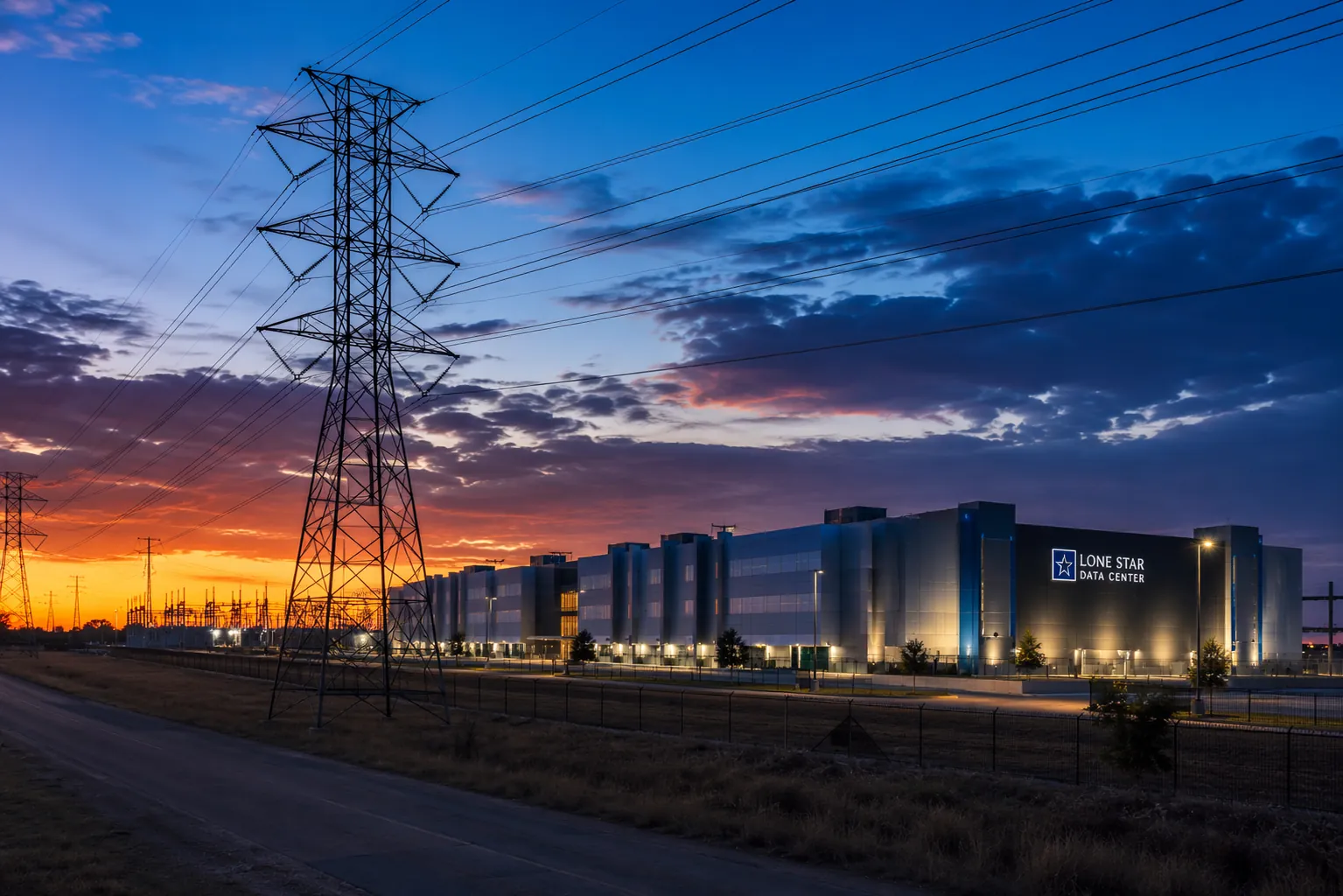
The 75 MW Threshold Turns Grid Management Into a Contract Condition
SB6 does not regulate every server room or enterprise facility. Its force comes from the large-load threshold. A 75 MW project is large enough to become a grid-planning issue and specific enough to become a diligence item. That matters because a threshold gives lawyers something that ordinary policy language does not: a trigger.
Under the framework described in the current legal updates, ERCOT’s authority is not limited to asking a large-load customer to conserve during an emergency. Covered customers may be subject to remote-disconnect requirements, 24-hour notice for ordered curtailment or disconnection, and backup generation obligations equal to 50% of the requested load. The same framework also identifies study fees in the $100,000 to $300,000 range and financial security requirements tied to the requested interconnection capacity.[1]
Each of those points belongs in a different part of the deal file. The 75 MW threshold belongs in site selection and load-phasing analysis. The remote-disconnect obligation belongs in interconnection review and operations controls. The 24-hour notice concept belongs in incident-response procedures and customer communications. The 50% backup-generation requirement belongs in construction scope, permitting, procurement, emissions review, and tenant representations. The study fees and security requirements belong in budget approvals and financing assumptions.
A press release can describe the same package as reliability protection. A public official can describe it as ratepayer protection. A utility can describe it as system planning. None of those labels answers the question that will matter when a project misses a delivery date or a tenant asserts an SLA credit: did this specific agreement allocate a grid-ordered curtailment as an excused event, a utility interruption, a governmental order, a customer-risk event, or an operator default?
| SB6 / draft-rule feature | Why counsel should isolate it |
|---|---|
| 75 MW large-load threshold | Creates the entry point for enhanced interconnection and curtailment obligations |
| Remote-disconnect capability | Changes interruption from a theoretical utility event to an operational authority that may be exercised |
| 24-hour notice concept | Forces alignment among ERCOT notice, customer notice, internal escalation, and lender reporting |
| 50% backup generation requirement | Moves reliability planning into construction, procurement, permitting, and cost-allocation documents |
| $100,000 to $300,000 study fees | Creates pre-construction spend before the project has fully de-risked interconnection |
| $50,000/MW financial security proposal | Turns requested capacity into a balance-sheet and withdrawal-risk issue |
The Draft Interconnection Economics Are Where the Risk Becomes Hard to Ignore
PUCT draft rule 25.194, published in March 2026, is still a draft. It was in a comment period with an April 17, 2026 deadline, and the final rule may differ. But the numbers in the draft explain why curtailment risk cannot be left for the operations team to manage later.[2]
The draft proposes a $50,000/MW non-refundable interconnection fee or financial security requirement for large loads. At that level, a 1 GW project would post $50 million. The draft also describes an 80% security forfeiture if a project withdraws, making the interconnection queue decision a real capital-risk event rather than a placeholder in development planning.[2]
That forfeiture term is easy to underestimate because it appears before the project is operating. A lawyer reviewing only uptime obligations might treat curtailment as a future performance risk. The draft economics move it earlier. Before a shovel is in the ground, the sponsor may have to decide whether to post security against capacity that is useful only if the project can absorb the curtailment regime, secure sufficient backup generation, and pass enough of the interruption risk through the downstream contract stack.
A hypothetical project illustrates the drafting problem without needing any special facts. If a sponsor reserves a very large load, posts security, negotiates tenant commitments based on phased delivery, and then determines that backup-generation costs or curtailment exposure make the site uneconomic, the withdrawal is not merely a development disappointment. Under the draft structure, the withdrawal may itself carry a forfeiture consequence. The sponsor then looks to the development agreement, tenant term sheet, utility documents, lender conditions, and board approval materials to see whether anyone identified that exposure when the site was selected.
The more precise drafting question is not whether the party knew “grid risk” existed. Everyone in the transaction can say that. The better question is whether the documents distinguish at least four separate risks: failure to obtain interconnection, delayed interconnection, grid-ordered curtailment after interconnection, and economic loss from withdrawal or forfeiture before service begins.
The security requirement also changes lender diligence
Financing covenants often care about permits, material contracts, construction milestones, and casualty events. A proposed interconnection security deposit with an 80% withdrawal forfeiture sits awkwardly across those categories. It is not a construction cost in the ordinary sense. It is not a classic liquidated damage payable to a customer. It is not an operating expense triggered by poor performance. It is a regulatory-access cost that can become partially unrecoverable if the project exits the queue.
That distinction matters for draw conditions and defaults. If the borrower loses interconnection security because the site is no longer viable under the curtailment rules, the lender will ask whether the loss is permitted project spend, a breach of development covenants, a material adverse event, or a sponsor-funded overrun. The answer will not be found in a generic utility-interruption clause.
The State Map Is Not One Trend Moving at One Speed
Texas is the cleanest place to see the legal form because SB6 gives the issue thresholds, authority, notice, and money. It is not, however, the only place where large-load data center regulation has become a state-level legislative subject. A 27-state wave now includes enacted measures, proposed bills, tariff proceedings, and study efforts addressing AI data centers, electricity costs, grid reliability, and ratepayer exposure.[1][3]
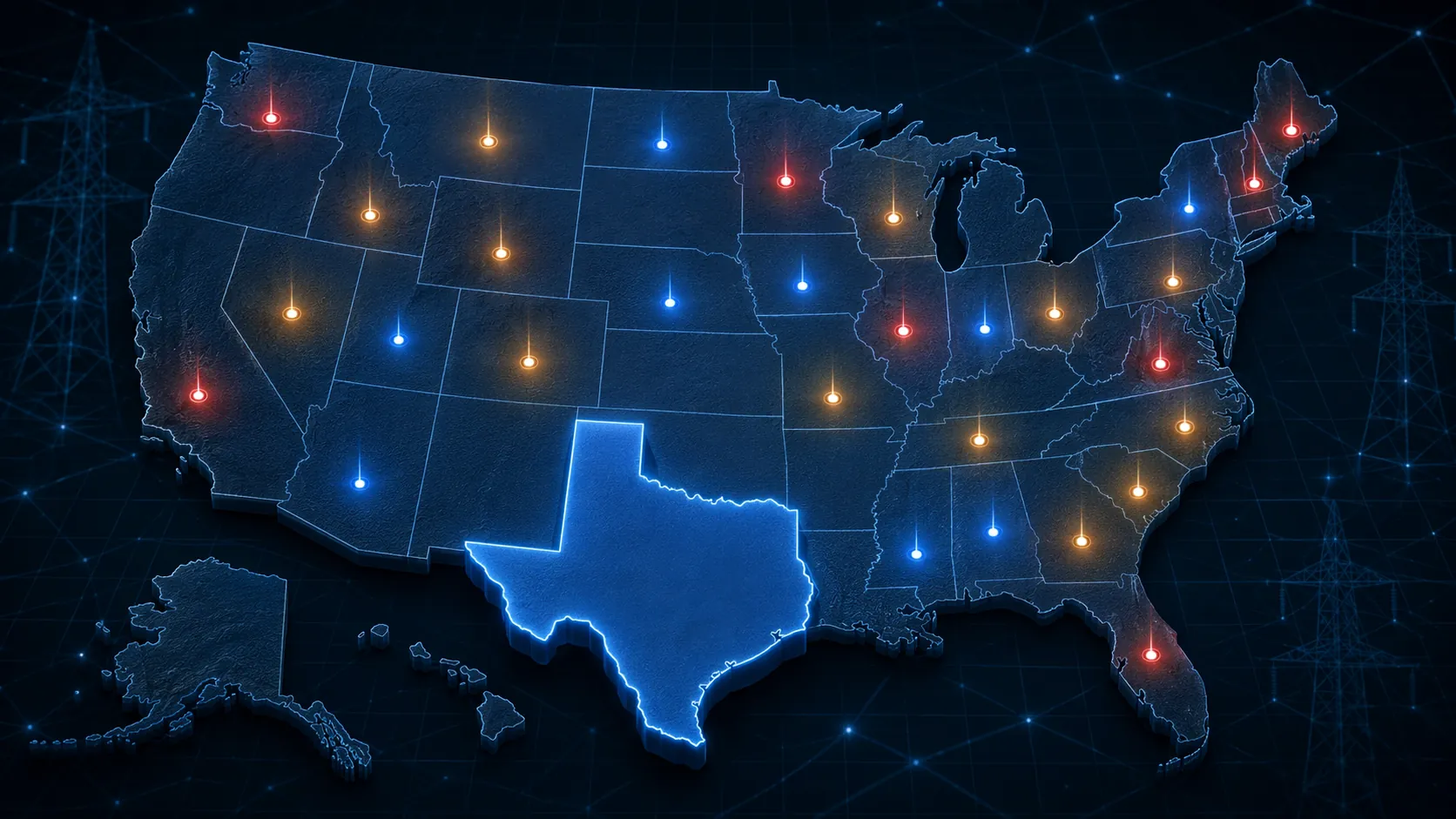
Flattening that into a single national rule would be careless. California SB57, Oregon’s POWER Act, Ohio SB103, Utah HB507, and Georgia SB34 are identified as enacted measures. Minnesota HF3007 is proposed. New Jersey is identified through a proposed tariff. Those are not the same legal posture, and they should not receive the same risk weighting in a site-selection memo.[3]
| Jurisdictional posture | Examples identified in the research materials | Diligence consequence |
|---|---|---|
| Enacted | California SB57; Oregon POWER Act; Ohio SB103; Utah HB507; Georgia SB34 | Review statutory obligations and any implementing utility or commission requirements |
| Proposed | Minnesota HF3007 | Track bill text, committee movement, effective dates, and transition provisions |
| Tariff proposal | New Jersey proposed tariff | Review utility filing, commission docket, customer class definitions, and cost-allocation mechanics |
| Moratorium proposal | Maine pause on data center construction until November 2027 | Treat as a gating site-selection issue, not merely an operating condition |
Maine marks the boundary of the current discussion because it is poised to become the first state with a data center construction moratorium, pausing construction until November 2027. A moratorium does different legal work than a curtailment rule. It does not allocate interruption risk after interconnection; it may prevent the project from moving forward at all during the pause. For a development lawyer, that belongs at the front of the site-screening process with zoning, permitting, and utility availability.[1]
The federal Ratepayer Protection Pledge, announced in March 2026, should be kept in its proper category. It may matter politically and reputationally, but the research materials describe it as voluntary and unenforceable. That means it does not supply the contractual protection that a tenant, lender, or operator would need when a state rule or grid operator order interrupts service.[1]
Curtailment Does Not Automatically Pass Through the Contract Stack
The most expensive disputes may not be between the data center and the grid operator. They may arise one or two contracts downstream, where the party suffering the business consequence did not agree to the same definition of excused performance.
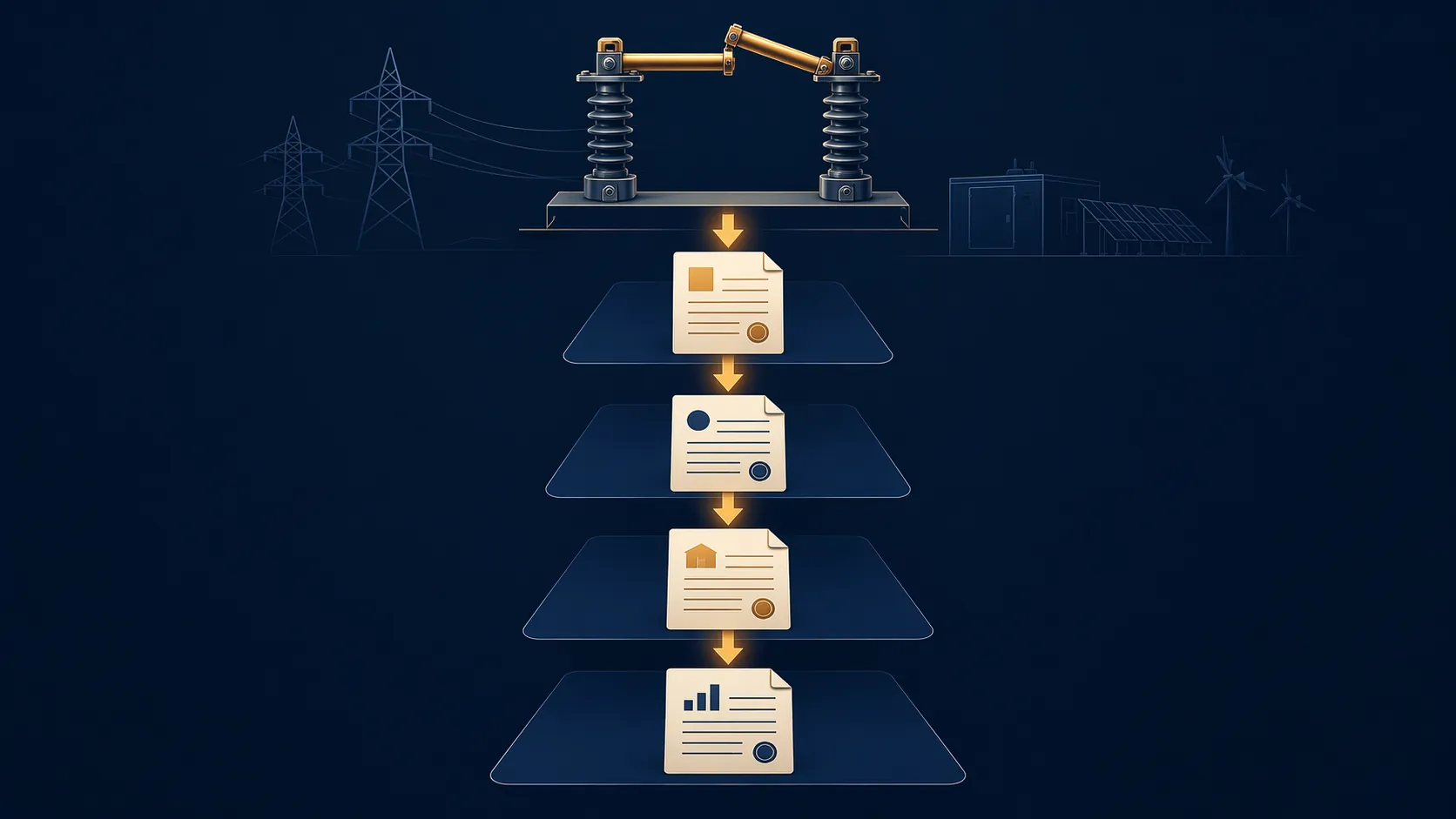
A grid-ordered curtailment under SB6 may look like governmental action for one agreement. That does not mean it excuses performance under a customer SLA, a lease, a construction contract, or a financing covenant. Quinn Emanuel’s force majeure analysis of AI data center buildout risk makes the same point in practical terms: if grid-ordered curtailment is to excuse performance, the clause should specifically enumerate it rather than assuming a general act-of-God formulation will do the work.[4]
The distinction between an act of God and a government action is not decorative. A weather event that damages transmission infrastructure, a utility’s ordinary service interruption, a regulator’s order, and ERCOT’s exercise of a statutory disconnection authority may all produce the same operational result: the facility cannot draw the expected power. They may produce very different contract outcomes if the documents define excused events by cause rather than effect.
The pass-through problem becomes sharper in colocation and hyperscale arrangements. The operator may receive relief under an interconnection agreement or tariff. The tenant may still demand credits under an availability SLA. The landlord may still owe quiet enjoyment or utility-service covenants under a lease. The EPC contractor may still face milestone obligations unless the curtailment affects construction access or energization in a way the contract recognizes. The borrower may still have to certify compliance with material project documents.
These mismatches are not solved by adding the words “grid risk” to a definition. Counsel should separate at least five events when reviewing the contract stack:
- A utility’s failure to deliver service for reasons outside the customer’s control
- A regulator’s or grid operator’s order requiring curtailment or disconnection
- A contractual obligation to switch to backup generation
- A planned or emergency load reduction that does not fully interrupt service
- A pre-operation withdrawal, delay, or forfeiture tied to interconnection approval
Those events may overlap in a real incident, but they should not be collapsed at drafting. A tenant that receives reduced power for six hours may care about service levels and business interruption. A lender may care about whether a repeated curtailment pattern affects projected revenue. A developer may care about whether a delayed energization date triggers liquidated damages. The same ERCOT notice can therefore land in several documents at once, with inconsistent consequences.
SLA language needs more than a utility-outage carveout
Availability SLAs often exclude outages caused by scheduled maintenance, customer equipment, force majeure, or upstream utility failure. SB6-style curtailment does not fit neatly into any one of those buckets. If the grid operator orders a reduction and the data center remains partially available, the question may be whether degraded power, reduced redundancy, or transfer to backup generation counts as downtime, reduced service, emergency maintenance, or an excluded event.
The answer should not depend on post-incident advocacy. If backup generation is mandatory for 50% of the requested load, the SLA should say whether service supported by backup generation satisfies the availability commitment, whether customers receive notice of the transfer, and whether any contractual remedies differ when the interruption results from a grid order rather than operator negligence.
Construction contracts should address energization and withdrawal separately
Construction agreements need a different review. A contractor cannot control ERCOT’s interconnection process, but the contractor may control procurement, backup-generation installation, commissioning, and schedule coordination. If a project is delayed because the large-load study takes longer than expected, that is not the same event as a sponsor withdrawing because the security forfeiture risk is unacceptable. One affects time. The other may affect whether the project proceeds at all.
A clean drafting approach assigns responsibility by control. The owner should not expect the contractor to absorb regulatory-access costs it did not price. The contractor should not be able to treat every utility or grid development as automatic relief from obligations it can still perform. If the project requires backup generation to satisfy interconnection conditions, the scope, commissioning standards, fuel arrangements, and change-order mechanics should be express.
Leases and financing documents need their own definitions
A data center lease may speak in the language of premises, services, access, utilities, and tenant remedies. A financing agreement may speak in the language of project documents, permits, debt-service coverage, material adverse effect, and default. Neither will necessarily incorporate the curtailment definition used in the interconnection agreement unless someone makes it do so.
That incorporation should be deliberate. If a lease gives the tenant remedies for failure to provide utility service, the landlord will want to know whether an ERCOT-ordered curtailment is carved out, capped, passed through, or treated as a shared-risk event. If a financing covenant requires continued compliance with material contracts, the borrower will want to know whether obeying a grid operator’s curtailment order can simultaneously cause noncompliance with a revenue contract.
What Should Change in Diligence Now
The immediate task is not to predict whether SB6 will succeed as energy policy. The legal task is to stop treating power interruption as a generic contingency. For large-load AI data centers, curtailment liability now needs its own line in diligence, drafting, and approval materials.
A site-selection memo should identify whether the proposed load crosses a statutory or tariff threshold, whether the jurisdiction has enacted legislation or merely proposed it, whether a moratorium or tariff proceeding could block or reprice the project, and whether the project economics assume uninterrupted grid access. In Texas, that review should expressly account for the 75 MW threshold, remote-disconnect capability, 24-hour notice concept, 50% backup-generation requirement, study fees, and proposed security mechanics.[1][2]
An interconnection review should identify the party with authority to order curtailment or disconnection, the notice process, the customer’s required response, the technical controls needed to comply, the consequences of noncompliance, and the economic consequences of withdrawal. If the final PUCT rule differs from the March 2026 draft, the diligence should track the adopted text rather than preserving draft assumptions.[2]
A force majeure review should not stop at “governmental action.” The clause should say whether grid-ordered curtailment, remote disconnection, mandated load reduction, inability to obtain or retain interconnection, and mandatory backup-generation use are included. It should also say what relief follows: time extension, suspension of performance, excuse from SLA credits, termination right, cost sharing, notice obligation, or some narrower remedy.
An SLA review should test the operational states that SB6 makes plausible. Full disconnection is only one outcome. Partial curtailment, transfer to backup generation, constrained redundancy, and scheduled compliance with a grid order may matter just as much to a customer with strict uptime commitments. The contract should say whether those conditions count as downtime, degraded service, excluded events, emergency maintenance, or ordinary service.
A financing review should treat interconnection security and forfeiture exposure as pre-operational legal risk. If a 1 GW project may be required to post $50 million under the draft formula, and withdrawal may forfeit 80% of security, the credit file should not bury that exposure in a generic development-risk paragraph.[2]
The same discipline applies outside Texas, with less certainty and more jurisdictional tracking. Enacted laws, proposed bills, tariff proceedings, and moratorium proposals belong in separate columns. A voluntary federal pledge belongs in still another column. They do not impose the same obligations, and they will not rescue the same contract clause when performance fails.
Grid interruption has moved from assumed contingency to named legal exposure. The documents that matter now are the ones that say exactly when that exposure begins, who must act on notice, who pays to preserve the interconnection position, and which promises remain enforceable when the grid operator uses the authority the law gives it.
References
- Federal and State Policymakers Target AI Data Centers as Electricity Costs and Grid Reliability Concerns Mount, Troutman
- Texas Senate Bill 6 Update: What Data Centers, Large-Load Customers Should Know About Proposed Interconnection Standards, Greenberg Traurig, March 2026
- Federal AI Data Center Policy Meets Resistance from State Lawmakers, Multistate Insider, April 14, 2026
- Client Alert: Force Majeure and the AI Data Center Buildout: Allocating Risk in AI Data Center Contracts, Quinn Emanuel
Related records
Tool profile
Browse tool evaluations →Governing regulation
Browse the obligations tracker →Preventive workflow
Browse verification workflows →
Report a correction or tip
Spotted an outdated figure, a misstated fact, or a ruling this case record should reflect? Public comments are disabled for this content given the professional cost of a misreported case outcome, penalty amount, or rule text — use the structured correction channel instead.
Report a correction or tip for this record →