
TPS Work Permit Block: AI Hallucination Risks for Immigration Attorneys
The July 2026 Gorton ruling temporarily blocks the Trump administration from revoking TPS work permits for nationals of El Salvador, Sudan, and Ukraine. This article examines how AI-generated errors in immigration filings—from fabricated case citations to outdated OBBBA fee advice—now carry heightened sanction exposure for practitioners.
- Jurisdiction
- US Federal
- Court
- United States District Court
- Judge
- Nathaniel Gorton
- AI tool named
- ChatGPT
- Ruling date
- Jul 21, 2026
- Source document
- View primary court order ↗
- Last verified
- Jul 25, 2026
Lex Machina Review is an independent risk-tracking and reference resource. Nothing on this site is legal advice, and using it does not create an attorney-client relationship. Every record is reviewed against primary sources but may not reflect the most current status of a matter — always verify directly against the cited court order, rule text, or a licensed attorney before relying on it.
Companion explanation — secondary to the source document above
On July 21, 2026, U.S. District Judge Nathaniel Gorton temporarily blocked USCIS from implementing One Big Beautiful Bill Act provisions that would have retroactively revoked Temporary Protected Status-based work authorization for nationals of El Salvador, Sudan, and Ukraine. The temporary restraining order covers El Salvador TPS holders whose designation remains valid through September 9, 2026, and Sudan and Ukraine TPS holders whose designations remain valid through October 19, 2026. The ruling rested on an Administrative Procedure Act notice-and-comment problem, not on any finding about artificial intelligence.[1]
That last point matters. There is no evidence in the available reporting that AI was used in the Gorton litigation itself. The AI problem begins one step away from the docket: in the client email, the TPS renewal checklist, the employer-facing work-authorization memo, the draft motion, and the paralegal note that asks a model to summarize what changed after “judge blocks Trump work permits El Salvador Sudan Ukraine 2025.” The ruling is July 2026. The “2025” hook most likely points to the OBBBA, enacted in 2025, not to the date of the order. A tool that misses that distinction is already in dangerous territory.
The affected population is not a neat single number in the public materials. Reuters and Al Jazeera described the case as affecting tens of thousands of people, while Alianza Americas referred to more than 100,000 Salvadorans waiting more than 14 months.[1][2][3] For a lawyer advising one worker, one employer, or one family, the range is less important than the operational fact: work authorization remains temporarily protected for a defined group, but only because a court order has interrupted a statutory and agency implementation path that is still moving.
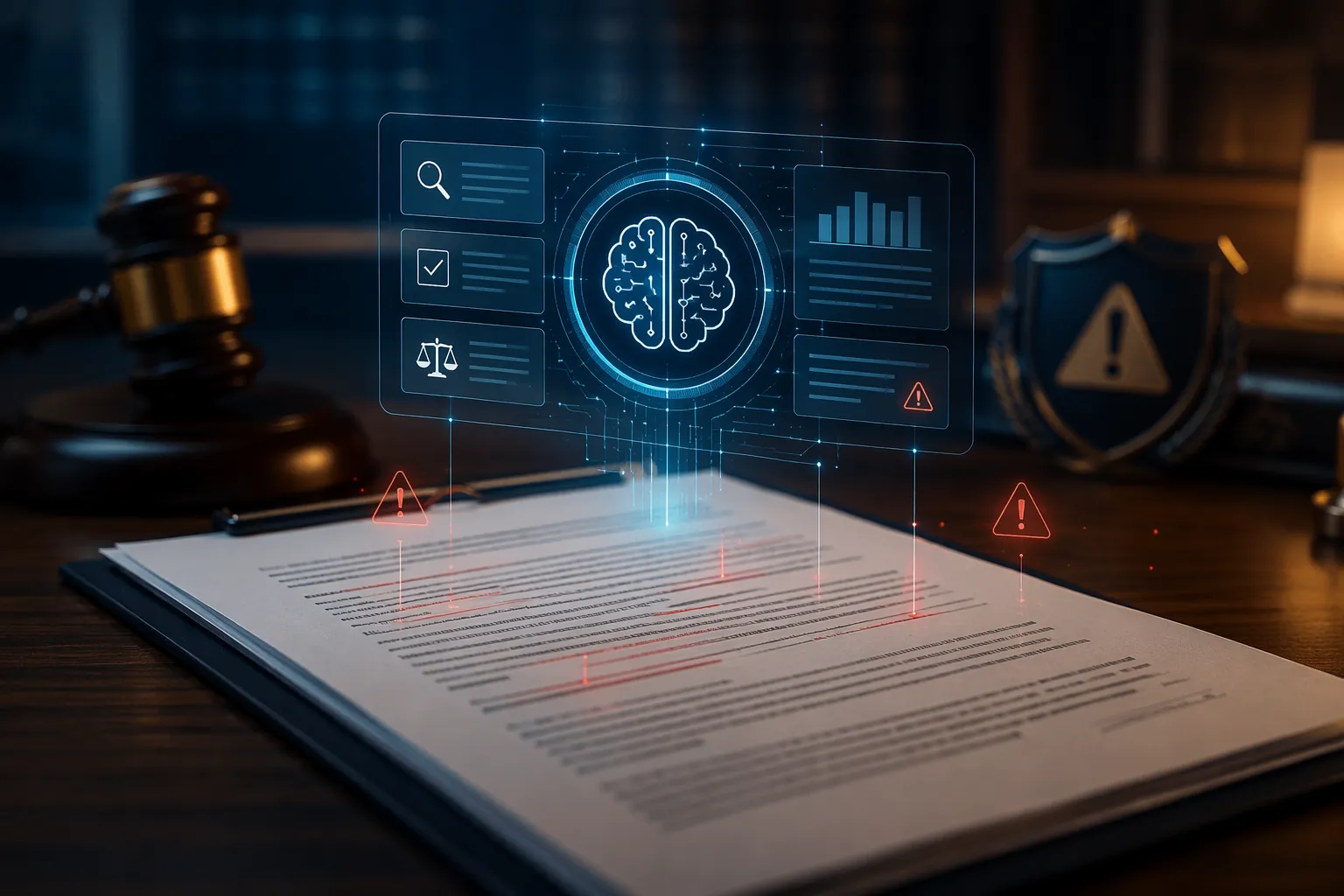
The ruling creates a verification problem, not an AI story
The easiest mistake is to treat this as another warning that lawyers should “check the citation.” Citation checking is necessary, but it is too small for this moment. The risk after Gorton is not limited to fabricated cases. It includes stale fee advice, wrong employment authorization document dates, obsolete auto-extension language, and client instructions that were correct before OBBBA but wrong after implementation guidance changed.
Immigration practice has always punished sloppy date work. TPS practice is especially unforgiving because a missed EAD rule does not merely create an internal correction task. It can affect I-9 reverification, payroll continuity, filing strategy, fee collection, and a client’s ability to keep working while the lawyer fixes the record. The Gorton order temporarily changes the immediate answer for certain Salvadoran, Sudanese, and Ukrainian TPS holders, but it does not restore a stable pre-OBBBA world.
That is where general-purpose AI tools and even legal AI products become risky in a more specific way. They are not just capable of making things up. They are likely to be trained, indexed, or retrieval-tuned around a regulatory environment that no longer maps cleanly onto the question being asked. A model can sound fluent because it has seen years of TPS, EAD, asylum-fee, and auto-extension language. Fluency is exactly the problem when the old language is the wrong language.
OBBBA is the discontinuity point
The OBBBA changes are not minor formatting updates. Public practice materials identify a new $550 EAD fee, an annual asylum fee, the elimination of the 540-day automatic extension rule, and a one-year TPS EAD cap tied to a May 29, 2026 DHS rule.[4][5][6] Those are exactly the categories that show up in routine immigration-office work: intake scripts, fee quotes, cover letters, renewal calendars, employer notices, and “can my client keep working?” emails.
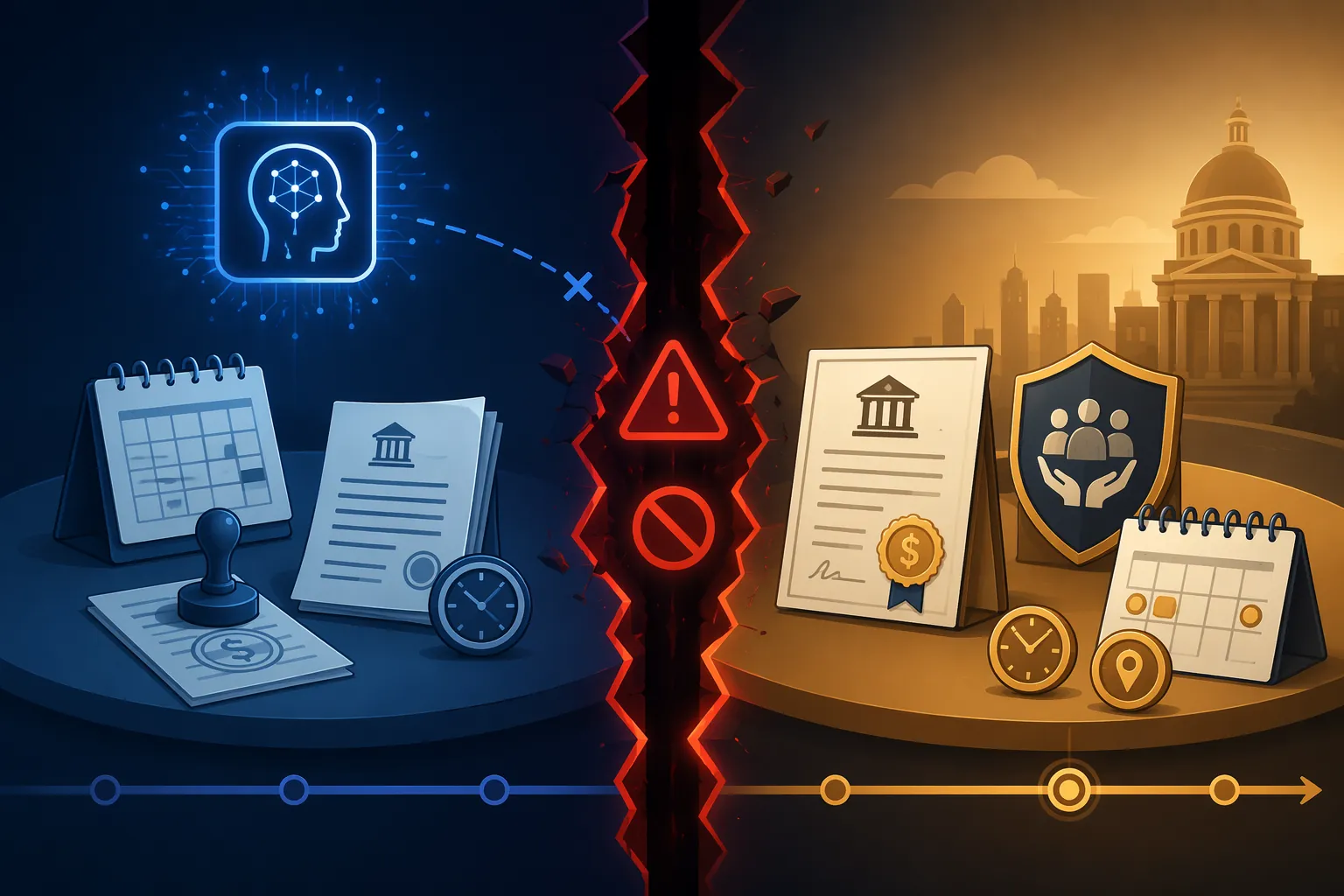
The problem is not that every AI answer about TPS will be wrong. The problem is that several wrong answers will look normal. A pre-OBBBA answer may still cite a familiar extension period. It may still tell the client that a pending renewal preserves employment authorization for a longer window. It may still quote a fee structure that used to be ordinary. It may even explain TPS categories in a way that is broadly accurate while failing on the single date or charge that determines whether a client can lawfully work next week.
| AI output area | Why it is unusually risky after OBBBA and Gorton |
|---|---|
| TPS EAD validity dates | The Gorton order temporarily protects work authorization for specific El Salvador, Sudan, and Ukraine TPS date ranges; generic TPS summaries may omit the court-order window. |
| EAD filing fees | Post-OBBBA materials identify a new $550 EAD fee; older templates and model answers may quote prior fee assumptions. |
| Automatic extension advice | The elimination of the 540-day auto-extension rule changes the practical advice a lawyer gives while a renewal is pending. |
| TPS EAD duration | The one-year TPS EAD cap changes calendar management and client-facing expectations. |
| Asylum-related fees | Annual asylum-fee language can be missed by tools summarizing older fee regimes or blending asylum and TPS guidance. |
Processing time makes the auto-extension issue more than a technicality. USCIS data cited by Peter Chu showed TPS initial applications averaging 5.2 months in Q4 2025.[7] That figure does not prove how every post-OBBBA case will move, and it does not answer the Gorton merits question. It does show why an outdated extension answer can create a real gap between the date a client expects to work and the date an agency document arrives.
The verification task, then, is not “ask the AI for a source.” It is to identify which legal proposition depends on a rule that changed after the model’s likely training or retrieval baseline, and then verify that proposition against a dated primary or practice source before anyone relies on it. In a TPS matter after Gorton, the propositions most likely to need that treatment are the work-authorization end date, the filing fee, the auto-extension consequence, the EAD duration, and any client instruction about continued employment.
Fabricated immigration law is not hypothetical
CLINIC’s example remains one of the cleaner immigration-specific warnings because it is concrete. When asked about firm resettlement law, ChatGPT fabricated Campbell v. Barr, 956 F.3d 542, presenting a nonexistent Second Circuit asylum precedent as if it were real.[8] That is not a generic “AI can hallucinate” anecdote. It is a practice-area failure in the kind of legal research immigration lawyers actually perform.
A fabricated asylum precedent and a stale TPS work-authorization rule are different species of error, but they create the same professional problem. The lawyer who signs the filing or sends the advice owns the representation. A paralegal may have copied the output. A firm leader may have encouraged experimentation. A vendor may have promised legal-grade safeguards. None of that changes whose name appears on the filing or whose client acted on the instruction.
The discipline stack is already in place
EOIR did not need a new misconduct category to address generative AI. Policy Memorandum 25-40 treats misuse of generative AI in EOIR proceedings as disciplinable under existing conduct rules and signals that immigration adjudicators and regulators are watching for AI-related failures.[9] That matters because immigration lawyers do not operate under only one accountability system.
A bad AI-assisted TPS filing can implicate EOIR practice standards, 8 CFR 1003.102, state bar duties of competence and candor, tribunal-specific standing orders, and federal Rule 11-style obligations when the matter is in court. The same underlying mistake can also produce client-harm consequences: a missed employment authorization window, an avoidable fee problem, a withdrawal or correction, or a credibility issue in front of an adjudicator who now has reason to doubt the lawyer’s verification habits.
The important shift in 2026 is that courts are not treating AI errors as charming early-adopter mishaps. Norton Rose Fulbright’s 2026 sanctions update reported more than 1,148 documented U.S. hallucination cases and described courts moving toward punitive sanctions. The update identifies Whiting, where sanctions reached $15,000 per attorney, and Fivehouse, where the fallout included loss of position.[10]
Gamez v. County of Fresno is the harder case for lawyers who assume tool choice will save them. In that Eastern District of California matter, counsel used a paid legal AI tool marketed with anti-hallucination features and still filed fake citations. The court spared sanctions because of counsel’s candor, not because the tool’s marketing shifted responsibility away from the attorney.[10] That is the lesson worth carrying into immigration practice: a paid subscription may be relevant to firm procurement, but it is not a professional-responsibility defense by itself.
Candor helped in Gamez because the lawyer confronted the problem. It should not be misread as a safe harbor. In a TPS matter, the cleaner question for a court, EOIR, or a state disciplinary authority will be whether the lawyer had a source-dated verification trail before the filing went out or the client relied on the advice. After Gorton, the absence of that trail will be harder to explain because the risk is obvious on the face of the regulatory timeline.
Informal AI use leaves individual lawyers exposed
DocketWise, citing the 8am 2026 Legal Industry Report, says 82% of immigration law professionals personally use AI tools for work, while only 8% of firms have a formal written AI policy.[11] The underlying report was not independently verified in the materials reviewed here, so the figures should be treated as a secondary-source adoption indicator rather than a definitive census. Even with that caveat, the gap is the point: AI use is already personal and routine in many practices, while firm-level controls lag behind.
That gap is especially uncomfortable in high-volume immigration work. A lawyer may not think of a quick AI query as “firm AI use” when it produces a first draft of an EAD instruction sheet or a summary of the Gorton order. The client will not experience it that way if the answer is wrong. The tribunal will not experience it that way if the mistake reaches a filing. The disciplinary authority will not experience it that way if the lawyer cannot show how the answer was checked.
The policy gap also creates an unfair internal distribution of risk. Firm leadership may tolerate experimentation because it saves time on intake and drafting. The associate or paralegal may be the person who actually uses the tool. The signing lawyer may inherit the verification burden. If the output contains an obsolete OBBBA fee, a fabricated case, or a wrong TPS EAD date, the professional record will not say “innovation initiative.” It will say the lawyer submitted or communicated an unsupported legal position.
DHS is also using automation
AI risk in this setting is not one-sided. American Immigration Council materials on DHS automation describe 105 active DHS AI use cases, including compliance risk scoring, automated fraud detection, and intelligent document processing.[12] GT Law has also discussed DHS AI activity in the immigration compliance environment.[13] The immediate point is not that every TPS filing will be algorithmically flagged or that any particular Gorton-related submission will receive automated scrutiny. The narrower point is that immigration filings increasingly move through a government environment that is itself using automated tools to classify, process, and identify risk.
That should make lawyers less casual, not more theatrical. If a filing contains inconsistent dates, mismatched fee logic, or citations that cannot be found, the error may be reviewed by a human, an automated system, or both. Either way, the lawyer’s best protection is not a statement that AI was used responsibly in general. It is a file that shows the controlling date, the source consulted, the version checked, the person who checked it, and the instruction that was actually given to the client.
What defensible verification looks like now
This is risk intelligence, not legal advice. The practical discipline point is still narrow enough to state plainly: for TPS work after Gorton and OBBBA, AI-assisted output should not be filed, sent, or relied on unless the lawyer can reconstruct the human verification path for the parts of the answer that matter.
- Citations: confirm that every case, regulation, policy memorandum, and agency page exists, says what the draft claims, and remains current on the date of use.
- Fees: verify EAD and asylum-related charges against dated post-OBBBA sources before quoting a client, collecting payment, or finalizing a filing packet.
- EAD dates: check the Gorton-protected TPS date range for the client’s nationality and designation instead of relying on a generic TPS summary.
- Auto-extension advice: treat any 540-day extension language as suspect unless it has been checked against current post-OBBBA guidance.
- Client instructions: preserve the dated source basis for employment-authorization advice, especially where an employer may rely on the lawyer’s communication for I-9 or payroll decisions.
The lawyer does not need to prove that a model is perfect. The lawyer needs to show that the legally operative parts of the output were verified by a human against current authority before they affected a filing or a client decision. In the Gorton window, that means source-dated human verification for citations, fees, EAD dates, and client-facing advice. Courts and immigration regulators are already treating AI mistakes as lawyer conduct, not software mishaps.
References
- US judge blocks Trump administration from stripping immigrants of work permits, Reuters, July 21, 2026.
- US judge blocks Trump administration from stripping immigrants of work permits, Al Jazeera.
- Statement on TPS work permits for Salvadorans, Alianza Americas.
- AILA Practice Alert on OBBBA immigration fees and employment authorization changes, American Immigration Lawyers Association.
- One Big Beautiful Bill Act immigration provisions fact sheet, American Immigration Council.
- OBBBA immigration explainer, National Immigration Law Center.
- USCIS processing time data cited in TPS processing-time analysis, USCIS data cited by Peter Chu.
- I'm Sorry, I Just Hallucinated!, CLINIC.
- Use of Gen AI in EOIR Proceedings, Executive Office for Immigration Review.
- AI in litigation: Update on Gen AI sanctions in 2026, Norton Rose Fulbright.
- AI for Immigration Lawyers, DocketWise.
- Invisible Gatekeepers, American Immigration Council.
- DHS AI activity in immigration compliance, GT Law Inside Business Immigration.
Related records
Tool profile
How to Read Legal AI Benchmarks Ahead of the OpenAI IPOGoverning regulation
Browse the obligations tracker →Preventive workflow
Browse verification workflows →
Report a correction or tip
Spotted an outdated figure, a misstated fact, or a ruling this case record should reflect? Public comments are disabled for this content given the professional cost of a misreported case outcome, penalty amount, or rule text — use the structured correction channel instead.
Report a correction or tip for this record →