
Preserve Truck Accident Evidence in Five Steps
A five-step verification protocol for preserving evidence after a commercial truck accident, with deadline-driven guidance for spoliation letters, ECM/EDR extraction, and regulatory record collection to prevent spoliation claims.
- Jurisdiction
- United States
- Court
- FMCSA
- AI tool named
- None
- Ruling date
- Jul 30, 2026
- Source document
- View primary court order ↗
- Last verified
- Jul 30, 2026
Lex Machina Review is an independent risk-tracking and reference resource. Nothing on this site is legal advice, and using it does not create an attorney-client relationship. Every record is reviewed against primary sources but may not reflect the most current status of a matter — always verify directly against the cited court order, rule text, or a licensed attorney before relying on it.
Companion explanation — secondary to the source document above
Five-step verification protocol
The useful question is not whether evidence should be preserved after a commercial truck crash. It is whether someone can reconstruct, by timestamp, what was captured, who was notified, what data was extracted, and which records were requested before each source of evidence became vulnerable. A workable intake file should show this sequence in the first month, not after discovery opens.

| When | Verification action | Evidence at risk | File proof to keep |
|---|---|---|---|
| First 24 hours | Document the scene, identify witnesses, locate nearby cameras, and confirm whether post-accident alcohol or drug testing was required. | Roadway conditions, vehicle positions, debris, skid or yaw marks, witness memory, short-loop video, alcohol/drug testing windows. | Investigator assignment, photo/video log, witness list, camera-location list, testing-status note. |
| First 48 hours | Send a category-specific preservation demand and litigation hold to the carrier, owner, broker if appropriate, insurer, and known third-party evidence holders. | ECM/EDR data, ELD/RODS, dashcam footage, dispatch materials, driver files, maintenance files, cell phone data, load documents. | Spoliation letter, delivery confirmations, recipient list, follow-up call notes. |
| First week | Arrange inspection and download of electronic vehicle data before repair, salvage, or return to service. | ECM/EDR event data, fault codes, speed/braking inputs, hours and movement data, dashcam files. | Inspection notice, protocol, expert engagement, chain-of-custody record, download report or refusal record. |
| First 30 days | Collect or demand driver, carrier, maintenance, dispatch, load, fuel, toll, GPS, and third-party video records. | Operational records that explain fatigue, routing, loading, hiring, qualification, repair history, and post-crash handling. | Record-request matrix, custodian names, subpoenas or authorizations, missing-record log. |
| Longer retention periods | Calendar federal minimum retention periods but do not treat them as permission to wait. | ELD/RODS, DVIRs, maintenance files, accident registers, driver qualification files. | Regulatory-retention calendar and litigation-hold renewal reminders. |
This sequence synthesizes practitioner checklists that put scene capture, witness identification, preservation letters, vehicle inspection, and carrier-record collection at the front of a trucking investigation rather than treating them as later discovery tasks.[1][2] It also respects the federal post-accident testing clock: when 49 CFR 382.303 applies, alcohol testing is expected within 2 hours if practicable, with an 8-hour outer limit for continued attempts, while controlled-substances testing has a 32-hour window.[3]
First 24 hours: build the file before the file exists
The first 24 hours are for capture, not theory. The intake note should identify who is going to the scene, who is contacting witnesses, who is checking nearby businesses or residences for cameras, and who is confirming the location and condition of the tractor, trailer, cargo, and any electronic devices that may contain movement or event data.
Scene work should record what will not survive ordinary cleanup: final rest positions if still available, gouge marks, debris fields, fluid trails, sight lines, traffic-control devices, lighting, weather conditions, construction zones, temporary signage, and camera angles. If law enforcement, towing, highway cleanup, or a property owner has already altered the scene, the file should say so. A later preservation dispute is easier to explain when the record shows what was attempted and when.
Witness work needs the same timestamp discipline. Names from the police report are only a starting point. The better first-day file separates eyewitnesses, first responders, tow operators, nearby employees, passengers, other drivers, and people who arrived after impact. Their contact information, statement status, and any video or photos they took should be logged while the crash is still recent.
Post-accident testing should be verified early because the legal significance of a missed test may depend on the facts, but the practical window is short. The file should note whether the crash met the regulatory trigger, whether testing occurred, when it occurred, who administered it, and whether the carrier documented why a test was delayed or not completed within the applicable window.[3]
First 48 hours: the spoliation letter has to name the evidence
A preservation letter is useful because it creates a dated demand, defines the categories at issue, and gives later motion practice a clean exhibit. It is not useful if it arrives after the truck has returned to service, the camera loop has recycled, or the carrier can plausibly say the request never identified the record now being disputed.
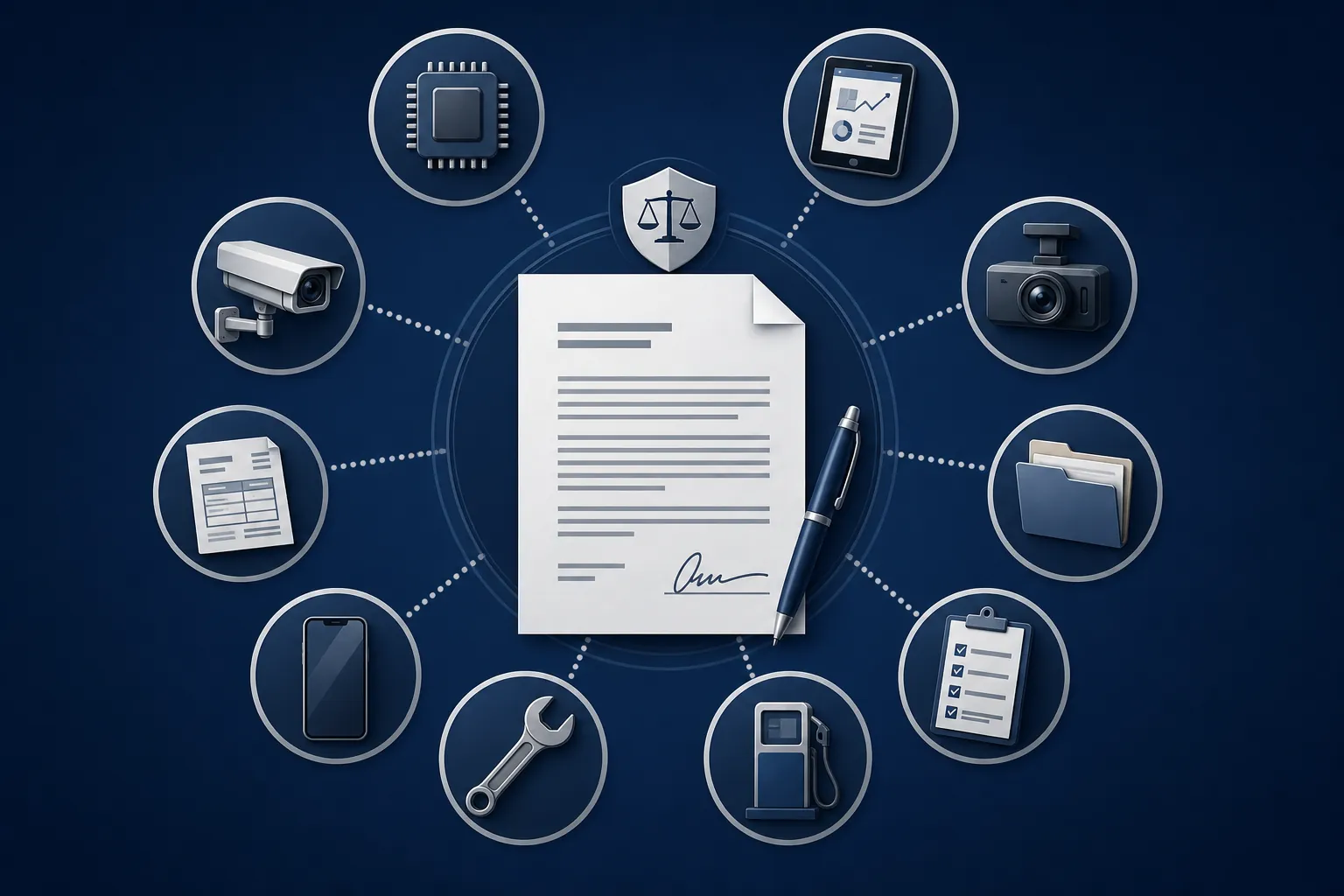
The letter should be category-specific. Sample trucking spoliation demands commonly identify ECM or event data, ELD and RODS materials, dashcam or inward-facing camera footage, driver qualification files, dispatch records, trip documents, fuel receipts, maintenance and inspection records, cell phone records, bills of lading, load securement materials, GPS data, photographs, repair records, and communications about the trip or crash.[4] The point is not to make the letter long for its own sake. The point is to close the gap between “preserve evidence” and “preserve this evidence, from these systems, held by these custodians.”
The recipient list matters as much as the category list. A tractor may be owned by one entity, operated by another, insured through a third, repaired by a vendor, towed by a separate company, and equipped with camera or telematics systems administered by outside providers. If the load, trailer, or broker relationship is material, those records should not wait for the motor carrier to decide what is relevant.
The letter should demand suspension of ordinary destruction policies, preservation of native electronic formats and metadata, identification of custodians, notice before repair or alteration, and a protocol for inspection and download. Delivery proof should be saved with the letter: email headers, certified-mail receipts, portal confirmations, fax confirmations, and call notes. If a recipient refuses access or says a category does not exist, that response belongs in the preservation chronology.
The duty to preserve does not always depend on receiving a letter. Practitioner commentary on New York trucking cases describes serious-injury or fatality crashes as events that can place a carrier on constructive notice that litigation is reasonably foreseeable, even before a formal demand arrives.[5] Other state frameworks differ; Georgia, Kansas, and Missouri are described in secondary sources as using different spoliation or ESI analyses, including factor tests, statutory ESI rules, or adverse-inference doctrines.[6] The safe procedural assumption is narrower: send the letter early, but do not let the letter substitute for evidence capture.
First week: electronic vehicle data is an extraction problem
ECM, EDR, telematics, ELD, and camera data should be treated as evidence that may need immediate technical handling, not as a document request to be served later. The operational questions are plain: who has the truck, whether it has been repaired, whether it has been driven, whether the module has been powered through additional cycles, who can download it, and whether the opposing party will agree to a protocol before alteration occurs.
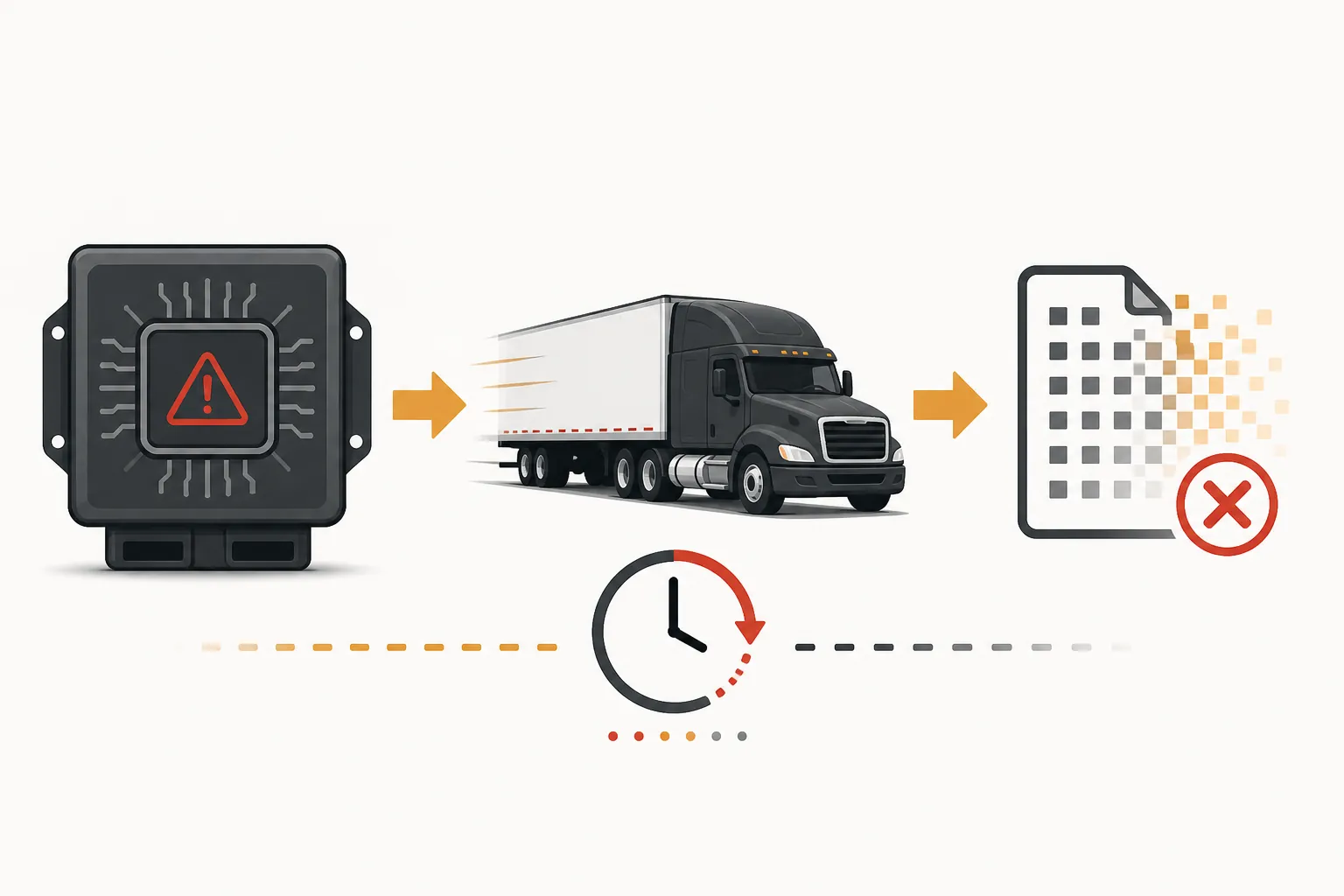
Plaintiff-side sources warn that ELD data may be overwritten in a 7-to-14-day range if not preserved, while ECM event data may be overwritten after only a few engine cycles if the truck returns to service.[7][8] Those are not universal engineering rules for every device, carrier, or configuration. They are practical risk windows that justify immediate inspection, because ordinary discovery timing is too slow for data that may depend on device settings, storage capacity, triggering events, and continued vehicle use.
The inspection notice should ask for the tractor, trailer, attached electronic modules, dashcam system, memory cards, telematics device, ELD unit, and any related cloud or vendor account data to remain unaltered until inspection. If the truck must be moved for safety or storage, the move should be documented. If repair is proposed, the file should demand notice before work begins and should identify the components that cannot be replaced, wiped, or recalibrated without agreement or court order.
A clean first-week file usually contains an expert engagement note, a proposed download protocol, dates offered for inspection, the storage location of the equipment, the carrier’s response, and any refusal or claimed unavailability. That paper trail matters even when the download does not happen immediately, because it shows whether the requesting party treated the data as time-sensitive before it disappeared.
Inside 30 days: collect the records that explain the trip
By the 30-day mark, the file should move from emergency preservation to record completeness. The goal is not to collect every trucking document ever created. The goal is to connect the crash to the driver, vehicle, carrier, trip, cargo, route, maintenance history, and communications that may explain how the event occurred.
| Record group | What to request or verify | Why it belongs in the first-month matrix |
|---|---|---|
| Driver qualification and employment | Driver qualification file, application materials, license and medical certification materials, prior safety or training records where applicable. | These records identify whether the driver was qualified, trained, supervised, and retained under the carrier’s own process. |
| Hours, movement, and trip records | ELD/RODS, dispatch logs, GPS or telematics records, toll records, fuel receipts, delivery schedules, bills of lading. | These records test fatigue, route timing, stops, speed, load timing, and whether the paper account matches movement data. |
| Vehicle condition | DVIRs, inspection reports, maintenance records, repair orders, tire and brake records, post-crash repair estimates. | These records show whether a mechanical issue existed before impact and whether post-crash repair changed the evidence. |
| Communications and devices | Driver phone records, carrier-driver messages, dispatch communications, app data where legally obtainable. | These records may show distraction, routing pressure, delay, or post-crash coordination. |
| Third-party evidence | Store, warehouse, traffic, dashcam, bodycam, tow-yard, shipper, receiver, and nearby residential or business video. | These sources often sit outside the carrier’s control and may recycle faster than formal discovery can reach them. |
Third-party video deserves its own line in the matrix because it often disappears without any bad faith. Law-firm sources note that there is no general federal dashcam-retention statute and that private dashcam or surveillance retention policies can vary, with some described in the 30-to-90-day range.[6][9] That means the demand has to reach the camera owner, not just the carrier, and the file should record the date each location was identified, contacted, and followed up.
The same discipline applies to phones and messaging data. A preservation demand can ask a carrier to preserve company devices, dispatch platforms, and communications within its control. Personal-device records may require consent, subpoena, court order, or a jurisdiction-specific process. The intake file should not blur those categories; it should identify what was requested voluntarily, what requires compulsory process, and what remains outstanding.
Regulatory retention periods are floors, not a preservation plan
Federal retention rules are useful for calendaring because they show what a carrier should have kept in ordinary operations. They do not answer the separate litigation question of what must be preserved once a serious crash makes litigation reasonably foreseeable. A carrier that deletes a record on the last day of a regulatory minimum may still face a preservation dispute if the duty to preserve had already attached.
| Category | Minimum retention period identified in the sources | Authority or source |
|---|---|---|
| Post-accident alcohol testing | Attempt within 2 hours when required; document continued delay; no further attempts after 8 hours. | 49 CFR 382.303, summarized in FMCSA accident-documentation guidance.[3] |
| Post-accident controlled-substances testing | Within 32 hours when required. | 49 CFR 382.303, summarized in FMCSA accident-documentation guidance.[3] |
| ELD records and supporting RODS materials | 6 months. | 49 CFR 395.8(k)(1); FMCSA ELD retention guidance.[10][11] |
| Driver vehicle inspection reports | 90 days. | 49 CFR 396.11(c)(2), summarized in FMCSA accident-documentation guidance.[3] |
| Inspection, repair, and maintenance records | 1 year while vehicle is controlled by the motor carrier, and for 6 months after the vehicle leaves carrier control, as summarized by the cited guidance. | 49 CFR 396.3(c), summarized in FMCSA accident-documentation guidance.[3] |
| Accident register | 3 years. | 49 CFR 390.15(b), summarized in FMCSA accident-documentation guidance.[3] |
| Driver qualification file | Duration of employment and 3 years thereafter, as summarized by the cited guidance. | 49 CFR 391.51, summarized in FMCSA accident-documentation guidance.[3] |
The retention table should be attached to the matter calendar, not buried in research notes. If ELD materials carry a 6-month retention rule, the plaintiff-side file should still show why the request went out in the first 48 hours and how follow-up occurred before any ordinary deletion date.[10][11] If maintenance records have a longer retention period, the file should still ask for them early enough to prevent repair vendors, insurers, or storage facilities from becoming the weak link.
What the preservation file should be able to prove
A defensible preservation chronology is usually more persuasive than a dramatic preservation letter. It should show the date and time of intake, scene assignment, witness work, camera canvass, testing verification, spoliation notice, recipient delivery, vehicle-location confirmation, inspection demand, electronic-data protocol, record requests, third-party follow-up, and unresolved gaps.
That chronology should also separate what is known from what is assumed. If an ELD overwrite risk is based on practitioner estimates, say so. If a state spoliation standard comes from secondary commentary rather than a reviewed order, flag it. If a dashcam policy is unknown, record the question and the custodian who needs to answer it. Precision helps the client more than overstatement.
The working standard is narrow and usable: capture the scene and witnesses within 24 hours, send a specific preservation demand within 48 hours, move on ECM/EDR/ELD inspection during the first week, request driver-carrier-third-party records inside 30 days, and calendar longer regulatory retention periods without relying on them. A standalone spoliation letter cannot recreate a cleaned scene, overwritten module data, or a surveillance loop that no one identified in time.
References
- Best Investigative Practices Following a Truck Accident, cshlaw.com
- What Does a Lawyer Do to Preserve Evidence Right After an Accident or Death?, finchmccranie.com
- FMCSA Accident Documentation Requirements for Trucking Companies, starrrg.com
- Sample Spoliation Letter in Truck Accident Case, millerandzois.com
- Preservation Starts at the Moment of Impact: New York Spoliation Lessons for Trucking Defense, law.com, July 2026
- Spoliation in Commercial Trucking Litigation, bbga.com
- What Evidence Disappears First After a Commercial Wreck?, dmlawusa.com
- Timely Evidence Preservation in Trucking Crashes, rafilawfirm.com
- What Evidence Do I Need to Win a Truck Accident Case in California?, victimslawyer.com
- 49 CFR § 395.8, ecfr.gov
- How Long Must a Motor Carrier Retain ELD Record, fmcsa.dot.gov
Related records
Tool profile
Browse tool evaluations →Governing regulation
Browse the obligations tracker →Preventive workflow
Browse verification workflows →
Report a correction or tip
Spotted an outdated figure, a misstated fact, or a ruling this case record should reflect? Public comments are disabled for this content given the professional cost of a misreported case outcome, penalty amount, or rule text — use the structured correction channel instead.
Report a correction or tip for this record →