
Trump's $83.3M Defamation Verdict Appeal Heads to SCOTUS
Analysis of the three questions presented in the Trump and DOJ cert petitions, the procedural history, and why the Supreme Court is unlikely to grant review of the $83.3 million defamation verdict.
- Jurisdiction
- US federal
- Court
- U.S. Supreme Court
- AI tool named
- none
- Ruling date
- Sep 8, 2025
- Source document
- View primary court order ↗
- Last verified
- Aug 2, 2026
Lex Machina Review is an independent risk-tracking and reference resource. Nothing on this site is legal advice, and using it does not create an attorney-client relationship. Every record is reviewed against primary sources but may not reflect the most current status of a matter — always verify directly against the cited court order, rule text, or a licensed attorney before relying on it.
Companion explanation — secondary to the source document above
| Record item | Status |
|---|---|
| Petitions now pending | Trump v. Carroll, No. 26-141, and United States v. Carroll, No. 26-142, filed in the final days of July 2026 after the Second Circuit affirmed the $83.3 million judgment. [1][2][3][4] |
| What is being appealed | The Jan. 26, 2024 defamation verdict: $18.3 million compensatory damages and $65 million punitive damages. [1] |
| Provisional cert view | Possible, because the questions are novel; unlikely, because waiver and forfeiture give the Court a clean way to deny review. |
| Important comparator | On June 29, 2026, the Court denied certiorari in the companion $5 million Carroll case, No. 25-573, after repeated rescheduling and without a noted dissent. [5][6] |
| Record last verified | Aug. 2, 2026, 00:00 UTC. |
The useful question in the pending Supreme Court appeal is not whether the filings sound important. They do. A former President is asking the Supreme Court to revisit an $83.3 million civil judgment based on statements he made while in office, and the United States has filed its own petition arguing that the Westfall Act required substitution of the federal government. The harder question is whether the Court has any reason to reach those questions after the Second Circuit treated the central immunity arguments as too late.
That posture matters more than the size of the verdict. The Supreme Court does not sit to reward the most nationally resonant version of an argument when the lower court decided that the argument was waived, forfeited, or otherwise unavailable on the record presented. Here, the petitions ask the Justices to look past exactly that kind of procedural holding.

The Timeline Is the Argument
Carroll filed this defamation action in November 2019. The suit concerned statements Trump made while President after Carroll publicly accused him of sexually assaulting her in the 1990s; Trump denied the allegation and made statements that Carroll alleged were defamatory. Years of litigation followed before the case reached the damages trial that produced the judgment now headed to the Supreme Court. [1][7]
On Jan. 26, 2024, a federal jury awarded Carroll $83.3 million: about $7.3 million for reputational and emotional harm, $11 million for a reputation-repair program, and $65 million in punitive damages. [1] The district-court phase is often described through that number. The appellate problem is better described through dates.
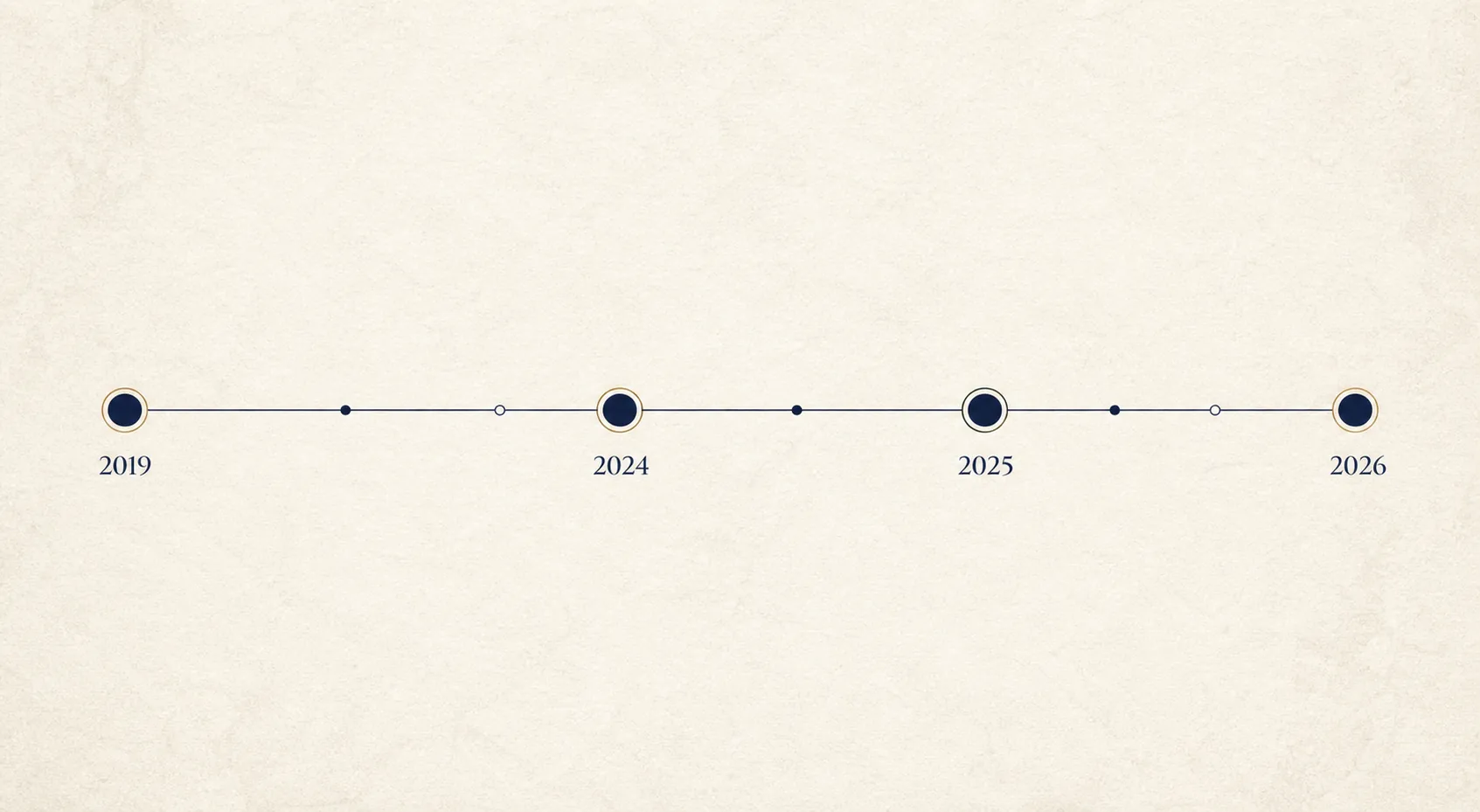
| Date | Procedural event | Why it matters now |
|---|---|---|
| November 2019 | Carroll files the defamation action. | The Second Circuit later measured Trump’s presidential-immunity timing against the first years of this case. [7] |
| Jan. 26, 2024 | The jury returns the $83.3 million verdict. | The verdict supplies the headline, but not the cert vehicle problem. [1] |
| Aug. 8, 2025 | The Second Circuit rejects Westfall Act substitution at the appellate stage. | This becomes the subject of the United States’ separate petition. [3] |
| Sept. 8, 2025 | The Second Circuit affirms the judgment in No. 24-644. | The panel affirms without deciding that presidential immunity bars the claim, because it holds the defense was not timely preserved. [7] |
| April 29, 2026 | The Second Circuit denies rehearing en banc. | Judge Chin’s concurrence and Judge Menashi’s dissent frame the forfeiture dispute the petitions now bring to the Court. [1][4] |
| June 29, 2026 | The Supreme Court denies certiorari in the companion $5 million case, No. 25-573. | That denial is not merits precedent, but it is a recent signal about the Court’s appetite for adjacent Carroll-Trump issues. [5][6] |
| July 28–30, 2026 | Trump and the United States file new petitions in Nos. 26-141 and 26-142. | The Court now has one petition from Trump and one from the federal government, aimed at related but distinct immunity questions. [1][2][3][4] |
The Second Circuit’s September 2025 opinion is the document to keep open. It did not need to hold that a President can never invoke immunity for statements to the press. It held that Trump had waited too long to press the defense in the manner required. [7] That is a less dramatic holding than the petitions’ institutional framing, but it is often the kind of holding that controls certiorari.
Two Petitions, Three Questions
The filings should not be collapsed into one “Supreme Court case.” Trump’s petition, docketed as No. 26-141, asks the Court to review the judgment against him. The United States’ petition, docketed as No. 26-142, asks the Court to decide whether the federal government should have been substituted under the Westfall Act. [2][3][4] The questions overlap in practical effect, but they travel through different legal routes.
Trump’s First Question: Forfeiture Without Express Renunciation
Trump’s first question asks whether a President can forfeit presidential immunity “without ever expressly renouncing such immunity.” His petition argues that the Second Circuit “never even decided whether presidential immunity applies” because it disposed of the issue through forfeiture. [4]
That is an attractive way to frame the question for a cert petition: an immunity question of constitutional dimension, avoided by a court of appeals through a procedural default. But the Second Circuit’s answer was not that immunity is unimportant. It was that Trump did not raise the defense for the first three years of the case in a way that preserved it. [7]
The en banc materials sharpen the conflict. Judge Chin’s concurrence treated the late assertion of presidential immunity as forfeited; Judge Menashi dissented from denial of rehearing, emphasizing that Trump had “consistently raised” immunity in his answer, summary-judgment motion, motion to amend, amended answer, and appeal. [1][4] That is the best version of Trump’s procedural argument. It is also the point at which the case becomes least suitable for sweeping public shorthand. The dispute is not simply whether presidential immunity exists. It is whether this defendant preserved this immunity defense in this record.
Trump’s Second Question: Official-Act Immunity After Trump v. United States
Trump’s second question invokes the Supreme Court’s 2024 decision in Trump v. United States. In that criminal case, the Court held that a former President has absolute immunity from criminal prosecution for conduct within his conclusive and preclusive constitutional authority, at least presumptive immunity for other official acts, and no immunity for unofficial acts. [8]
The petition asks the Court to apply official-act immunity principles to White House statements made in response to press inquiries. [4] That is the clean institutional puzzle in the case. Presidents speak constantly through official channels, and courts should be careful before converting every press response into personal-capacity litigation.
Still, Trump v. United States was a criminal-prosecution decision. [8] It does not automatically answer whether a civil defamation judgment based on statements to the press is barred, and it certainly does not automatically cure a preservation problem identified below. The petition’s official-act question is serious; its vehicle is the difficulty.
The United States’ Question: Westfall Act Recertification After Judgment
The United States’ petition is not just a friend-of-the-court brief in Trump’s favor. It is a separate request for review of the Second Circuit’s refusal to substitute the United States as defendant under the Westfall Act after the government recertified that Trump acted within the scope of his federal employment. Acting Solicitor General Hashim Mooppan argues that the Act “did not impose any time limit at all, much less a pretrial restriction.” [3]
The government’s institutional concern is broader than Trump. The Westfall Act generally protects federal employees from personal liability for torts committed within the scope of employment by substituting the United States as defendant. In the press-speech setting, the argument is that federal officials should not lose that protection merely because substitution is sought late, especially where public communications are part of federal work. [3]
The practical consequence is decisive. If the United States is substituted, Carroll’s defamation claim effectively ends because the Federal Tort Claims Act’s waiver of sovereign immunity excludes defamation. [3] That is why the Westfall petition cannot be treated as a technical sideshow. It is the route by which the judgment could disappear without the Court deciding whether Trump’s statements were protected by presidential immunity.
There is a respectable institutional rationale behind the government’s position. Mark C. Niles, writing at Lawfare about the Justice Department’s role in the Carroll litigation, explained the executive-branch interest in defending protections for federal officials who speak to the press. [9] But the timing problem is not imaginary. Trial courts have to manage cases, parties have to preserve defenses, and a substitution request after judgment asks a court to reorder years of litigation after the plaintiff has already tried the case.
The Petition Rhetoric Needs Careful Handling
Trump’s petition describes the judgment as the “first case in our Nation’s history in which a court has imposed damages liability on a President for his conduct in office.” [4] That is petition rhetoric, not a finding adopted by the Second Circuit or the Supreme Court. The distinction matters. A petitioner may state the case at the highest level of generality; a reviewing court still asks what was preserved, what was decided, and whether the vehicle is clean.
The same caution applies to the asserted circuit split. Judge Menashi’s dissent invoked Wasserman v. Rodacker to suggest tension with the D.C. Circuit on Westfall substitution timing. [4] That may become part of the cert pitch, but on the present materials it should be described as an asserted split, not a confirmed one. The Court is more likely to care about a square, outcome-determinative split than about disagreement characterized in dissent after a case has already accumulated preservation complications.
Nor should the companion cert denial be overread. A denial of certiorari in No. 25-573 does not decide the merits of the $83.3 million case. But the timing is hard to ignore: on June 29, 2026, the Court declined to review the separate $5 million Carroll verdict after the petition had been repeatedly rescheduled and without any noted dissent. [5][6] For a Court that wanted urgently to police Trump-Carroll immunity questions, that was an available moment.
Why Certiorari Is Possible
There are three reasons the petitions cannot be dismissed as routine loser’s appeals.
- The presidential-immunity question sits near the edge of Trump v. United States rather than inside its holding, because this is a civil defamation judgment rather than a criminal prosecution. [8]
- The Westfall Act question affects more than one President; it concerns when the United States may step in for federal officials sued over public communications. [3][9]
- The forfeiture dispute is not frivolous, given Judge Menashi’s dissenting account of where Trump raised immunity in the pleadings and motions. [4]
- The judgment is unusually large for a defamation case, even though the amount alone is not a cert-worthy legal question. [1]
Those points are enough to make the petitions real. They are not enough to make review likely.
Why Certiorari Is Unlikely
The main obstacle is vehicle quality. The Court can deny review without saying anything about whether a President enjoys civil immunity for the statements at issue, whether Trump v. United States should extend to this setting, or whether the Westfall Act permits post-judgment recertification in a cleaner case. It can simply leave in place the Second Circuit’s conclusion that the relevant arguments came too late. [7]
That is not a technicality in the pejorative sense. Preservation rules allocate responsibility. They tell parties when to raise defenses, give trial courts a chance to manage the case on the right legal premises, and prevent appellate courts from becoming first-instance forums for theories that would have changed the litigation path years earlier.
The United States has the strongest institutional argument, but also a hard remedial ask. Substitution after an adverse judgment would not merely change the caption. It would extinguish the claim because of the FTCA defamation exception. [3] A court may believe the executive branch has a legitimate interest in protecting official communications and still be unwilling to let recertification operate as a post-verdict exit ramp on this record.
The $5 million case reinforces the point cautiously. The Supreme Court’s June 29 denial in No. 25-573 was not an endorsement of the Second Circuit on every issue. But after repeated rescheduling, the Court let that judgment stand without noted dissent. [5][6] The new petitions present different questions, especially because the United States has now filed separately. Still, the denial weakens any assumption that the Justices are eager to use the Carroll litigation as the vehicle for a broad presidential-immunity intervention.
What Happens Next
Carroll’s opposition is due 30 days after docketing. [2] The Court will not act on the new petitions before it returns from summer recess. If the petitions are distributed for a fall conference, the first meaningful signal may be whether they are denied promptly, rescheduled, or held while the Court considers the related rehearing petition in No. 25-573.
The rehearing petition in the $5 million case remains pending, with possible action as soon as Aug. 17, 2026, based on the current docket posture. [6] Rehearing grants after cert denial are rare, and nothing in the available record suggests the Court has committed itself to revisiting that denial. But because these filings are moving in parallel, the docket should be checked before relying on any static account.
If the Court grants review in either No. 26-141 or No. 26-142, a merits decision could arrive in 2027. If it denies review, the Second Circuit’s affirmance of the $83.3 million judgment remains in place. The petitions raise serious institutional questions; the reason certiorari remains unlikely is that the decisive issue below was not the ultimate scope of presidential immunity, but whether the immunity arguments were timely preserved.
References
- Trump asks Supreme Court to hear appeal of $83.3 million defamation verdict against him, SCOTUSblog, July 29, 2026.
- Trump v. Carroll, SCOTUSblog.
- United States v. Carroll certiorari petition, Supreme Court of the United States, July 2026.
- Trump certiorari petition, DocumentCloud, July 2026.
- Supreme Court will not consider $5 million verdict against Trump, SCOTUSblog, June 29, 2026.
- Trump v. Carroll docket, No. 25-573, Supreme Court of the United States.
- Carroll v. Trump, No. 24-644, U.S. Court of Appeals for the Second Circuit, Sept. 8, 2025.
- Trump v. United States, No. 23-939, Supreme Court of the United States, July 1, 2024.
- What’s the Justice Department Doing in the E. Jean Carroll Lawsuit?, Lawfare.
Related records
Tool profile
Browse tool evaluations →Governing regulation
Browse the obligations tracker →Preventive workflow
Browse verification workflows →
Report a correction or tip
Spotted an outdated figure, a misstated fact, or a ruling this case record should reflect? Public comments are disabled for this content given the professional cost of a misreported case outcome, penalty amount, or rule text — use the structured correction channel instead.
Report a correction or tip for this record →