
The Underwood Teacher Probation Case That AI Keeps Hallucinating
The real Peake v. Underwood case involved a teacher probation sentence, but AI tools have hallucinated its holdings and quotations in at least three sanction proceedings. This article details the actual case, the pattern of AI errors, and the verification steps that would have prevented the sanctions.
- Jurisdiction
- California
- Court
- California Court of Appeal, Second Appellate District, Division Three
- AI tool named
- ChatGPT
- Ruling date
- Sep 1, 2025
- Source document
- View primary court order ↗
- Last verified
- Jul 31, 2026
Lex Machina Review is an independent risk-tracking and reference resource. Nothing on this site is legal advice, and using it does not create an attorney-client relationship. Every record is reviewed against primary sources but may not reflect the most current status of a matter — always verify directly against the cited court order, rule text, or a licensed attorney before relying on it.
Companion explanation — secondary to the source document above
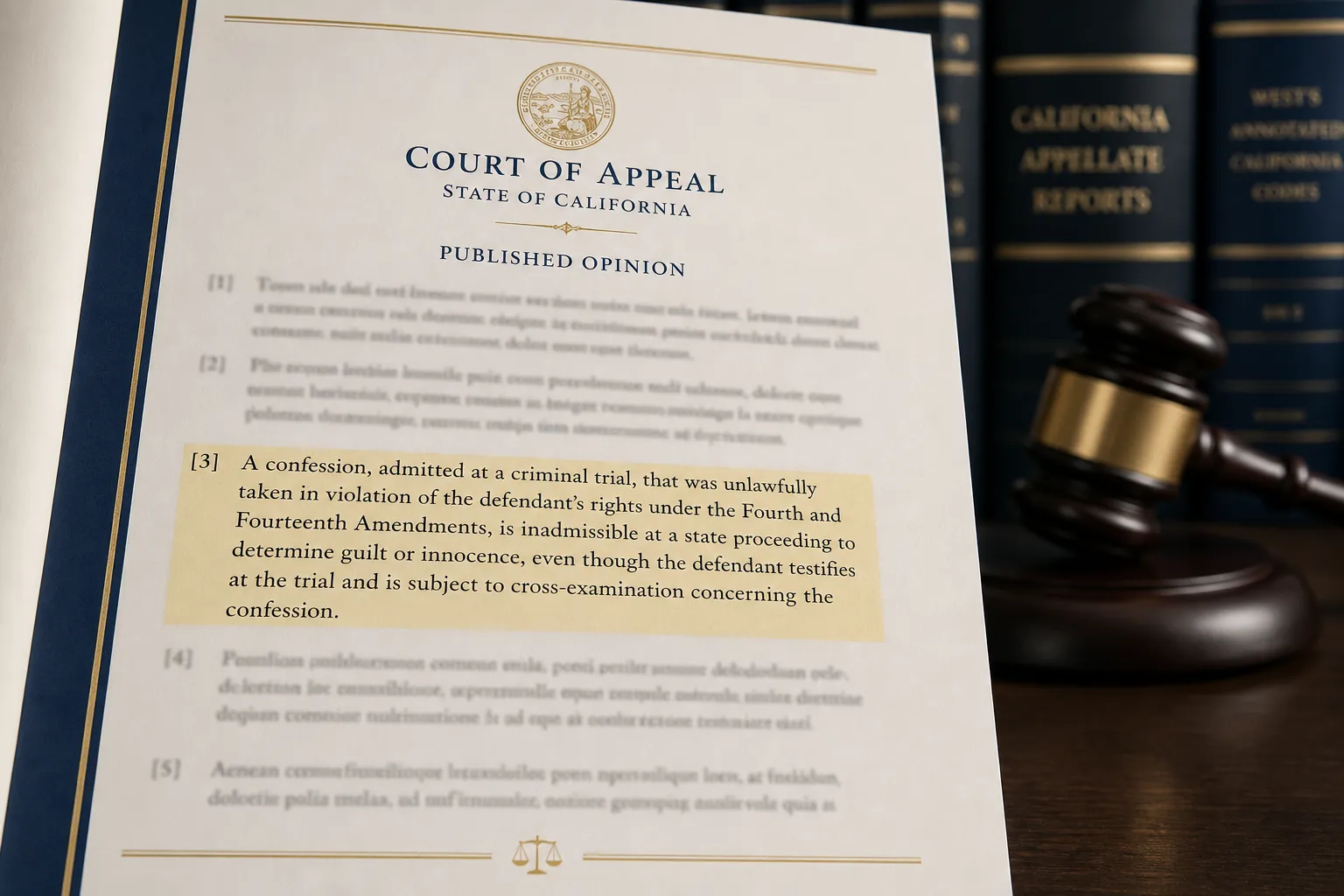
The first thing to get right is that Peake v. Underwood is not a fake case. It is a real California Court of Appeal decision, published at 227 Cal.App.4th 428, and its actual point is a procedural one: a party can forfeit the safe-harbor protection of Code of Civil Procedure section 128.7 by waiting too long to raise it. That is the baseline for any Underwood discussion; the case should not be treated as invented simply because later filings misused it. The trouble begins when a real citation is made to carry language, facts, or procedural propositions that do not appear in the opinion.
That distinction matters because Peake has now appeared around multiple AI-citation sanction episodes in California practice. In one, it was among authorities misquoted in an AI-generated brief. In another, it was cited correctly while the surrounding brief contained fabricated material. In a third, it appears in a documented Los Angeles ChatGPT-related account, though the available materials are thinner than the appellate sanction records discussed here. The useful lesson is narrower than “AI makes things up.” A real, citable California case has become a citation-risk marker.
What Peake Actually Does
Peake is useful to litigators for a limited reason. It concerns the safe-harbor procedure under section 128.7, the California sanctions statute that requires service of a sanctions motion before filing so the challenged paper can be withdrawn or corrected. The point relevant here is forfeiture: the safe-harbor objection can be lost if the party waits too long to assert it.
That is not glamorous law. It is also exactly the kind of law that gets mishandled when a brief treats a parenthetical as a substitute for reading. A citation to Peake should answer several ordinary questions before it is filed: Is the cited proposition about section 128.7? Is the point actually forfeiture of the safe-harbor objection? Does the procedural posture match the argument being made? If the brief quotes Peake, do those words appear in the published opinion?
A bad Peake citation can pass a lazy smell test because the case name is real and the general sanctions setting is plausible. That is what makes it more dangerous than a wholly nonexistent authority. A clerk, associate, or judge has to spend time separating the real case from the invented gloss.
Noland Shows the Failure in Its Plainest Form
Noland v. Land of the Free supplies the cleanest warning because the error pattern was not subtle. In September 2025, the Second Appellate District, Division Three, sanctioned attorney Amir Mostafavi after an AI-generated appellate brief contained fabricated quotations; available accounts state that 21 of 23 quotations were fabricated, including material attributed to Peake v. Underwood.[1][2]
The sanction was $10,000, described in the available reporting as California’s largest state-court AI-hallucination sanction as of September 2025.[2] The dollar amount gets attention, but the more useful filing-room fact is the ratio. If 21 of 23 quotations do not check out, the problem is not a typo, a missing pincite, or a misunderstood holding. It is the absence of quote verification before filing.
Peake’s role in Noland is especially irritating because it did not need to be debunked through model science. It needed to be opened. The opinion exists. The quoted language either appears or it does not. A lawyer relying on the quotation has to make that comparison before the court and opposing counsel inherit the mess.
Noland also states the duty in terms that are hard to soften: counsel must personally read and verify the authority cited in papers filed with the court.[1] That is a black-letter rule in the only sense that matters during brief cleanup. The signature does not certify that a tool sounded confident. It certifies the lawyer’s work.
Quinteros Makes the Signal More Nuanced
Quinteros v. Harbor Distributing is harder to reduce to a slogan, which makes it more useful. In June 2026, the First Appellate District, Division Four, certified for publication an opinion imposing $6,000 in joint-and-several sanctions after a brief contained at least eight AI-fabricated quotations and nonexistent citations.[3]
But Peake was not the fabricated citation there. The available discussion reports that Peake was cited correctly for its actual safe-harbor forfeiture holding.[3] That fact should stop the easy version of the story. Peake does not mean “fake.” Peake means “slow down.” Its appearance in a brief now has context: it has shown up in the neighborhood of AI citation failures often enough that it should trigger a more careful audit, not an automatic accusation.
Quinteros also matters because of its precedential posture. Unlike Noland, whose publication status should not be overstated from secondary descriptions, Quinteros was certified for publication by a different district. The safe way to state the combined rule is not to flatten the two opinions into one authority. It is to recognize that California appellate courts are now saying the same operational thing in separate proceedings: counsel of record bear ultimate responsibility for the authorities filed under their names and cannot delegate that responsibility to technology.[1][3]
The Los Angeles Reference Is a Third Signal, Not the Main Exhibit
The vLex “AI Horror Stories” materials document another Los Angeles ChatGPT-related reference involving the hallucinated Underwood citation pattern.[4] That should be treated cautiously. Without independently walking the underlying order, it should not carry the same weight as Noland or Quinteros. Still, it is useful as a third signal that the Peake/Underwood reference has circulated beyond one brief and one lawyer.
There is no need to speculate about why Peake became attractive to an AI system. The practical point is enough: when a real case name has appeared across documented hallucination accounts, it belongs on the list of authorities that get opened from the primary source before anyone trusts a quotation, parenthetical, or procedural description.
What Would Have Caught It Before Filing
The prevention sequence is not exotic. It is the same work good appellate lawyers and careful litigation teams already do when a brief matters. AI changes the volume and polish of the first draft; it does not change the verification burden.
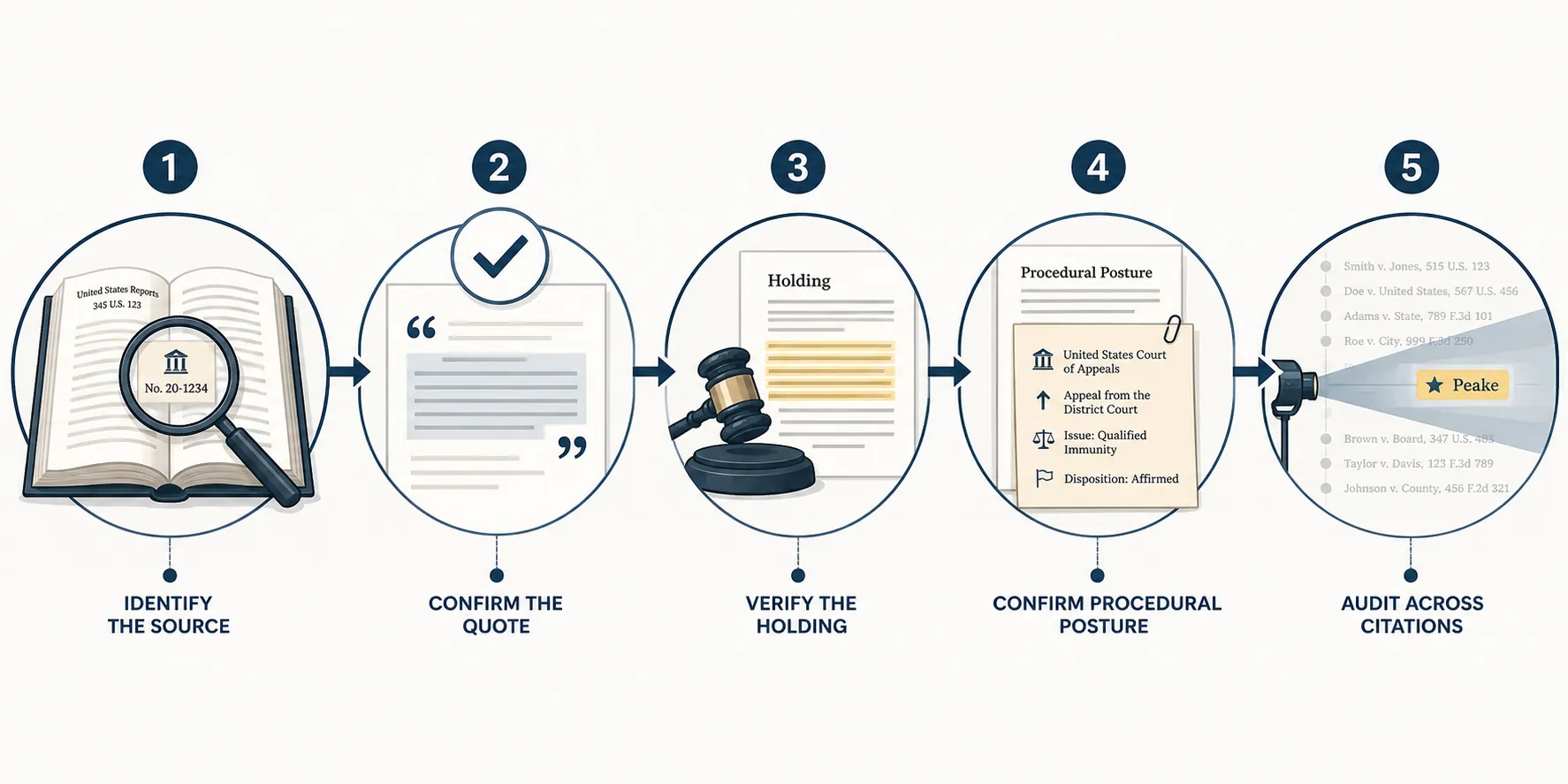
- Open the primary opinion. Do not verify Peake through an AI answer, a summary, or another brief.
- Search the opinion for the quoted language. If the quoted words are not there, the quote does not survive.
- Confirm the holding. For Peake, the supported proposition is safe-harbor forfeiture under section 128.7, not whatever broader sanctions rule the draft may prefer.
- Check procedural posture. A case about forfeiting a safe-harbor objection is not automatically authority for every sanctions timing argument.
- Audit nearby citations. If Peake appears in an AI-assisted draft, especially with polished quotations, widen the check to the surrounding authorities.
That last step is where Peake now earns its risk-marker status. In Quinteros, the Peake citation itself was apparently correct, but the brief still contained fabricated quotations and nonexistent citations.[3] A citation can be accurate and still serve as a clue about the drafting environment that produced it.
For firms building review protocols, this is also where tool policy has to become workflow rather than aspiration. A useful AI research tool may shorten the first pass or surface authorities a lawyer might have missed. It should not be the final source for quoted text. Risk teams that want a broader checklist can connect this Peake-specific lesson to the recurring failure modes discussed in What AI Paralegal Tools Still Get Wrong, especially where the problem is not just hallucination but misplaced confidence in a plausible-looking draft.
Peake Is Part of a Larger Pattern, But It Is Not Just a Statistic
The broader AI-citation problem is no longer anecdotal. Damien Charlotin’s database listed more than 1,148 documented U.S. lawyer hallucination cases as of early 2026.[5] That number is useful context, not the center of this article. It tells risk managers that Peake is not an oddity created by one careless lawyer. It does not prove that every Peake citation is suspect or that AI use caused every later citation error.
The California materials are doing something more concrete. Noland and Quinteros take the old duty to verify authority and apply it to AI-assisted filings without leaving room for delegation. That fits the state-law obligations arc now being watched in California ethics rulemaking, where proposed AI-related amendments would move professional expectations from soft guidance toward enforceable requirements; see California’s AI Ethics Rulemaking for the regulatory side of that development.
For a lawyer reviewing a draft, the operational consequence is simpler than the policy debate. A citation to Peake v. Underwood should not be deleted because the case is “fake.” It should be checked because the case is real, useful, and now known to have been surrounded by fabricated AI text in sanction proceedings.
The Filing-Room Rule
Noland and Quinteros should be read with their distinctions intact. They came from different districts. They had different publication postures. Peake played different roles in the two records. But both opinions point to the same black-letter duty: counsel must personally read and verify cited authority, and cannot hand that responsibility to a technology tool.[1][3]
Peake v. Underwood remains good law for the limited safe-harbor forfeiture point it actually supports. It is also now a known citation-risk marker. When Peake appears, open the primary opinion, verify the quoted language and holding, and widen the audit to the rest of the brief.
References
- California Appellate Court Issues $10K Sanctions in State’s First Published Opinion on AI-Hallucinated Case Citations, McGuireWoods, September 2025
- ChatGPT lawyer fine AI regulation, CalMatters, September 2025
- Quinteros v. Harbor Distributing, Wrongful Termination Law Review
- AI Horror Stories, vLex
- AI Hallucination Cases Database, Damien Charlotin
Related records
Tool profile
How to Read Legal AI Benchmarks Ahead of the OpenAI IPOGoverning regulation
Browse the obligations tracker →Preventive workflow
Browse verification workflows →
Report a correction or tip
Spotted an outdated figure, a misstated fact, or a ruling this case record should reflect? Public comments are disabled for this content given the professional cost of a misreported case outcome, penalty amount, or rule text — use the structured correction channel instead.
Report a correction or tip for this record →