
How United Airlines' Trip Trading Algorithm Created Age Bias Liability
When United Airlines deployed a proprietary algorithm to enforce its trip trading policy, the tool flagged 28 flight attendants and led to the termination of three senior women—all over 55. This article examines why the Fifth Circuit ruled that algorithmic enforcement does not shield employers from age discrimination claims and what that means for AI-driven HR decisions.
- Jurisdiction
- Fifth Circuit
- Ruling date
- Jun 9, 2025
- Source document
- View primary court order ↗
Lex Machina Review is an independent risk-tracking and reference resource. Nothing on this site is legal advice, and using it does not create an attorney-client relationship. Every record is reviewed against primary sources but may not reflect the most current status of a matter — always verify directly against the cited court order, rule text, or a licensed attorney before relying on it.
Companion explanation — secondary to the source document above
United Airlines did not terminate Margita Palova because a manager happened to dislike one trip trade. The company had built a proprietary system in 2019 to scan flight-attendant trade data for “trip parking,” an alleged workaround in which one attendant temporarily holds a trip for another outside the contractual trading rules. Reporting based on union memos and court filings says the system heavily weighted seniority when identifying suspected violators, flagged 28 flight attendants across three hubs, and led to the discharge of three Houston-based attendants who were women between 55 and 61 years old with 25 to 30 years of service.[1][2]
That sequence is the practical heart of the legal implications from United’s trip-trading terminations. The legal problem was not that United used software to find possible rule violations. Employers have legitimate reasons to look for patterns in scheduling systems, especially in workforces where seniority, swaps, personal favors, and local workarounds can become hard to separate. The problem was the next move: treating an algorithmic flag as if it had already answered the discrimination question.
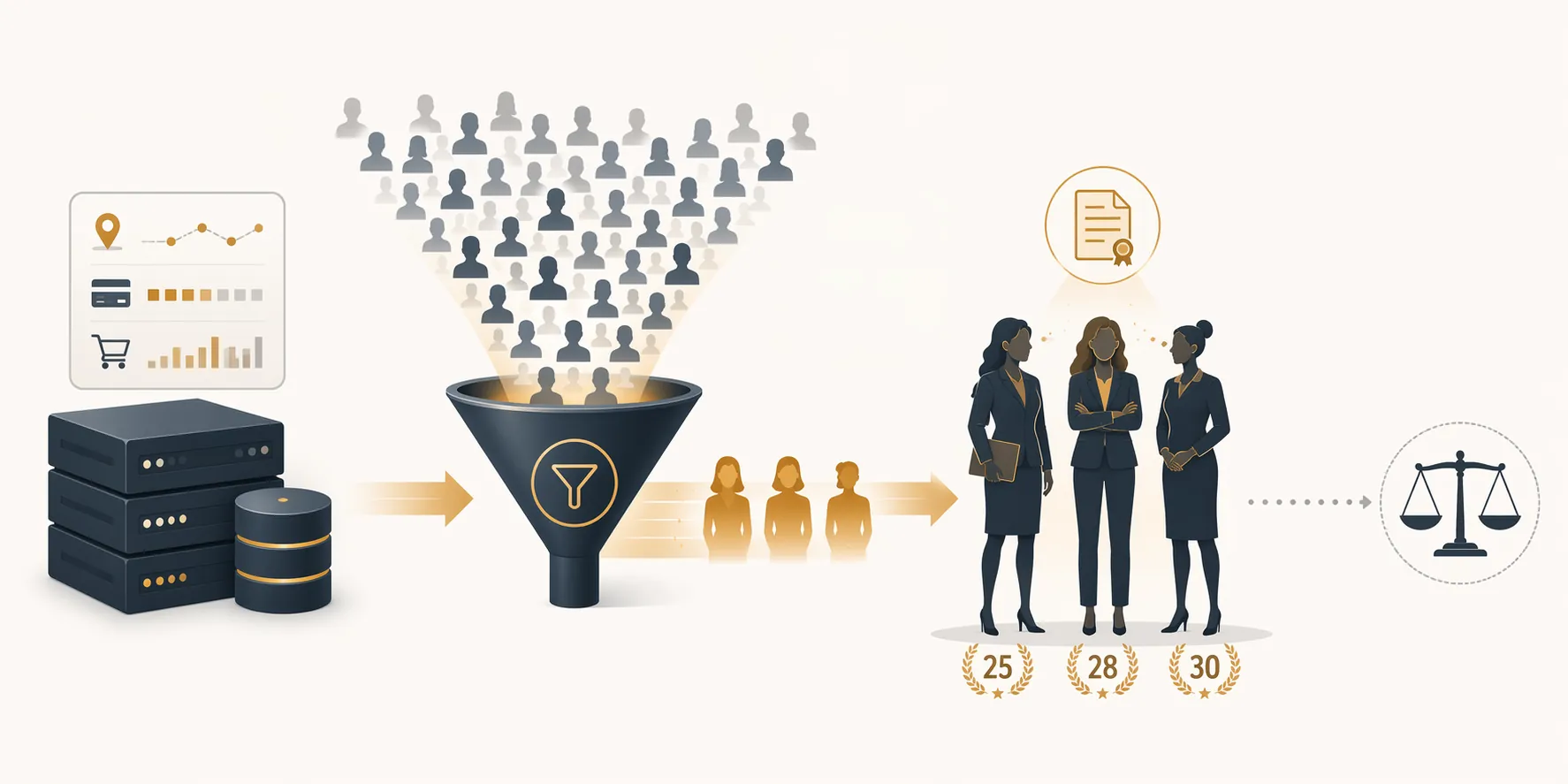
Palova sued under the Age Discrimination in Employment Act and Texas age-discrimination law. United argued that the case belonged in the Railway Labor Act system because the trip-trading rule came from the collective bargaining agreement. The district court accepted that framing. The Fifth Circuit did not. In June 2025, a unanimous panel reversed, holding that Palova’s statutory discrimination claims could not be conclusively resolved through interpretation of the CBA because the core issue was whether United enforced the rule equally.[3][4]
The Flag Was Only the Start of the Employment Decision
The reported enforcement chain has several human handoffs inside it. United built or used a proprietary detection process. The process scanned trades. It identified suspected trip parking. Company personnel then had to decide what to investigate, what explanation to credit, whether the employee’s conduct matched the rule, whether comparable employees had been handled the same way, and whether termination fit the facts.
Those handoffs matter because discrimination law usually does not stop at the moment a tool produces a list. A list can be useful. It can also be incomplete, skewed by the variables selected, or accurate in one narrow sense while still unsafe as a basis for discipline. If the system heavily weighted seniority, that design choice was not legally neutral in any practical sense; seniority in an airline workforce can track age closely enough that an age-bias claim deserves careful testing before discharge, not after litigation starts.
The available reporting does not establish that United’s algorithm was designed to target older attendants. It also does not confirm the tool’s exact specifications or vendor through United’s own disclosures. That uncertainty cuts both ways. It prevents an easy “AI discriminated” story, but it also leaves the employer with the harder courtroom problem: if the company cannot clearly explain what the tool measured and how decisionmakers checked its output before discipline, the word “proprietary” does not do much work.
Why the Demographics Changed the Risk
The flagged population and the terminated group are not the same thing. That distinction is important. The reported pool was 28 flight attendants across three hubs. The three Houston terminees were all older women with long tenure.[1][3] A plaintiff does not win an age-discrimination case just by pointing to that cluster. But at the pleading and pretrial stage, the cluster makes it difficult for an employer to say the case is only about what the contract allowed.
A clean audit file would answer a few basic questions before anyone reached for termination. What variables did the system weight? Did seniority operate as a proxy for age? Were less senior or younger employees flagged for similar patterns? If so, were they investigated with the same intensity? Were any given coaching, suspension, settlement, or another lesser consequence? Who reviewed the trade history manually? What facts ruled out innocent explanations?
Those questions are not technical niceties. They decide whether the employer can show equal enforcement. A labor-relations team can reasonably want consistency. A compliance team can reasonably want to stop side arrangements that undermine the scheduling system. But consistency has to be demonstrated across comparable employees, not assumed from the existence of a common detection tool.
The Fifth Circuit also told the lower court to consider evidence that Palova’s supervisor had mocked senior flight attendants on Pinterest.[1] That fact is not the whole case. It does, however, give the disparate-treatment theory a human decisionmaker context. Algorithmic enforcement rarely removes human bias from the file; it often changes where counsel has to look for it.
The Railway Labor Act Argument Did Not End the Discrimination Claim
United’s strongest procedural move was to characterize the dispute as a contract dispute. In the airline and railroad context, the Railway Labor Act channels “minor disputes” over collective bargaining agreements into arbitration. If Palova’s case required a court to decide what the trip-trading rule meant, United had a serious preemption argument.
The Fifth Circuit drew a different line. A court may need to refer to the CBA to understand what trip parking is, what the rule says, and what United claimed Palova violated. But “mere reference” to a collective bargaining agreement is not the same as “interpretation” of that agreement. The panel held that Palova’s claims turned on whether United enforced the rule in a discriminatory way, not on a contested construction of the rule itself.[3]
| Question | Why it matters |
|---|---|
| Did the CBA prohibit the relevant form of trip parking? | That may require looking at the agreement and the established work rules. |
| Did United enforce that prohibition equally against similarly situated employees? | That is the statutory discrimination question the Fifth Circuit treated as fit for a jury. |
| Did the algorithm identify possible violations? | That may explain how employees came under review, but it does not resolve motive, comparators, or disparate treatment. |
That distinction is the case’s most important legal move. It prevents an employer from converting a discrimination claim into a labor-arbitration issue simply because the workplace rule being enforced appears in a CBA. The agreement may supply the rule. The employer’s disciplinary choices supply the discrimination exposure.
For transportation employers, that is not a small distinction. Many discipline decisions sit on top of collectively bargained rules: attendance points, safety procedures, bidding rules, schedule swaps, fatigue calls, layover conduct, travel privileges. Palova does not say every one of those cases belongs in federal court. It says a statutory age-discrimination claim is not preempted merely because the factfinder must look at the agreement to understand the employer’s stated reason.
Algorithmic Enforcement Still Needs Comparator Proof
The case now turns on proof United still has to make or defeat on remand. There was no jury verdict as of July 2026. The Fifth Circuit ruling kept Palova’s claims alive; it did not decide that age discrimination occurred. That procedural posture matters because the legal implication is narrower and more useful than a headline about an airline losing an AI case.
The employer-side file needs more than a printout of flagged trades. It needs comparator analysis. If a younger attendant with a similar trade pattern was warned while an older attendant was fired, the tool’s initial accuracy will not cure the enforcement disparity. If the company can show that all similarly situated employees were treated alike after a documented review, the demographic pattern may look different to a jury.
That is where many algorithmic HR systems create avoidable litigation risk. They are built to surface exceptions, not to build a defensible discipline record. A detection model can say, “This pattern resembles trip parking.” It usually cannot say, without human work around it, “This employee is similarly situated to those employees, had the same policy notice, offered no credited explanation, and received the same penalty as younger comparators.”
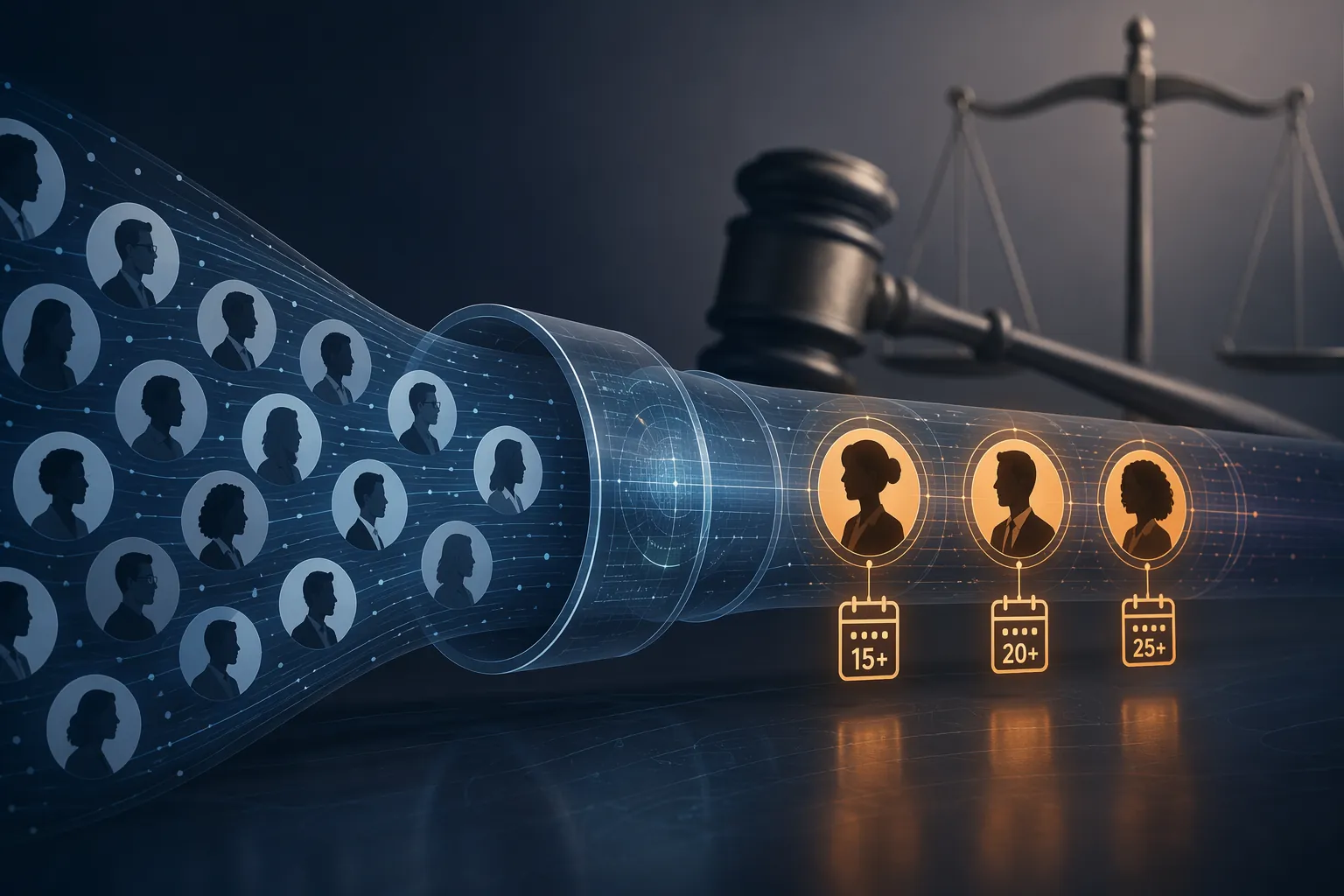
The Broader AI-Employment Pattern Is Real, but Palova Is Not Workday
Palova sits inside a larger 2026 risk environment for algorithmic employment decisions. The EEOC’s 2023–2026 AI guidance has kept attention on disparate impact, including the possibility that neutral-looking selection procedures can disproportionately screen out protected groups.[5] Parallel litigation over Workday’s hiring technology has also kept courts focused on when vendors and employers may face claims tied to automated employment-screening systems.[6]
Still, Palova should not be flattened into a generic AI-hiring case. It is an enforcement case. The employee already had the job. The employer already had a collective bargaining agreement, a seniority system, trip-trading practices, supervisors, investigators, and discipline choices. The alleged harm came from how a policy violation was detected and punished, not from a résumé screen or chatbot rejecting applicants.
That difference is why the case belongs in the same conversation as automated attendance discipline, route-performance monitoring, safety-score dashboards, loss-prevention alerts, and productivity systems. These tools do not simply recommend whom to hire. They create a record that managers may treat as cause. Once cause becomes discipline, the employer has to prove the discipline process was evenhanded.
The 2026 Termination Reports Add Pressure, Not Proof
Union-reported developments in July 2026 add context but should be handled carefully. The AFA-CWA reported a “significant increase” in United terminations and said it would “push back on every case,” demanding proper investigations and progressive discipline.[1] Those reports are not the same as a court finding, and the numbers were not confirmed by United in the materials available here.
They do, however, show why Palova is not an isolated curiosity for legal operations teams. A company that scales enforcement through data tools can also scale weak documentation, uneven investigation, or overconfident reliance on system outputs. The risk compounds when the workforce is unionized, long-tenured, and governed by detailed rules that are easy to invoke but harder to enforce consistently.
Earlier United discipline waves also show that the company had been pursuing travel and trip-related abuses for years. Reporting says United fired 35 employees in March 2019 for travel-pass brokering and had fired 28 flight attendants for trip parking by February 2020.[7][8] Those facts help explain the enforcement environment. They do not answer whether Palova and the other Houston attendants were treated the same as younger comparable employees.
What Employers Should Take From the Ruling
The operational lesson is not to stop using detection tools. In scheduling-heavy businesses, a well-designed tool may find patterns no manager would catch by hand. It may also reduce favoritism by forcing suspicious patterns into view. But the tool has to sit inside a discipline workflow that can be explained to a court, a union, an agency, and the employee whose job is on the line.
- Document what the tool measures, including whether variables such as seniority may correlate with age or another protected trait.
- Separate detection from discipline, with a human review that tests innocent explanations and comparable cases.
- Run an adverse-pattern review before termination, not as a litigation reconstruction after the complaint is filed.
- Preserve the comparator file: flagged employees, unflagged lookalikes, discipline levels, tenure, age bands where lawfully reviewed, and stated reasons for different outcomes.
- Train supervisors not to treat algorithmic output as a credibility finding or a substitute for progressive-discipline analysis.
For airlines and other transportation employers, Palova’s most durable point is the one United could not avoid at the preemption stage: a contractual rule can explain why the company investigated, but it does not automatically explain why these employees were fired. The employer still owns the enforcement decision, the demographic pattern that follows from it, and the proof that similarly situated workers were treated alike.
References
- United Airlines Accused of Using AI to Fire Senior Flight Attendants Over Trip Trading — Paddle Your Own Kanoo, July 21, 2026
- United Airlines Trip Trading Terminations Coverage — Simple Flying, July 22, 2026
- United Airlines Flight Attendant Age Bias Claims Revived — Bloomberg Law, June 9, 2025
- United Airlines Age Bias Suit Revived by Fifth Circuit — Law360 via HCA Mag, June 10, 2025
- EEOC Issues Guidance on AI and Disparate Impact — Ogletree Deakins, May 12, 2026
- Emerging AI Legal Risks July 2026 Update — Quinn Emanuel, July 2026
- United Airlines fires 35 employees for selling travel passes — FOX News, September 12, 2019
- United Airlines Fired 28 Flight Attendants for Trip Parking by February 2020 — Paddle Your Own Kanoo, June 9, 2025
Related records
Tool profile
Browse tool evaluations →Governing regulation
Browse the obligations tracker →Preventive workflow
Browse verification workflows →
Report a correction or tip
Spotted an outdated figure, a misstated fact, or a ruling this case record should reflect? Public comments are disabled for this content given the professional cost of a misreported case outcome, penalty amount, or rule text — use the structured correction channel instead.
Report a correction or tip for this record →