
The US-Israel Defense Initiative and India's Export Control Gap
An analysis of how the FY2027 NDAA's US-Israel Defense Technology Cooperation Initiative institutionalizes a structural legal precedence for Israel under US defense procurement law, creating a de facto two-tier system that disadvantages India despite its Major Defense Partner status and extensive defense acquisition history.
- Jurisdiction
- United States
- Ruling date
- Jul 24, 2026
- Source document
- View primary court order ↗
Lex Machina Review is an independent risk-tracking and reference resource. Nothing on this site is legal advice, and using it does not create an attorney-client relationship. Every record is reviewed against primary sources but may not reflect the most current status of a matter — always verify directly against the cited court order, rule text, or a licensed attorney before relying on it.
Companion explanation — secondary to the source document above
The legal issue in the proposed U.S.-Israel Defense Technology Cooperation Initiative is not that Israel may receive more weapons, more money, or more political indulgence from Washington. Those are familiar debates. The sharper point is that the FY2027 NDAA process appears to contemplate an administrative mechanism that India does not possess: an Executive Agent channel inside the Department of Defense, tied to procurement and technology cooperation, with authority that can outrank ordinary component-level control.
A legal analysis of the U.S.-Israel initiative’s implications for India should begin there. Not with a claim that the United States and Israel have already merged their militaries, and not with the familiar recital that India is a Major Defense Partner, a Strategic Trade Authorization Tier 1 country, and a large buyer of U.S. defense equipment. The question is narrower and more consequential: whether pending U.S. legislation would convert one partner’s access into a codified bureaucratic priority while India continues to depend on discretionary, case-by-case release decisions.
As of July 2026, that question is still partly contingent. The relevant NDAA language is not yet a final enacted settlement; House and Senate versions differ, and the conference outcome may alter section numbers, funding, conditions, or operative text. Congress.gov’s text for S.3855 shows the pending legislative vehicle rather than a completed export-control revolution.[1] That distinction matters. A bill can signal intent; it does not, by itself, rewrite the International Traffic in Arms Regulations.

Status Is Not Authority
India’s problem is not absence of status. It has accumulated more than enough diplomatic vocabulary. It has Major Defense Partner recognition. It has STA-1 treatment. It has purchased more than $22 billion in U.S. defense equipment since 2002.[2] In ordinary political argument, those facts are placed in a single column and treated as proof that technology access should follow.
In export-control practice, the column breaks apart. A designation may affect licensing presumptions, interagency habits, and political comfort, but it does not automatically create a procurement command, an exception to a controlled-technology rule, or a superior institutional priority inside the Pentagon. The difference is not semantic. It decides which official must move, which office may block, and whether a partner’s request is processed as a favored case or as part of an established authority structure.
That is why the Executive Agent mechanism matters. The Quincy Institute’s analysis of the U.S.-Israel initiative emphasizes the operative language associated with DoD Directive 5101.01: an Executive Agent’s assigned responsibilities “take precedence over the authority of other DoD component heads.”[3] That sentence is more important than most public descriptions of partnership. It tells a lawyer where the hierarchy sits.
An Executive Agent is not merely a point of contact. It is a designated DoD official or component assigned responsibilities by the Secretary of Defense or Deputy Secretary of Defense for a specific function. If the relevant U.S.-Israel defense-technology mechanism is built through that form, the participating office does not simply request cooperation from the rest of the Pentagon. It can be placed above conflicting component-level authority for the assigned mission.
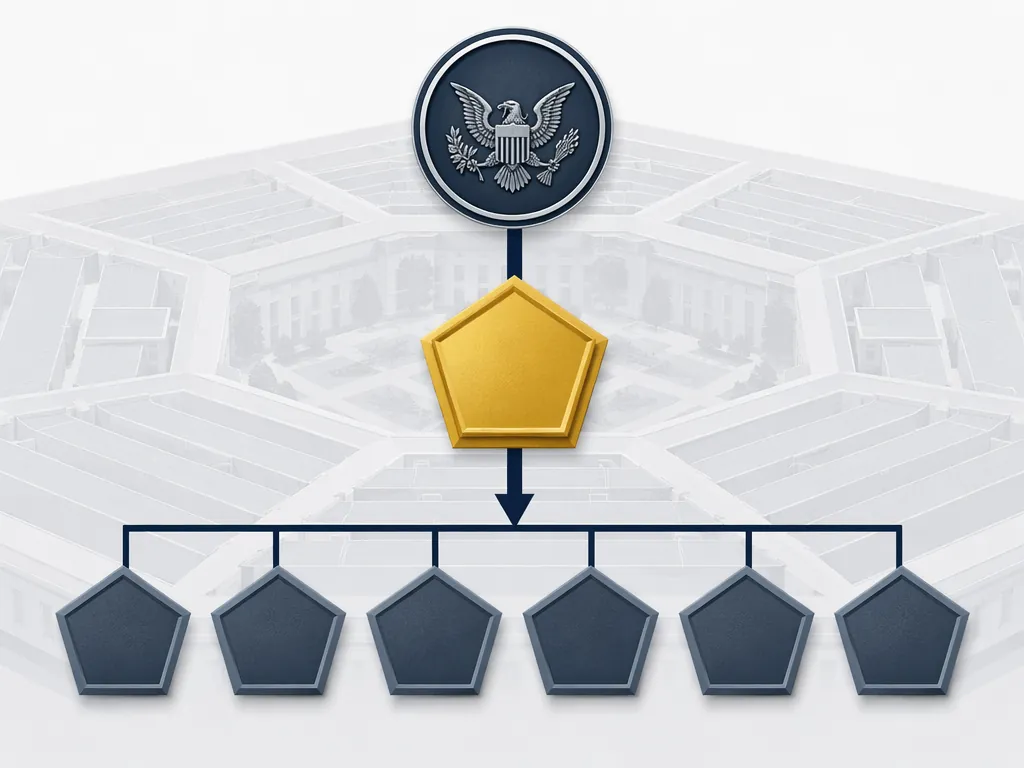
For India, the comparison is uncomfortable because Major Defense Partner status has never supplied an equivalent command grammar. The Observer Research Foundation’s survey of India-U.S. defense cooperation states that the status “was not clearly defined or operationalized.”[2] That is the line Indian negotiators should keep beside the Executive Agent language. One formulation expresses warmth without settled machinery. The other appears to assign machinery with precedence.
| Legal or policy position | What it can do | What it does not itself prove |
|---|---|---|
| India’s Major Defense Partner status | Signals political priority and supports defense cooperation | Does not clearly create an operationalized procurement or technology-release authority |
| India’s STA-1 designation | Improves access within defined export-control categories | Does not place India inside the National Technology and Industrial Base |
| India’s U.S. defense acquisitions since 2002 | Shows sustained procurement dependence and strategic convergence | Does not create entitlement to controlled technology transfer |
| Israel-linked Executive Agent mechanism | Potentially assigns a DoD authority whose mission can take precedence over other component heads | Does not become final law until the NDAA process settles and implementation follows |
The Procurement Consequence of Precedence
Precedence inside the Pentagon is not an ornament. Defense technology cooperation is slowed less often by a single grand refusal than by layered authority: program offices, service components, security review bodies, export-control lawyers, disclosure officials, congressional notification requirements, and industry counsel all occupying different parts of the chain. A partner with political support may still wait while those offices reconcile risk, classification, releasability, industrial-base exposure, and end-use obligations.
An Executive Agent structure can change that internal choreography. It does not make every transfer lawful. It does not erase classification rules. It does not compel a private contractor to surrender intellectual property. But it gives the assigned mission a bureaucratic owner with superior authority for the designated function. When another DoD component resists, the question is no longer only whether cooperation is desirable. It is whether that component can obstruct a task assigned to an Executive Agent whose authority, for that task, takes precedence.
That is a different legal environment from one in which a foreign partner repeatedly invokes strategic convergence and waits for the United States to assemble exceptions. India has often succeeded in buying U.S. platforms, but acquisition volume is not the same as technology entitlement. Buying aircraft, helicopters, artillery, or surveillance systems over many years proves that the U.S. system can approve sales. It does not prove that the same system will release source code, hot-section technology, manufacturing know-how, or sensitive subsystems when the industrial bargain becomes more ambitious.
The GE F414 co-production dispute is useful for precisely that reason. It should not be inflated into a complete history of India-U.S. defense technology relations, but it shows where the gap becomes industrial. India’s defense-technology ambitions have run into difficult questions over how much technology will actually be transferred and under what conditions; The Hindu has described the broader pattern as one of “big ambitions” with “little delivery” in India-U.S. defense technology ties.[4] The legal point is not that Washington has no reason to protect sensitive technology. The point is that India’s present statuses do not supply a comparable institutional lever when the release question becomes hard.
The ITAR Pathway India Still Lacks
The pending U.S.-Israel language is also significant because it may point beyond procurement coordination toward export-control privilege. Josh Paul’s analysis for Arab Center Washington DC warns that the relevant NDAA provision could lead to ITAR amendments giving Israel access of a kind currently limited to Australia, Canada, and the United Kingdom.[5] That warning should be read carefully. It is not yet a final regulatory amendment. It is an assessment of likely legal direction based on pending legislative text and the structure of U.S.-Israel integration.
Even with that caution, the comparison with India is stark. India is not inside the National Technology and Industrial Base. Australia, Canada, and the United Kingdom occupy a different position in U.S. defense industrial law, and India’s STA-1 status does not collapse that distinction. STA-1 may ease certain licensing burdens; it does not make India part of the club for which some defense trade rules and industrial-base assumptions are structurally different.
This is where Indian commentary often reaches too quickly for betrayal as the explanation. Betrayal is a political word. The legal architecture is colder. U.S. export controls are designed to preserve U.S. discretion unless Congress, the executive branch, or treaty-based arrangements narrow that discretion. If India is outside the relevant exception, the system is doing what it was built to do: treat release as a controlled choice, not as a partner’s accrued right.
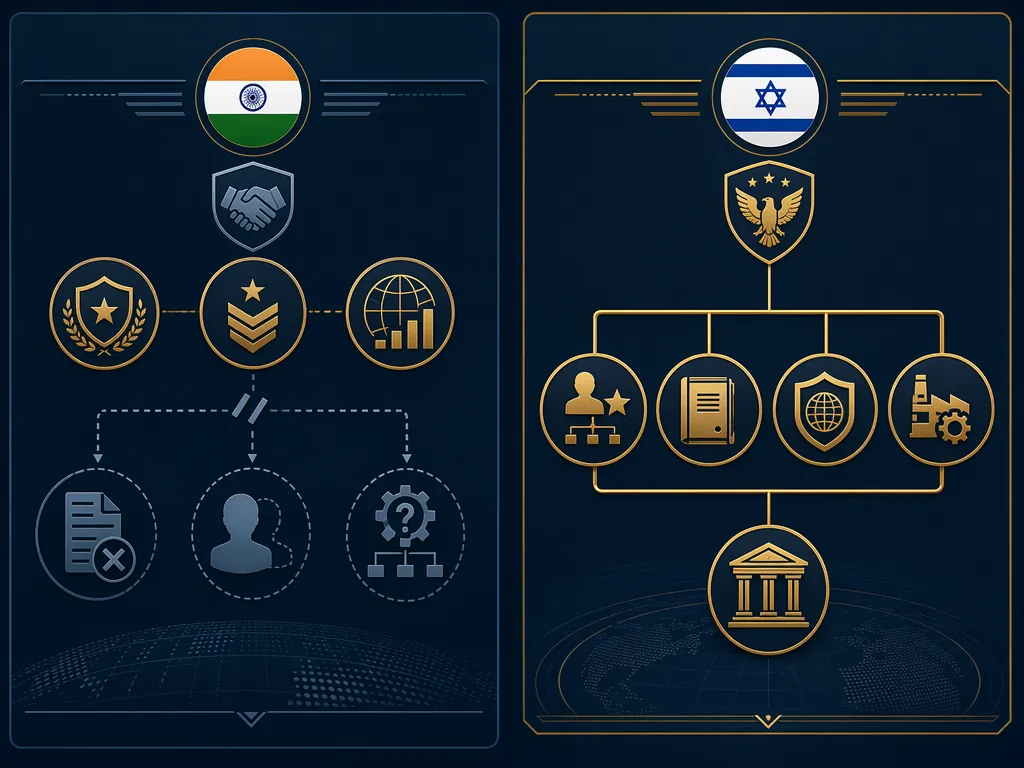
The proposed Israel pathway therefore exposes a problem India has tended to manage through diplomacy rather than legal redesign. If Washington can build a partner-specific Executive Agent mechanism and then contemplate ITAR adjustments for Israel, the Indian demand cannot remain at the level of being recognized as important. It must identify the legal instrument India wants: NTIB inclusion, a tailored statutory exception, a defined technology-release process, a procurement authority, or some other operational machinery that survives changes in mood and personnel.
Money Helps Institutionalization, But It Is Not the Core Legal Fact
Supporters of the FY2027 U.S.-Israel defense package present the initiative as part of a broader cooperative architecture. AIPAC’s NDAA memo describes $750 million for U.S.-Israel cooperative programs, including a $65 million increase.[6] Those figures are politically relevant because appropriations and authorizations can make a bureaucratic initiative durable. They also need verification against final NDAA markups or conference text before they are treated as enacted amounts.
For India, however, the money comparison is secondary. The decisive asymmetry is not whether Israel receives a larger or smaller package in one fiscal year than India has purchased across two decades. India’s more than $22 billion in U.S. defense acquisitions since 2002 already demonstrates that transaction volume can be high without resolving technology-release status.[2] A buyer may become indispensable to exporters and still remain outside the legal category that matters for controlled know-how.
That distinction should discipline Indian expectations in future negotiations. A procurement contract can include offsets, assembly, licensed production, maintenance rights, training packages, and supply-chain commitments. It cannot, by its own force, amend the Arms Export Control Act, alter ITAR exemptions, or subordinate a resistant U.S. defense component to a partner-specific technology mission. If those outcomes are desired, they must be pursued as legal authorities, not assumed as diplomatic dividends.
Pending Text Is Not Enacted Law
There is a temptation to describe the initiative as though the United States has already completed a defense-industrial merger with Israel. That overstates the record. Military.com has reported the NDAA provision as seeking sweeping U.S.-Israel defense-technology integration, but seeking is not the same as completing.[7] The operative text must survive the legislative process, be implemented by the relevant departments, and then interact with export-control regulations, appropriations conditions, congressional oversight, and agency practice.
The section-number confusion itself is a useful warning. The materials cited here refer to Section 219/1217 in the FY2027 NDAA context, while the Arab Center analysis discusses Section 224. That does not defeat the underlying issue; section numbers often shift across drafts, chambers, and related vehicles. But it does mean any final legal memorandum should cite the enacted public law section, not a mid-process label, and should separate proposed ITAR consequences from regulatory amendments actually issued.
A careful Indian reading should therefore avoid two errors at once. The first is complacency: assuming that Major Defense Partner language and past purchases will naturally mature into U.S.-style industrial trust. The second is exaggeration: claiming that a pending NDAA provision has already rewritten the entire export-control order. The useful position sits between them. The United States is considering a form of institutionalized defense-technology access for Israel that, if enacted and implemented, would be materially different from India’s present status.
What Indian Counsel Should Now Ask For
Indian officials and counsel do not need another abstract affirmation that the relationship is strategically important. They need a table of authorities. For each desired technology area, the question should be which U.S. legal barrier applies, which office controls it, whether an exception exists, whether the exception is statutory or regulatory, whether Congress must be notified, and whether any partner-specific mechanism can override or coordinate component-level resistance.
- If India seeks NTIB-like treatment, it should say whether it wants formal NTIB inclusion or a narrower country-specific analogue.
- If India seeks co-production with meaningful technology transfer, it should identify which controlled items require a licensing change rather than a commercial side letter.
- If India seeks faster release decisions, it should ask whether a named U.S. authority will coordinate and prevail over conflicting component positions.
- If India relies on STA-1, it should map exactly which desired technologies remain outside practical reach despite that status.
- If India cites past purchases, it should connect them to a requested legal mechanism rather than to a general expectation of reciprocity.
This is not an argument that India should receive every technology it requests, or that Israel’s security relationship with the United States is easily comparable to India’s. The United States may have battlefield, intelligence, domestic political, and alliance reasons for treating Israel differently. The question for India is more limited: whether its own legal position is adequate for the defense-industrial ambitions it keeps announcing.
On the present record, it is not. India has status, purchases, and political language. Israel may receive a designated Executive Agent pathway with precedence inside the Pentagon and a possible route toward privileged ITAR treatment. If that structure survives the FY2027 NDAA process, Israel will occupy a codified tier of defense-procurement precedence that India’s current designations do not match. The export-control gap will no longer be something Indian counsel can politely file under diplomatic friction.
References
- S.3855 - 119th Congress (2025-2026), Congress.gov, https://www.congress.gov/bill/119th-congress/senate-bill/3855/text
- A Survey of India-US Defence Cooperation, Observer Research Foundation, https://www.orfonline.org/research/a-survey-of-india-us-defence-cooperation
- Cooperation Without Oversight: The United States-Israel Defense Technology Cooperation Initiative, Quincy Institute, https://quincyinst.org/research/cooperation-without-oversight-the-united-states-israel-defense-technology-cooperation-initiative/
- India-U.S. defence technology ties: big ambitions, little delivery, The Hindu, https://www.thehindu.com/opinion/op-ed/india-us-defence-technology-ties-big-ambitions-little-delivery/article71222458.ece
- Section 224: US-Israel Defense Integration Beyond Military Aid, Arab Center Washington DC, https://arabcenterdc.org/resource/section-224-us-israel-defense-integration-beyond-military-aid/
- America-Israel Defense NDAA, AIPAC, https://www.aipac.org/memos/america-israel-defense-ndaa
- 2027 NDAA Provision Seeks Sweeping US-Israel Defense Tech Integration, Military.com, https://www.military.com/2027-ndaa-provision-seeks-sweeping-us-israel-defense-tech-integration
Related records
Tool profile
Browse tool evaluations →Governing regulation
Browse the obligations tracker →Preventive workflow
Browse verification workflows →
Report a correction or tip
Spotted an outdated figure, a misstated fact, or a ruling this case record should reflect? Public comments are disabled for this content given the professional cost of a misreported case outcome, penalty amount, or rule text — use the structured correction channel instead.
Report a correction or tip for this record →