
Verify Jensen Huang's six-figure AI data center jobs claim
Jensen Huang's six-figure AI data center jobs claim is real in origin but systematically overstated in circulation. This verification workflow gives legal professionals a source-checking procedure — trace the exact quote, separate observed wages from projections, and flag unverified figures — before repeating the claim in a brief, memo, or client update.
- Jurisdiction
- United States
- Court
- No court
- AI tool named
- Anthropic
- Ruling date
- Jan 21, 2026
- Source document
- View primary court order ↗
- Last verified
- Aug 3, 2026
Lex Machina Review is an independent risk-tracking and reference resource. Nothing on this site is legal advice, and using it does not create an attorney-client relationship. Every record is reviewed against primary sources but may not reflect the most current status of a matter — always verify directly against the cited court order, rule text, or a licensed attorney before relying on it.
Companion explanation — secondary to the source document above
Last verified: August 3, 2026. This verification workflow is for legal-information and knowledge-management use only; it is not legal advice.
Operational answer: the phrase “Jensen Huang AI data center construction jobs six figure” points to a real executive claim, but the commonly reused version is too clean. In the available source chain, Huang’s Davos remarks support the infrastructure-buildout framing, and Fortune reported him saying that trade workers involved in building chip, computer, and AI factories would see “six-figure salaries.” The safer sentence is narrower: Huang has argued that AI infrastructure buildout will create high-paying skilled-trade opportunities, including six-figure roles, but observed wage data does not support treating six figures as typical pay across the relevant trades.
For a brief, diligence memo, client alert, or market-risk note, do not leave the claim in as “AI data centers are creating six-figure construction jobs” unless the sentence identifies who said it, separates quoted rhetoric from wage evidence, and labels forecasts as forecasts. The companion claim audit, Will AI Create Electrician and Plumbing Jobs? Huang Says Yes, rates the parts of the claim. This piece is the workflow for deciding whether a reused version is safe to cite.

Start by preserving the source chain
The chain of custody matters because each retelling changes the useful legal meaning of the sentence. The most useful primary record is Huang’s January 21, 2026 Davos conversation with BlackRock CEO Larry Fink, where he described AI as “the largest infrastructure buildout in human history” and tied that buildout to factories, power, and data-center construction rather than only to software labor markets.[1] NVIDIA’s own blog summary of the same Davos appearance also frames the point as an infrastructure-buildout argument, not a wage survey.[2]
The “six-figure” version circulating in business coverage is tied most directly to Fortune’s report on Huang’s late-2025 Channel 4 News interview. Fortune reported that Huang said trade workers involved in building chip, computer, and AI factories would see “six-figure salaries,” that trade salaries had “nearly doubled,” and that “hundreds of thousands” of electricians, plumbers, and carpenters would be needed.[3]
That is enough to attribute the claim to Huang. It is not enough to convert it into an observed labor-market fact. The legal drafting problem begins when the quotation drops its attribution and becomes a general sentence about what AI data-center construction jobs pay.
Use different verbs for quoted claims, observed pay, and projections
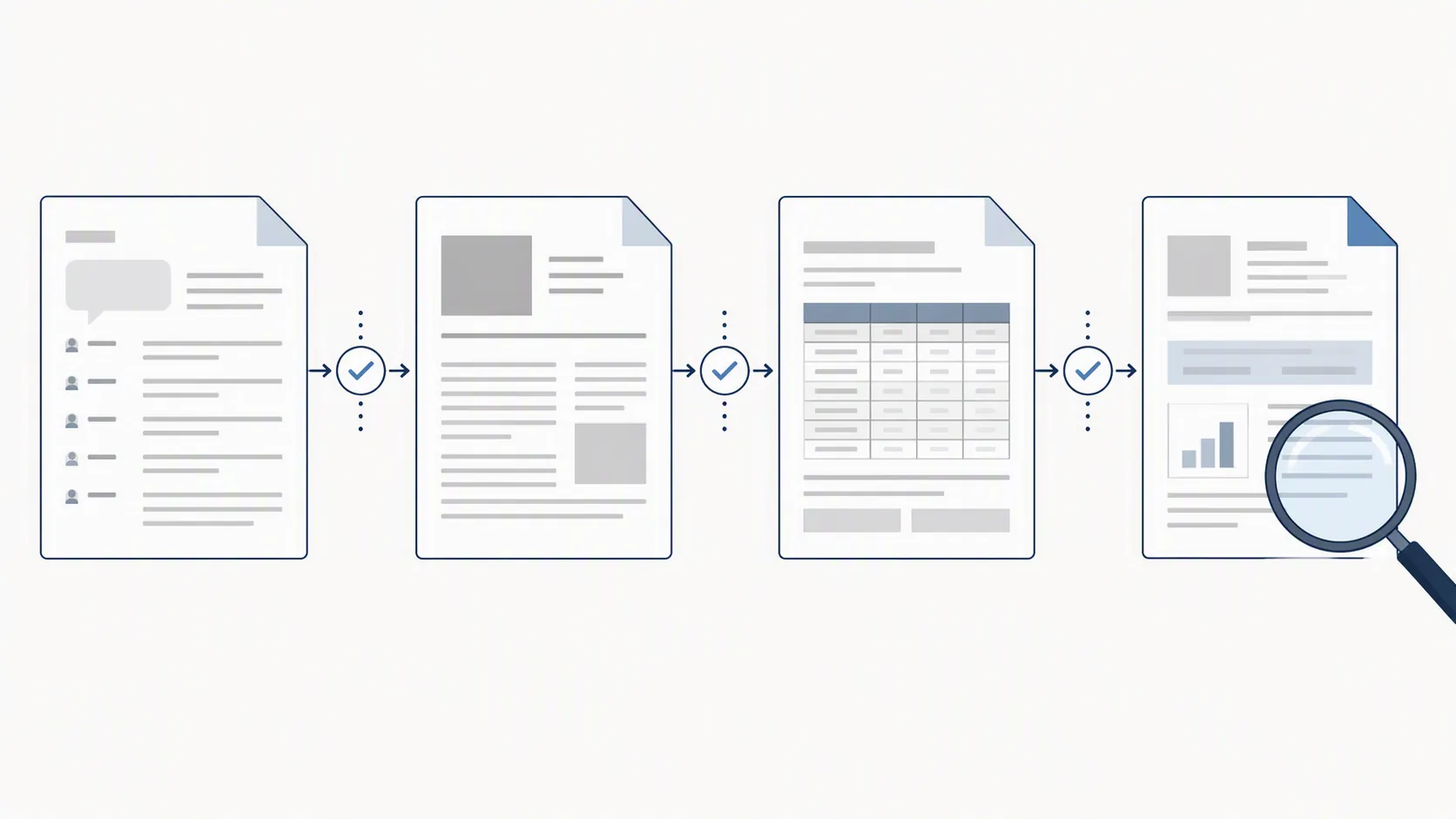
A workable review pass begins with verbs. Huang “said,” “argued,” or “predicted.” BLS and Glassdoor “report” or “list” pay data. McKinsey, Randstad, Kelly, and trade groups “project,” “estimate,” or “analyze postings.” Brookings “found” effects in a defined empirical study. Those distinctions are not stylistic. They are how the reader knows whether a sentence rests on a transcript, a median wage table, an advertised-wage signal, or a model.
| Claim fragment in draft | Evidence class | Safer treatment |
|---|---|---|
| “Huang says AI data centers will create six-figure trade jobs.” | Executive statement / reported interview | Attribute to Huang and cite the transcript or reported interview. Do not present as a wage finding. |
| “Electricians and plumbers typically earn six figures because of AI data centers.” | Observed wage claim | Unsafe as written. Compare against BLS medians and, if relevant, top-decile wages. |
| “Data center technicians earn around $88,000.” | Salary-aggregator signal reported by news coverage | Attribute to the source and avoid treating it as a BLS-equivalent occupational median. |
| “Hundreds of thousands of trade workers will be needed.” | Projection or executive forecast | Label as a forecast and cite the specific study or attributed statement. |
| “Salaries nearly doubled.” | Unverified in the available record | Do not repeat as fact unless a direct source supports the measured period, occupation, and geography. |
The wage evidence does not carry the viral wording
The central distinction is between “six-figure jobs exist” and “these jobs are typically six-figure.” The first can be true in pockets. The second is not supported by the available observed wage data.
BLS May 2024 data, as reported by Observer, put median pay at $62,350 for electricians, roughly $63,000 for plumbers, pipefitters, and steamfitters, and about $46,000 for construction laborers. Electricians in the top decile exceeded $106,030, which matters: six-figure electrician pay is not imaginary. It is just not the median.[4]
CBS News, citing Glassdoor, reported a U.S. data center technician median of $88,000.[5] That is closer to the headline figure, but it is not the same occupation as a construction electrician, plumber, carpenter, or general construction laborer, and it does not prove that buildout construction roles generally pay six figures. A data center technician role may involve operating, maintaining, and troubleshooting facilities after construction, while Huang’s broad construction-trades language also covers temporary buildout labor.
This is where a surprising number of otherwise polished drafts fail. They borrow the authority of an executive quote, insert a salary-aggregator number from a different role, and then round the result into a general labor-market conclusion. If the draft says “six-figure jobs,” ask: which occupation, which geography, which wage measure, and which phase of the data-center life cycle?

A safe wage sentence
A safer formulation would read: “Huang has said AI infrastructure buildout will create six-figure opportunities for skilled-trade workers, but available wage data show lower median pay for major construction trades, with six-figure earnings appearing more clearly in top-decile or specialized roles.”
Treat the big labor-demand numbers as projections, not findings
The demand side has a similar problem. Forecasts can be useful, especially for procurement, site-selection, apprenticeship, and workforce-risk discussions. They become misleading when written as if the projected jobs already exist.
Fortune, citing McKinsey, reported an estimated $7 trillion in global data-center capital expenditure by 2030 and projected U.S. needs for 130,000 electricians, 240,000 general contractors, and 150,000 HVAC and mechanical workers over 2023–2030.[6] CNBC reported Randstad analysis of 50 million postings showing demand growth of 27% to 107% across trades, about 10% to 15% advertised HVAC wage growth, and Kelly Services’ view that certain specialists can command a 25% to 30% premium.[7]
Those figures support a sentence about expected pressure on skilled-trade labor. They do not, by themselves, support a sentence saying that AI data centers have already produced a nationwide six-figure construction-labor market. Postings are not hires. Advertised wages are not realized wages. Premiums for certain specialists are not typical pay across electricians, plumbers, carpenters, HVAC workers, and laborers.
The same caution applies to industry-reported job multipliers and single-project figures. Fortune reported figures such as up to 1,500 construction workers for a 250,000-square-foot build, around 50 permanent staff, and 3.5 local jobs per direct job, but the methodology was not disclosed in the material available for this workflow.[6] A lawyer can cite those figures only as attributed industry-reported estimates, not as established general effects.
Funding and methodology belong in the margin note
CBS News reported a 4.7 million temporary-construction-jobs figure tied to the American Edge Project, which CBS identified as Meta-formed.[5] That does not make the number useless. It does mean a client-facing document should not present it in the same register as BLS wage data or an independent empirical study. If the figure is material, disclose the sponsor context and the temporary-construction nature of the estimate.
Salary-aggregator pages claiming very high data-center compensation ranges were excluded from this workflow where the methodology was not available. That exclusion is not a view that high-paying roles do not exist. It is a view that a citation has to tell the reader enough about what is being measured.
Brookings changes the confidence level on job-impact claims
The strongest counterweight to the exuberant version of the claim is Brookings’ May 2026 synthetic-control study of roughly 770 facilities and 93 treated counties over a 2008–2024 facility window. Brookings found that first large data centers raised total private employment by 4% to 5% over five to six years, construction employment by 11%, and wages by 3% to 4%; it also found that naive estimates overstate effects by a factor of three and that construction jobs are largely temporary.[8]
That study does not refute Huang’s infrastructure point. It does narrow the usable claim. A first large data center can produce measurable local employment and wage effects. The observed effects are smaller than many headline multipliers imply, and the construction component does not necessarily translate into permanent local employment.
For legal verification, the Brookings point is less “data centers do not create jobs” than “do not cite construction headcount as though it were long-term operating employment.” If a memo discusses community benefits, permitting risk, local-labor commitments, tax incentives, or economic-development representations, temporary construction work and permanent facility staffing need separate treatment.
One additional notation is appropriate for this site’s verification context: Brookings disclosed that its authors used Anthropic AI-assisted analysis with human review.[8] That does not disqualify the study. It is simply a methodological disclosure worth preserving when the article itself is about source handling. The same habit appears in other verification workflows, including Verify AI summaries of the DOE professional-degree stay and Relying on DOJ Drops Charges? Verify the Hearn Docket.
How to mark up an AI-generated draft
When the claim appears in an AI-generated client update, start by dividing the sentence into pieces. The model may have compressed several source types into one confident paragraph.
- Highlight the attributed statement: Huang’s Davos infrastructure-buildout comments and Fortune’s reported Channel 4 “six-figure salaries” wording.
- Underline any wage assertion that is written as typical, current, or nationwide.
- Circle any projection words that have been removed, such as “will need,” “expected,” “by 2030,” or “projected.”
- Bracket claims about permanent local employment, because buildout labor and facility staffing are different categories.
- Delete or quarantine “salaries nearly doubled” unless the draft can identify a direct source, measured occupation, geography, and comparison period.
A bad sentence usually sounds like this: “Jensen Huang says AI data centers are creating six-figure construction jobs, with salaries nearly doubling as hundreds of thousands of workers are hired.” It is doing too much. It treats an executive claim, a wage claim, and a labor-demand projection as one verified fact.
A usable replacement would be: “NVIDIA CEO Jensen Huang has argued that the AI infrastructure buildout will create high-paying opportunities for skilled trades, including six-figure roles, but available wage data show lower median pay for major construction trades; workforce-shortage figures cited in business coverage are projections or industry estimates rather than observed employment outcomes.”
If the document is about broader labor constraints rather than the claim’s exact wording, it may be better to cite a labor-market piece such as Skilled Trade Jobs Are the AI Boom’s Critical Path. If the document is about NVIDIA’s regulatory posture rather than construction labor, use a source aimed at that issue, such as What Nvidia CEO’s testimony refusal means for AI regulation. The fact that the same executive is involved does not make every Huang citation interchangeable.
Citation checklist for legal professionals
- Cite the primary Davos transcript for Huang’s infrastructure-buildout framing, or clearly identify Fortune as reporting the Channel 4 News interview language.
- Do not state that AI data-center construction jobs typically pay six figures. If six-figure pay is mentioned, identify it as Huang’s claim or as applying to top-decile or specialized roles where the cited source supports that narrower statement.
- Keep construction trades, data center technicians, temporary buildout labor, and permanent facility staff in separate categories.
- Use BLS medians and top-decile figures as observed wage anchors; use Glassdoor-style technician numbers only with attribution and role limits.
- Label McKinsey, Randstad, Kelly, ABC, NAM, and similar workforce figures as projections, posting analyses, premiums, or industry-supported estimates, as applicable.
- Disclose funder or sponsor context where material, especially for large temporary-construction job estimates tied to industry advocacy.
- Use Brookings as the empirical counterweight for local job-impact claims: measurable effects, smaller than naive estimates, and with construction employment largely temporary.
- Mark “salaries nearly doubled” as unverified unless a source directly supports the occupations, geography, baseline, endpoint, and time period.
- If the claim appears in an AI-generated draft, require a source-by-source reconstruction before approving it for client-facing use. The same basic discipline applies outside labor-market claims, as in Does a valid work permit stop ICE detention?.
References
- NVIDIA CEO Jensen Huang’s Interview at WEF Davos 2026: Transcript — Singju Post
- At Davos, NVIDIA CEO Jensen Huang and BlackRock CEO Larry Fink Discuss AI’s Infrastructure Buildout — NVIDIA Blog
- Nvidia billionaire CEO Jensen Huang says demand for Gen Z skilled trade workers—electricians, plumbers, carpenters—will soar from data center growth and six-figure salaries — Fortune
- Nvidia CEO Jensen Huang Says AI Will Create Millions of Blue-Collar Jobs — Observer
- AI data center jobs: Construction, technician roles in demand — CBS News
- Jensen Huang says a lot of six-figure jobs in plumbing and construction will soon be unlocked because someone needs to build new AI centers — Fortune
- AI data center buildout jobs salary skilled traders worker shortage — CNBC, March 18, 2026
- New evidence on data center employment effects — Brookings, May 2026
Related records
Tool profile
Reddit v Anthropic Ruling Creates New Path for AI Data Licensing EnforcementGoverning regulation
Browse the obligations tracker →Preventive workflow
Browse verification workflows →
Report a correction or tip
Spotted an outdated figure, a misstated fact, or a ruling this case record should reflect? Public comments are disabled for this content given the professional cost of a misreported case outcome, penalty amount, or rule text — use the structured correction channel instead.
Report a correction or tip for this record →