
Walmart's bakery recall assigns liability to manufacturer
When glass contamination occurs in a retailer-branded product made by a manufacturer, liability allocation depends on contract indemnification clauses, recall-insurance requirements, and the FDA's harm classification. This analysis maps the Walmart-General Mills recall to the legal framework that determines who pays for recall costs and potential consumer claims.
- Jurisdiction
- US Federal
- Court
- FDA
- AI tool named
- None
- Ruling date
- Jul 26, 2026
- Source document
- View primary court order ↗
- Last verified
- Jul 26, 2026
Lex Machina Review is an independent risk-tracking and reference resource. Nothing on this site is legal advice, and using it does not create an attorney-client relationship. Every record is reviewed against primary sources but may not reflect the most current status of a matter — always verify directly against the cited court order, rule text, or a licensed attorney before relying on it.
Companion explanation — secondary to the source document above
The shelf-level story is simple enough: Walmart bakery rolls were recalled after a possible glass-contamination issue. The legal file is less retail-facing. General Mills made the Pillsbury frozen dough, Walmart’s in-store bakeries sold the finished rolls, and the product reached customers through a bakery channel that does not give consumers the same package, UPC, and lot-code evidence that would usually anchor a recall claim.
That is the useful starting point for assessing the legal consequences of the Walmart bakery glass-contamination recall. The customer sees Walmart. The recall path points upstream. The payment question then turns less on brand visibility than on manufacturing fault, supplier indemnity, recall insurance, traceability, and the FDA’s harm classification.
| Recall fact | Current record |
|---|---|
| Product | Pillsbury rolls sold through Walmart in-store bakeries |
| Manufacturer | General Mills / Pillsbury frozen dough |
| Retail channel | Bulk dough supplied to Walmart bakeries, then sold as bakery rolls |
| Scope | 735,840 rolls distributed across 19 states [1][2] |
| Reported injuries | None reported in the cited recall coverage [1][2] |
| FDA classification | Class II, a category used where use of or exposure to the product may cause temporary or medically reversible adverse health consequences, or where the probability of serious adverse health consequences is remote [3] |
| Current litigation status | As of late July 2026, the available materials identify no class action filed specifically over this Pillsbury-Walmart bakery recall |
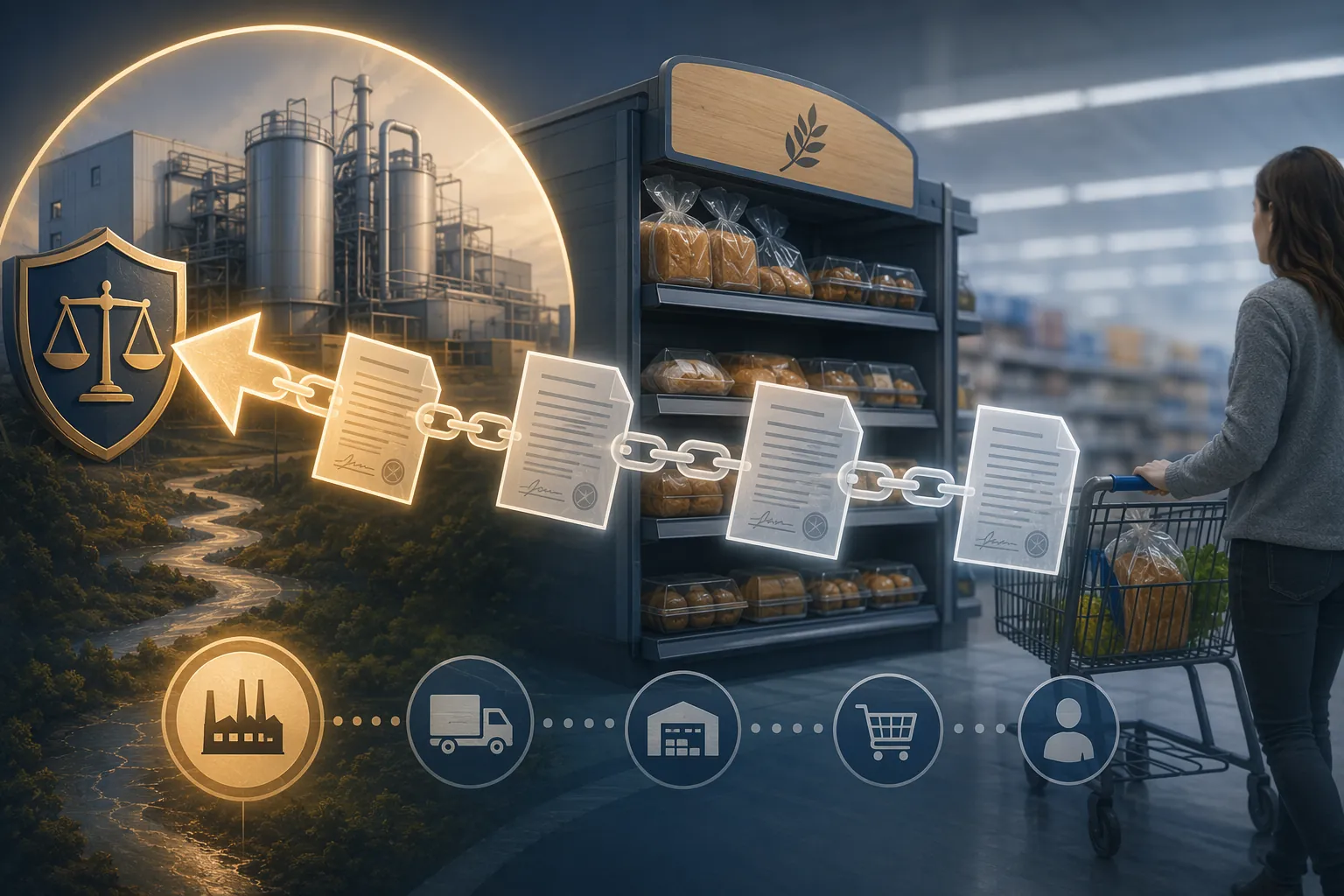
The customer-facing brand is not the same as the loss-bearing party
Retail recalls often invite a lazy first allocation: the store sold it, so the store must be the principal defendant. That may be good enough for a headline, but not for the contract file. In this recall, the reported defect is tied to the manufacturing stage of the frozen dough, not to Walmart’s oven, bakery counter, or store handling. Once the alleged contaminant is placed upstream, the liability analysis begins to separate consumer-facing responsibility from ultimate cost allocation.
A retailer can still be named in a consumer suit. It put the finished food into commerce, controlled the point of sale, and had the customer relationship. Strict-liability and consumer-protection theories do not always wait politely for the indemnity clause before naming the visible seller. But between Walmart and General Mills, the more important commercial question is whether the supplier agreement shifts recall costs, defense costs, losses, and related liabilities back to the manufacturer.
Gallagher’s food-supply-chain risk analysis describes Walmart’s supplier framework as requiring suppliers to carry recall insurance and indemnify Walmart for recall-related losses, including costs associated with product contamination and recall events [4]. That is not a footnote in this kind of dispute. It is the routing mechanism. If the contaminant entered the product while General Mills controlled the dough, Walmart’s most important asset may be less a public statement than a tender letter.
The allocation is not automatic in the abstract. Counsel would still want the operative supply agreement, purchase orders, vendor manuals incorporated by reference, insurance certificates, additional-insured language, notice provisions, defense-control language, and any limitation-of-liability clause. But the available framework points in one direction: Walmart’s bakery channel may have created the consumer interface, while General Mills appears to carry the primary manufacturing-risk burden.
Indemnity does the work that public recall notices do not
The practical consequence of a supplier indemnity clause is not that Walmart disappears from the case. It is that the invoice may travel in the opposite direction from the consumer complaint. Recall administration, discarded inventory, customer refunds, notice costs, investigation costs, business interruption, defense fees, and settlement funding can all become part of the supplier-retailer accounting if the agreement is broad enough.
Recall insurance matters for the same reason. Indemnity without collectible insurance is an unsecured promise from a counterparty whose own recall may already be expensive. A mandatory recall-insurance requirement gives the retailer a funded risk-transfer layer, assuming the policy terms match the event and the insured has complied with notice and cooperation obligations. For Walmart, that kind of requirement is especially rational in a private-label or retailer-branded environment where customers may not distinguish between the store’s conduct and the supplier’s manufacturing process.
For General Mills, the same contract architecture creates a predictable but uncomfortable posture. The company may face direct product-liability exposure as the manufacturer and contractual reimbursement exposure to Walmart as the retailer. Those are not identical liabilities. A consumer claim asks whether the product was defective, whether the consumer bought it, and what injury or economic loss followed. A retailer tender asks whether the supplier agreed to defend, indemnify, insure, or reimburse Walmart for a contamination-driven recall.
That difference can determine timing. Consumer litigation may take months to organize, particularly where customers lack product codes. Contract tenders can begin as soon as the recall work begins. A supplier may therefore be paying, reserving, or negotiating over recall costs before any putative consumer class action is filed.
The FDA classification limits the injury story, not the commercial dispute
Glass contamination sounds severe, and in another record it could be. Here, however, the FDA classification matters. The recall was classified as Class II, a category for products that may cause temporary or medically reversible adverse health consequences, or where the probability of serious adverse health consequences is remote [3]. Coupled with the absence of reported injuries in the cited coverage, that classification narrows the personal-injury portion of the case [1][2][3].
It does not erase recall cost. It does not erase refund exposure. It does not answer whether Walmart can demand reimbursement from General Mills. And it does not prevent a consumer-protection complaint from alleging that customers paid for a food product they would not have purchased had they known it was subject to recall.
The classification instead affects leverage. With no reported injuries and a Class II designation, a plaintiff seeking large bodily-injury damages would need facts not presently in the public record. A consumer class lawyer would more likely look to economic-injury theories: overpayment, benefit of the bargain, refund inadequacy, failure to notify, or diminished value. Those theories can still be expensive to defend, but they are not the same case as a glass-ingestion injury docket.
Bulk bakery sales create a proof problem that packaged recalls often avoid
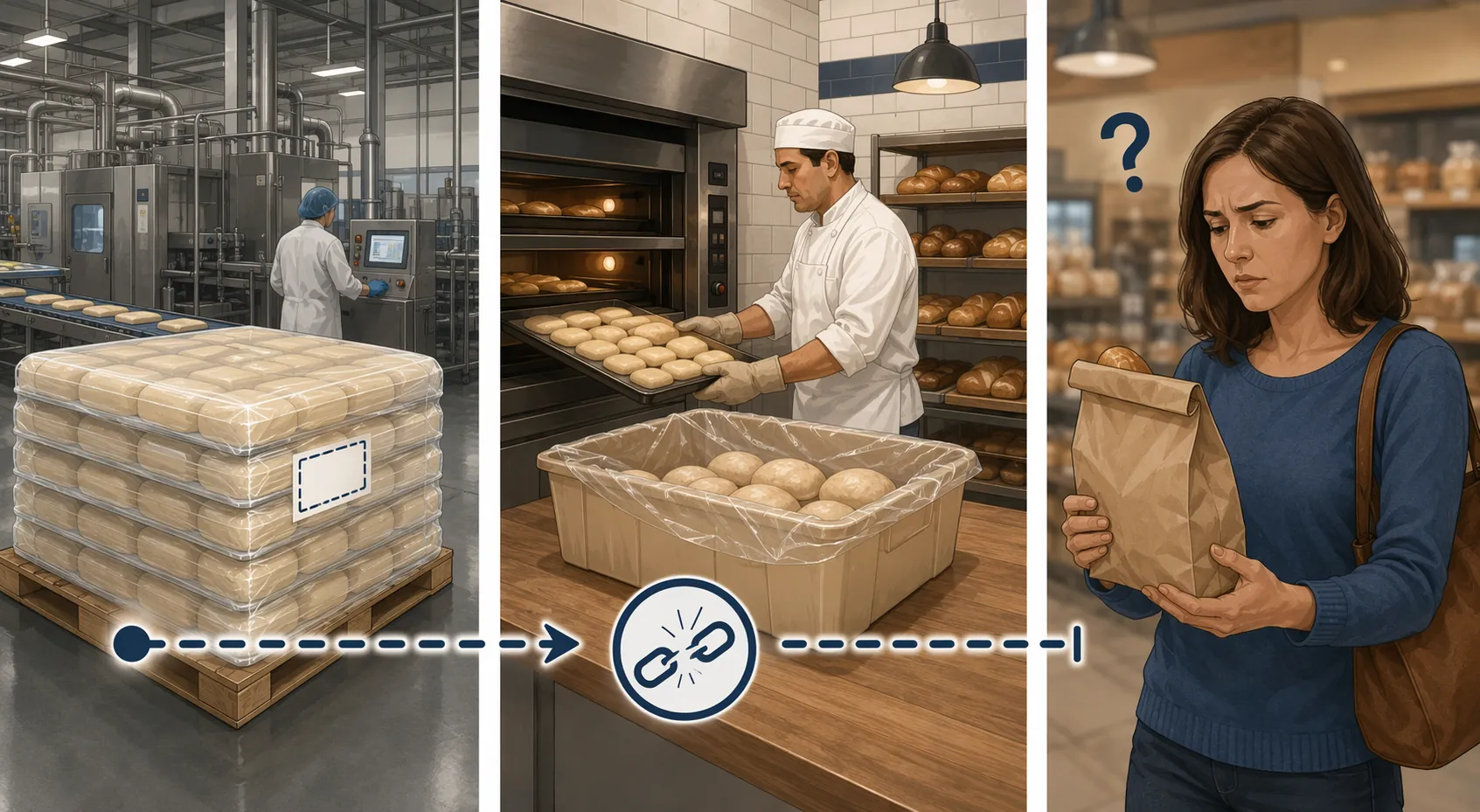
The unusual feature is not merely that Walmart sold the rolls. It is how the rolls reached consumers. The reported channel involved bulk dough supplied to Walmart bakeries and then sold as finished bakery items [1][2]. That may remove the ordinary consumer-facing proof: the package in the pantry, the printed lot code, the UPC, the best-by date, and a photo tying a household purchase to a recalled production run.
That missing evidence cuts differently for different parties. For consumers, it can make standing and class membership harder. A plaintiff must do more than say Walmart sold recalled rolls somewhere in the state. The plaintiff needs a plausible way to show that the roll purchased came from the recalled batch, during the relevant window, at a covered store, and was not merely a similar bakery item. Receipts may identify a bakery product category without carrying the manufacturing lot information that would usually do the hardest work.
For Walmart, the same traceability gap is not an uncomplicated defense. If store-level systems cannot tell customers whether their bakery purchase came from recalled dough, that fact can support arguments about inadequate notice, refund friction, or failure to maintain recall-ready records. A retailer does not get full benefit from consumer uncertainty if the uncertainty was produced by its own sales channel design.
For General Mills, the channel complicates damages more than defect origin. If the manufacturing lot is identifiable at the pallet or distribution level, Walmart and General Mills may be able to trace affected stores internally even where consumers cannot trace individual purchases externally. That distinction matters. Business-to-business allocation can proceed on records that consumers never saw.
A consumer class action would probably start with economic loss
As of late July 2026, the available materials do not identify a class action filed specifically over this Pillsbury-Walmart bakery recall. Any class-action exposure is therefore projected from analogous recall litigation and consumer-protection patterns, not from an existing complaint about these rolls.
The obvious template would be a benefit-of-the-bargain theory: customers paid for bakery rolls fit for ordinary consumption, allegedly received rolls subject to a glass-contamination recall, and therefore suffered an economic injury even without physical harm. The McLean v. Walmart complaint, although not about this Pillsbury recall, illustrates that style of pleading against Walmart: the claimed injury is not necessarily medical treatment, but payment for a product allegedly worth less than represented [7].
The defense response would be equally familiar but unusually fact-dependent. Did the named plaintiff buy the recalled product, or merely a bakery item sold under a similar description? Can the plaintiff identify the store, purchase date, and product code? Did Walmart offer refunds, and if so, did the named plaintiff request one? If a consumer cannot connect the purchase to the recalled dough, standing becomes a more serious obstacle than it would be in a packaged-food case where a lot code sits on the wrapper.
This is where the recall can create pressure despite modest injury facts. Post-recall consumer class actions have produced settlements even when the core theory is economic loss. Cozen O’Connor identifies recent food-recall settlements including Quaker Oats at $6.75 million, TreeHouse at $4.4 million, and Boar’s Head at $3.1 million [5]. Those figures are not a damages forecast for the Pillsbury rolls. They are a reminder that recall administration, notice, and refund mechanics can become settlement currency even when personal-injury claims are not driving the docket.
Hollingsworth similarly flags increasing food and supplement recalls as a driver of consumer class-action litigation alleging violations of state consumer-protection statutes [6]. Again, that is trend evidence, not proof that this recall will generate a certified class. The bakery-channel proof problem remains specific and material.
The recall wave makes the contract audit less optional
The broader recall environment explains why this small-seeming allocation issue deserves attention. Cozen reports 295 FDA food recalls in 2025, up from 261 in 2024, a 13% increase [5]. More recalls mean more occasions for retailers and manufacturers to test whether their contracts actually say what their risk teams assume they say.
The clauses that matter are not exotic. Counsel should be able to answer a short set of questions before the next contaminant appears:
- Does the supplier indemnity cover contamination, recall costs, consumer claims, regulatory actions, and retailer defense fees?
- Is the duty to defend triggered by allegations, confirmed fault, or a final adjudication?
- Does recall insurance cover voluntary and regulatory recalls, and are limits adequate for multi-state distribution?
- Does the retailer receive additional-insured status or only contractual indemnity?
- Can store-level systems trace bulk ingredients into consumer-facing bakery sales with enough precision to support notice and refunds?
- Who controls public statements, customer refunds, regulator communications, and settlement authority?
Jones Day’s product-recall litigation framework makes the same point in broader form: companies should anticipate product-liability lawsuits before the recall, with documentation, compliance systems, and response planning already in place [8]. In a bulk-bakery setting, that preparation has to include traceability at the handoff between manufacturing lots and store-level sale formats. Otherwise, a defendant may have enough information to conduct the recall internally but not enough to defeat, narrow, or administer consumer claims efficiently.
The bounded legal consequence
On the present record, General Mills carries the primary liability burden because the alleged defect originated upstream in the frozen dough and Walmart’s supplier framework appears designed to shift contamination-related recall losses back to the supplier. Walmart remains the consumer-facing seller and could still be named in an economic-loss case, but its strongest commercial position is contractual: tender the recall costs, insist on defense and indemnity, and look to required recall insurance.
Total exposure is likely constrained by three facts that should not be blurred: the FDA Class II classification, the absence of reported injuries in the cited materials, and the bulk-bakery channel’s lack of consumer-facing lot codes. The first two weaken a large personal-injury narrative. The third makes a consumer class action harder to plead and certify, while also giving plaintiffs a possible notice-and-traceability argument against the retailer.
That leaves a narrower and more defensible conclusion than the headline version. This recall is not principally about whether Walmart’s name appeared at the bakery counter. It is about whether the supply contract, insurance stack, and traceability records can move the financial consequence to the party that controlled the manufacturing stage.
References
- Popular Walmart bakery item recalled, Yahoo Finance / TheStreet, https://finance.yahoo.com/healthcare/articles/popular-walmart-bakery-item-recalled-173300565.html
- General Mills recalled nearly 736,000 Pillsbury rolls, CBS News, https://www.cbsnews.com/news/pillsbury-rolls-recall-glass-contamination/
- General Mills pulls more than 735K Pillsbury rolls from shelves over possible glass contamination, Fox Business, https://www.foxbusiness.com/lifestyle/general-mills-pulls-more-than-735k-pillsbury-rolls-shelves-possible-glass-contamination
- Addressing Recall Risks in the Food Supply Chain, Gallagher, https://www.ajg.com/-/media/files/gallagher/us/2024/addressing-recall-risks-in-the-food-supply-chain.pdf
- The Continuing Rise of Post Recall Consumer Class Actions, Cozen O’Connor, 2026, https://www.cozen.com/news-resources/publications/2026/the-continuing-rise-of-post-recall-consumer-class-actions
- What We’re Watching in 2026: Increasing Recalls of Food and Supplement Products in 2026 Will Drive Consumer Class Action Litigation Alleging Violations of State Consumer Protection Statutes, Hollingsworth LLP, https://hollingsworthllp.com/blog/what-were-watching-in-2026-increasing-recalls-of-food-and-supplement-products-in-2026-will-drive-consumer-class-action-litigation-alleging-violations-of-state-consumer-protection-statutes/
- McLean v. Walmart Inc., ClassAction.org, https://www.classaction.org/media/mclean-v-walmart-inc.pdf
- Product Recalls: Anticipating the Product Liability Lawsuits, Jones Day, February 2012, https://www.jonesday.com/en/insights/2012/02/product-recalls-anticipating-the-product-liability-lawsuits
Related records
Tool profile
Browse tool evaluations →Governing regulation
Browse the obligations tracker →Preventive workflow
Browse verification workflows →
Report a correction or tip
Spotted an outdated figure, a misstated fact, or a ruling this case record should reflect? Public comments are disabled for this content given the professional cost of a misreported case outcome, penalty amount, or rule text — use the structured correction channel instead.
Report a correction or tip for this record →