
One fact decides WestJet strike cancellation refund rights
Whether WestJet cancelled your flight before the strike or because of it is the decisive fact in any refund claim: the preemptive bucket carries refund, rebooking, meals, and up to CAD $1,000 in APPR compensation; the strike-caused bucket carries a 48-hour rebooking or a refund at the passenger's choice, with no cash. Each entitlement is tied to its APPR section, along with the enforcement route and the CTA's penalty record against WestJet.
- Jurisdiction
- Canada
- Court
- Federal Court of Appeal
- AI tool named
- None
- Ruling date
- Jan 1, 2025
- Source document
- View primary court order ↗
- Last verified
- Aug 4, 2026
Lex Machina Review is an independent risk-tracking and reference resource. Nothing on this site is legal advice, and using it does not create an attorney-client relationship. Every record is reviewed against primary sources but may not reflect the most current status of a matter — always verify directly against the cited court order, rule text, or a licensed attorney before relying on it.
Companion explanation — secondary to the source document above
Last verified August 4, 2026, UTC. This is a legal-information explainer, not legal advice. The WestJet labour disruption is still verification-sensitive: cancellation counts, strike status, and WestJet’s temporary travel policies should be checked again before anyone files or relies on a specific factual claim.
For a WestJet strike cancellation, the legal refund question is not how angry the disruption made you, how expensive the replacement ticket was, or whether the word “strike” appeared somewhere in the notice. The first question is narrower and more useful: did WestJet cancel your flight preemptively as a business decision before the active labour disruption caused the cancellation, or was your flight cancelled because of the active strike itself?
Those are not two versions of the same claim. Under Canada’s Air Passenger Protection Regulations, they lead to different obligations.
| Cancellation bucket | What it means | APPR consequences |
|---|---|---|
| Preemptive cancellation or lockout decision within the carrier’s control | WestJet made an operational or business decision to cancel before the active strike itself caused that passenger’s disruption. | Rebooking on the next available flight operated by any carrier within 9 hours for a large carrier, where required; meals and accommodation when the passenger is waiting; refund rights if the passenger does not travel; and possible cash compensation of CAD $400, CAD $700, or CAD $1,000 depending on arrival delay length. Key provisions include APPR ss. 14, 17(1)(a), 18.2, 19(1)(a), and 19(2)(a). [1] |
| Cancellation caused by the active strike | The labour disruption is the cause of the cancellation. | A labour disruption is listed as outside the carrier’s control under APPR s. 10(1)(j). The airline must rebook, and if it cannot do so within 48 hours of the original departure time it must offer the passenger a refund or alternate arrangements at the passenger’s choice. No APPR cash compensation for inconvenience, meals, or hotel accommodation is owed for this bucket. [1][2] |
| Either bucket | The passenger still has to prove what happened and use the correct process. | A written claim must be made within the applicable 1-year window for compensation claims, and unresolved disputes can be taken to the Canadian Transportation Agency. [2] |

Why the preemptive bucket matters more than most strike explainers admit
A strike does not magically convert every nearby cancellation into an outside-control event. If WestJet cancelled before the labour disruption was actually causing that flight’s cancellation, the passenger has a stronger argument that the cancellation was within the carrier’s control. That classification matters because the APPR does not treat “within control” and “outside control” cancellations as different moods of the same event. It gives them different remedies.
The useful legal idea is control. In WestJet v. Lareau, the Federal Court of Appeal described the concept of an event within a carrier’s control in terms of whether the carrier can exercise a restraining or directing influence over the occurrence or severity of the disruption. Anyone relying on that formulation in a filed argument should check the judgment text and paragraph reference directly, but it is the right kind of question to ask: was the cancellation the unavoidable effect of a strike already disrupting operations, or was it WestJet’s own decision about how to position aircraft, crew, schedules, and risk before that point? [3]
For a passenger, the difference shows up in the travel problem immediately. In the within-control bucket, a large carrier’s rebooking obligation can reach beyond its own network. APPR s. 17(1)(a) requires rebooking on the next available flight operated by any carrier on a reasonable route from the same airport to the destination, if that flight departs within 9 hours of the original departure time. If the passenger is being made to wait, APPR s. 14 supplies standards of treatment, including food and drink in reasonable quantities and, where an overnight stay is required, hotel or comparable accommodation and transportation between the airport and the accommodation. [1]
That is the part that gets lost when passengers are told, too broadly, that a strike means there is only a refund or a later WestJet flight. If the cancellation was preemptive and within WestJet’s control, the passenger should not treat the airline’s own next convenient seat as the full legal ceiling without checking the APPR route first.
Refund rights also have to be handled carefully. For a within-control cancellation, APPR s. 18.2 addresses the refund owed when the passenger is not provided with arrangements that meet the prescribed requirements or no longer needs to travel because the trip no longer serves a purpose. The refund must be paid to the person who purchased the ticket and, where the ticket was bought directly from the carrier, in the original form of payment unless another form is agreed to. The APPR also sets a 30-day timing rule for refunds. [1]
Cash compensation is separate from the ticket refund. For a large carrier in the within-control bucket, APPR s. 19(1)(a) sets compensation at CAD $400, CAD $700, or CAD $1,000 depending on the length of the arrival delay. If the passenger chooses a refund instead of completing the trip after being notified 14 days or fewer before the original departure time, APPR s. 19(2)(a) can add CAD $400 in compensation. Those amounts do not belong in a claim for a cancellation caused by the active strike. [1]
That last sentence is not a technicality. Asking for CAD $1,000 because “there was a strike” is the kind of overclaim that lets the real issue disappear. The better claim says: this was not caused by the active labour disruption; this was a preemptive cancellation within WestJet’s control; here is the notice, the timestamp, the flight status history, and the APPR section that applies.
What changes once the active strike caused the cancellation
The outside-control bucket is narrower. APPR s. 10(1)(j) expressly lists a labour disruption within the carrier, an essential service provider, or another carrier as a situation outside the carrier’s control. The Canadian Transportation Agency’s labour-disruption guidance says passengers affected by this bucket are not entitled to compensation for inconvenience. It also says the airline does not have to provide meals, drinks, or accommodation for disruptions outside its control. [1][2]
The airline still has obligations. It cannot simply point to the strike and disappear. For an outside-control cancellation, the rebooking duty runs first. If the airline cannot provide a confirmed reservation within 48 hours of the original departure time, the passenger must be offered a refund or alternate travel arrangements, at the passenger’s choice. [2]
That choice needs more attention than airlines usually give it. A refund may be the right answer for a traveller who no longer needs the trip. But accepting the refund can end the fight over rebooking. Air Passenger Rights, an advocacy organization, warns passengers not to accept a refund casually if they still need to travel, because the refund may release the airline from arranging onward transportation. The group’s practical position is that a passenger who still needs to travel may have to buy a replacement ticket and then claim the difference, but that is advocacy guidance and should be treated as a claim strategy, not as an automatic statutory payment. [4]
So the active-strike answer is not “no rights.” It is also not “everyone gets compensation.” It is rebooking first, then the 48-hour refund-or-alternate-arrangements choice, with no APPR cash compensation for inconvenience and no APPR meals or hotel obligation for that outside-control classification. [2]
Where the August 2026 WestJet disruption fits
The current facts matter only after the legal fork is clear. Reports before the strike described WestJet cancelling hundreds of flights preemptively ahead of the August 2026 flight-attendant strike deadline. Those cancellations may sit in the stronger within-control bucket if the passenger can show the cancellation was WestJet’s pre-strike operational decision rather than the direct effect of an active labour disruption. [5][6]
BBC reported that WestJet flight attendants went on strike after a 72-hour notice period lapsed on Sunday, August 2, 2026. For cancellations caused by the strike after that point, the outside-control labour-disruption rule is the safer starting classification. The exact timing still has to be checked against the individual flight notice, because a passenger’s rights turn on the cancellation cause and timing for that flight, not on a general news label attached to the disruption. [7]
Reported cancellation counts have varied across coverage, and stale live-disruption numbers are not very useful for a claim. A screenshot showing when WestJet cancelled your specific flight, what reason it gave, and what alternatives it offered is more valuable than a headline saying the disruption had reached a particular total.
WestJet’s temporary travel policy is also not the same thing as APPR rights. National Post and TechTimes reported policy details including no-fee changes through August 4, a 60-day completion window, a 2-hour cutoff, and UltraBasic eligibility conditions. Those details may help a traveller move quickly, but they come from airline advisories as reported by news outlets and should be rechecked on WestJet’s own site before use. They do not replace the statutory classification analysis. [5][6]

How to preserve the claim before the record gets cleaned up
The first practical job is evidence, not argument. Passengers should preserve the cancellation email or app notice, the time it arrived, the reason given, the original itinerary, the replacement itinerary offered, screenshots of available flights on WestJet and other carriers, receipts for meals, hotel, ground transportation, and any replacement ticket. If the notice says only “operational reasons” or “labour disruption,” keep it anyway. Vague wording is still evidence of what the airline told you at the time.
- For a preemptive-cancellation claim, preserve anything showing the flight was cancelled before the active strike caused the disruption.
- For a rebooking claim, preserve screenshots showing earlier flights on WestJet, partner airlines, and other carriers, especially within the 9-hour window for the within-control bucket or the 48-hour window for the outside-control bucket.
- For a refund claim, preserve proof of who paid, how they paid, whether the trip still served a purpose, and whether the airline offered compliant alternate arrangements.
- For out-of-pocket expenses, preserve receipts and a short note explaining why the expense was incurred while waiting or replacing travel.
Do not rely on the app remaining unchanged. Flight status pages, disruption banners, and rebooking offers can change quickly, and the legally useful version is often the one the passenger saw before making a decision.
Making the written claim and escalating it
The written claim should identify the bucket first. Do not bury it under a long travel diary. A useful claim says, in substance: WestJet cancelled flight X on date Y at time Z; the cancellation was preemptive and within WestJet’s control, or it was an outside-control labour disruption; here are the APPR sections; here is the remedy requested; here are the documents.
The CTA’s labour-disruption guidance tells passengers to make a claim to the airline in writing within 1 year for compensation claims. If the airline rejects the claim or does not resolve it, the passenger can escalate through the CTA process. The same CTA page also draws a hard line around remedies: the agency cannot award damages for pain and suffering, stress, loss of enjoyment, or lost income. [2]
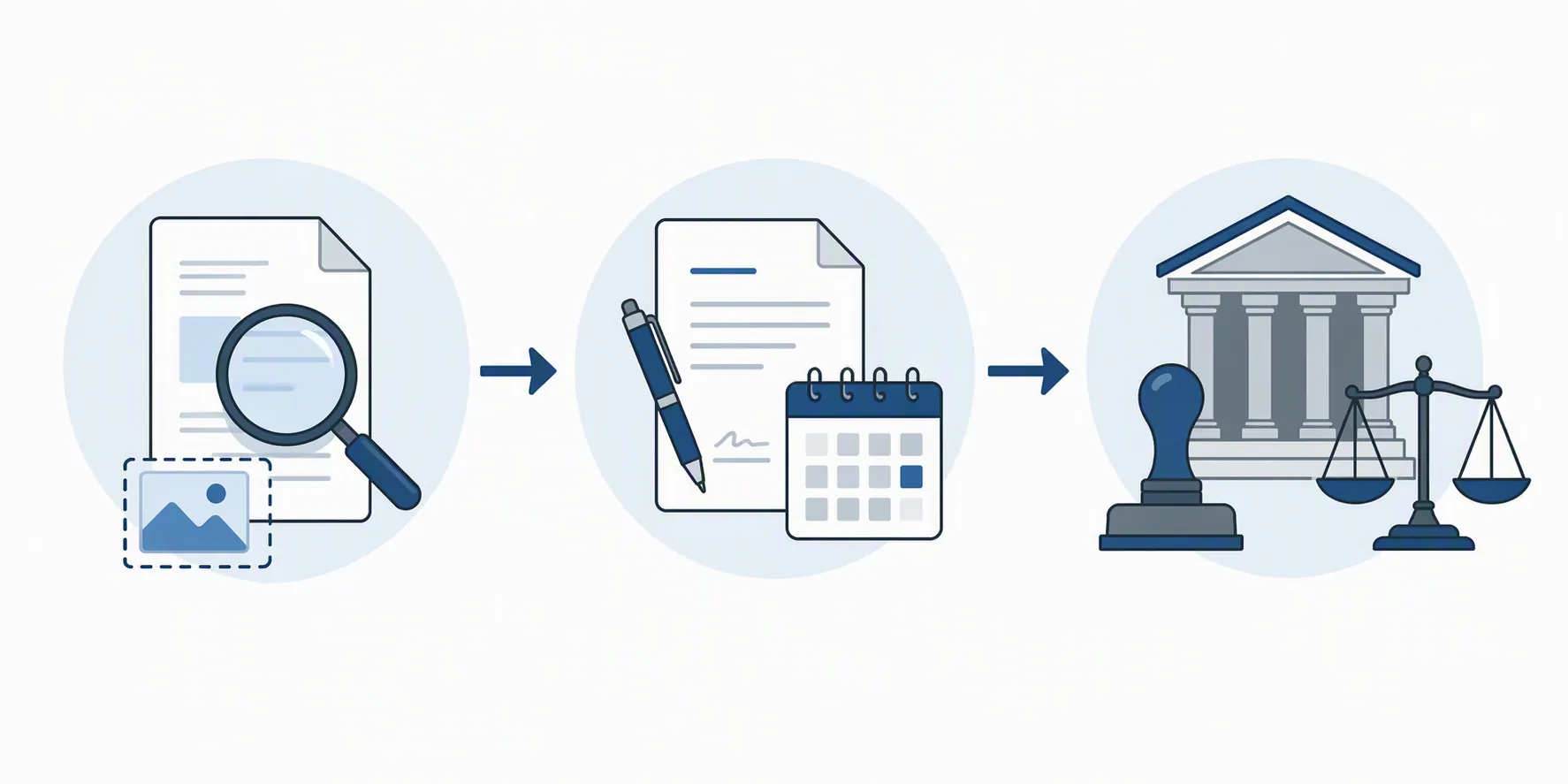
There is enforcement history behind the rebooking issue. On February 27, 2025, the CTA announced a CAD $204,000 administrative monetary penalty against WestJet for violations of APPR s. 18(1.1) during the June 29 to July 3, 2024 mechanics strike, with a 30-day window for review before the Transportation Appeal Tribunal of Canada. That penalty is not proof that every August 2026 passenger will win. It is proof that the CTA has treated rebooking failures during a labour disruption as enforceable APPR obligations. [8]
The cost of a failed rebooking duty is not theoretical. CBC reported on passengers affected by the 2024 WestJet mechanics strike who absorbed out-of-pocket costs in the CAD $2,438 to CAD $3,861 range. Those individual figures do not set a tariff for 2026 claims, but they show why passengers should keep receipts and why the refund-versus-rebooking decision should not be made casually at an airport counter. [9]
The refund trap
A refund sounds clean when someone is exhausted and the airline has not offered a useful replacement flight. It can also be the moment the passenger gives up the rebooking fight without meaning to. That is why the choice should be made with the classification in view.
| If you still need to travel | If you no longer need the trip |
|---|---|
| Be careful before accepting a refund. In the within-control bucket, first check whether WestJet owed rebooking on another carrier within the APPR time frame. In the outside-control bucket, check whether the 48-hour rule has been triggered. | A refund may be the correct remedy. Keep proof that the trip no longer served its purpose or that compliant alternate arrangements were not provided. |
| If you buy a replacement ticket, keep screenshots showing why that purchase was reasonable and what WestJet offered or failed to offer. | If you accept a refund, understand that you may be ending the demand for the airline to transport you on that itinerary. |
Air Passenger Rights has specifically warned about this refund trap in its WestJet 2026 materials and argues that passengers affected by preemptive cancellations may be able to hold WestJet responsible for the cost difference when they reasonably buy replacement travel. That is an advocacy position, not a guarantee of payment. It is still useful because it identifies the practical danger: a passenger who wants transportation should not click “refund” merely because the first replacement offer is bad. [4][10]
What not to put at the center of the claim
Cross-border routing, currency conversion, and Montreal Convention arguments may matter in some disputes, but they are not the first move for most WestJet strike cancellation claims. The APPR classification decides the core refund, rebooking, standards-of-treatment, and compensation questions. If the claim starts somewhere else, it may miss the one fact the airline and the CTA actually have to classify.
The disciplined final test is simple. Identify the bucket. Attach the APPR section. Decide whether you want transportation or a refund before accepting anything. Preserve the evidence showing timing and cause. Ask the CTA for the APPR remedy it can award, not damages for stress, lost income, or a ruined holiday that the CTA says it cannot award. [2]
References
- Air Passenger Protection Regulations (SOR/2019-150), Justice Laws Website
- Airline labour disruptions – what passengers should know, Canadian Transportation Agency, updated 2026-07-29
- WestJet v. Lareau, 2025 FCA 149, CanLII
- WestJet Strike 2026: What Are My Rights?, Air Passenger Rights
- WestJet Strike: Flights Already Canceled, and Passengers Have Stronger Rights for It, TechTimes
- What to do if your WestJet flight is disrupted by a strike or lockout, National Post
- BBC News report on WestJet flight attendants striking after 72-hour notice, BBC News
- WestJet penalized for violations of the APPR, Canadian Transportation Agency, 2025-02-27
- Customers frustrated by treatment from WestJet after strike, CBC
- WestJet Preemptive Flight Cancellations 2026, Air Passenger Rights
Related records
Tool profile
Browse tool evaluations →Governing regulation
Browse the obligations tracker →Preventive workflow
Browse verification workflows →
Report a correction or tip
Spotted an outdated figure, a misstated fact, or a ruling this case record should reflect? Public comments are disabled for this content given the professional cost of a misreported case outcome, penalty amount, or rule text — use the structured correction channel instead.
Report a correction or tip for this record →