
What Amazon Nova's 2025 Terms Said About Its Discontinuation
A clause-by-clause review of the Amazon Nova consumer Terms of Use (updated 2025-12-02) showing that the July 2026 wind-down was already anticipated by the contract's non-deterministic-output, no-liability, at-will suspension, and $50-cap terms. Maps each clause to the corresponding ABA Formal Opinion 512 duty so in-house counsel and law-firm procurement staff can turn the discontinuation into a concrete vendor-diligence checklist.
- Tool
- Amazon Nova
- Benchmark source
- AWS Bedrock model-lifecycle table
- Hallucination rate
- Not measured / undisclosed
- Test methodology
- Clause-by-clause review of Amazon Nova consumer Terms of Use updated 2025-12-02, mapped to AWS Bedrock lifecycle dates and ABA Formal Opinion 512
- Test date
- Jul 31, 2026
Last verified on 2026-07-31. This article is a tool-dependency review, not legal advice and not a claim that Amazon Nova was involved in any sanctions matter. The question behind “amazon nova ai discontinued legal impact 2025” is narrower and more useful: when a Nova-backed workflow later loses model availability, did the governing document already place that risk on the user?
For consumer use of nova.amazon.com, the answer begins before the July 2026 wind-down reports. The relevant Amazon Nova Terms of Use page states an update date of 2025-12-02, and those terms already addressed unreliable outputs, legal-use limits, at-will discontinuation, data handling, termination, and a $50 aggregate liability cap. [1]

The wind-down matters, but it is not where the legal review starts
Business Insider reported on 2026-07-28 that Amazon was rethinking its AI strategy and winding down many in-house Nova models, with most flagship models including Premier, Omni, Reel, and Canvas moving to “KTLO” status. Because that report relies on unnamed sources, it is useful as the news trigger, not as the contract. [2]
The dated availability record is AWS’s Bedrock model-lifecycle table. It lists Amazon Nova Premier and Amazon Nova Sonic as entering Legacy status on 2026-03-13 with end of life on 2026-09-14, and Amazon Nova Canvas and Amazon Nova Reel as entering Legacy status on 2026-03-30 with end of life on 2026-09-30. [3]
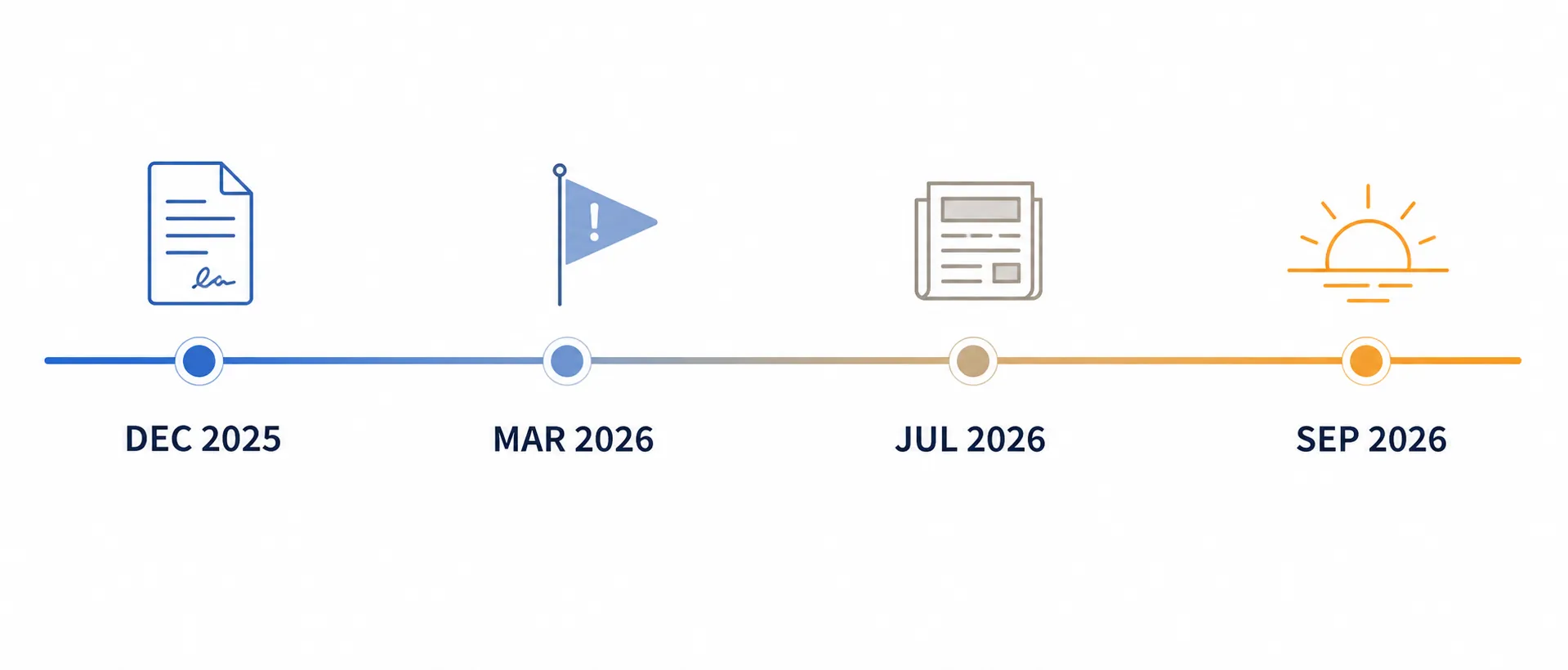
That sequence is the point. The contract language was not drafted after the discontinuation became embarrassing or operationally expensive. The consumer terms put the risk allocation in writing in December 2025; the 2026 lifecycle and wind-down events later tested whether anyone had treated those clauses as operationally real.
First separate consumer Nova from Bedrock and vendor-specific deals
The consumer Nova Terms of Use govern consumer use of nova.amazon.com. They should not be pasted over an AWS Bedrock enterprise deployment, a negotiated AWS agreement, or a legal-tech vendor’s separate contract. A law firm using a product that happens to call a Nova model through Bedrock may have a different governing stack: the vendor agreement, the AWS service terms incorporated by that vendor, data-processing terms, security exhibits, support commitments, and the model-lifecycle rules.
The distinction matters because AWS Bedrock documentation says model providers do not have access to Bedrock logs or customer prompts and completions, and it frames security through AWS’s shared-responsibility model. [4] That is not the same posture as a consumer help-page term saying interactions may be recorded, retained, processed, and manually reviewed. [1]
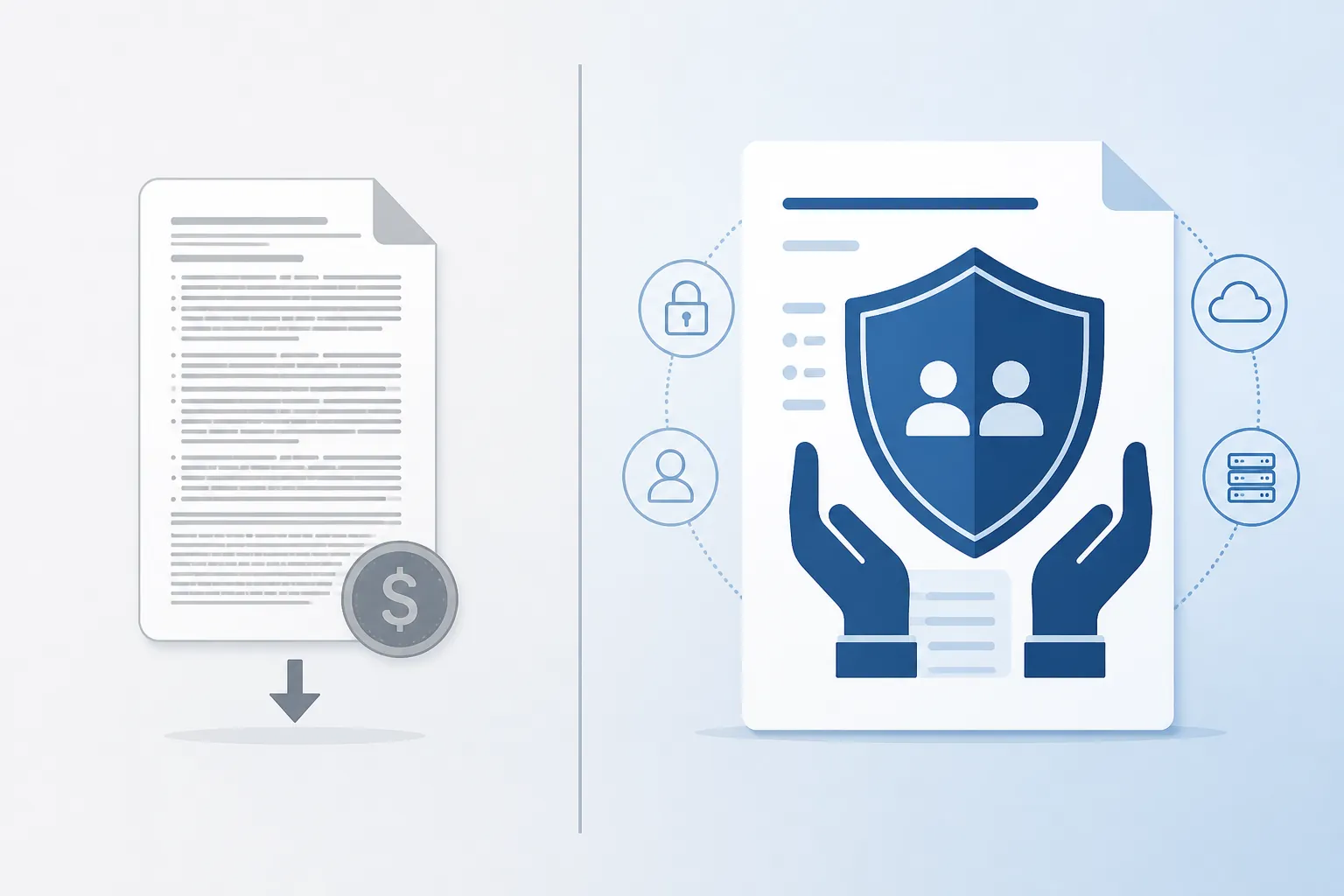
So the consumer terms are not a verdict on every Nova-powered legal tool. They are a diligence template. They show the kinds of clauses a buyer should look for before letting any model-dependent service become part of legal research, drafting, knowledge management, intake, or client-facing advice.
What the 2025 consumer terms already said
| Consumer ToS provision | What it allocates | Legal-ops consequence |
|---|---|---|
| Section 1.2 | Amazon records, processes, retains interactions and may manually review them. [1] | Treat consumer use as a confidentiality issue before any client information, privileged facts, or nonpublic matter data is entered. |
| Section 2.2 | Models are non-deterministic, may produce inaccurate, objectionable, or unreliable content, Amazon has no responsibility or liability for outputs, and Nova is not intended for legal decisions. [1] | Do not let output move into legal advice, filings, or client work without lawyer verification and a documented review process. |
| Section 2.3 | Amazon may change, suspend, or discontinue Amazon Nova or any part of it at any time without notice. [1] | Build continuity planning outside the consumer service promise; the promise is essentially that there may be no promise. |
| Section 2.4 | Amazon Nova is stated to be operated in the United States. [1] | Check data-location and cross-border assumptions rather than assuming a deployment posture from the model brand. |
| Section 2.5 | Amazon may terminate access in its discretion. [1] | Do not treat access as durable unless a separate agreement says so. |
| Section 2.6 | Disputes are handled under the Amazon Conditions of Use. [1] | Confirm dispute forum, governing terms, and incorporated documents before procurement signs off. |
| Section 2.7 | Amazon’s aggregate liability is capped at $50. [1] | Assume the professional and operational consequence of failure remains with the user unless another contract changes that allocation. |
Section 2.2 is the clause no legal workflow can ignore
Section 2.2 does several jobs at once. It says the models “by their nature are non-deterministic,” that they may produce “inaccurate, objectionable, or unreliable content,” that “Amazon has no responsibility or liability for such outputs,” and that Nova “is not intended for use in making legal, financial, or medical decisions or diagnoses.” [1]
For a lawyer, that is not ordinary product fluff. It is the vendor declining the exact reliance posture that a legal user may be tempted to adopt. If a research memo, case summary, contract clause explanation, or litigation chronology depends on Nova output, Section 2.2 tells the reviewer to expect variance, error, and unreliability as a design risk rather than a breach.
ABA Formal Opinion 512, issued on 2024-07-29, identifies professional-responsibility issues when lawyers use generative AI, including competence under Model Rule 1.1, confidentiality under Model Rule 1.6, client communication under Model Rule 1.4, and fee issues under Model Rule 1.5. [5] It is ethics guidance, not a universal statute, and state rules vary. Still, it is a useful map for the contract problem because the vendor’s disclaimer and the lawyer’s duty meet in the same place: verification.
A competent-use file should therefore show more than “we used an AI tool.” It should show what the tool was used for, whether the output was treated as a lead or as authority, who checked citations and reasoning, what sources were consulted, and whether any final legal judgment rested on human review rather than generated text. That record matters even when no outage occurs. Once a model is retired or altered, it may become harder to recreate the exact behavior that produced a prior answer.
The legal-use disclaimer also limits the defense that a buyer reasonably expected consumer Nova to be suitable for legal decision-making. A firm can still use AI to reduce mechanical drafting or research friction. What Section 2.2 removes is the comfortable fiction that a consumer tool’s output carried vendor-backed legal reliability.
Section 1.2 raises the confidentiality question before the first prompt
Section 1.2 says Amazon records, processes, and retains interactions with Nova and may manually review them. [1] That language is enough to stop any casual use of client-identifying facts in the consumer service until someone has answered the confidentiality questions.
Under the ABA 512 framework, the confidentiality duty is not satisfied by liking the tool or trusting the brand. [5] The lawyer has to understand, at a practical level, what information is being sent, who can access it, how long it is retained, whether it can be reviewed by humans, and whether client consent or additional contractual protection is required under the applicable rules.
This is also where the consumer-versus-enterprise distinction becomes more than taxonomy. Bedrock documentation’s statement that model providers do not have access to Bedrock logs or customer prompts and completions may be highly relevant to an enterprise architecture review. [4] It does not erase Section 1.2 for consumer Nova, and it does not answer what a separate legal-tech vendor stores, reviews, or uses for support.
Sections 2.3 and 2.7 turn discontinuation into a continuity-and-remedy problem
Section 2.3 says Amazon may “change, suspend, or discontinue Amazon Nova, or any part of it, at any time without notice.” Section 2.7 then caps Amazon’s aggregate liability at $50. [1] Read together, those clauses are the practical answer to the discontinuation question: the consumer terms do not offer a continuity commitment, and they do not offer a meaningful damages remedy if continuity fails.
That does not mean Amazon did anything legally wrong by changing model availability. It means a lawyer or buyer relying on the consumer service had already accepted a contract in which continuity sat largely outside Amazon’s liability. The July 2026 reporting and the Bedrock lifecycle dates make the risk visible; Section 2.3 made it foreseeable. [2][3]
For legal operations, the consequence is mundane but serious. If a knowledge-management workflow, precedent-search process, contract-review queue, or intake triage step depends on a model family, the continuity plan has to live in the firm’s own controls or in a negotiated vendor commitment. Consumer terms that allow discontinuation without notice and cap aggregate liability at $50 should not be treated as an operating agreement for client-service continuity. [1]
The same point applies to tools built on Bedrock, but the document to review changes. The buyer should read the AWS lifecycle table, the vendor’s model-substitution rights, notice obligations, support language, service-level terms, data-export rights, and any promise to maintain equivalent functionality after a model enters Legacy or end-of-life status. The public Bedrock lifecycle table provides the milestone dates; it does not, by itself, tell a law firm whether its vendor owes migration support. [3]
The smaller clauses still belong in the diligence file
Sections 2.4, 2.5, and 2.6 do not carry the same immediate force as the output, confidentiality, suspension, and liability language, but they are not filler. Section 2.4’s U.S.-operation language affects data-location assumptions. Section 2.5’s termination discretion reinforces that access can end. Section 2.6 points disputes back to Amazon’s Conditions of Use. [1]
Those clauses are where procurement tends to lose the thread. The dramatic risk is a model disappearing. The contract work is checking venue, incorporated documents, termination triggers, data location, data return, support, audit rights, and whether any enterprise addendum actually overrides the consumer-style allocation.
How to translate the Nova terms into a legal-AI procurement review
For the broader procurement angle on the same July 2026 Amazon pivot, see Amazon’s Frontier Model Pivot Creates Legal Procurement Risk. The review here is narrower: use the 2025 consumer terms as a clause-by-clause checklist before a Nova-powered workflow becomes operational.
- Identify the governing relationship first. Is the user accessing consumer nova.amazon.com, an AWS Bedrock deployment, or a legal-tech vendor that uses Nova behind the scenes?
- Locate the operative documents. Pull the order form, master agreement, service terms, data-processing addendum, security exhibit, support terms, lifecycle documentation, and any incorporated online terms.
- Classify the intended use. Research assistance, drafting support, summarization, client advice, filing preparation, and legal decision support do not carry the same review burden.
- Document output verification. Assign responsibility for citation checking, source review, factual confirmation, privilege review, and final legal judgment.
- Confirm data handling before prompting. Determine what is logged, retained, reviewed by humans, used for training or improvement, exported, deleted, or available to subcontractors.
- Check model-lifecycle rights. Ask whether the vendor can substitute models, degrade features, retire workflows, or move to a different provider without notice or consent.
- Require a continuity plan for material workflows. The plan should cover notice, migration support, data export, fallback models, testing, and who pays for transition work.
- Review remedy language honestly. A low liability cap, exclusion of output liability, and no-notice discontinuation clause should be escalated if the workflow affects client service.
- Map the contract back to professional duties. ABA 512 leaves competence, confidentiality, communication, and fee questions with the lawyer; a vendor disclaimer does not move those duties to the vendor.
The cleanest file is not the one that pretends model retirement will not happen. It is the one that shows the buyer knew which agreement governed, understood the output and confidentiality limits, verified the work product, and had a documented way to keep serving clients when a model changed status or disappeared.
References
- Nova.amazon.com Terms of Use — Amazon Customer Service, updated 2025-12-02
- Amazon Rethinks Its AI Strategy and Winds Down Many In-House Models — Business Insider, 2026-07-28
- Model lifecycle – Amazon Bedrock — AWS Documentation
- Data protection – Amazon Bedrock — AWS Documentation
- ABA issues first ethics guidance on a lawyer's use of AI tools — Formal Opinion 512 — ABA, 2024-07-29
Chronological incident history
No sanction cases have named this tool in the tracked record set to date. This does not imply the tool is safe — see Risk Digest for ongoing monitoring.
← Compare peer toolsReport a correction or tip
Spotted an outdated figure, a misstated fact, or a ruling this tool profile should reflect? Public comments are disabled for this content given the professional cost of a misreported case outcome, penalty amount, or rule text — use the structured correction channel instead.
Report a correction or tip for this record →