
Aramark Kiosk Case: Automated Accusation and Defamation Per Se
When an automated kiosk system falsely accuses an employee of theft and the vendor holds exculpatory data, what legal exposure do the employer and vendor face? This article examines the Kurt Kromm case against Ford and Aramark under Kentucky defamation per se law.
- Hallucination rate
- Not measured / undisclosed
On May 9, 2026, Kurt Kromm was on the overnight shift at Ford’s Kentucky Truck Plant when an Aramark self-serve kiosk flashed a red screen after a PIN-code timeout. The same system still recorded a completed $1.95 transaction at 3:38 a.m., and Kromm’s bank statement matched the debit. That mismatch is the case: not a missed cookie payment, but an automated theft accusation that moved from a kiosk display into employment discipline and, now, pre-litigation legal review [1].
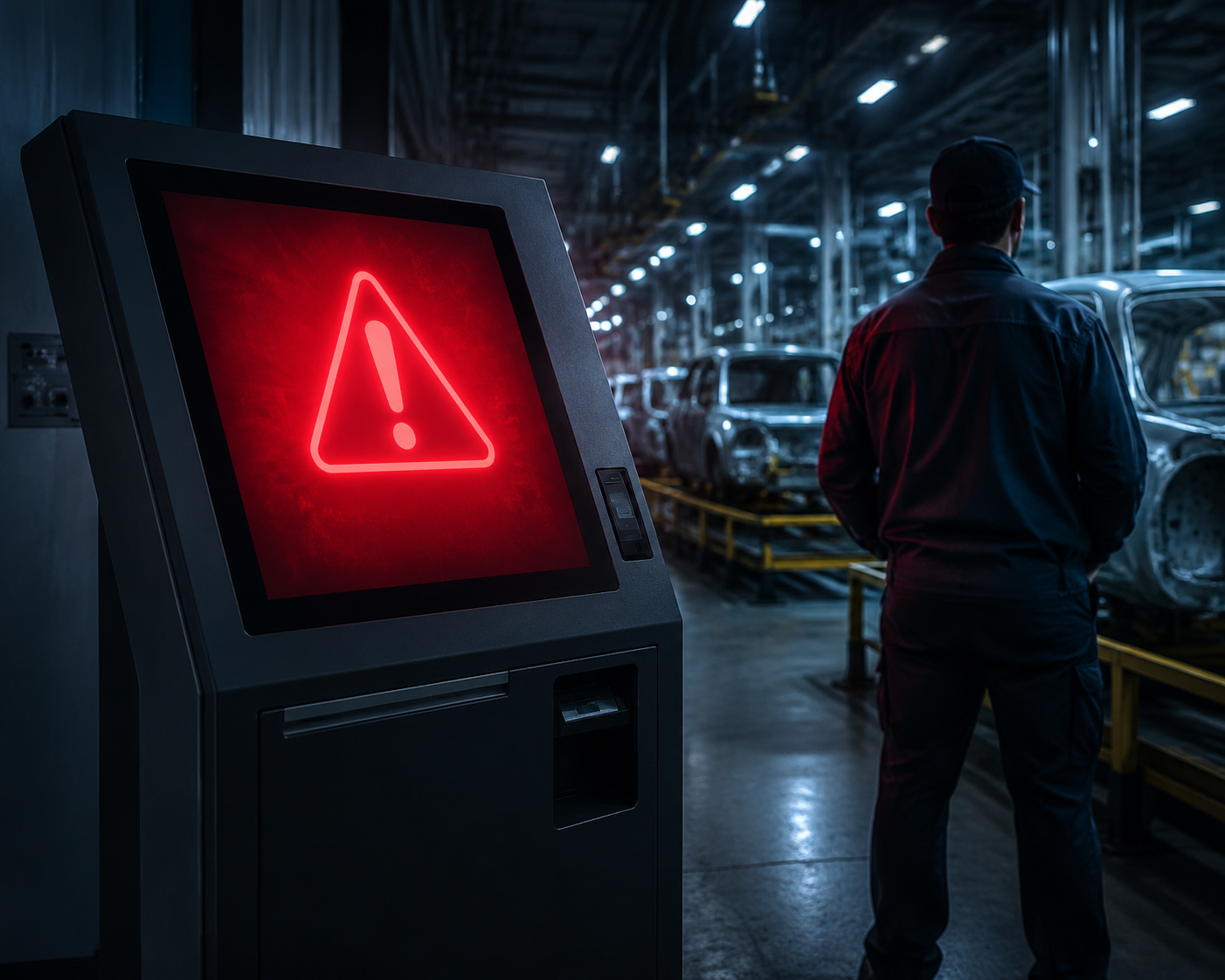
What happened before anyone started arguing doctrine
Ford terminated Kromm on May 16, 2026, and the public reporting says no one reviewed Aramark’s own transaction records before that decision [2]. Later reporting says Ford offered reinstatement and about $33,000 in back pay, while Kromm retained attorney Tony Huber and rejected the offer [3]. The amount at issue is small; the employment consequence is not. That is why the case is drawing attention from lawyers who normally care less about kiosks than about how an accusation becomes a permanent label.
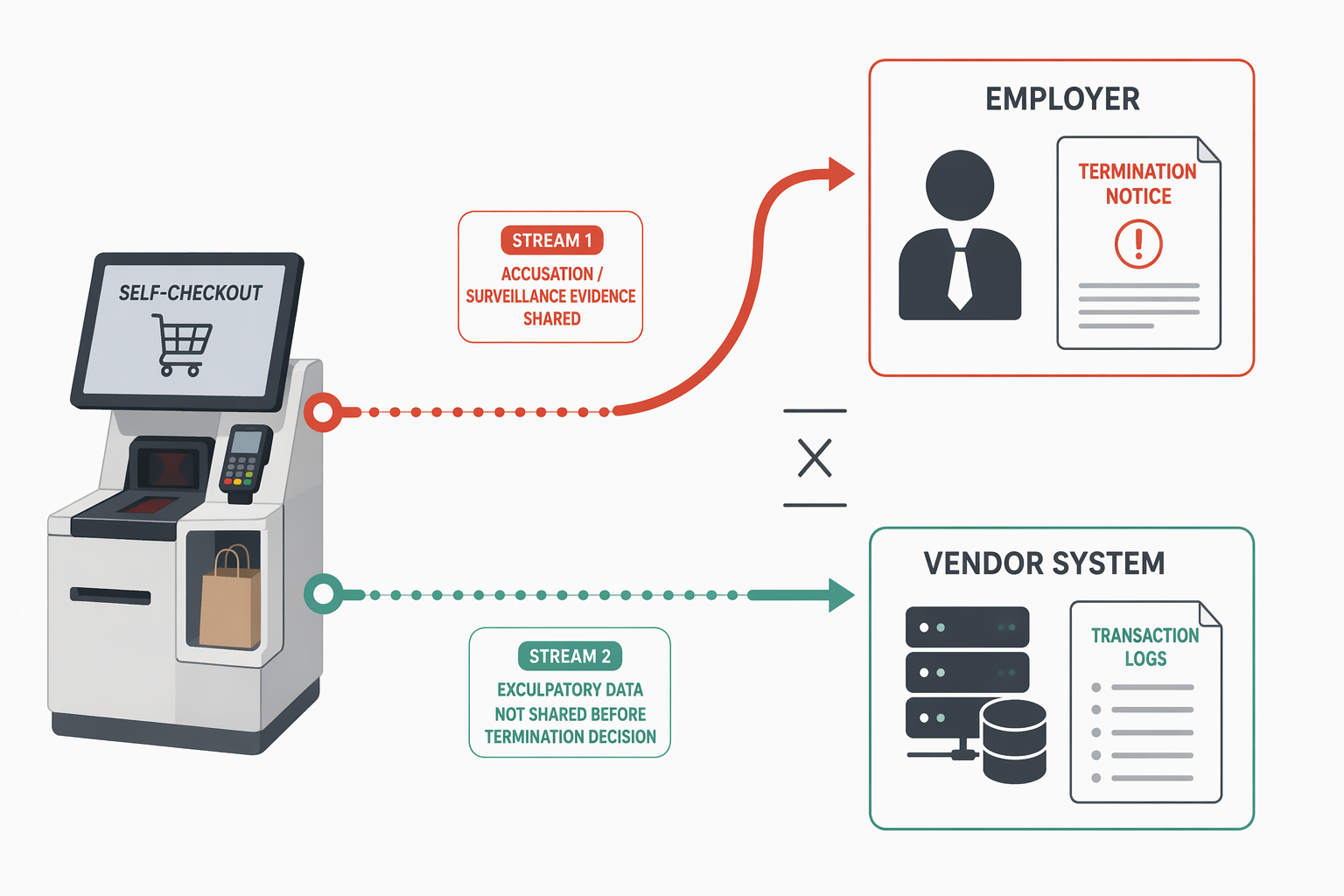
Aramark is the more legally interesting actor because it allegedly sat on both sides of the proof problem. Public statements describe Aramark as the source of the kiosk-related surveillance or payment failure signal that triggered the accusation, while also holding the transaction log that showed the purchase had cleared. Huber said the investigation was ongoing and that both Ford and Aramark were being examined [3].
Why Kentucky defamation per se changes the stakes
This is where Kentucky law matters. A legal overview of Stringer v. Wal-Mart Stores, Inc. says a false accusation of theft falls within defamation per se, which means damages and malice may be presumed without proof of special harm [5]. That does not make liability automatic. It does mean the theory is not just “the employer made a bad call.” If someone is branded a thief in connection with a workplace event, the damages conversation changes immediately.
| Actor | Public role | Why it matters |
|---|---|---|
| Ford | Acted on the kiosk accusation and, according to reporting, terminated Kromm without first reviewing Aramark’s transaction records [2]. | The issue is not only whether the firing was mistaken, but whether Ford published or relied on a theft accusation without checking the clearing record. |
| Aramark | Supplied the kiosk-based accusation signal and held the payment log that showed the $1.95 transaction completed [1][3]. | That dual role creates the sharper exposure: the same vendor that helped produce the accusation also controlled the exculpatory data. |
Reinstatement helps Ford less than it helps the record
Ford’s reinstatement and back-pay offer matters, but it does not necessarily end the reputational injury. Kromm has said the offer was about $33,000, and he has also said he earns about $200,000 a year, which makes the back-pay figure look like a partial repair rather than a full account of what followed from being accused of theft [3]. In a public dispute like this, a quiet rehire does not undo the fact pattern that already exists in personnel history, union memory, and any future reference check.
That is why the defense-side response is not frivolous. Reinstatement and back pay can narrow the damages story, and the case is still pre-litigation, so there is no complaint to test the exact publication, malice, and privilege questions yet [3]. But the plaintiff-side argument is also straightforward: being called a thief is not the same as being temporarily benched, and defamation per se is designed around that distinction.
A separate Ford kiosk dispute involving Nick Nabozny at the Michigan Assembly Plant has been reported as another example of how these cases can get stuck in grievance machinery. Shifting Gears reported that he was told the process could take six months to two years [3]. UAW Vice President Laura Dickerson separately said the union was reviewing both cases with a “methodical approach” [4].
The cleaner legal risk analysis is narrower than the headline suggests. The danger is not self-serve automation in the abstract, and it is not even a red screen by itself. The danger is an accusation pipeline in which the vendor that generates the theft signal also controls the records that would clear the worker, and nobody checks those records before the worker is fired.
References
- Ford worker who was fired after falsely accused of stealing a $1.95 cookie lawyers up — New York Post, July 20, 2026
- Ford looks to hire back worker it wrongly accused of stealing a $1.95 cookie — but he refuses — New York Post, July 6, 2026
- Fired Ford worker hires legal counsel, Aramark kiosks under scrutiny after cookie incident — Shifting Gears Substack
- UAW to review firings over kiosk payment issues — Kiosk Marketplace
- Stringer v. Wal-Mart Stores, Inc. — Cosgrove Simpson law firm legal overview
Chronological incident history
No sanction cases have named this tool in the tracked record set to date. This does not imply the tool is safe — see Risk Digest for ongoing monitoring.
← Compare peer toolsReport a correction or tip
Spotted an outdated figure, a misstated fact, or a ruling this tool profile should reflect? Public comments are disabled for this content given the professional cost of a misreported case outcome, penalty amount, or rule text — use the structured correction channel instead.
Report a correction or tip for this record →