
BPC-157 Compounding Remains Risky Despite PCAC Vote
Despite the July 23, 2026 PCAC 8-6 vote recommending BPC-157 for the 503A Bulks List, compounding remains unauthorized due to FDA's non-binding advisory role, pending rulemaking, and lack of pharmaceutical-grade API. This article clarifies the three-tier legal distinction and identifies enforcement risks operators still face.
- Tool
- BPC-157 compounding
- Benchmark source
- STAT News, FDA Law Blog, LumaLex, Health Law Alliance
- Hallucination rate
- Not measured / undisclosed
- Test methodology
- PCAC advisory vote, FDA rulemaking analysis, API supply chain verification
- Test date
- Jul 23, 2026
As of July 24, 2026, the answer to the BPC-157 compounding-status question is narrower than yesterday’s headline suggests: the Pharmacy Compounding Advisory Committee voted 8-6 on July 23, 2026, to recommend BPC-157 for the 503A Bulks List, but that vote does not authorize a pharmacy to compound BPC-157 today. PCAC advises FDA; it does not issue the rule, and FDA is not bound by the vote. STAT reported that FDA has followed PCAC recommendations in about 90% of past cases, but has diverged at least once.[1]
That distinction matters because favorable procedural events have a habit of being converted into sales language before the legal instrument exists. The April 2026 removal of BPC-157 from Category 2 changed the regulatory posture, but FDA Law Blog described that move as lifting a “do not compound” posture rather than affirmatively authorizing compounding.[2] The July PCAC vote improves the odds of a future pathway. It does not supply the pathway.
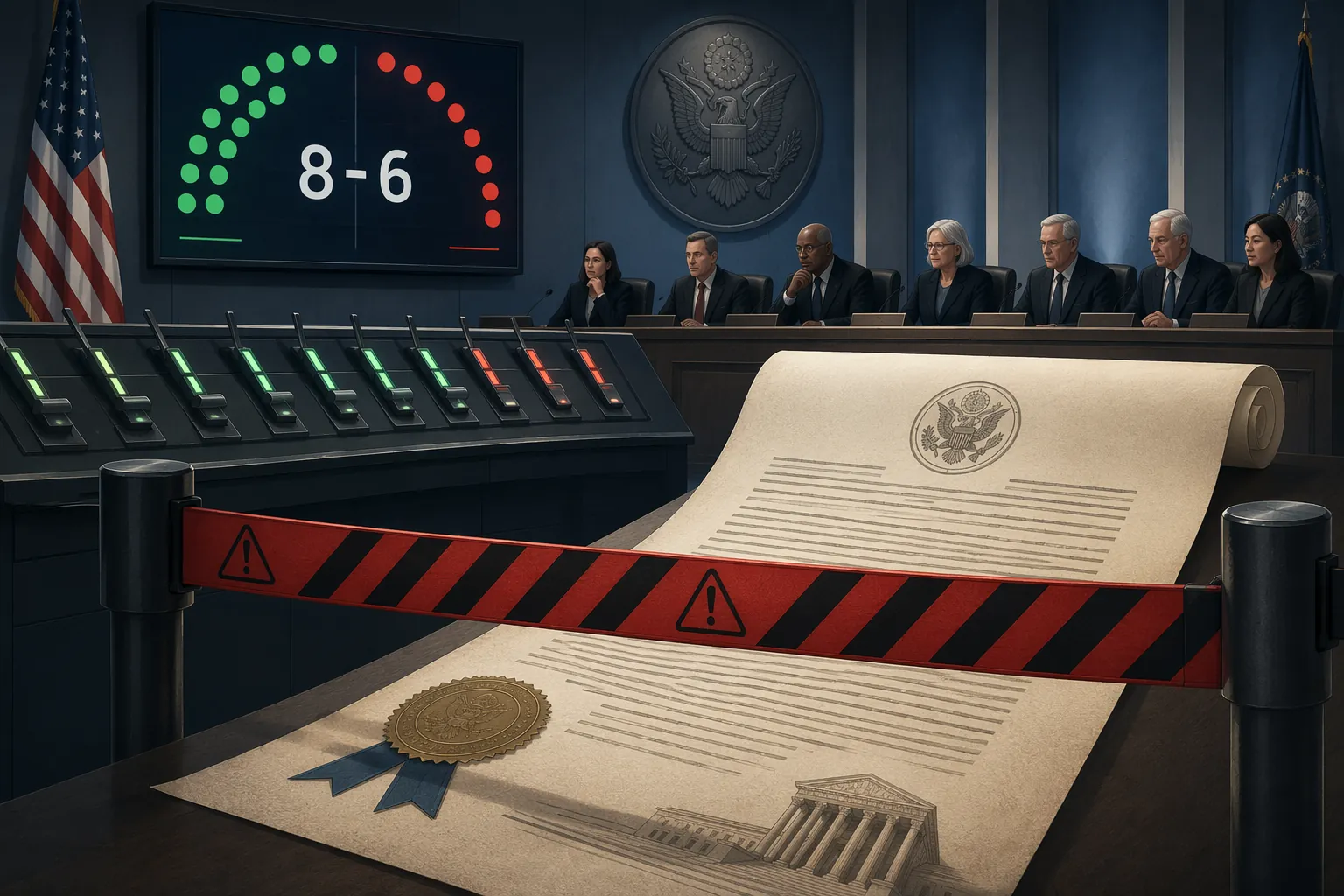
Three Statuses That Should Not Be Collapsed
The cleanest way to read the current file is to keep three statuses separate: removal from Category 2, possible Category 1 treatment, and final entry on the 503A Bulks List. Frier Levitt’s 2025 discussion of peptide compounding status and FDA’s own Category 2 materials both point to the same operational problem: these categories do not carry the same legal consequence.[3][4]
| Status | What it means | What it does not mean |
|---|---|---|
| Removed from Category 2 | FDA is no longer treating the substance as one that should remain in the “do not compound” risk category. | It is not an affirmative authorization to compound. |
| Category 1 placement or similar interim consideration | The substance may be under FDA evaluation for possible inclusion on the 503A Bulks List. | It is not final placement on the list and does not erase other statutory conditions. |
| 503A Bulks List entry | FDA has completed the legally required process to add the bulk drug substance to the list for 503A compounding. | It is not created by a PCAC vote alone. |
The middle category is where commercial pressure tends to do the most damage. A substance under active consideration feels different from a substance sitting in a risk category. It can make a clinic operator, pharmacy investor, or marketing team think the government has already accepted the compound in practical terms. But reliance needs a decision-maker and an instrument. Here, the decision-maker remains FDA, and the instrument for adding BPC-157 to the 503A Bulks List remains rulemaking.
Even if FDA accepts the PCAC recommendation, FDA Law Blog’s April 2026 analysis says adding BPC-157 to the 503A Bulks List requires notice-and-comment rulemaking under the Administrative Procedure Act, and estimates that the process would take “more than a year” if it proceeds smoothly.[2] That is not a minor administrative lag. It is the difference between a recommendation that can be cited in a policy memo and a rule that a pharmacy may be able to build operations around.

What the April 2026 Removal Actually Changed
The April 2026 Category 2 removal should not be minimized. Before that removal, the legal conversation was dominated by FDA’s view that certain nominated bulk drug substances may present significant safety risks in compounding. Once BPC-157 was removed from that posture, compounders had a materially better procedural record than they had before.[2]
But “better” is doing work here. It does not mean “available for routine commercial launch.” The removal reduced one barrier; it did not create the statutory permission that 503A pharmacies need when using bulk drug substances. A compliance memo that stops at “removed from Category 2” leaves out the question that matters most: what current legal authority allows the pharmacy to compound this substance today?
There is also a small source discrepancy worth cabining rather than overworking. Sources have not been perfectly consistent on the number of peptides originally treated in Category 2, with figures such as 17, 19, and 12 appearing in circulation. That discrepancy may matter for historical accounting. It does not change the present conclusion for BPC-157: removal from Category 2 is not final 503A Bulks List placement.
The PCAC Vote Helps the File, But It Is a Thin Reed for Reliance
A close 8-6 advisory vote is not meaningless. For a sponsor, trade association, or pharmacy group trying to show momentum, it is important evidence. It tells FDA that a majority of the advisory committee was willing to recommend BPC-157 for inclusion. In an ordinary risk record, that fact belongs in the column marked “supports future authorization,” not in the column marked “current defense.”[1]
The narrowness of the vote also matters. STAT noted that a majority of panelists who voted yes had ties to the peptide industry.[1] That observation does not invalidate the vote, and it should not be inflated into a claim that FDA must discount it. It does mean counsel should avoid presenting the recommendation as a broad, unambiguous agency settlement of the issue.
FDA also retains a separate public-health override authority under section 503A(c). The available materials do not indicate that HHS has invoked that route for BPC-157. The point for operators is more modest: the advisory committee recommendation is not the only legal lever in the statute, and it is not a command to FDA.
The API Problem Is Not a Footnote
A legal pathway that cannot be supplied compliantly is not much of a pathway. LumaLex reported APC CEO Scott Brunner’s warning before the July meeting that, even if FDA acted immediately, pharmacies would have to turn away prescriptions because compliant pharmaceutical-grade BPC-157 API was not available.[5]
That warning belongs in the same risk analysis as the rulemaking delay. It is tempting to treat API availability as a procurement issue that can be solved once the law changes. For a compounding pharmacy, it is closer to a condition precedent. If the ingredient source cannot meet the required standard, the business still cannot safely operationalize the service simply because the advisory record improved.
This also changes how counsel should read a commercial team’s “ready to restart” plan. The first question is not whether demand exists. The first questions are whether there is a final legal status, whether the API supplier can support compliant use, who has verified that supplier, and what the pharmacy will do with prescriptions that arrive before those conditions are met.
FDA’s Safety and Characterization Concerns Remain in the Record
The vote also did not erase the agency’s scientific reservations. LumaLex’s analysis of FDA briefing materials for the July 23-24, 2026 PCAC meeting described FDA’s emphasis on gaps in human safety and effectiveness data and characterization concerns for BPC-157; FDA’s advisory committee calendar identifies the meeting as the Pharmacy Compounding Advisory Committee session for those dates.[5][6]
Those points should be kept in their proper lane. They are not a finding that BPC-157 can never be compounded, and they are not a substitute for the final rulemaking decision. They are, however, relevant to enforcement risk during the interim period. If a pharmacy compounds now and later argues that it relied on a favorable advisory vote, FDA’s own record of unresolved safety, effectiveness, and characterization concerns will be sitting nearby.
Interim Enforcement Risk Is Not Theoretical
The broader enforcement environment makes premature reliance harder to defend. Health Law Alliance reported a 50% increase in CDER warning letters in fiscal year 2025 and more than 100 letters in September 2025 in the context of FDA scrutiny of GLP-1 and peptide compounding advertising and research-use-only labeling.[7] In March 2026, FDA announced warning letters to 30 telehealth companies for illegal marketing of compounded GLP-1 drugs.[8]
Those actions do not prove that FDA will target every pharmacy that mentions BPC-157 after the PCAC vote. They do show that FDA has been willing to police compounded-drug marketing, telehealth channels, and product claims during the same period in which peptide businesses have been watching the Category 2 and bulks-list process. The safer assumption is that a public misstatement of legal status can become part of the enforcement record.
For counsel, the immediate exposure is not limited to actual compounding. Website copy, intake scripts, affiliate materials, clinician-facing emails, prescriber education, and investor updates can all turn a procedural event into a representation that the product is legally available. The sentence “PCAC recommended BPC-157 for the 503A Bulks List” is defensible if accurately framed. The sentence “BPC-157 is back” may not be.
A Practical Status Memo for July 24, 2026
A compliance file written today should separate what changed from what remains unresolved. The July 23 vote is useful evidence. The April 2026 removal from Category 2 is useful posture. Neither one supplies final authorization.
- Decision-maker: FDA, not PCAC.
- Current procedural signal: favorable 8-6 advisory recommendation.
- Current legal gap: no completed notice-and-comment rule adding BPC-157 to the 503A Bulks List.
- Operational gap: no identified compliant pharmaceutical-grade BPC-157 API supply chain in the cited materials.
- Interim risk: FDA enforcement scrutiny of compounded-drug marketing and telehealth channels remains active.
The conservative advice is not that BPC-157 can never reach the 503A Bulks List. The record now points more favorably in that direction than it did before April 2026 and before the July 23 vote. The advice is that no regulated operator should treat the vote as the moment when compounding became lawful.
The reliable answer for July 24, 2026 is therefore precise: BPC-157 has a favorable PCAC recommendation, FDA remains unbound, final rulemaking is unfinished and estimated to take more than a year if smooth, compliant API remains unavailable in the cited industry account, and enforcement exposure remains live for anyone who converts the vote into a commercial green light.[1][2][5]
References
- FDA panel okays peptides for compound pharmacies, including BPC-157 and KPV, STAT News, July 23, 2026,
- FDA’s Peptide Rally: What Compounders and Industry Need to Know Post 2 of 2, FDA Law Blog, April 2026,
- Regulatory Status of Peptide Compounding in 2025, Frier Levitt, 2025,
- Certain Bulk Drug Substances for Use in Compounding That May Present Significant Safety Risks, FDA,
- The July 2026 PCAC Peptide Meeting, LumaLex Law, July 15, 2026,
- July 23-24, 2026 Meeting of the Pharmacy Compounding Advisory Committee, FDA,
- FDA Targets GLP-1 and Peptide Compounding Advertising and Research Use Only Labeling, Health Law Alliance, Jan. 8, 2026,
- FDA warns 30 telehealth companies against illegal marketing of compounded GLP-1s, FDA,
Chronological incident history
No sanction cases have named this tool in the tracked record set to date. This does not imply the tool is safe — see Risk Digest for ongoing monitoring.
← Compare peer toolsReport a correction or tip
Spotted an outdated figure, a misstated fact, or a ruling this tool profile should reflect? Public comments are disabled for this content given the professional cost of a misreported case outcome, penalty amount, or rule text — use the structured correction channel instead.
Report a correction or tip for this record →