
Three legal consequences of Charleston White's threatening text
This article analyzes the legal significance of the threatening text messages Charleston White sent to Drew Anthony in June 2026, examining how they function as evidence in the active Fields v. White defamation lawsuit, support parallel IIED claims, and create potential criminal liability under Texas harassment statutes.
- Hallucination rate
- Not measured / undisclosed
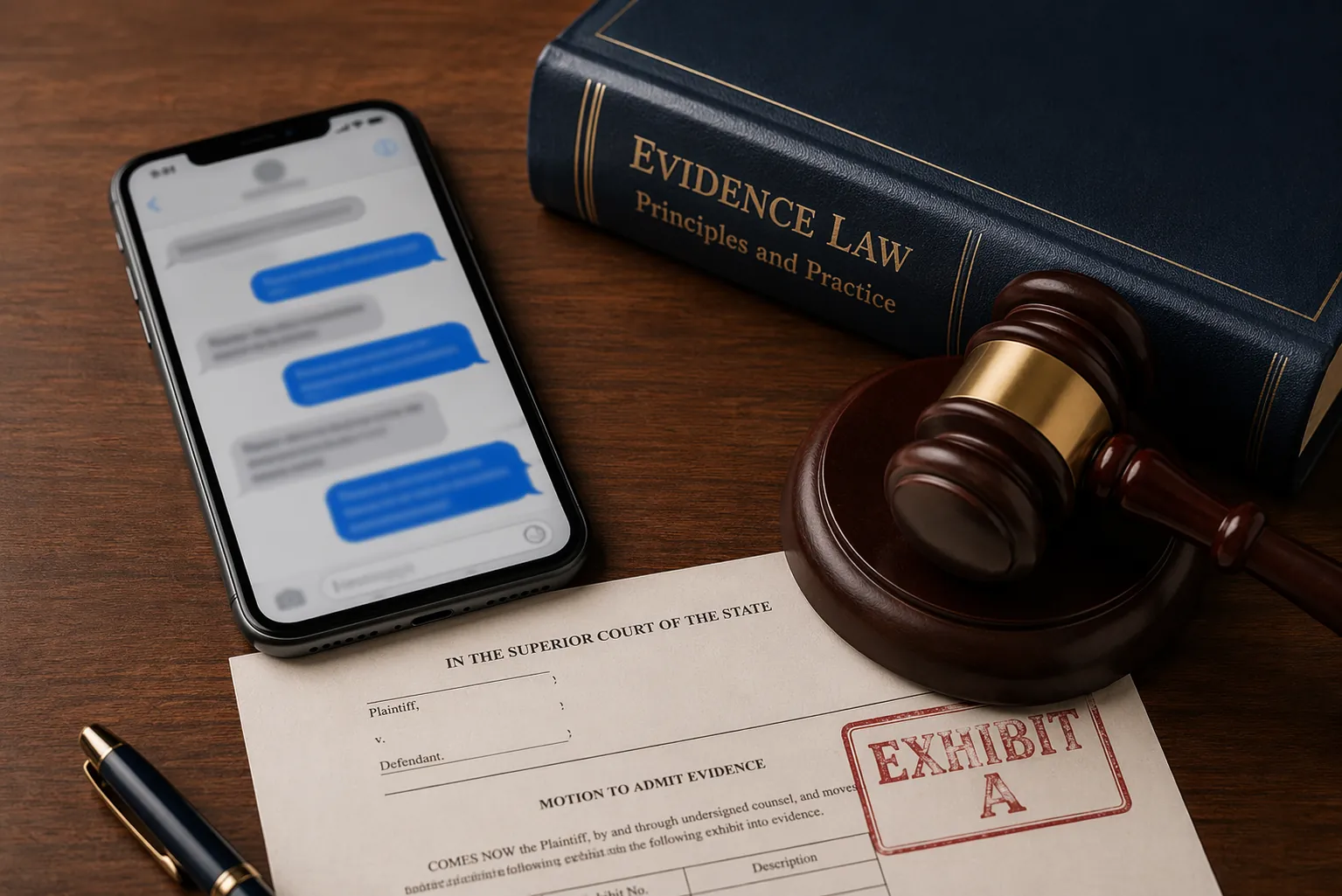
The legal importance of the Charleston White threatening text begins with one sentence: “I’ll make sure your son catch hell in prison.” Hindustan Times reported the wording on June 16, 2026, describing it as appearing in publicly available X screenshots involving Drew Anthony, the father of Karmelo Anthony.[1] That is a narrow sourcing posture. It is not, on the current public materials, a court-admitted exhibit. It is a reported digital communication that would still need the ordinary work: account attribution, screenshot authentication, metadata if available, witness testimony, and a connection to a claim or statutory element.
That distinction matters because the sentence is not legally interesting merely because it is ugly. It is legally interesting because it is targeted. The reported words identify the vulnerable pressure point: a parent’s incarcerated child. If authenticated, the message can do more than supply color for celebrity coverage. It can become evidence of emotional distress, evidence of state of mind, and possibly evidence of a communication offense.
The June 2026 Sequence Gives the Text Its Legal Shape
The timeline reported in June is important because it narrows the possible legal uses of the message. White had publicly pledged $75,000 to support Karmelo Anthony’s appeal, then withdrew that support after Anthony’s June 9, 2026 sentencing to 35 years, and the threatening messages were reported as occurring around June 13 to June 15, 2026.[2] Those dates matter less as a public-relations arc than as a sequence of conduct: support, withdrawal, conflict, then a direct statement about what would happen to the son in prison.
A lawyer looking at that sequence would not need to prove, at the outset, that White could actually affect prison conditions. In several legal settings, the immediate question would be what the communication was reasonably understood to convey, why it was sent, and what effect it was intended or likely to have on the recipient. A threat can be legally relevant even when it is not operationally realistic.
The public record also has a gap that should not be papered over. Hindustan Times described screenshots from X; it did not publish a discovery record, a sworn declaration, or a trial exhibit. If the text enters Fields v. White or any related proceeding, the evidentiary question will not be whether people online saw it. The question will be whether a party can prove that White sent or published it, when he did so, to whom it was directed, and for what purpose.
Where It Fits in Fields v. White
The active civil context is Fields v. White, described in the available research materials as a Texas lawsuit brought by journalist Sarah Fields and asserting claims including defamation per se, defamation, intentional infliction of emotional distress, public disclosure of private facts, and civil conspiracy against Anthony, White, and Billions. The same materials describe White as having been personally served on January 18, 2026, and failing to answer, with liability reportedly resolved by default as to him. That last point remains a caveat rather than a settled public docket fact here, because the default judgment information has not been independently verified from the trial court docket.
That procedural posture changes how the June text should be handled. If liability has already been established by default against White, the text may become more useful at damages, intent, or remedial stages than at the initial liability stage. If the default posture is incomplete, contested, or later reopened, the text may have broader use. Either way, the legal question is not whether the message makes White look worse. The question is whether it helps prove a disputed element or a permissible evidentiary purpose.
The Closest Civil Use Is Intentional Infliction of Emotional Distress
The strongest immediate fit is intentional infliction of emotional distress. The reported communication was not a generalized insult broadcast into an argument. It was allegedly directed at a father and tied to his son’s imprisonment. That specificity is what gives the text legal work to do. IIED analysis usually turns on conduct, intent or recklessness, severity, and causation; the sentence speaks most directly to conduct and state of mind.
The phrase “catch hell in prison” does not merely express disagreement with Drew Anthony. It invokes a place where the son is dependent on institutional protection and where the parent cannot personally intervene. A factfinder would still need evidence about the recipient’s distress and causation, but the communication itself could support an argument that the sender chose a target calculated to alarm or torment.
For IIED purposes, the surrounding June timeline may matter. A shift from pledged financial support to a prison-directed threat shortly after sentencing can be framed as escalation. That does not prove liability by itself. It does, however, make the message less likely to be treated as a stray insult detached from consequence.
The evidentiary burden would remain practical and unglamorous. The party using the text would need to show that the screenshot accurately reflects the communication, that the relevant account or device can be tied to White, and that the recipient’s claimed distress is not being inferred solely from the offensiveness of the words. Courts do not admit screenshots because they are viral; they admit them because someone has laid a foundation.
How a Post-Complaint Threat Can Matter to Defamation
The defamation use is less direct but still significant. A threatening message sent after the underlying complaint does not automatically prove that earlier statements were false, defamatory, or published with the required fault. It can, however, become evidence of state of mind if the proponent can connect the later conduct to the same dispute, the same parties, or the same retaliatory posture.
Actual malice in constitutional defamation doctrine concerns knowledge of falsity or reckless disregard for truth, not personal spite in the everyday sense. That is where careless coverage often goes wrong. The June text would not establish actual malice simply because it sounds malicious. Its possible value is circumstantial: it may help show hostility, motive, willingness to use claims as weapons, or absence of mistake when read alongside the challenged statements and the available record.
Texas Rule of Evidence 404(b) is the natural evidentiary boundary. If a party offers the message merely to argue that White is the kind of person who threatens people, the evidence invites a character-propensity objection. If the message is offered for a non-propensity purpose—intent, motive, plan, knowledge, or absence of mistake—the analysis becomes more serious. The timing cuts both ways: it post-dates the complaint, but subsequent acts can still illuminate state of mind when they are closely connected to the same controversy.
That does not make the text a shortcut through defamation law. A plaintiff still must connect the alleged defamatory statements to falsity, publication, fault, and damages. The threatening communication is useful only if it helps answer one of those legal questions. Otherwise, it remains prejudicial background, not proof.
The Criminal-Harassment Question Is Narrower
The possible criminal exposure is most plausibly discussed under Texas Penal Code § 42.07, the harassment statute identified in the research materials. The relevant fit is the idea of a communication made with intent to annoy, alarm, abuse, torment, or harass a specific person. On the reported facts, the communication was directed at Drew Anthony and invoked harm or hardship to his incarcerated son. That is enough to make § 42.07 a serious analytical category, but not enough to declare a crime occurred.
Intent would be the hard point. Prosecutors would not be able to rely only on audience reaction online. They would have to prove the sender’s purpose under the statute. The wording of the message, its timing after the withdrawal of support, and any surrounding communications could all matter. So could evidence cutting the other way, including claims that the statement was performative, hyperbolic, or not intended to reach the recipient as a true threat.
Texas Penal Code § 22.07, the terroristic-threat statute, is a useful boundary rather than the better fit on the public facts. The currently described message does not clearly show a direct threat by White to commit a specified violent offense himself. It is a statement about making the son “catch hell in prison,” which may be menacing and actionable in other ways, but the available materials do not support confidently treating it as a terroristic threat charge.
Pattern Evidence Has a Use, but It Has Limits
White’s broader public record may be tempting to overuse. Reports about prior confrontational episodes, including XXL’s coverage of Young Thug-related threat allegations and Complex’s reporting on an arrest involving aggravated assault and animal-cruelty allegations, may give opposing counsel context to argue that the June text was not accidental or isolated.[3][4] But context is not the same as proof of the specific communication at issue.
A court would still have to decide relevance, unfair prejudice, and the permitted purpose for any such material. Prior controversies cannot be used simply to invite a factfinder to dislike White. They become potentially useful only if tied to a live issue such as intent, motive, absence of mistake, or a pattern of communications directed at people connected to the dispute.
That is the discipline missing from much coverage of threatening online speech. The legal system does not need a personality montage. It needs a record: who sent the message, who received it, when it was sent, what it meant in context, and which element it tends to prove.
What the Text Can and Cannot Prove Now
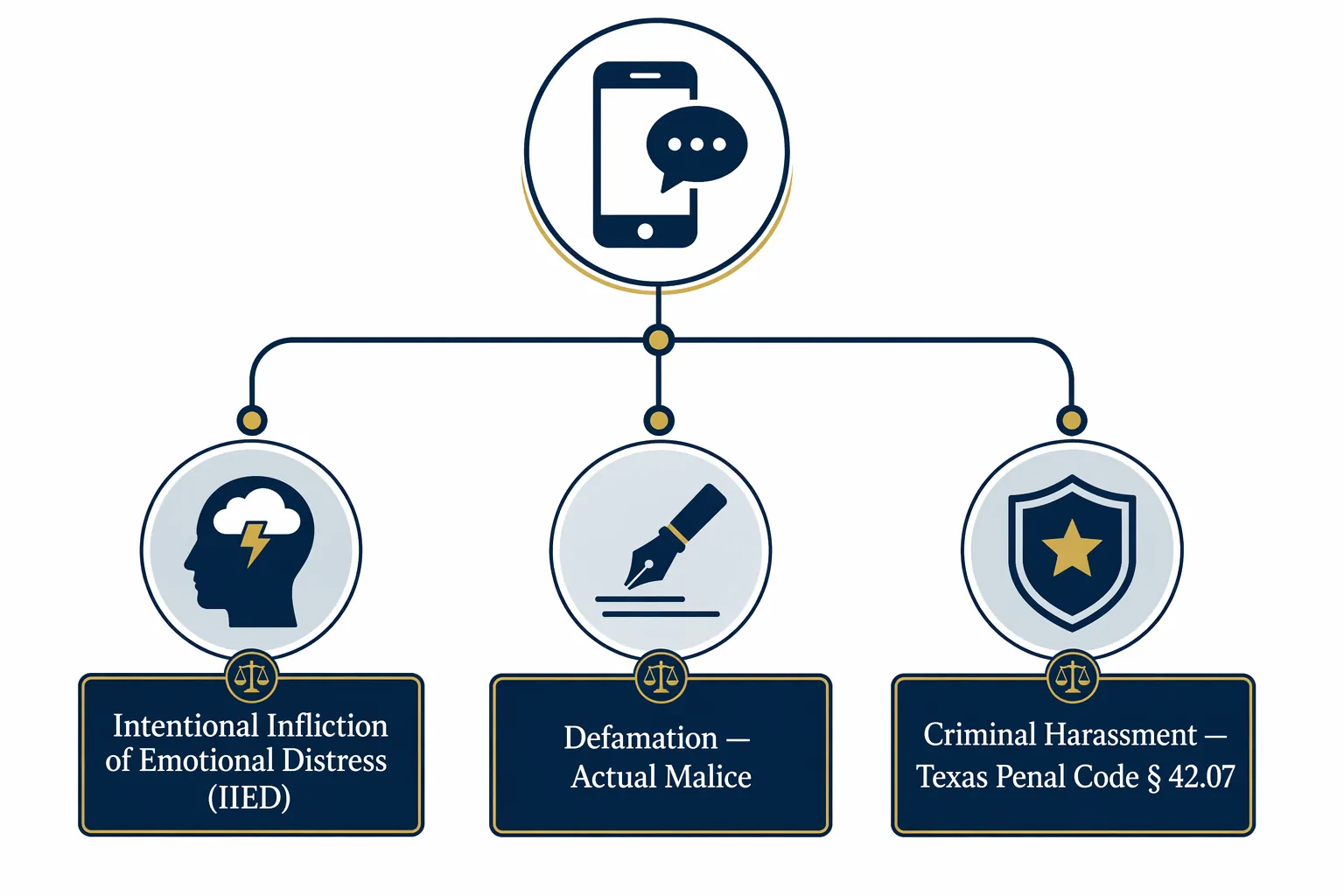
On the present public record, the June 2026 text is not merely reputationally damaging. If authenticated and connected to the surrounding dispute, it may be operative in several legal channels: as conduct supporting IIED, as circumstantial evidence bearing on state of mind in defamation litigation, and as a possible communication under Texas harassment law.
The gaps are equally important. The reported screenshots are not the same thing as admitted evidence. The default-judgment status in Fields v. White still needs docket confirmation. The full appellate materials referenced in the research record have not been reviewed here. Those limits do not make the text legally irrelevant; they mark the line between a reported communication and a litigation fact.
Threatening digital messages become legally significant when they can be tied to a claim element, a state-of-mind issue, or a statutory communication offense. The reported sentence to Drew Anthony is close enough to all three categories that it deserves legal analysis before outrage and before prediction.
References
- Charleston White's threatening text to Karmelo Anthony's dad surfaces, Hindustan Times, June 16, 2026
- Charleston White withdraws support for Karmelo Anthony's dad, Hindustan Times
- Charleston White Threatens Young Thug Sent Prison, XXL Mag
- Charleston White Arrest Aggravated Assault Animal Cruelty, Complex
Chronological incident history
No sanction cases have named this tool in the tracked record set to date. This does not imply the tool is safe — see Risk Digest for ongoing monitoring.
← Compare peer toolsReport a correction or tip
Spotted an outdated figure, a misstated fact, or a ruling this tool profile should reflect? Public comments are disabled for this content given the professional cost of a misreported case outcome, penalty amount, or rule text — use the structured correction channel instead.
Report a correction or tip for this record →