
Chick-fil-A's 2026 breach tests the credential stuffing liability standard
This article examines how the New York Attorney General's four-layer credential stuffing defense framework applies to the Chick-fil-A repeat data breach, providing corporate counsel with a practical tool for assessing client exposure. The 2026 breach reveals failures in at least three of the four layers, creating heightened legal risk for consumer-facing businesses with loyalty programs.
- Hallucination rate
- Not measured / undisclosed
For counsel assessing Chick-fil-A’s data breach exposure, the more legally useful date is now 2026. Chick-fil-A says automated credential stuffing targeted Chick-fil-A One accounts from June 17 through June 19, 2026; the company discovered the activity on July 13 and began sending customer notices on July 20 to more than 10 states and the District of Columbia. Public state notices currently confirm at least 2,182 affected Texas residents and 39 affected Massachusetts residents, while the total national count has not been disclosed.[1]
That timing is not just incident chronology. It is the beginning of the reasonableness analysis. The same loyalty program was involved in a prior credential stuffing event affecting 71,473 accounts between December 2022 and February 2023, followed by Stephens et al. v. Chick-fil-A, Inc., a putative class action that later settled on undisclosed terms.[2] The complaint alleged, among other things, that customer information had been stored “unencrypted” and “unredacted,” and that the company denied the breach for two months.[2] Those are allegations, not adjudicated findings. Still, they matter because a second credential stuffing incident lands in a different record than a first one.
A company can be right that attackers used passwords compromised elsewhere and still have a hard problem. The useful question is not whether password reuse occurred. It is what the company did, after prior notice, to make account takeover harder, detect it sooner, limit misuse, and respond in a way that preserved trust and satisfied notification obligations.
Prior notice changes the litigation record
Credential stuffing occupies an awkward space in breach law. The attacker may not have broken into a database. The consumer may have reused a password. The company may have no direct control over the credential leak that armed the attack. Those facts are real, and they can narrow causation and damages arguments.
They do not end the analysis for a consumer-facing loyalty program. Chick-fil-A One accounts are not throwaway newsletter logins. The 2023 complaint described accounts tied to personal information, stored payment access, rewards, and transaction histories.[2] A low-friction login model is commercially valuable precisely because it reduces steps between the customer and the purchase. The legal burden of that design is that the company needs a defensible account takeover program, not merely a Terms of Service provision discouraging password reuse.
The prior Stephens matter does not create an automatic admission of liability. The settlement terms were not publicly disclosed, and the available docket posture does not establish a judicial finding that Chick-fil-A’s controls were unreasonable. But it does create documented notice. A regulator, plaintiff, or board committee reviewing the 2026 facts would reasonably ask what changed after the 2023 event, what was funded, what was deferred, and what evidence exists that the earlier incident produced operational memory rather than just legal closure.
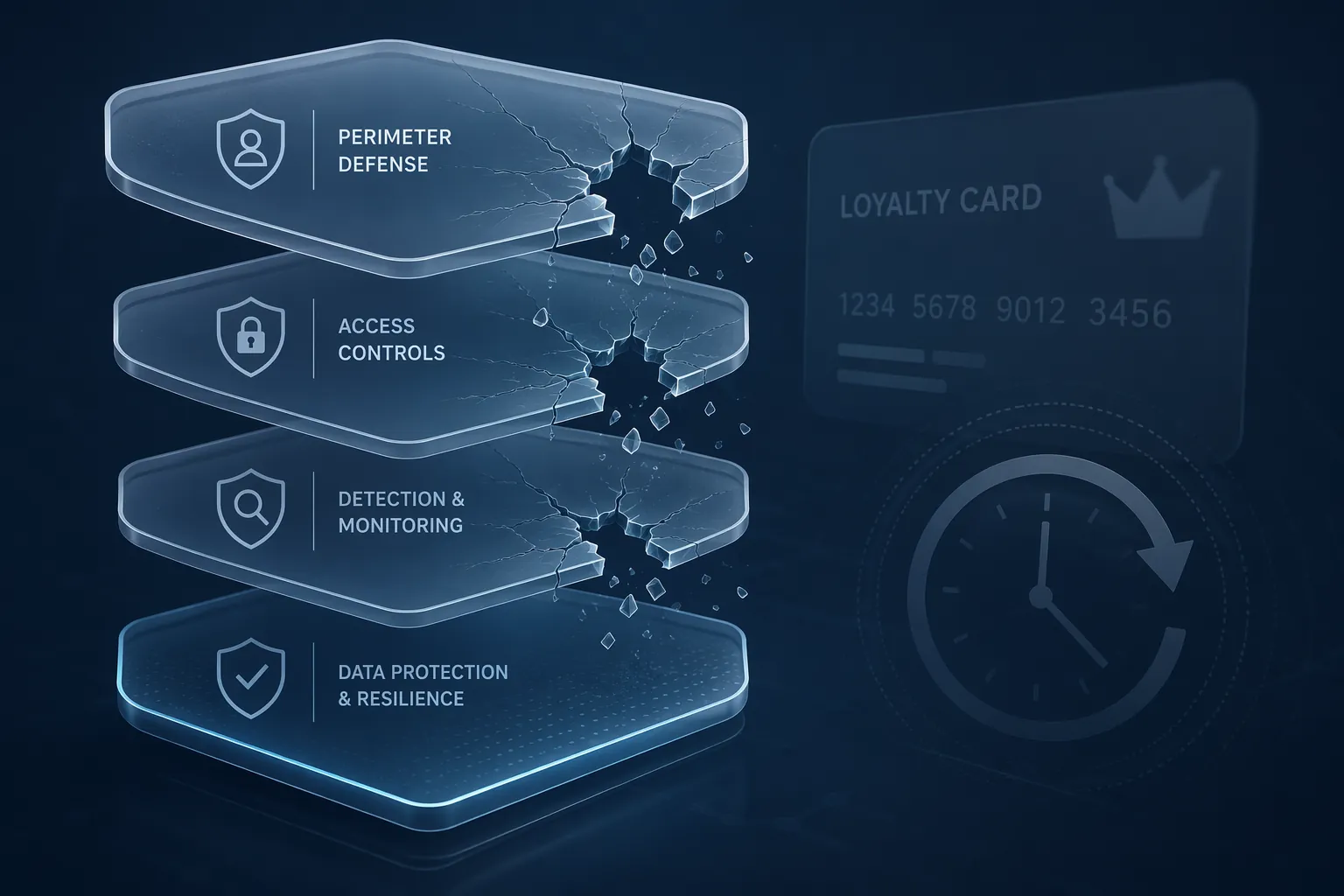
The NY AG framework is not binding law, but it is courtroom-useful
The New York Attorney General’s “Business Guide for Credential-Stuffing Attacks” organizes credential stuffing defense into four layers: defend against attacks, detect a breach, prevent fraud and misuse, and respond to an incident.[3] It is a policy publication, not a statute or regulation. Courts are not required to treat it as a binding standard of care, and counsel should resist any argument that a guidance document automatically becomes negligence per se.
That caveat should not make companies dismiss it. Soft-law documents have a way of becoming deposition exhibits. They give plaintiffs a tidy sequence for questioning witnesses and give regulators a vocabulary for asking what the company knew before the incident. For outside counsel, the guide is useful because it turns a vague “reasonable security” conversation into a record test: what was in place before the attack, how the company saw the attack, what misuse it blocked, and how it handled the aftermath.
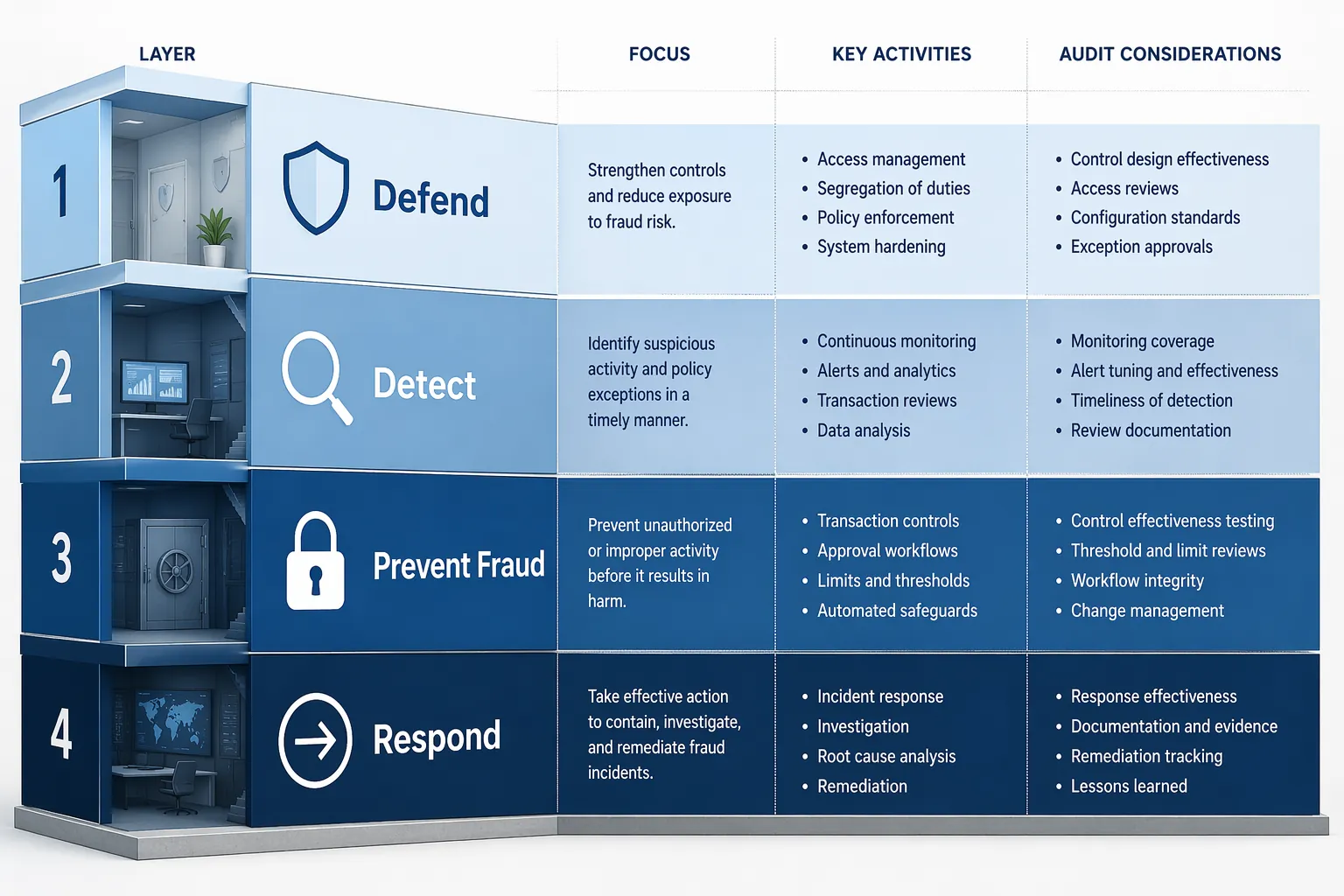
| NY AG layer | Counsel’s record question | Why the Chick-fil-A repeat incident matters |
|---|---|---|
| Defend | Which controls made automated account takeover materially harder before the attack? | A second event after the 2023 matter invites scrutiny of MFA, bot controls, rate limiting, password hygiene, and payment exposure. |
| Detect | How quickly did monitoring identify abnormal access, and what thresholds triggered review? | The roughly 24-day discovery period may compare favorably to broad breach-lifecycle benchmarks, but repeat facts sharpen questions about account takeover alerts. |
| Prevent fraud | What misuse was stopped after credentials worked? | Stored payment credentials, loyalty value, and account changes make post-login controls legally important. |
| Respond | Were notices, customer protections, remediation, and internal escalation timely and well documented? | The July 20 notices and multi-state notification pattern create the first public response record. |
Defend: reused passwords are foreseeable, not exculpatory
The defense layer is where the legal texture is most concrete. Credential stuffing is not a fringe scenario. One vendor analysis described credential stuffing as the top initial breach vector at 22% of breaches, with more than 24 billion stolen credential pairs in circulation, more than 193 billion annual credential stuffing attempts, and 47% year-over-year growth.[4] Those figures are directional because they come from a cybersecurity vendor report, not a neutral census of all attacks. They are still useful for one proposition: account takeover through reused credentials is no longer an unforeseeable edge case.
For a loyalty program, the defensible-control discussion usually starts with multifactor authentication, bot detection, rate limits, anomaly rules, credential screening, forced password resets in appropriate circumstances, and user prompts that discourage weak or reused passwords. None of those controls should be treated as a universal silver bullet. MFA can be bypassed, bot controls can produce false positives, and aggressive throttling can lock out legitimate customers. But in 2026, the absence of a documented risk-based decision about those controls is harder to defend than the decision itself.
Microsoft has reported that MFA can stop 99.9% of credential-based attacks.[5] That number should be used carefully. It is not proof that every account without MFA was negligently protected, nor does it establish causation in any single incident. It does, however, raise the budget and governance question counsel should be asking before a breach: if MFA was not required for all customers, was it offered, risk-triggered, required for stored payment changes, or otherwise evaluated against customer friction and fraud exposure?
The repeat-breach issue is not whether Chick-fil-A had any particular control in place; the public record cited so far does not disclose enough to say that. The issue is what a plaintiff or regulator can fairly ask for next. After the 2023 incident and settlement posture, the company’s internal record would be expected to show a post-incident review, control-gap analysis, remediation tracking, and some business decision on customer authentication. If those documents exist and show serious follow-through, they may mitigate the narrative. If they do not, the prior matter becomes more than history; it becomes notice.
Detect: 24 days may help, but it does not close the file
The 2026 timeline gives Chick-fil-A one fact that should not be ignored. The automated activity reportedly occurred from June 17 to June 19, and the company discovered it on July 13.[1] Measured from the first day of the attack window, that is roughly 24 to 26 days, depending on the precise internal discovery point. IBM’s 2025 Cost of a Data Breach report put the mean identification and containment lifecycle at 246 days, making the Chick-fil-A discovery window meaningfully shorter than that broad benchmark.[6]
That comparison has limits. IBM’s lifecycle figure is an average across breach types and organizational contexts; it is not a credential-stuffing-specific safe harbor. A credential stuffing campaign against consumer accounts often leaves different signals than a stealthy network intrusion: login velocity, failed-to-successful login ratios, IP and device anomalies, password reset spikes, reward redemption changes, payment update attempts, and customer complaints. A company that has already experienced account takeover should be able to explain which signals it monitored and how those alerts were tuned after the prior event.
Detection reasonableness also depends on what happened between June 19 and July 13. Did suspicious activity sit in a queue? Was it escalated by fraud, security, customer support, or a vendor? Were accounts locked pending review? Did customer complaints surface before formal discovery? Those questions cannot be answered from the current public materials. They are exactly the questions counsel should preserve now, before litigation converts normal incident response ambiguity into alleged delay.
Prevent fraud: the legally important moment is after the login succeeds
Credential stuffing defenses often focus too heavily on the front door. The NY AG’s third layer is useful because it assumes some attackers will get in.[3] The question then becomes what they can do once credentials work. Can they see full payment data, change contact information, drain loyalty value, place orders, add addresses, or lock out the legitimate customer? Which actions require step-up authentication? Which trigger alerts? Which are reversible without making the consumer negotiate with customer service?
For Chick-fil-A, the public notices and reports do not yet provide a complete misuse picture for the 2026 incident. The prior complaint, however, alleged exposure tied to personal information and account features that made unauthorized access commercially meaningful.[2] That is why stored payment credentials and loyalty balances matter in the legal analysis. A successful login is not merely a privacy event if the account can be monetized quickly.
Counsel assessing a client’s program should separate authentication controls from transaction controls. A company may decide not to require MFA at every login because of customer friction. That decision is more defensible if higher-risk actions receive stronger checks: viewing or changing payment instruments, redeeming rewards, changing email or phone fields, adding delivery locations, or using stored value in abnormal patterns. The post-login fraud layer is where a company can show that it planned for partial failure rather than assuming perimeter controls would hold.
Respond: notification timing is only one part of the response record
Chick-fil-A reportedly discovered the 2026 incident on July 13 and began sending customer notifications on July 20.[1] On the face of the public timeline, that is a fast movement from discovery to notice. The harder response questions are not answered by counting calendar days alone: when did the company determine that notice was legally required, what data elements were involved, what states were implicated, whether law enforcement delay was considered, and how the notice language described credential stuffing without appearing to minimize the company’s own security obligations.
State breach notification analysis has become a multi-front exercise, particularly for national consumer brands. All 50 states have breach notification laws, and state attorneys general have shown willingness to pursue notification failures. California’s SB-446, effective in 2026, tightened notification timelines, and Massachusetts reached a $795,000 settlement in a separate notification-failure matter.[7] For a closer discussion of the Chick-fil-A notices themselves, the site’s article on Chick-fil-A data breach notification obligations across 11 states addresses the consumer-notice layer in more detail.
For corporate counsel, the response layer should be treated as both legal compliance and evidentiary preservation. The board-facing record should identify the incident timeline, affected systems, known and unknown data elements, containment steps, customer remediation, regulator notifications, and lessons learned from any prior incident. If the same account-takeover weakness appears in two incident files with no clear remediation bridge between them, response documentation will not cure the control problem. It may, however, determine whether the company can explain the problem credibly.
Why this is harder to dismiss in 2026
The class action environment adds pressure, but it should not be overstated into a prediction about Chick-fil-A. As of July 23, 2026, no new public class action complaint over the 2026 incident has been identified in the materials reviewed here. The appropriate posture is pre-litigation assessment, not lawsuit forecasting.
Still, the background risk is real. Duane Morris reported more than 1,900 data privacy class actions filed in 2025.[8] Norton Rose Fulbright’s 2026 Annual Litigation Trends Survey reported that cybersecurity and data privacy class actions rose to 30% of all class action exposure, up from 16% the prior year.[9] Those figures do not say that a credential stuffing case is automatically viable. They do say that account takeover incidents are being evaluated in a litigation market where privacy and cybersecurity claims are no longer peripheral.
The strongest defense record will not be a generic statement that criminals used compromised third-party credentials. It will be a dated, specific record showing that the company understood credential stuffing as a foreseeable threat; considered MFA and other layered controls; monitored account takeover indicators; limited what attackers could do after login; and used the prior incident to drive remediation. That is the difference between arguing user password reuse as a complete defense and presenting it as one fact in a broader reasonableness record.
The practical exposure test for loyalty programs
A restaurant, retailer, hotel, or app-based service with loyalty accounts should be able to answer a short set of questions before the incident call begins:
- What account takeover controls were approved, rejected, or deferred after the last security review or incident?
- Is MFA mandatory, optional, risk-triggered, or required only for sensitive account actions?
- Which bot, rate-limiting, credential-screening, and anomaly-detection signals are monitored, and who receives those alerts?
- What can an attacker do after a successful login, especially with stored payment credentials, loyalty value, account profile fields, and transaction history?
- Where is the written bridge between prior incidents, remediation decisions, engineering tickets, budget approvals, and board reporting?
Those questions track the NY AG’s four layers without pretending the guide is binding law. They also force the conversation into documents that can be reviewed before a regulator, class action plaintiff, or judge asks for them. Chick-fil-A’s 2026 incident remains an incomplete public record, and liability cannot be declared from state notice counts and early reporting. But the repeat-breach fact makes the caution plain: once a loyalty program has been through credential stuffing and a settlement posture, gaps in documented defenses, fraud prevention, detection tuning, and response discipline become much harder to explain as ordinary operational imperfection.
References
- Chick-fil-A discloses data breach after credential stuffing attacks, BleepingComputer
- Stephens et al. v. Chick-fil-A, Inc. Complaint, ClassAction.org
- Business Guide for Credential-Stuffing Attacks, New York Attorney General
- Credential Stuffing Attacks 2026, CyberFence
- Microsoft telemetry on MFA and credential-based attacks, Microsoft
- Cost of a Data Breach Report 2025, IBM
- California SB-446 and Massachusetts notification enforcement materials, State breach notification enforcement sources
- Duane Morris Publishes Data Breach And Privacy Class Action Review - 2026, Duane Morris
- Industry Trends, Norton Rose Fulbright
Chronological incident history
No sanction cases have named this tool in the tracked record set to date. This does not imply the tool is safe — see Risk Digest for ongoing monitoring.
← Compare peer toolsReport a correction or tip
Spotted an outdated figure, a misstated fact, or a ruling this tool profile should reflect? Public comments are disabled for this content given the professional cost of a misreported case outcome, penalty amount, or rule text — use the structured correction channel instead.
Report a correction or tip for this record →