
Chick-fil-A's Second Breach May Open Stronger Consumer Claims
Analysis of how Chick-fil-A's June 2026 credential stuffing breach — the second in three years — alters the legal landscape for affected consumers, supporting stronger negligence arguments and regulatory enforcement parallels while acknowledging uncertainties in settlement terms and total affected counts.
- Hallucination rate
- Not measured / undisclosed
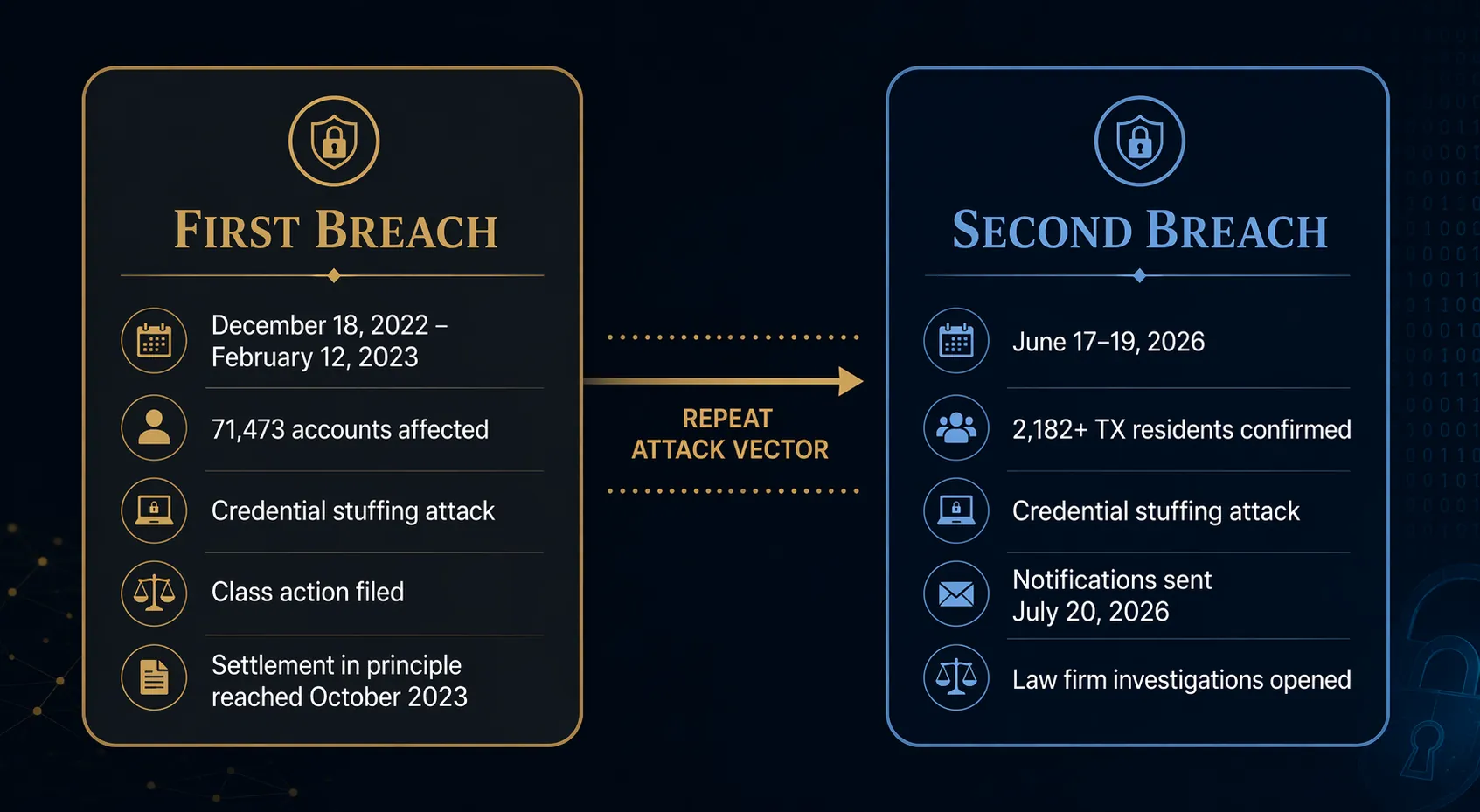
The June 2026 Chick-fil-A account breach matters less because of the partial headcount disclosed so far than because it looks familiar. Chick-fil-A has now reported another credential stuffing incident affecting Chick-fil-A One accounts, after a 2022–2023 credential stuffing episode that affected 71,473 accounts, ran from December 18, 2022 through February 12, 2023, produced a federal class action, and ended with a settlement in principle later in 2023.[1][2]
That recurrence changes the posture of any consumer legal recourse after a Chick-fil-A account hack. It does not make liability automatic. Credential stuffing still begins with attackers using usernames and passwords compromised elsewhere, and many consumer claims will rise or fall on standing, damages, contract terms, and proof of misuse. But a second incident gives plaintiffs a cleaner and more pointed question: after the first attack, the public allegations, and the settlement pressure, what exactly changed?
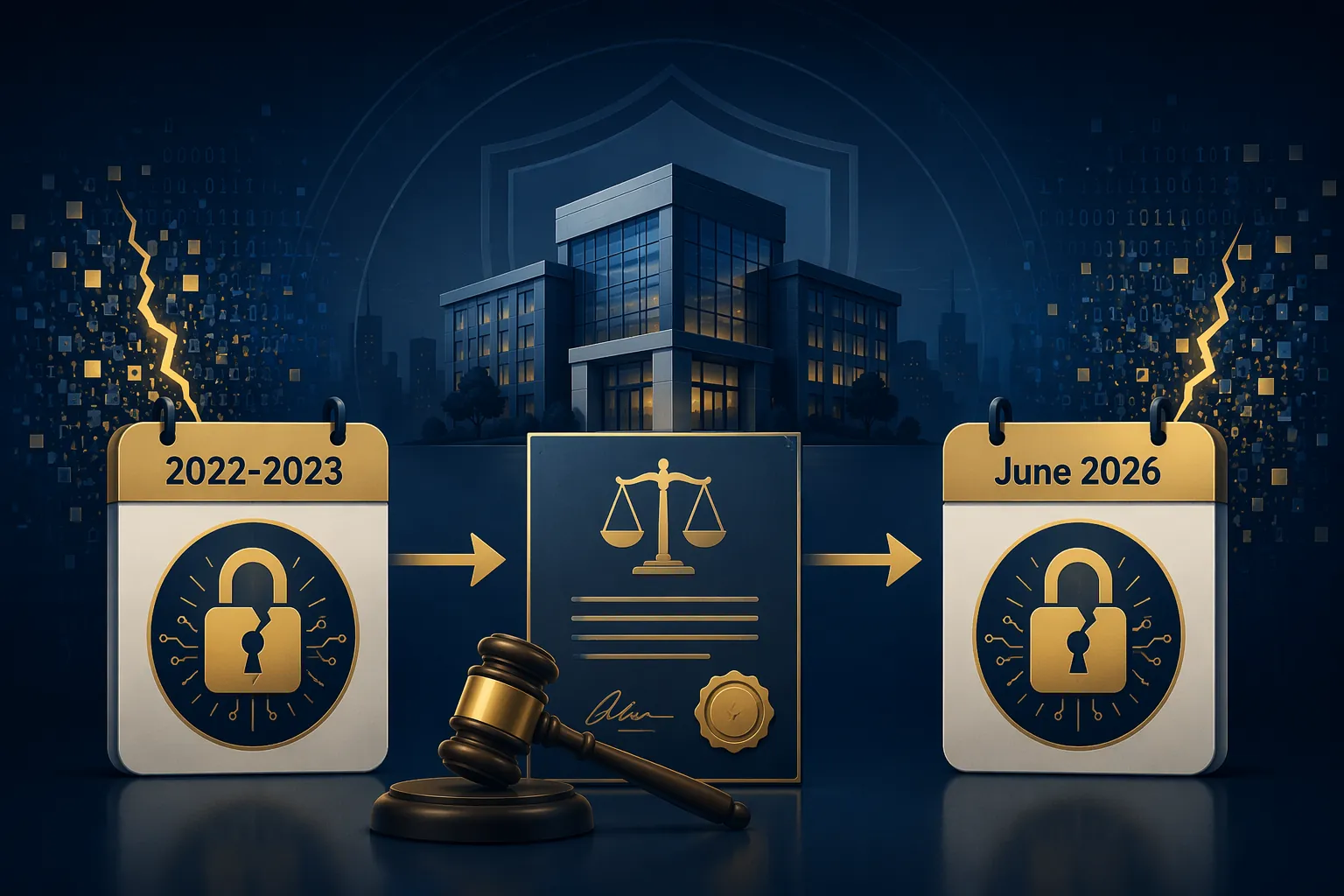
The Second Incident Gives Plaintiffs Something the First One Did Not
A first credential stuffing case often starts in a difficult place for plaintiffs. The company says the attackers used credentials obtained from unrelated third-party breaches. The consumer may have reused a password. The account may have been accessed, but not every account access produces out-of-pocket loss. Defense counsel can frame the event as a criminal attack on the user’s password hygiene rather than a failure of the platform.
A repeat incident is different. It lets plaintiffs plead notice in a more concrete way. The 2023 Chick-fil-A litigation alleged that the company stored customer data in an “unencrypted” and “unredacted” manner and criticized the company’s public response as a “confusing and botched series of announcements.”[2] Those allegations were not a final adjudication of wrongdoing, but they put the disputed security practices, account takeover risk, and customer-protection response squarely on the record.
Then came June 2026. The reported second incident involved credential stuffing between June 17 and June 19, 2026, with notifications sent on July 20, 2026.[3] Known state disclosures identify at least 2,182 affected Texas residents, 39 Massachusetts residents, and 2 Vermont residents, while the total affected population across 10 states plus the District of Columbia has not been disclosed.[4]
| Issue | 2022-2023 Incident | June 2026 Incident |
|---|---|---|
| Attack vector | Credential stuffing | Credential stuffing |
| Known timing | December 18, 2022-February 12, 2023 | June 17-19, 2026 |
| Known affected count | 71,473 accounts | Partial state figures only; total undisclosed |
| Litigation posture | Federal class action filed; settlement in principle reached in October 2023 | Law-firm investigations opened; no public 2026 complaint on PACER as of July 23, 2026 |
The table is not a liability finding. It is a pleading map. The repeated attack vector is what makes the negligence theory more substantial than a bare allegation that Chick-fil-A suffered an account takeover event.
Negligence After Notice Is the More Serious Claim
The strongest consumer argument after the 2026 incident is not that every Chick-fil-A account hacked through credential stuffing proves negligent security. It is that Chick-fil-A allegedly had practical notice of this precise mode of attack and then suffered another credential stuffing event affecting the same account ecosystem.
That distinction matters. A negligence complaint built around a single credential stuffing incident has to work harder to show what reasonable measures were required before the attack. A complaint built around recurrence can point to the earlier incident and ask whether Chick-fil-A implemented measures that would reasonably reduce repeat account takeovers: bot detection, velocity controls, risk-based authentication, forced password resets, monitoring for credential reuse patterns, customer reimbursement processes, and clearer notice procedures.
Some of those measures may turn out to have been in place. Some may have been deployed and bypassed. Some may not have been commercially reasonable for every account type or risk tier. Plaintiffs still need evidence. But recurrence shifts the factual inquiry away from an abstract debate about whether credential stuffing is “really” the company’s fault and toward the paper trail: risk assessments, remediation plans, post-incident board or security reviews, vendor recommendations, and settlement-related commitments.
That paper trail is likely to matter more than the early public count. The 2026 figures now available are incomplete; they show some affected residents in some states, not the full incident. A small disclosed state number does not necessarily mean a small national event, and a large number would not by itself establish compensable loss. The legal pressure comes from the repetition.
The Undisclosed 2023 Settlement Is a Key Unknown
The 2023 class action, Stephens v. Chick-fil-A, reached a settlement in principle in October 2023.[2] The available research does not disclose the settlement terms. That omission is not a footnote; it is central to the strength of any 2026 consumer claim.
If the settlement included injunctive security relief, the repeat breach could become more than evidence of notice. It could raise questions about compliance with specific commitments. A plaintiff would want to know whether Chick-fil-A agreed to implement particular controls, improve account monitoring, revise customer notice practices, reset credentials, offer reimbursements, or submit to any verification process. If the 2026 event occurred after such terms became operative, the analysis would move closer to settlement enforcement and adequacy of remediation.
If the settlement was primarily monetary or did not include meaningful security obligations, the 2026 case would still benefit from the earlier notice, but it would lose a sharper compliance hook. That is why careful pleading should not assume a settlement violation before the documents support it. The better move is conditional: identify the settlement, request or obtain the operative terms, and plead post-notice negligence based on what Chick-fil-A knew regardless of whether the settlement created enforceable security duties.
Dunkin’ Is the Regulatory Analogue Plaintiffs Will Reach For
The most useful comparator is not a generic data breach settlement. It is the New York Attorney General’s 2020 Dunkin’ credential stuffing matter. There, the state alleged that Dunkin’ failed to respond adequately to attacks on customer accounts, and the resulting consent order required a $650,000 penalty, multi-factor authentication, bot detection, password resets, refunds for affected customers, and other security changes.[5]
That enforcement matter does not decide Chick-fil-A’s civil liability. It involved a different company, a regulator rather than private plaintiffs, and its own factual record. But it gives courts and regulators a concrete vocabulary for what reasonable post-notice controls may look like in a credential stuffing context. “Credential stuffing was caused by reused passwords” is not the end of the analysis when a loyalty-account operator has already seen the same attack pattern.
The remedies in the Dunkin’ order are especially important because they map onto the consumer harm in loyalty-account takeovers. Refunds address stolen stored value or rewards. Password resets and MFA address recurrence. Bot detection targets the attack method. Those remedies are more practical than broad promises to maintain reasonable security, and they are the kind of injunctive relief a repeat-incident complaint should be prepared to specify.
The Early 2026 Posture Is Still Pre-Filing
By July 21-22, 2026, at least three law firms had opened investigations into the 2026 Chick-fil-A incident, including Cole & Van Note, ClaimDepot, and the firm behind the 2023 action.[4] That is not the same thing as a filed case. As of July 23, 2026, no 2026 complaint was publicly available on PACER.
The gap matters because investigation pages tend to speak in recruitment language. A filed complaint has to choose causes of action, identify named plaintiffs, plead injury, address account terms, and survive standing challenges. For now, the reliable conclusion is narrower: the incident has attracted plaintiffs’ counsel attention quickly, and the prior Chick-fil-A litigation gives those lawyers a ready factual framework.
Standing and Damages May Still Do Real Work
A stronger negligence story does not eliminate Article III standing problems. Credential stuffing claims can be awkward when the named plaintiff cannot allege fraudulent charges, stolen rewards, unreimbursed account value, identity theft, or a concrete misuse of personal information. Some consumers may have spent time resetting passwords or monitoring accounts; others may have lost points, stored value, or payment-card convenience. Those facts should not be treated as interchangeable.
The unsettled standing landscape is one reason injunctive relief may be more important than damages for some plaintiffs. A consumer who can show exposure to a repeat account takeover risk may seek account-security changes, but federal courts still require a concrete and particularized injury. The recurrence helps with foreseeability and notice; it does not supply the missing loss facts for every account holder.
State statutory theories may also draw more attention. Recent analysis has noted courts expanding the California Consumer Privacy Act’s private right of action in data-security cases, which makes California claims a potential pressure point when unauthorized access involves covered personal information.[6] That trend should be used carefully. It does not convert every credential stuffing event into a viable CCPA claim, and it does not resolve whether particular Chick-fil-A account data, security practices, or plaintiffs fit the statute.
Account Terms Could Shape the Route to Recovery
Chick-fil-A One terms were updated on March 23, 2026.[4] That timing deserves attention because arbitration clauses, class waivers, liability limitations, or notice-and-cure provisions can materially affect how consumers pursue claims. The available research does not establish which provisions will control any particular consumer’s claim or whether they are enforceable.
For plaintiffs, the terms question is procedural before it is rhetorical. Counsel will need to identify which version of the terms applied when the account was created, when the consumer used the account, when the incident occurred, and whether assent can be shown. For Chick-fil-A, the same documents may become a first-line defense against class litigation in court, even if they do not answer the underlying security questions.
What Consumer Recourse Should Focus On
The most plausible consumer legal recourse after the 2026 Chick-fil-A account hack is not a simple damages claim for every notified account holder. The stronger route is a focused post-notice case: Chick-fil-A allegedly experienced a known credential stuffing problem, litigated over it, reached a settlement in principle, and then reported another credential stuffing incident affecting the same account program.
That posture supports targeted discovery and targeted remedies. Plaintiffs should want the 2023 settlement terms, remediation records, bot-detection and rate-limiting evidence, authentication-change history, password-reset policies, customer reimbursement records, and incident-response communications. Consumers with actual losses should preserve records of unauthorized redemptions, stored payment misuse, account changes, notice timing, and any reimbursement denial.
The legal case is therefore stronger than it would be after a standalone credential stuffing event, but it is not complete on the public record. The missing facts still matter: the full 2026 affected population, the 2023 settlement terms, the account data accessed, the number of consumers with actual misuse or losses, and the enforceability of the current Chick-fil-A One terms. The second breach gives plaintiffs a better negligence and injunctive-relief story. Whether it gives consumers meaningful recovery depends on what those documents show.
References
- Chick-fil-A Says Credential Stuffing Attack Impacted 71,000 Accounts, SecurityWeek
- Chick-fil-A Data Breach Lawsuit Says Company Failed to Protect Customer Information, ClassAction.org
- Chick-fil-A reports data breach involving customer accounts, The Atlanta Journal-Constitution
- Chick-fil-A Data Breach Investigation, ClaimDepot
- Attorney General James Announces $650,000 Settlement with Dunkin’ Brands for Ignoring Cyberattacks That Compromised Customer Accounts, New York State Attorney General, 2020
- Courts Expand CCPA Private Right of Action, Troutman Pepper, June 2026
Chronological incident history
No sanction cases have named this tool in the tracked record set to date. This does not imply the tool is safe — see Risk Digest for ongoing monitoring.
← Compare peer toolsReport a correction or tip
Spotted an outdated figure, a misstated fact, or a ruling this tool profile should reflect? Public comments are disabled for this content given the professional cost of a misreported case outcome, penalty amount, or rule text — use the structured correction channel instead.
Report a correction or tip for this record →