
Is DeepSeek V4 a Safe Coding Agent for Legal Workflows?
Evaluates DeepSeek V4 as a coding agent for legal-workflow automation, separating defensible from prohibited uses in a structured verdict. The evidence supports non-privileged automation scaffolding under mandatory human verification, and blocks privileged data and unverified legal content or citations.
- Tool
- DeepSeek V4
- Benchmark source
- NIST/CAISI; Artificial Analysis; Vectara; BenchLM
- Hallucination rate
- 8.6% grounded summarization; 94% overconfidence
- Test methodology
- Public benchmark review separated by workflow domain; coding capability distinct from legal reliability; no direct legal-domain benchmark for V4.
- Test date
- Aug 2, 2026
Category: tool-evaluations. Last verified: August 2, 2026. This record is a tool-reliability evaluation, not legal advice. It asks a procurement question: can a law firm use a DeepSeek V4 coding agent for legal workflow automation through Claude Code or OpenCode without creating ethics, privilege, or filing risk?
Concise verdict: yes, but only inside a narrow lane. DeepSeek’s official coding-agent guide documents an Anthropic-compatible endpoint for Claude Code, OpenCode, and OpenClaw, which makes V4 unusually easy to wire into agentic developer workflows. [1] V4 Pro and Flash were released on April 24, 2026; the Pro model card describes an open-weight, MIT-licensed model with a 1M-token context window. [2][3] That is attractive for intake-code generation, document-assembly scripts, validation tests, and anonymized extraction scaffolds. It is not enough for privileged matter files, unverified legal assertions, unchecked citations, or filing-ready analysis.
Method note: this evaluation separates coding-agent usefulness from legal-reliability proof. Coding benchmarks, legal-research benchmarks, privacy terms, ethics duties, and sanctions history answer different questions. A model can be strong at repairing software and still be unsafe when it invents a case citation, summarizes privileged facts into a hosted endpoint, or lets a paralegal believe an unverified answer is research.
| Workflow | Verdict | Why | Minimum control if used |
|---|---|---|---|
| Generate non-privileged document-assembly code, intake forms, test fixtures, or workflow scripts | Permitted with controls | This is the defensible core use: coding assistance against non-confidential requirements. ABA Formal Opinion 512 still leaves competence, supervision, confidentiality, and candor duties with lawyers and supervising personnel. [4] | No client secrets in prompts; code review; unit tests; version control; named human owner before deployment. |
| Create anonymized clause-extraction scaffolds or data-cleaning scripts | Permitted only if anonymization is real and reviewed | Useful as scaffolding, not as a final legal classification system. DeepSeek-related legal-team materials also warn that outputs may contain errors and are not professional advice. [5] | Use synthetic or irreversibly anonymized samples; validate against a lawyer-approved gold set; log who approved each extraction rule. |
| Send privileged matter files, client PII, draft deal documents, investigation notes, or litigation strategy into the hosted DeepSeek API | Blocked | DeepSeek privacy materials identify PRC processing/storage of personal data; that is a confidentiality and privilege blocker for ordinary U.S. law-firm use unless independently cleared by the firm’s privacy, conflicts, client-consent, and privilege review. Fox Rothschild reportedly blocked DeepSeek for attorney use in January 2025. [5][6] | Do not route privileged or client-identifying content to the hosted service without a separately approved deployment path, client authorization where required, and privilege analysis. |
| Run a Claude Code-style autonomous agent that edits legal-workflow repositories | Conditionally permitted for non-privileged repositories | The integration path exists, but agent governance is separate from model capability. Law-firm Claude Code deployment lessons emphasize per-user identity, audit logging, access control, and safe rollout mechanics. [1][7] | Use least-privilege access; disable secret exposure; require pull requests; log prompts, diffs, approvals, and rollbacks. |
| Draft filing-ready legal argument, client advice, research memos, or demand letters | Blocked | The record contains no public V4 legal-domain reliability evidence. ABA 512 duties do not move to the model vendor. [4] | Use only as a background drafting aid after removing confidential facts, and only if every legal proposition, quotation, and citation is independently verified from primary or trusted legal sources. |
| Generate or check case citations for a brief | Blocked unless treated as untrusted text | Sanctions records show courts are no longer treating AI citation errors as a novelty. Norton Rose Fulbright’s 2026 update describes sanctions including $2,500 in Fletcher and $15,000 per attorney plus fees and double costs in Whiting. [8] | No citation enters a filing until a human verifies existence, jurisdiction, quotation, procedural posture, and relevance. |
| Let an agent send client communications, update matter files, or close compliance tasks without human approval | Blocked | A June 2026 Ninth Circuit order required two lawyers to disclose which AI program they used for two years, making model identity part of the disciplinary record. [9] | Human approval before external communication or matter-record mutation; preserve model identity, prompt trail, and reviewer identity. |
The coding-agent path is real; the governance layer is not included
DeepSeek’s integration guide is the fact that changes the procurement conversation. The guide does not merely say the model can write code. It shows how to point Claude Code-style tools at DeepSeek’s Anthropic-compatible endpoint by setting ANTHROPIC_BASE_URL=https://api.deepseek.com/anthropic and using DeepSeek API credentials. [1] For a legal-ops engineer, that means the familiar agent interface can be used to generate migrations, draft validation rules, refactor an intake portal, or build a clause-extraction prototype without waiting for a bespoke legal-AI product.
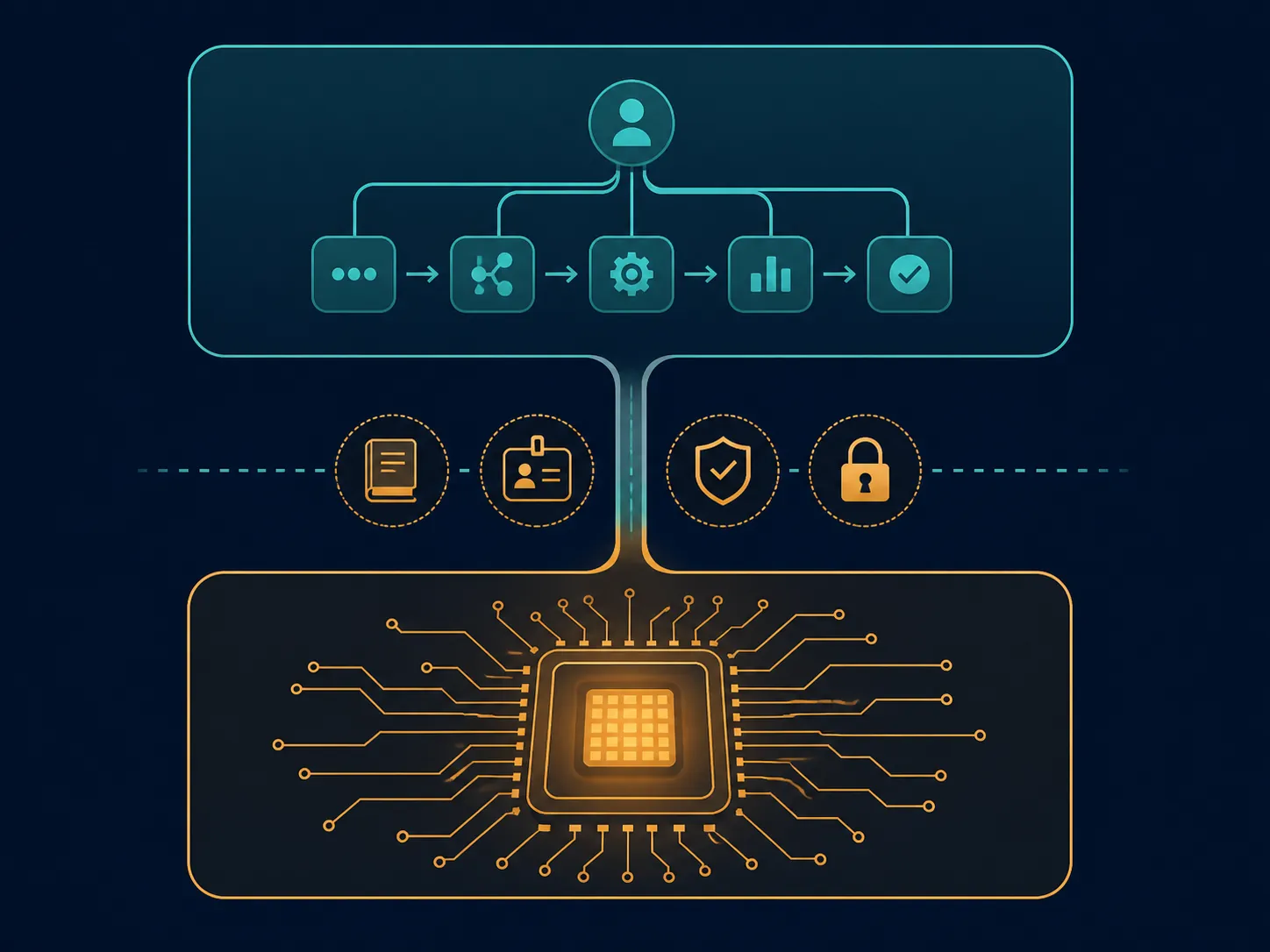
That convenience should not be mistaken for a control environment. Claude Code or OpenCode supplies an orchestration surface. DeepSeek supplies the model endpoint. Neither fact, by itself, answers who authenticated the user, whether the agent saw secrets in the repository, whether prompts are retained, whether a privileged document was pasted into context, whether reviewer approval was captured, or whether the firm can reconstruct the sequence after a client complaint.
The defensible setup looks more like software-release governance than chatbot adoption: non-privileged requirements, repository scoping, secret scanning, pull-request review, test coverage, logs that name the human approver, and a rule that generated code does not become legal advice merely because it touches a legal workflow. The agent may reduce drudge work. The supervising lawyer still owns the consequence.
Coding strength is the best evidence in DeepSeek’s favor
On coding evidence, DeepSeek V4 deserves attention. DeepSeek’s own release materials report V4-Pro-Max at 80.6% on SWE-bench Verified and 67.9% on Terminal-Bench 2.0. [2] Those are not legal-research scores, but they do support the narrow proposition that V4 can be a serious coding engine for agentic automation.
Independent testing is more restrained. NIST/CAISI placed DeepSeek V4 Pro about eight months behind the frontier, with IRT Elo 800 versus GPT-5.5’s 1260, PortBench 44%, and SWE-bench Verified 74% under the CAISI harness. [10] That is still useful performance. It is also a reminder that configuration and harness matter. A procurement memo should not collapse vendor Think-Max results, independent harness results, and non-thinking leaderboard entries into one blended “safe” score.
Mode labels are not decoration. BenchLM’s non-think listing for DeepSeek V4 Pro ranks it #104 of 129 for coding and #80 of 128 for agentic tasks. [11] That does not erase the stronger reported results under other configurations. It does mean a law firm must record which endpoint, mode, prompting policy, tool permissions, and agent harness it approved. “DeepSeek V4” is too vague for an incident report.
The reliability problem is not just hallucination; it is confidence when wrong
The hardest risk signal in the record is overconfidence. Artificial Analysis reports AA-Omniscience overconfidence at 94% for DeepSeek V4 Pro. [12] DeepInfra’s overview reports 96% for V4 Flash. [13] For a lawyer, that is not a cosmetic flaw. A model that is impressive when it knows the answer and assertive when it does not is exactly the kind of assistant that shifts time from drafting to cleanup.
There is a favorable counterpoint, but it should stay in its lane. Vectara’s hallucination leaderboard reports a strong 8.6% HHEM-2.3 grounded-summarization result for DeepSeek V4. [14] Grounded summarization is useful for workflows where the model is constrained to supplied text and a human checks the output. It does not prove that the model can research law, select controlling authority, distinguish dicta, or know when a jurisdictional split makes a tidy answer unsafe.
Legal reliability is unmeasured, not proven
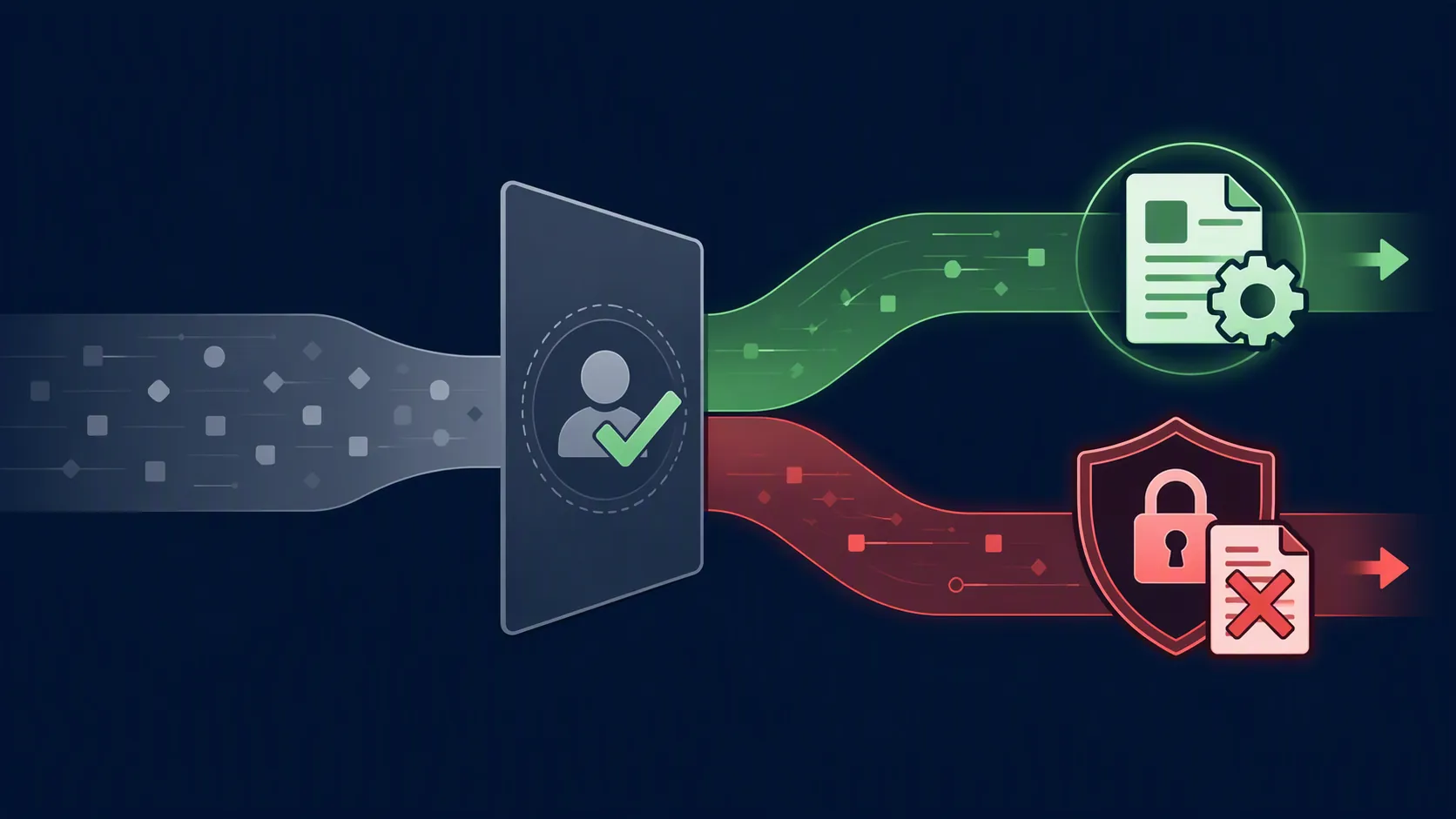
The public legal-benchmark record does not fill the gap for V4. VLAIR is relevant as context because LawNext reported that generalist and legal AI systems reached 80% legal-research accuracy versus lawyers’ 71%, while lawyers retained a 76%-to-70% authoritativeness advantage and models dropped about 11 points on multi-jurisdictional questions. [15] But that is not a DeepSeek V4 result. It cannot be used to certify V4 for legal research.
Stanford RegLab and HAI are also cautionary rather than model-specific here. Their work found that even legal-specific AI research tools hallucinated 17% to 34% of the time, and HAI’s public summary described legal models hallucinating in one out of six or more benchmarking queries. [16][17] The narrow lesson is not that DeepSeek V4 must perform the same way. The lesson is that legal reliability requires direct legal-domain evidence. In this record, that evidence is absent.
That absence matters more than it would in ordinary business automation. A bad intake-form component can be rolled back. A fabricated citation can enter a filing, trigger candor issues, and consume partner time in a sanctions response. The model’s coding strength does not travel automatically into legal authority selection.
Confidentiality blocks the hosted path for ordinary privileged use
The privilege problem is not solved by saying the model is open-weight. A firm might separately evaluate local or private deployments, but the official Claude Code/OpenCode path described in the integration guide points to DeepSeek’s hosted API endpoint. [1] For ordinary hosted use, the confidentiality question is immediate: what data leaves the firm, where is it processed, what is retained, who can access logs, and can the firm satisfy client commitments?
On the materials reviewed, I would not approve privileged prompts into the hosted DeepSeek API. DeepSeek privacy materials identify collection and storage of personal data in the PRC, and DeepSeek-related legal-team guidance separately warns that outputs may contain errors and are not professional advice. [5] Bloomberg Law reported that Fox Rothschild blocked DeepSeek for attorney use in January 2025. [6] That is not a universal rule for every deployment architecture, but it is enough to block casual hosted use with client-identifying or privileged content.
The missing enterprise-cloud routing path is also practical, not abstract. Large firms expect identity integration, matter-level controls, audit logs, retention settings, and a way to prove which user sent which content to which model. 273 Ventures’ Claude Code deployment lessons are a useful reminder that even with a capable coding agent, law-firm deployment turns on per-user identity, auditability, and administrative control. [7]
Price helps the business case, not the ethics analysis
DeepSeek’s low-cost profile is part of the appeal, especially for high-volume code scaffolding and test generation. The price/performance case can be real without becoming a permission slip. If the workflow contains privileged facts, client communications, or legal propositions that may reach a court, cheap tokens do not reduce the supervising lawyer’s duties.
I would also keep cached-input pricing out of a final approval memo until checked against DeepSeek’s official pricing page. The materials reviewed contain a decimal-place discrepancy between secondary figures for cached input pricing, including $0.0145 per 1M and $0.145 per 1M. [10][13] That discrepancy does not change the workflow verdict, but it is exactly the kind of detail procurement teams should verify before circulating savings estimates.
What a defensible pilot looks like
A defensible pilot should start with a repository and data boundary, not with a model leaderboard. The safest initial projects are the ones where the input can be non-confidential and the output can be tested like software: intake-form generators, document-assembly scripts, schema migrations, validation rules, anonymized extraction scaffolds, and internal QA tools.
- Use synthetic, public, or irreversibly anonymized examples only.
- Scope the agent to a non-privileged repository with no production secrets.
- Require pull requests rather than direct commits to production branches.
- Record model name, endpoint, mode, prompt policy, tool permissions, reviewer, and approval time.
- Test generated code against lawyer-approved workflow requirements.
- Forbid generated legal citations, legal conclusions, or client communications unless independently verified and approved by a responsible lawyer.
The pilot should also state what success does not mean. If the agent cuts development time on a document-assembly script, that proves something about code scaffolding. It does not prove the model can identify controlling law or safely summarize privileged evidence.
Filing risk is now an operational record-keeping problem
The sanctions cases make the recordkeeping point concrete. Norton Rose Fulbright’s 2026 update reports that in Gamez v. County of Fresno, the court discharged sanctions only after accepting good-faith reliance on a vendor’s anti-hallucination marketing, while warning that such assurances are not a defense. [8] The same update lists monetary sanctions in Fletcher and Whiting. [8]
Reuters reported that the Ninth Circuit’s June 2026 order required two lawyers to disclose which AI program they used for two years. [9] That is a sharp procurement lesson: model identity, workflow identity, and reviewer identity belong in the file. A firm that cannot say which system generated a passage will be in a poor position when the court asks.
Bottom-line procurement verdict
DeepSeek V4 is a practical coding engine for non-privileged legal-ops scaffolding. The official Claude Code/OpenCode integration is real, the coding results are strong enough to justify a controlled pilot, and the open-weight MIT-licensed model profile will interest teams that want lower-cost automation.
The same record does not support privileged hosted use, unsupervised legal content, or unchecked citations. ABA Formal Opinion 512 keeps competence, confidentiality, candor, and supervision duties on the lawyers and their organizations. [4] V4’s legal reliability is unmeasured rather than proven, and its overconfidence signal makes verification a control requirement rather than a preference.
For adjacent records, compare the Flash-only benchmark view in DeepSeek V4 Flash agent benchmarks, the separate legal-research comparison in DeepSeek V4 vs GPT-5.6 legal research, the verification workflow in AI legal research hallucinations verification protocol, and the sanctions pattern record at SSA AI sanctions 2026 pattern.
References
- Coding Agents — DeepSeek API Docs
- DeepSeek-V4 Release — DeepSeek API Docs, April 24, 2026
- DeepSeek-V4-Pro — Hugging Face
- ABA Formal Opinion 512 — American Bar Association
- DeepSeek for Legal Teams — chat-deep.ai
- Fox Rothschild Blocks DeepSeek’s AI Model for Attorney Use — Bloomberg Law, January 2025
- Deploying Claude Code Safely in Law Firms — 273 Ventures
- AI in litigation: update on Gen AI sanctions in 2026 — Norton Rose Fulbright
- US appeals court sanctions lawyers over AI hallucinations, lack of candor — Reuters, June 3, 2026
- CAISI evaluation of DeepSeek V4 Pro — NIST, May 2026
- DeepSeek V4 Pro — BenchLM
- Omniscience — Artificial Analysis
- DeepSeek V4 Pro Model Overview — DeepInfra
- Hallucination Leaderboard — Vectara
- VALS AI’s Latest Benchmark Finds Legal and General AI Now Outperform Lawyers in Legal Research Accuracy — LawNext, October 2025
- Hallucination-Free? Assessing the Reliability of Leading AI Legal Research Tools — Stanford RegLab
- AI on Trial: Legal Models Hallucinate in 1 out of 6 or More Benchmarking Queries — Stanford HAI
Chronological incident history
No sanction cases have named this tool in the tracked record set to date. This does not imply the tool is safe — see Risk Digest for ongoing monitoring.
← Compare peer toolsReport a correction or tip
Spotted an outdated figure, a misstated fact, or a ruling this tool profile should reflect? Public comments are disabled for this content given the professional cost of a misreported case outcome, penalty amount, or rule text — use the structured correction channel instead.
Report a correction or tip for this record →