
Instagram DMs Can Now Be Used as Court Evidence After Encryption Drop
Meta ended end-to-end encryption for Instagram DMs in May 2026, making previously inaccessible messages obtainable through lawful legal process. This article explains how litigators can now request Instagram DM content, the required legal thresholds, and the preservation risks that remain.
- Hallucination rate
- Not measured / undisclosed
As of May 8, 2026, Instagram direct messages are no longer protected by Meta's optional end-to-end encryption. That does not make every Instagram DM automatically admissible in court. It does mean that message content Meta previously could not access may now be obtainable when the right legal process is served before the data is gone.[1]
For anyone asking whether Instagram DMs are admissible in court, the practical answer starts with three separate questions: whether Meta can produce the data, what legal authority is required to compel it, and whether the resulting material can be authenticated and admitted under ordinary evidence rules. The May change affects the first question most directly. It does not erase the Stored Communications Act, solve preservation failures, or turn a screenshot into a complete evidentiary record.
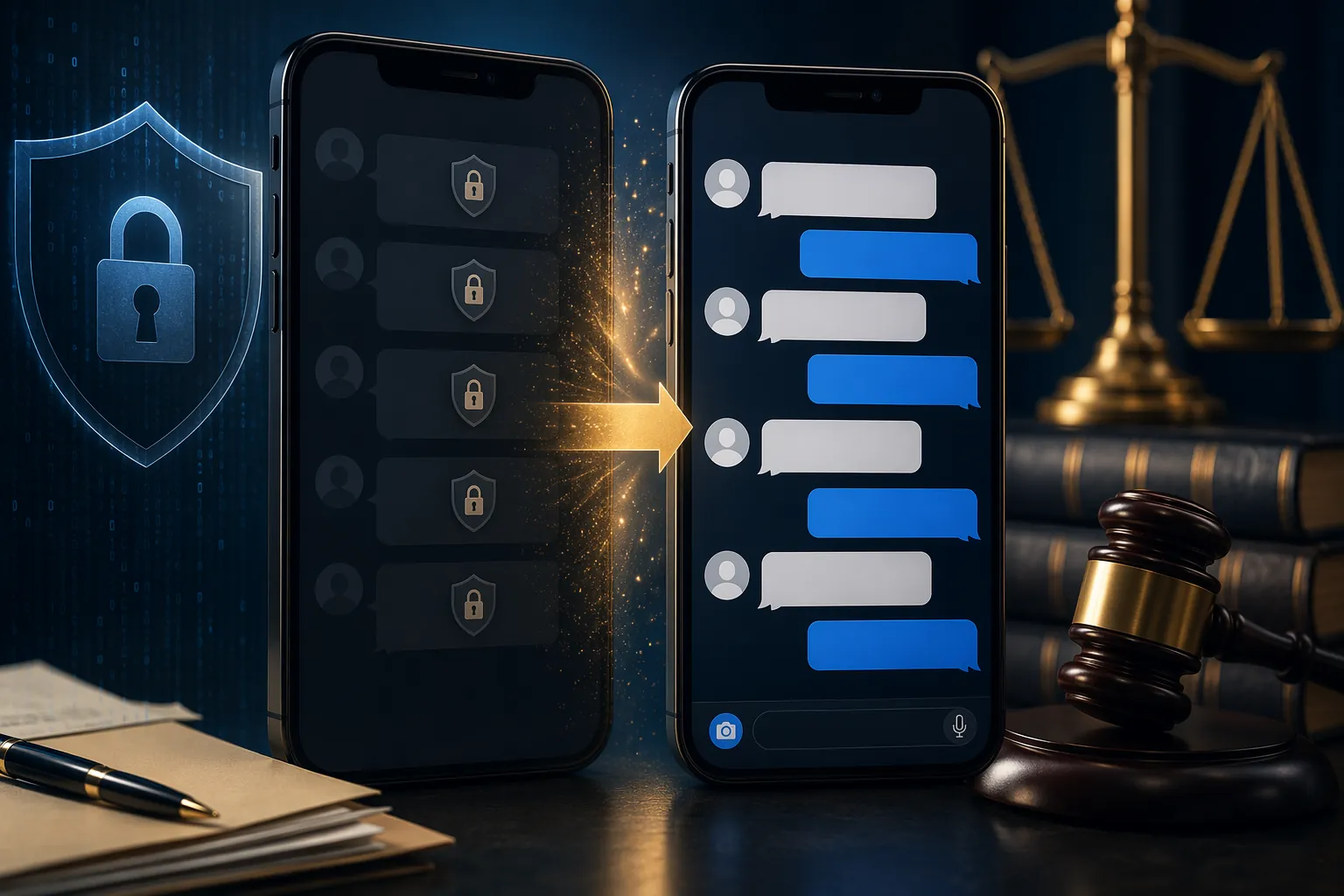
The Change Is About Access, Not Automatic Admission
Meta's reversal was recent and contested. Help Net Security reported that Meta was ending optional end-to-end encrypted messaging on Instagram, while the Electronic Frontier Foundation described the move as a broken promise and noted that Instagram's prior encrypted DMs were opt-in and limited in availability.[1][2]
The timing was not subtle. Independent analysis tied the decision to two March 2026 verdicts against Meta: a Los Angeles KGM verdict of $6 million, with Meta found 70% liable, and a New Mexico verdict of $375 million over alleged failures to protect children. The same analysis placed the change shortly before the Take It Down Act's May 19, 2026 effective date and reported that only about 10% of eligible users had opted into Instagram's encrypted DM feature.[3]
Those facts help explain why the move is drawing attention, but they do not change the litigation mechanics. A civil party cannot get Instagram DM content from Meta merely by issuing a subpoena. A law enforcement agency or litigant still has to fit the request to the category of records sought and the legal threshold that category requires.
The Legal Process Ladder Still Controls
Meta directs law enforcement and civil litigants to submit preservation requests through its Law Enforcement Online Request System, known as LEORS, at facebook.com/records. The Instagram Help Center identifies that system as the channel for preservation requests and legal process.[4]
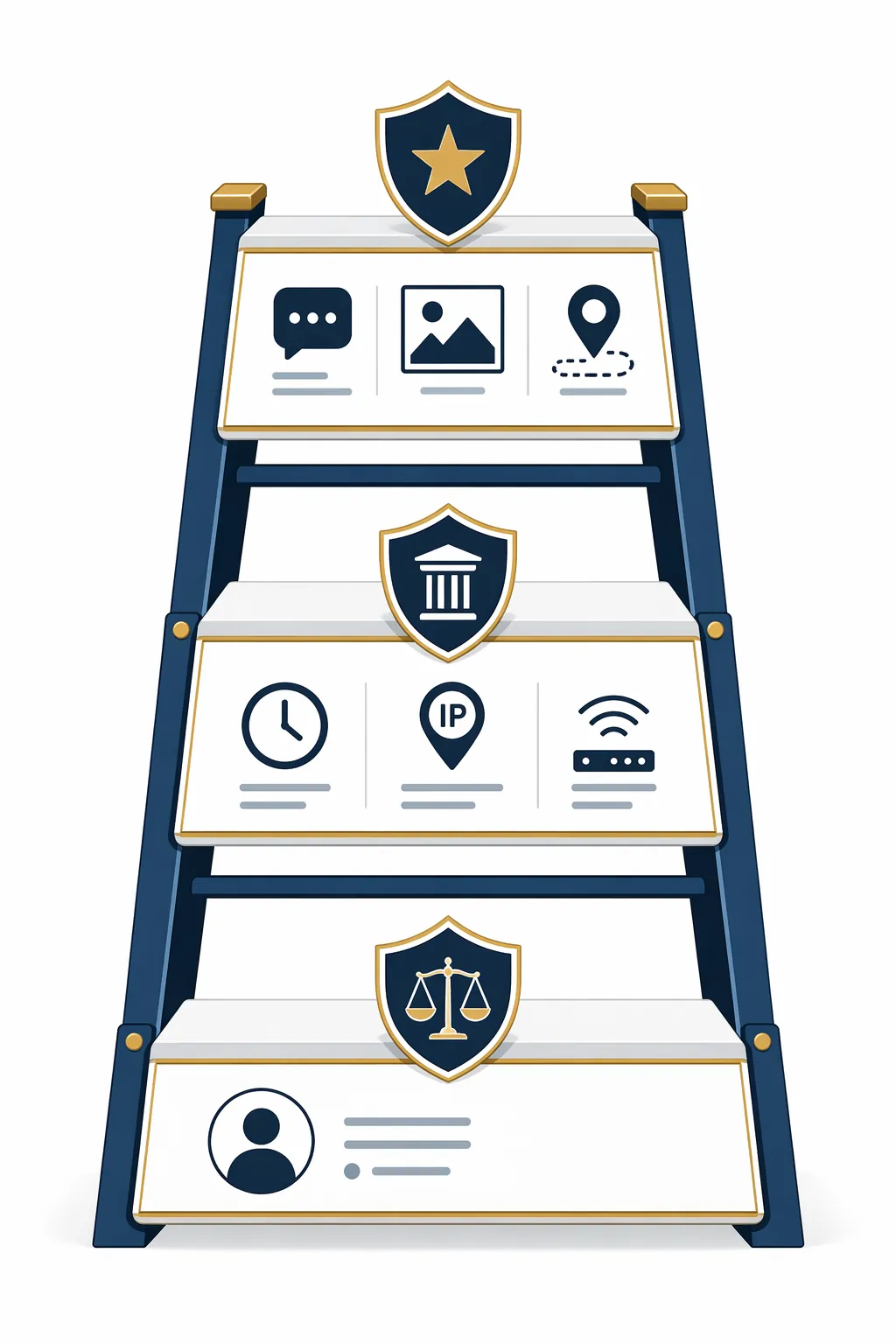
The important distinction is content versus non-content. Basic subscriber information sits at the bottom of the ladder. Non-content transactional records sit in the middle. The actual substance of communications sits at the top.
| What is sought | Typical legal process | What that means for Instagram DMs |
|---|---|---|
| Basic subscriber records | Subpoena | A subpoena may reach records such as name, email, login IPs, and service duration. |
| Non-content records | Section 2703(d) court order | A court order may be required for records such as IP addresses or message subject-line-type non-content information. |
| Message content and related content data | Search warrant | A warrant is required for DM content, photos, comments, and location data. |
That framework matters because the encryption change does not lower the warrant threshold for content. It changes what Meta can technically produce once that threshold is met. Before the May 2026 reversal, end-to-end encrypted Instagram DM content could be inaccessible to Meta even if legal process existed. After the reversal, Meta may be able to return content for accounts and time periods covered by valid process, subject to what it has retained.[1][4]
For civil litigators, this is where the caption on the subpoena can become misleading. If the requested material is content, a subpoena to Meta is not the tool that gets it. The more realistic civil workflow may involve preservation through LEORS, party discovery directed to the account holder, forensic or defensible collection from devices or accounts, and, where available, coordination with criminal process or a court order that fits the Stored Communications Act limits.
Preservation Is the Part That Still Fails First
The strongest new fact for discovery is that Meta can now be a source of Instagram DM content in a way it was not when messages were end-to-end encrypted. The weakest link remains time. Meta states that it preserves account records for 90 days upon receipt of a valid legal request, but that preservation has to be requested before the relevant records disappear.[4]
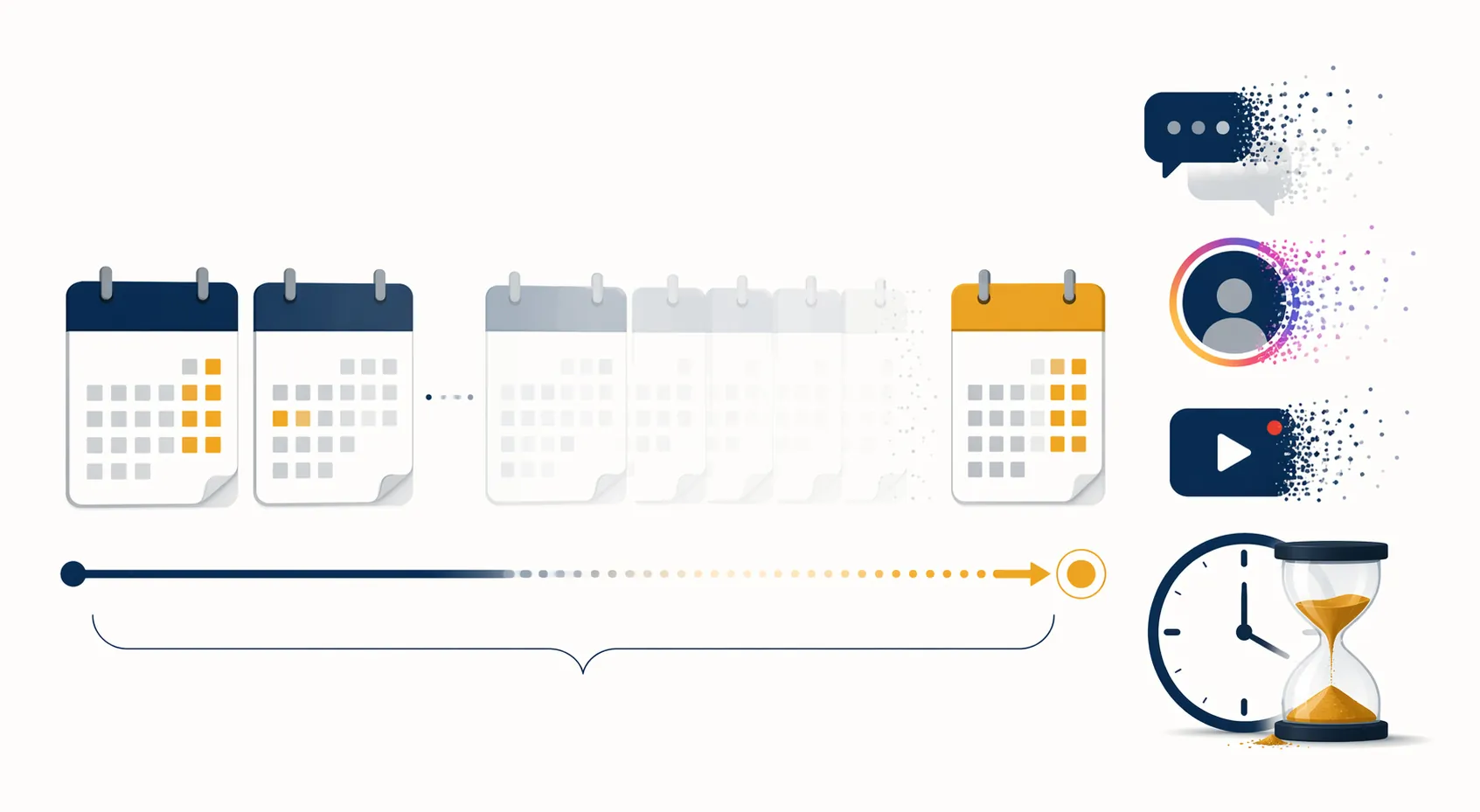
Ephemeral Instagram features remain a separate hazard. Everlaw's discussion of ephemeral messaging identifies Stories, Vanish Mode messages, and Live videos as content that may auto-delete within 24 hours and may not be reliably retained by the platform, even after the encryption change.[5]
That creates a simple but unforgiving sequence. A lawyer learns that a witness used Instagram DMs. A litigation hold goes out to the client or custodian. A preservation request goes to Meta through LEORS. Device and account collection are evaluated. If the team waits until motion practice to think about the platform, Stories and Vanish Mode content may already be beyond reach.
Courts have already treated social media deletion as sanctionable when preservation duties attach. Everlaw cites Gatto v. United Air Lines, a 2013 District of New Jersey case, and Liggins v. Wills, a 2022 Eastern District of California case, as examples of courts imposing consequences for deleted social media evidence.[5]
The regulatory direction is similar. Everlaw also notes more than $1.3 billion in penalties against financial firms for failures to preserve off-channel electronic communications.[5] Instagram DMs are not the same as broker-dealer texts, and that enforcement history should not be stretched into a universal rule. It does show that informal electronic channels are no longer safely treated as peripheral once they are used for relevant communications.
Screenshots Are Useful, but They Are Not the Whole Record
A screenshot may be the first thing a client has, and sometimes it is the only thing anyone preserved. It can orient the team, support a preservation letter, or justify targeted discovery. But a screenshot alone often leaves open the questions that matter in court: who controlled the account, whether the image is complete, whether timestamps are reliable, whether messages were deleted or edited outside the capture, and whether the conversation can be tied to other evidence.
The May 2026 encryption change may improve the ability to compare a screenshot against records from Meta or against a defensible account collection. That is a practical improvement, not an authentication shortcut. Courts still look for ordinary foundations: testimony from a participant, distinctive content, account ownership evidence, metadata, corroborating communications, device records, or other facts linking the message to the person alleged to have sent or received it.
Collection vendors are right to emphasize chain of custody, complete captures, metadata, and repeatable methods. They are less persuasive when authentication anxiety is presented as if it can be solved by a tool alone. The collection method can make the evidence easier to defend. It cannot supply relevance, authorship, or admissibility by itself.
What Counsel Should Do When Instagram DMs Become Relevant
The first move is not to debate admissibility in the abstract. It is to prevent loss while the team works out the path to evidence.
- Identify the account, username, custodian, approximate date range, and whether the relevant exchange used ordinary DMs, Vanish Mode, Stories, or Live.
- Issue a litigation hold that specifically names Instagram messages and instructs custodians not to delete, alter, unsend, or disable relevant content.
- Submit a preservation request through Meta's LEORS channel quickly, recognizing Meta's 90-day preservation period for valid requests.[4]
- Match the request to the legal threshold: subpoena for basic subscriber records, Section 2703(d) order for non-content records, and warrant for content.
- Collect from the client-side source where appropriate, preserving context, timestamps, account information, surrounding messages, and chain-of-custody documentation.
- Treat screenshots as leads or supporting exhibits unless the foundation can address completeness, authorship, and alteration.
This is especially important in cases involving harassment, employment disputes, fraud, family-law conflicts, product claims, and witness impeachment, where Instagram conversations may be casual in tone but material in substance. The fact that a client used a social app does not make the message informal for discovery purposes.
The Privacy Debate Is Real, but It Does Not Replace the Workflow
The EFF's criticism should not be treated as background noise. Its point is that Meta had offered encrypted Instagram DMs and then withdrew that protection, leaving users with less private messaging on that platform than they may have expected.[2] That matters for policy, user trust, and the scope of platform power.
It also matters because the platform split can confuse clients and lawyers. The change described here concerns Instagram DMs. WhatsApp and Facebook Messenger retained default end-to-end encryption, according to the same reporting and advocacy materials.[1][2] A discovery plan that treats all Meta messaging products as technically identical will overreach in one place and miss available evidence in another.
There is also no post-May 2026 appellate rule declaring Instagram DMs more trustworthy because Meta can access them. The change is too new for that. Courts will still apply ordinary evidentiary rules to preservation, authentication, relevance, hearsay, and the governing forum's requirements.
The Narrow Takeaway
Instagram DMs can be used as evidence in court, and Meta's May 2026 encryption reversal makes some DM content newly obtainable from the platform. The access route still runs through LEORS and the Stored Communications Act ladder. Subscriber records may be available by subpoena. Non-content records may require a Section 2703(d) order. Message content, photos, comments, and location data require a warrant.[4]
The harder practical point is preservation. A 90-day preservation response helps only if someone sends a valid request in time, and it does not guarantee rescue of Stories, Vanish Mode messages, or Live content that may auto-delete before the request lands.[4][5] The evidence is more reachable than it was before May 8, 2026. It is not self-proving, not available through a mere subpoena for content, and not safe from loss unless preservation starts quickly.
References
- Meta ditches end-to-end encrypted messaging on Instagram, Help Net Security
- Broken Promises: RIP Instagram's End-to-End Encrypted DMs, Electronic Frontier Foundation
- The Real Reason Meta Dropped Instagram Encryption, CyberSafetyGuy
- Information for law enforcement, Instagram Help Center
- What to Know About Ephemeral Messaging in Litigation, Everlaw
Chronological incident history
No sanction cases have named this tool in the tracked record set to date. This does not imply the tool is safe — see Risk Digest for ongoing monitoring.
← Compare peer toolsReport a correction or tip
Spotted an outdated figure, a misstated fact, or a ruling this tool profile should reflect? Public comments are disabled for this content given the professional cost of a misreported case outcome, penalty amount, or rule text — use the structured correction channel instead.
Report a correction or tip for this record →