
Micron Stock: Buy or Wait on AI Demand and Three Active Lawsuits?
Weighs Micron's AI-driven revenue surge against three active litigation fronts to determine whether investors should buy now or wait. Provides a structured decision framework that accounts for the different timeframe and probability curves of the DRAM antitrust, securities fraud, and patent infringement cases.
- Tool
- harvey-ai
- Benchmark source
- Investopedia
- Hallucination rate
- Not measured / undisclosed
- Test methodology
- Financial analysis and litigation review
- Test date
- Jul 30, 2026
A buy-or-wait analysis of Micron stock has to begin with an uncomfortable pairing: the company is producing the kind of AI-memory numbers investors usually do not want to wait on, while three active lawsuits now sit on separate procedural clocks. This is editorial analysis, not investment or legal advice. The cases discussed here are active and early; the complaints are allegations, not adjudicated facts. The financial data comes from Micron’s June 2026 earnings materials as reflected in market coverage, while the litigation facts are tied to named complaints, docket reporting, or case-focused reporting.

The AI-memory numbers are too large to treat as background noise
Micron’s Q3 FY2026 results explain why the legal screen matters at all. The company reported $41.46 billion in revenue, $25.11 in EPS, 84.6% gross margins, and 346% year-over-year revenue growth, driven by AI-related memory demand.[1] Those figures are not the usual “AI adjacency” story in which a company borrows the vocabulary of the cycle before the income statement catches up. Here, the income statement has already arrived.
The supply commentary is just as important as the earnings line. Micron’s HBM was reported sold out through 2026, with the company meeting only about 50% to 66% of HBM demand, while hyperscaler capital spending was cited at roughly $750 billion.[1][2] That creates a real opportunity cost for waiting. A clean docket may come later than the next leg of AI-memory pricing.
It also creates a cleaner way to read the lawsuits. The question is not whether litigation language sounds severe; it often does. The question is which case can change the risk profile before the AI-memory cycle has paid the investor for staying exposed.
A legal-risk scorecard by clock and consequence
| Legal front | What is alleged | Investor clock | Main consequence if it advances |
|---|---|---|---|
| Klein v. Micron securities class action | Micron allegedly overhyped demand and caused a stock slip when the market corrected its expectations. | Nearest procedural overhang because it was filed in January 2025 and follows a more familiar motion-to-dismiss path. | Dismissal could remove a near-term overhang; survival could open a document and witness-discovery phase. |
| Garciaguirre v. Samsung, SK hynix, and Micron DRAM antitrust action | Plaintiffs allege a Sherman Act Section 1 conspiracy tied to DRAM pricing, supply restriction, and a shift toward HBM. | Less immediate than Klein, but more strategically dangerous if it survives dismissal. | Discovery into HBM allocation, supply planning, and competitor-parallel conduct could become the real risk event. |
| Advanced Memory Technologies v. Micron patent suit | AMT alleges infringement of five Panasonic-sourced patents and seeks enhanced damages. | Early-stage and asymmetric; probability and remedy path matter more than the headline demand. | A damages case is manageable; any early injunction movement would matter disproportionately because it could touch shipments. |
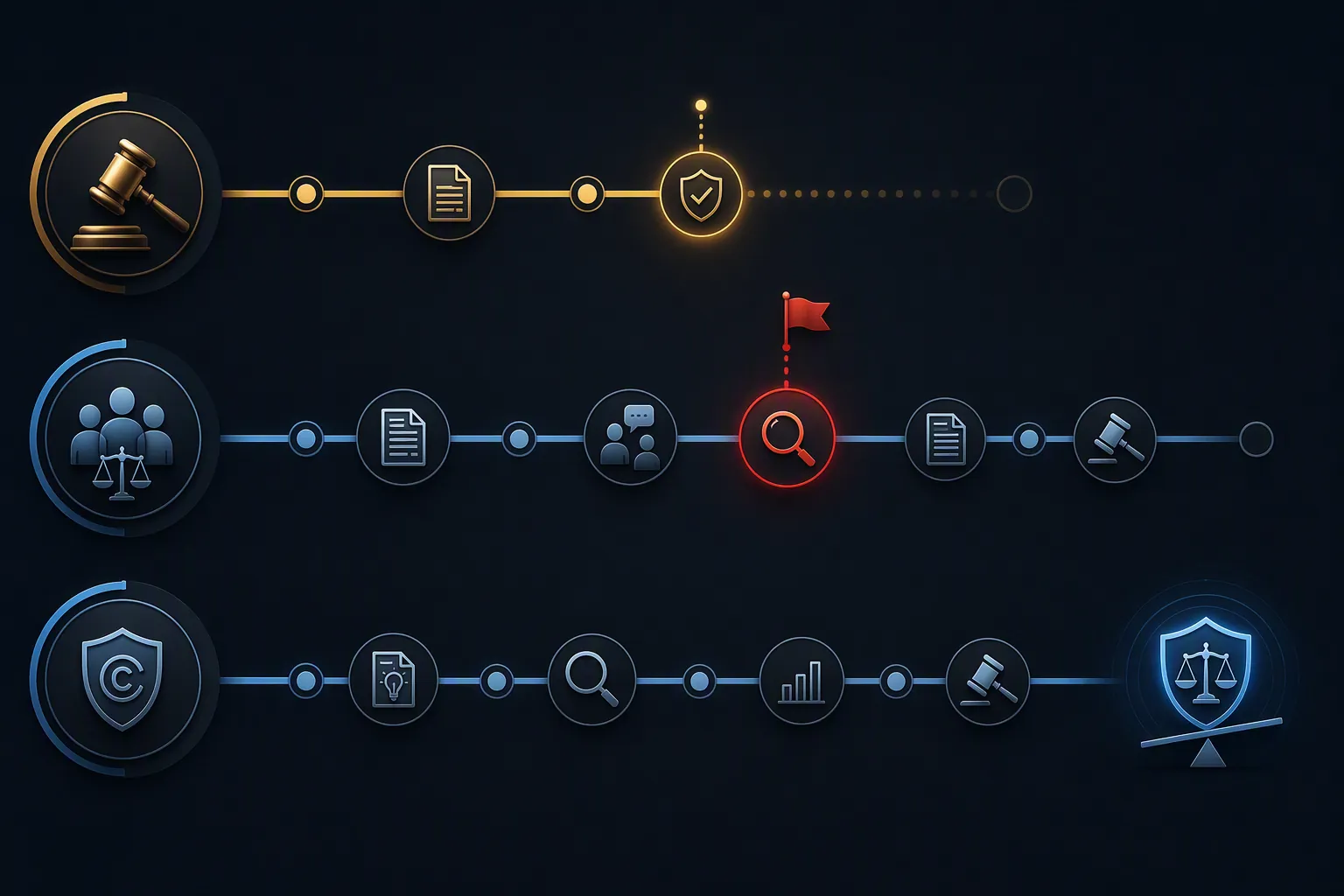
The error is to compress those three rows into one “lawsuit overhang.” A securities class action, an antitrust discovery fight, and a patent-injunction threat do not mature the same way. They do not settle for the same reasons. They do not threaten the business through the same legal mechanism.
The DRAM antitrust case is the one to watch if it reaches discovery
Garciaguirre v. Samsung, SK hynix, and Micron was filed on June 25, 2026, in the Northern District of California, and reporting on the complaint describes Sherman Act Section 1 allegations that the major DRAM producers coordinated supply and pricing amid record memory costs.[3] The headline number is the alleged 700% DRAM price increase, but the more important feature is the plaintiffs’ theory that HBM expansion can help prove coordinated conventional-DRAM supply restriction.[3][4]
That distinction matters because memory investors have seen cartel history before. The 2002 DRAM price-fixing era produced criminal enforcement and large fines, including a reported $300 million fine for Samsung and $185 million for Hynix.[5] But historical memory is not proof of a new conspiracy. A later DRAM class-action effort tied to the 2018 period failed, which is a useful caution against converting parallel price movements into liability before the pleading record is tested.[6]
The HBM-shift theory is different from a bare “prices went up, therefore collusion” complaint. Plaintiffs are trying to make capacity allocation do legal work. If HBM production absorbed resources that otherwise would have gone to conventional DRAM, and if multiple producers made similar moves, plaintiffs will try to frame those decisions as coordinated conduct rather than independent responses to AI demand.

The defense-side answer is visible in Micron’s own supply commentary. If the company is meeting only about 50% to 66% of HBM demand and is sold out through 2026, rising prices can be explained by real scarcity rather than collusion.[1][2] That does not make the case disappear. It does mean the plaintiffs need more than an alarming price chart.
The procedural trigger is survival into discovery. Before discovery, the antitrust complaint is a set of allegations competing against a plausible supply-demand explanation. After discovery begins, the risk changes: internal communications about allocation, pricing assumptions, HBM customer prioritization, and capacity planning become reviewable. For a portfolio manager, that is the step-change, not the mere existence of the complaint.
Klein is the nearer overhang because securities cases can clear or harden earlier
Klein v. Micron, filed in January 2025 in the Southern District of Florida, alleges that Micron caused a stock slip by overhyping demand.[7] That is a narrower claim than the DRAM antitrust theory. It does not need to prove an industry conspiracy. It asks whether investors were misled by company statements and whether the later market reaction can be tied to those alleged misstatements.
The broader environment makes the case worth taking seriously without assuming it is strong. Skadden’s 2026 securities-litigation outlook identified 161 new federal and state class actions through September 2025 and noted the growth of AI-related claims, including claims that companies overstated AI demand, capability, or revenue durability.[8] That trend is adoption by plaintiffs, not proof of effectiveness. A rising category of complaints can still face a high dismissal rate if the pleadings do not identify particularized facts.
For near-term investors, the motion-to-dismiss path matters more than speculative damages math. A dismissal would remove the most time-bound legal overhang. Survival would not establish liability, but it would move the case into a more expensive and more revealing phase. In securities litigation, discovery can matter as much for what it exposes as for what it ultimately proves.
There is also a pleading-standard issue. Recent NVIDIA-related pleading fights have made district courts less willing to credit expert-opinion allegations unless they are grounded in particularized facts. That is important for Klein because AI-demand securities claims often lean on the gap between optimistic public framing and later market disappointment. The gap alone is not always enough.
The AMT patent suit is lower-probability but asymmetric
Advanced Memory Technologies, LLC v. Micron Technology, Inc. was filed on July 6, 2026, in the District of Idaho and appears on the Justia docket as case number 1:2026cv00420.[9] The suit involves five Panasonic-sourced patents and seeks enhanced damages, including a triple-damages demand.[9] Reporting on the dispute ties the asserted technology to DRAM chips used by customers including Apple, Dell, and IBM, and notes potential relevance to Micron’s $50 billion Boise fab exposure.[10]
A patent damages case would be one kind of risk. An injunction threat would be another. Since the Supreme Court’s 2006 eBay v. MercExchange decision, patent plaintiffs seeking injunctions must satisfy an equitable test rather than receive an automatic exclusionary remedy after proving infringement.[11] Available post-eBay data places non-practicing-entity injunction success at roughly 15%, which is low enough to resist panic and high enough to avoid dismissing the issue as impossible.[11]
That is why the patent case belongs on the scorecard even if it should not dominate it. A royalty dispute or damages settlement can be modeled. A preliminary-injunction motion aimed at covered DRAM products would be harder to ignore, even if the odds are modest. The closest DRAM-patent precedent cited here is Rambus’s $280 million settlement in 2005, a reminder that memory patent fights can become financially meaningful without necessarily becoming shipment-stopping events.[12]
Export controls are a background layer, not a fourth equal lawsuit
AI-chip legal risk is broader than these three dockets, but not every risk belongs in the same decision box. Morrison Foerster’s export-control analysis points to a 23% BIS budget increase, Operation Gatekeeper’s alleged $160 million smuggling network, and the RASA legislation passing the House by a 369-22 vote.[13] Those facts show a tightening enforcement environment around AI-chip flows.
For Micron’s buy-or-wait question, export controls are a background sensitivity rather than a present case-specific trigger. They could matter if enforcement activity later touches Micron products, customers, or disclosures. On the current record, they should not be weighted the same way as Klein’s dismissal path, Garciaguirre’s discovery risk, or any early injunction motion in AMT.
Buy now or wait: the procedural triggers that matter
Buying Micron now is a bet that AI-memory scarcity and earnings power outrun early-stage litigation noise. That is not an irrational bet. The company’s reported growth, HBM sellout position, and unmet demand are unusually strong facts for a semiconductor company facing legal challenges. They also give Micron a non-collusive explanation for at least part of the pricing pressure that antitrust plaintiffs will try to characterize differently.
Waiting is also rational if the mandate requires cleaner docket visibility. The three most relevant triggers are straightforward:
- Klein: wait for the motion-to-dismiss path if securities-disclosure discovery would affect position sizing or investment-committee approval.
- Garciaguirre: wait for the pleading survival question if antitrust discovery into HBM allocation and conventional-DRAM capacity decisions would be material to the thesis.
- AMT: wait for any early injunction movement if shipment continuity, customer exposure, or Boise-fab risk is a hard constraint.
The 700% DRAM price-increase allegation should not be ignored, but it should not be treated as a verdict. The post-eBay injunction risk should not be exaggerated, but it should not be priced at zero. The cleanest current distinction is this: Micron’s fundamentals argue against waiting for perfect legal clarity, while the antitrust and patent remedies argue against pretending all litigation overhangs are merely headline risk.
References
- Micron Stock Soars as Results Blow Past Wall Street Expectations Amid Booming AI Demand — Investopedia — June 2026
- Micron Hit With Price-Fixing Lawsuit: Real Collusion or Simple Supply and Demand? — 24/7 Wall St.
- Samsung, SK hynix, and Micron sued over alleged DRAM price fixing amid record memory costs — Tom's Hardware
- New DRAM Price-Fixing Case Against Samsung, SK hynix, and Micron Tests Whether HBM Expansion Can Prove Collusion — TrendForce
- DRAM industry price fixing — Wikipedia
- Ninth Circuit dismissal of 2018 DRAM class action — Ninth Circuit
- Micron Caused Stock Slip by Overhyping Demand, Lawsuit Claims — Bloomberg Law — January 2025
- AI-Related Claims and Other Securities Litigation Trends to Watch — Skadden 2026 Insights — 2026
- Advanced Memory Technologies, LLC v. Micron Technology, Inc. — Justia Docket — July 6, 2026
- Idaho trial looms in Micron patent fight over AI memory chips — Idaho Statesman
- eBay Inc. v. MercExchange, L.L.C. — U.S. Supreme Court — 2006
- Rambus $280M settlement — 2005
- Managing Export Control Risks in the AI Chip Ecosystem — Morrison Foerster
Chronological incident history
No sanction cases have named this tool in the tracked record set to date. This does not imply the tool is safe — see Risk Digest for ongoing monitoring.
← Compare peer toolsReport a correction or tip
Spotted an outdated figure, a misstated fact, or a ruling this tool profile should reflect? Public comments are disabled for this content given the professional cost of a misreported case outcome, penalty amount, or rule text — use the structured correction channel instead.
Report a correction or tip for this record →