
What the Nolan Wells autopsy reveals about second autopsies in litigation
The Nolan Wells independent autopsy shows that second autopsies are structurally constrained litigation tactics. This article examines their evidentiary limitations in criminal and civil proceedings, including Confrontation Clause hurdles and information asymmetry with state findings.
- Hallucination rate
- Not measured / undisclosed
The most important legal fact about the Nolan Wells independent autopsy is also the fact most likely to disappoint anyone expecting a clean second answer: Dr. Roger Mitchell did not determine a cause or manner of death. On July 22, 2026, the former Washington, D.C. chief medical examiner and Howard University forensic pathology chair described findings that raised questions, including red discoloration he said was not explained by decomposition alone, but he also identified the missing pieces that kept him from answering the central medical questions. The throat and neck structures had already been removed during the first autopsy. He could not evaluate the airway or lungs for water. He could not assess stomach contents. He had not reviewed toxicology. The resulting opinion was not homicide, drowning, accident, or natural death. It was undetermined.[1]
That is the paradox at the center of the legal implications. The report gave the family and its lawyers a counter-record. It created material that officials, journalists, and eventually litigants may have to answer. At the same time, it documented why a second autopsy can be weaker on the very issues the public most wants resolved, especially when the state still controls the first autopsy record and unreleased toxicology.
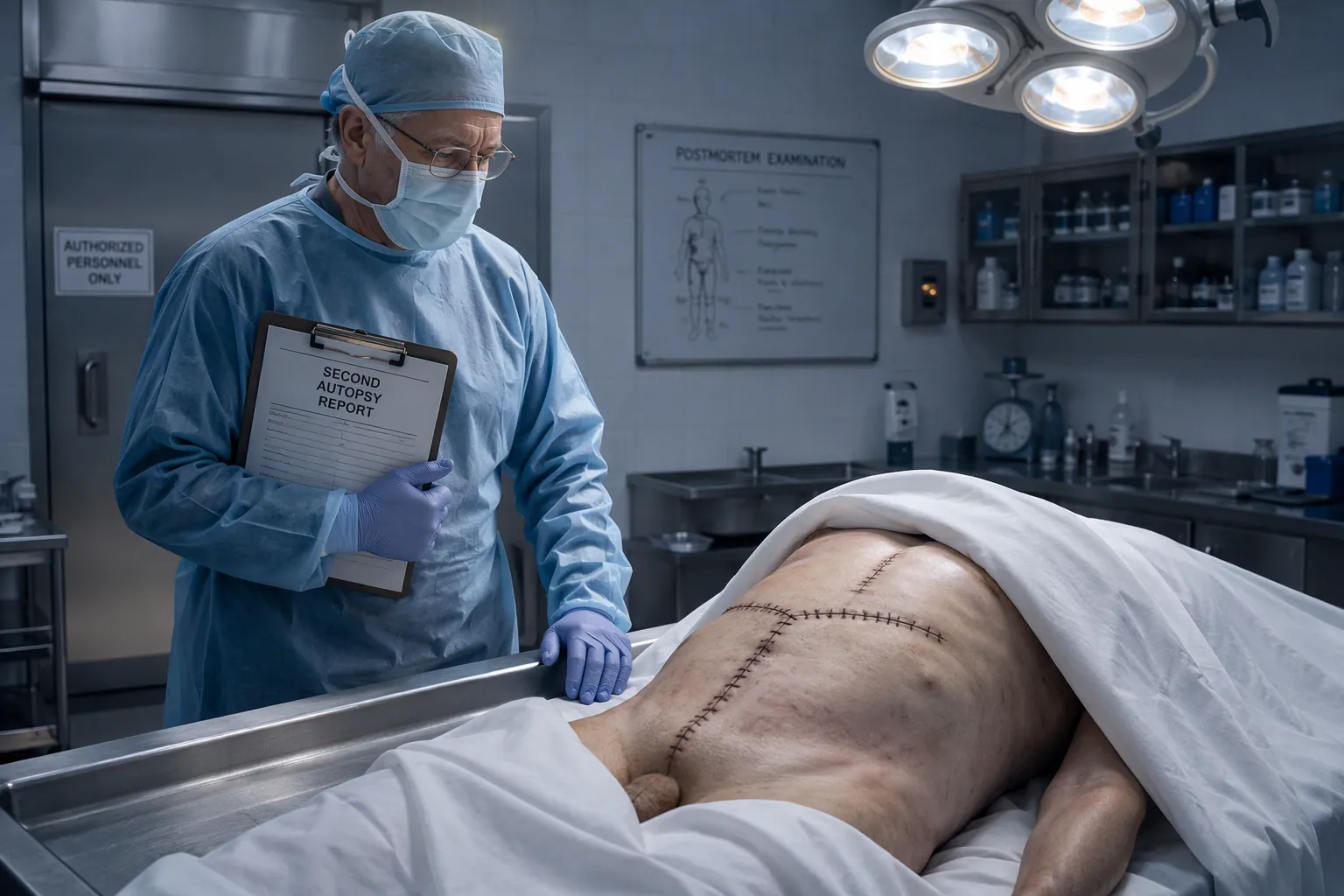
The Second Examiner Starts After the Body Has Already Been Changed
Second autopsies are often described as independent, but independence does not restore anatomy. It changes who is looking, not what remains available to be examined.
In Wells’s case, Mitchell’s most consequential findings were limits. The first autopsy had removed the throat and neck structures. That matters because neck anatomy can be central to evaluating strangulation, compression, airway obstruction, or other trauma theories. Once those structures are removed and preserved elsewhere, the second examiner is not making the same examination the first examiner made. He is reviewing an altered body, any available photographs, any retained tissues, and whatever information the first examiner or agency releases.
The drowning question was similarly constrained. Mitchell reportedly could not evaluate the airway or lungs for water, and he could not examine stomach contents. Those gaps matter because a freshwater drowning theory is not tested by a generic external review of the body. It depends on internal findings, scene information, and laboratory results that may be unavailable or less informative after the first postmortem examination has been completed.[1]
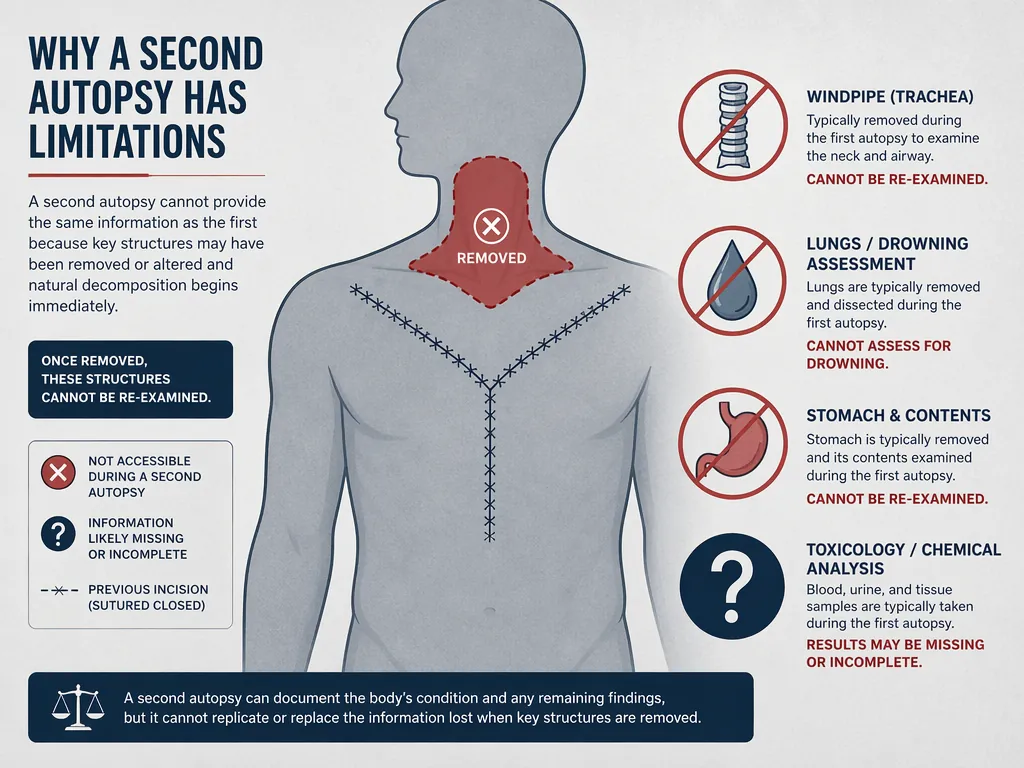
The National Association of Medical Examiners has warned about exactly this problem. Its position paper describes second autopsies as “technically and interpretatively difficult” because organs may already have been dissected, portions may have been removed for microscopic examination, and decomposition continues. It also notes that the second examiner usually relies heavily on investigative information, first autopsy findings, and additional testing, including original toxicology.[2]
That point is not a defense of the state autopsy. It is a warning against treating a private autopsy as if it begins from a neutral, untouched baseline. If the first examination was incomplete, mistaken, or poorly documented, the second examiner may be the person best positioned to expose those problems. But if the first examination removed the most relevant structures and the state has not released the laboratory file, the second examiner may be forced to say less, not more.
What Mitchell’s Report Can Do Before It Proves Anything
An undetermined private autopsy is not useless. In litigation, a report can matter before it becomes trial proof. It can preserve an expert’s observations, identify missing materials, support demands for records, shape discovery, and force an agency to explain why its conclusion is stronger than the family’s expert record.
For a wrongful death or civil rights team, the immediate value is leverage over the record. Mitchell did not need to announce a definitive cause of death to give counsel a list of concrete questions: Where are the removed throat and neck structures? Were they photographed before removal? What did the first examiner observe in the airway and lungs? Were stomach contents documented? What toxicology was ordered, and when will it be released? The legal force of the report lies less in the word “independent” than in the specificity of those unanswered questions.
Mississippi law also gives families a formal route to challenge a medical examiner’s determination. Mississippi Code § 41-61-65 allows a family member or other interested party to present written argument when disagreeing with a medical examiner’s determination.[3] That does not mean a family can rewrite the state’s forensic conclusion by hiring a private pathologist. It does mean independent findings can become part of a documented objection to the official record.
That distinction matters in the Wells case because family objection rights and independent autopsy commissioning are not the same procedure. A family may object to or challenge official death-investigation action under specific state law, while a private autopsy is a separately commissioned expert review. For the statutory background, Lex Machina Review’s discussion of Mississippi’s family autopsy objection law is the cleaner place to separate those tracks.
Civil Litigation Has the Wider Door
In civil litigation, the independent autopsy report can be useful even when it is not conclusive. A plaintiff’s lawyer does not have to prove the entire case through the second autopsy. The report can support early preservation demands, expert disclosures, deposition topics, and motions to compel state or local defendants to produce the materials the second examiner lacked.
| Use | What the Wells report may support | Limit |
|---|---|---|
| Wrongful death investigation | A documented expert basis to question cause and manner before accepting official conclusions | Undetermined findings do not prove liability |
| Civil rights litigation | Discovery requests for original photographs, retained organs, toxicology, scene records, and agency communications | The plaintiff still must connect conduct, causation, and damages |
| Administrative or public-record pressure | Written challenges officials must answer more carefully than generalized suspicion | Public pressure is not admissibility |
| Criminal proceeding | Potential expert testimony if the opinion is relevant and reliable | The pathologist may need to testify and face cross-examination |
The civil posture is also where an undetermined conclusion may be strategically honest. A lawyer can use the report to say the official record is incomplete without overclaiming that the private examiner has solved the death. That position is less dramatic, but it is harder to dismantle on cross-examination.
Costs should be treated as a practical constraint, not a legal magic wand. One commercial provider lists private autopsies at roughly $3,000 to $5,000 for basic exams and $8,000 to more than $15,000 when toxicology and tissue studies are included, with a standard turnaround of four to eight weeks.[4] Those figures are not industry-wide data, and they say nothing about quality. They do show why private autopsies are often commissioned when counsel believes the report will do more than satisfy a family’s understandable need for another set of eyes.
Criminal Use Turns the Report Into Testimony
The criminal evidentiary path is narrower. A private autopsy report is not just a document that can be dropped into a prosecution or defense file and treated as proof. If it is offered to establish facts about how Wells died, the real evidentiary event may be Mitchell’s live testimony.
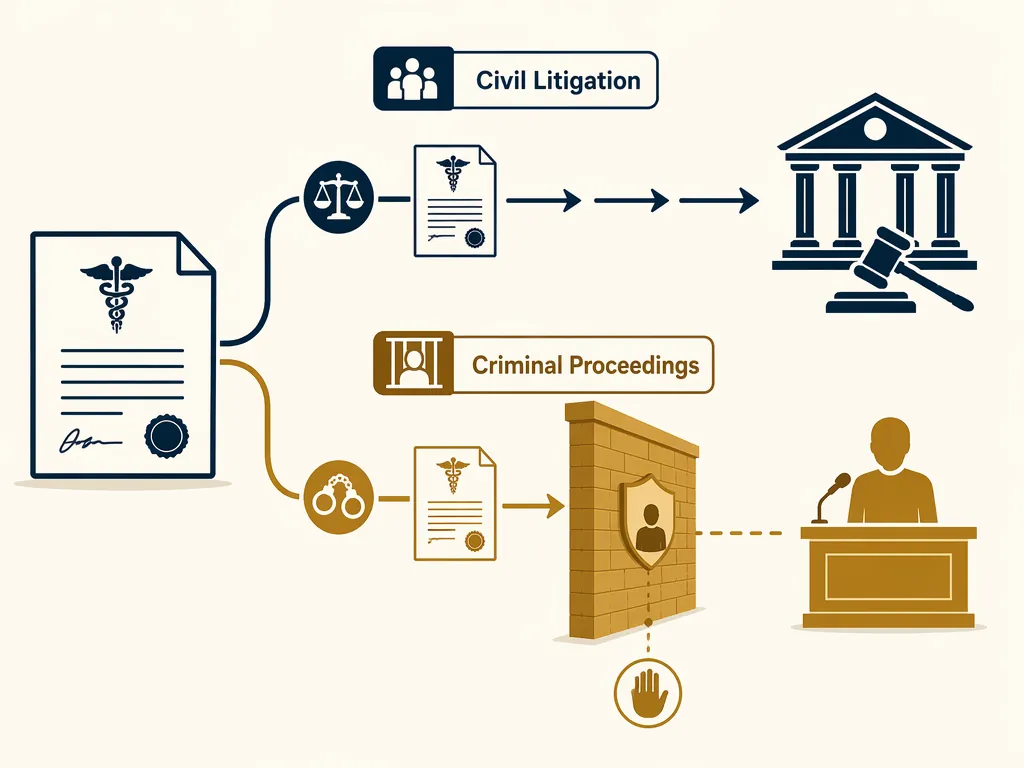
The Confrontation Clause problem is unsettled because autopsy reports sit awkwardly within the Supreme Court’s forensic-report cases. The Crawford, Melendez-Diaz, and Williams line focuses on whether a statement is testimonial, often asking whether its primary purpose was to establish past events potentially relevant to later criminal prosecution. A Duke Judicature article by Daniel J. Capra and Liesa L. Richter Tartakovsky argues for a presumption that autopsy reports conducted under state law are nontestimonial, but it also acknowledges that the doctrine remains unsettled.[5]
Family-commissioned autopsies complicate that analysis. If a report is commissioned mainly for civil litigation, insurance, or public accountability, a court may view its primary purpose differently than a police-directed forensic test. If the family’s legal team commissions the report while anticipating criminal charges against a specific person, an opposing party may argue the report was created for prosecution-like use and should be treated as testimonial. Scholarship tracking autopsy-report confrontation disputes reflects the lack of a simple national rule.[6]
Either way, cross-examination is not a technicality. Mitchell would have to explain what he saw, what he did not see, what the first autopsy prevented him from seeing, what records he lacked, and why an undetermined conclusion follows from those constraints. A prosecutor, defense attorney, or opposing civil lawyer would have obvious lines of attack: the body had already been altered; the airway and lungs could not be assessed for water; stomach contents were unavailable; toxicology was not reviewed; the opinion was preliminary and undetermined.
That does not make the report inadmissible. It makes the witness indispensable.
The Expert Split Is Part of the Legal Record Now
Public narratives tend to give the independent examiner the role of truth-teller and the state examiner the role of institution. Litigation is less tidy. Dr. Michael Baden, the former New York City chief medical examiner, publicly stated that the independent findings “do not point to foul play.”[7] That is not a side comment to wave away. It is the beginning of an opposing expert theme.
If the Wells matter ever turns on forensic testimony, Baden’s view previews the kind of argument an opposing party would make: red discoloration and an undetermined manner do not equal homicide; inability to evaluate drowning indicators does not disprove drowning; missing toxicology prevents firm conclusions in more than one direction. The strongest use of Mitchell’s report is therefore not that it proves foul play. It is that it prevents premature closure while identifying what must be produced before anyone claims confidence.
Grand Jury Referral Should Not Be Overread
The broader Wells investigation has already drawn attention because of the reported grand jury referral, FBI involvement, and national media coverage. Those developments frame the pressure around the case, but they should not be made to carry more than they can bear. Jackson County District Attorney Angel Myers McIlrath confirmed the investigation would go to a grand jury, and reporting has described that referral as standard protocol for unnatural deaths in Mississippi, not as an announcement that criminal liability has been found.[8]
For the procedural timeline, state-autopsy chronology, and agency involvement, Lex Machina Review’s key legal developments in the Nolan Wells death investigation supplies the necessary background without turning this autopsy analysis into a full case recap.
Grand jury secrecy also limits what outsiders can know about whether, when, or how Mitchell’s findings might enter that process. The private report may influence questions investigators ask. It may encourage prosecutors to obtain additional materials. It may never become a grand jury exhibit in any meaningful form. Without the state autopsy, toxicology, and investigative file, the procedural significance remains provisional.
Independent Autopsies Also Work in Public
Ben Crump’s role places the Wells autopsy within a recognizable litigation-publicity pattern, though the pattern should not be overstated. In 2026, Crump was connected to independent autopsies in at least three Mississippi cases involving Black decedents: Kohen Wiley, a 1-year-old killed in a police shooting in Senatobia; Demartravion Reed, found hanging at Delta State; and Nolan Wells on Horn Island.[9] The common feature is not proof of a shared factual theory. It is the use of private forensic review to create a public-facing record before official processes have fully disclosed their own.
That strategy can be legitimate. Families often litigate from informational disadvantage. Agencies control scene files, autopsy photographs, retained tissues, lab submissions, toxicology results, body-camera material, radio traffic, and internal communications. A private autopsy is one of the few tools a family can commission without waiting for the same institutions whose work it may later challenge.
It can also distort expectations. Public attention rewards the existence of an “independent autopsy” more than the content of the report. In Wells’s case, the content is careful and constrained. It gives the family a basis to demand answers. It does not supply the missing toxicology. It does not reconstruct removed throat structures. It does not convert uncertainty into a prosecutable theory.
That is the useful boundary. The Nolan Wells independent autopsy changes the record and the pressure around the case because an expert has now identified specific anatomical and informational gaps that officials will have to confront. It does not overcome the limits created by the first autopsy, the unreleased toxicology, unsettled confrontation doctrine, and public expert disagreement. The unreleased state autopsy and toxicology remain essential to the full evidentiary picture.
References
- Nolan Wells independent autopsy coverage, AP News, NewsNation, NBC News, Rolling Stone, July 22, 2026.
- Position Paper: Recommendations for the Investigation, Diagnosis, and Certification of Deaths Related to Medical Intervention, National Association of Medical Examiners.
- Mississippi Code § 41-61-65, Justia.
- Private Autopsy Cost and Turnaround Information, 1-800-AUTOPSY.
- Why Courts Should Admit Autopsy Reports, Judicature, Duke Law, 2015.
- Autopsy Reports and the Confrontation Clause, Catholic University Law Review.
- Dr. Michael Baden comments on Nolan Wells independent autopsy findings, Fox News.
- Jackson County district attorney confirms Nolan Wells investigation will go to grand jury, Mississippi Today and Fox 8.
- Attorney Ben Crump Retained by Family of 1-Year-Old Kohen Wiley, Killed in Mississippi Police Shooting, Ben Crump Law.
Chronological incident history
No sanction cases have named this tool in the tracked record set to date. This does not imply the tool is safe — see Risk Digest for ongoing monitoring.
← Compare peer toolsReport a correction or tip
Spotted an outdated figure, a misstated fact, or a ruling this tool profile should reflect? Public comments are disabled for this content given the professional cost of a misreported case outcome, penalty amount, or rule text — use the structured correction channel instead.
Report a correction or tip for this record →