
Section 219's Technology Domains Create Distinct Legal Risks
Section 219 of the NDAA 2027 authorizes cooperation across ten technology domains but lacks the treaty-level safeguards present in comparable frameworks like AUKUS. This article examines the distinct legal risk profiles for each domain, including AI-enabled targeting, biotech collaboration with a BWC non-party, and data fusion exposure under the War Crimes Act.
- Hallucination rate
- Not measured / undisclosed
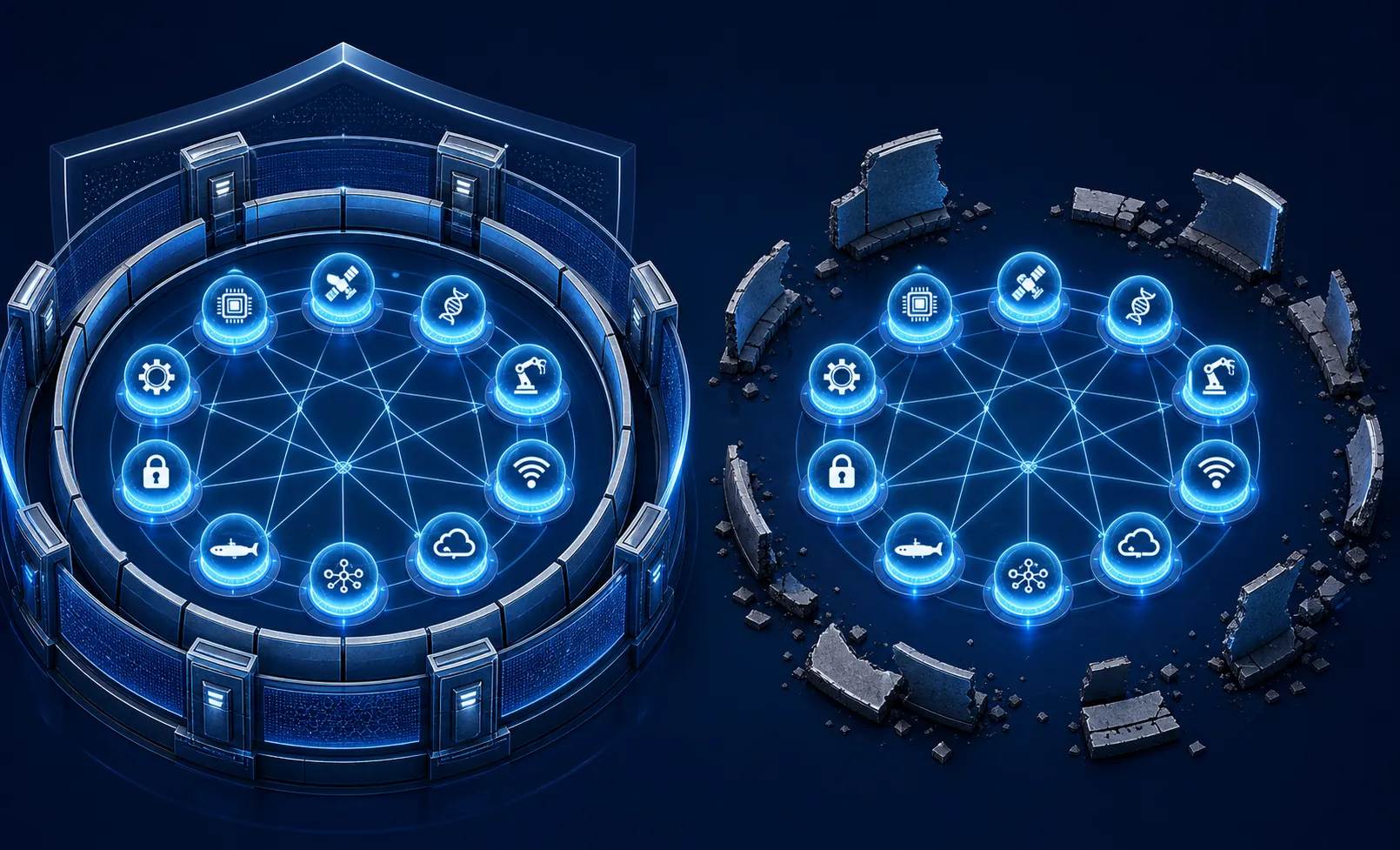
Section 219 of the NDAA 2027 is easiest to misread if it is treated as a single U.S.-Israel defense cooperation clause. The legal implications sit in the technology domains. As described in secondary analyses of the House text, Section 219(b) enumerates cooperation across ten domains: counter-unmanned aircraft systems, anti-tunneling technologies, missile defense, a combined category for artificial intelligence, quantum, and autonomous systems, directed energy, cyber and electronic warfare, biotechnology and manufacturing, network integration and data fusion, defense industrial base integration, and other emerging technologies.[1]
That list overlaps with the kinds of advanced military capabilities the United States has handled more cautiously in AUKUS Pillar II. The difference is not that AUKUS involves trustworthy allies while Israel does not. The difference is architectural. AUKUS technology sharing with the United Kingdom and Australia is paired, in the cited analysis, with a dedicated counterintelligence and technology-security framework; Section 219 is described as extending comparable categories of cooperation without visibly carrying the same treaty-level guardrails.[1]
There is also a drafting caveat that matters for lawyers more than for headline writers. The provision has appeared under different numbers during the process: originally described by some sources as Section 224, later as Section 219 in the House, and as Section 1217 in the Senate materials summarized in the research record.[1] As of July 2026, the House rule had reportedly passed 214-211 on July 21, while the Senate effort had stalled 50-46 after failing to meet a 60-vote threshold on July 14.[3] Until official final text is verified, every domain-level analysis should be treated as provisional.
Provisional does not mean irrelevant. Contractors do not wait for enrolled text to begin identifying affected business units, controlled technical data, subcontractor exposure, and government-facing representations. A broad cooperation mandate can start internal pressure before a license is approved, before a data interface is built, and before a program office decides who owns the risk.
The Clause That Moves Pressure Into Licensing
Section 219(c), as quoted or summarized by secondary sources, preserves consistency with existing laws, including export-control regimes such as the ITAR and EAR.[1] That sentence matters, but it does not end the analysis. A statutory instruction to cooperate can change the operating environment around licensing even if it does not formally repeal licensing requirements.
The pressure point is the Executive Agent role. DoD Directive 5101.01 states that an Executive Agent may be assigned responsibilities, functions, and authorities to provide defined levels of support for operational missions or administrative activities, and that the Executive Agent’s assigned responsibilities may take precedence over other DoD component responsibilities when directed.[2] In a sensitive technology-sharing context, that kind of precedence authority is not a mere org-chart detail. It can affect how program urgency is communicated to the Defense Technology Security Administration, the Directorate of Defense Trade Controls, contracting officers, and internal export-control reviewers.
The legally careful distinction is this: Section 219 does not, on the available record, equal completed transfer, licensing approval, or a safe harbor. It does create a statutory cooperation signal across domains where the normal compliance question is often whether the transfer should occur at all, under what limitations, and with what audit trail.
| Domain in Section 219(b) | Primary compliance question |
|---|---|
| Counter-unmanned aircraft systems | What technical data, test data, or operational lessons become export-controlled defense services? |
| Anti-tunneling technologies | Does cooperation expose classified or sensitive detection methods tied to sensors, geospatial intelligence, or underground infrastructure mapping? |
| Missile defense | Are existing U.S.-Israel missile defense channels being expanded into new integration, source-code, or supply-chain dependencies? |
| AI, quantum, and autonomous systems | Who controls targeting logic, human review, model outputs, and operational reliance? |
| Directed energy | What test data, platform-integration data, or component know-how crosses licensing boundaries? |
| Cyber and electronic warfare | Does collaboration involve tools, vulnerabilities, signals intelligence, or dual-use capabilities that require compartmented handling? |
| Biotechnology and manufacturing | How is defense biotech cooperation bounded when the partner state is not a BWC party? |
| Network integration and data fusion | Whose intelligence feeds enter the targeting picture, and where does responsibility land if the result is unlawful? |
| Defense industrial base integration | Which suppliers, components, facilities, and cybersecurity controls become part of a shared dependency chain? |
| Other emerging technologies | Who decides whether a new capability falls inside the cooperation mandate before controls and safeguards mature? |
AI, Quantum, and Autonomous Systems Are Not One Risk
The AI, quantum, and autonomous-systems category is the first place where the breadth of Section 219 becomes legally uncomfortable. These technologies are often grouped because they are strategically advanced. For compliance review, they separate quickly.
AI-enabled targeting raises the most immediate operational-law question: what role does the system play in selecting, ranking, validating, or striking a target? If U.S. forces receive or integrate an Israeli-developed tool, the legal issue is not simply whether the software is effective. It is whether U.S. personnel can understand the basis for the output, maintain meaningful human judgment, preserve records for after-action review, and avoid importing assumptions from a different operational environment.
Quantum technologies present a different profile. The likely legal friction is less about a single battlefield decision and more about counterintelligence, cryptographic sensitivity, and long-term technology leakage. That is why the AUKUS comparison matters. The cited AUKUS analysis treats advanced AI and quantum sharing as bounded by a technology-security architecture for the United Kingdom and Australia; Section 219 is described as enumerating similar domains for Israel without an equivalent architecture in the statutory framework.[1]
Autonomous systems sit between those two concerns. A platform can be exported as hardware, supported as a defense service, updated through software, trained on operational data, and evaluated through joint testing. Each layer can have a different licensing answer. A cooperation clause that does not specify human-in-the-loop obligations, auditability, or operational constraints leaves those questions to later implementation, where the party asking for speed is not always the party carrying the legal file.
One critique by retired Air Force Lt. Col. William Astore argues that AI targeting systems field-tested by Israel in Gaza could be integrated in ways that affect U.S. forces, including in scenarios involving American citizens.[6] That is a warning, not proof that Section 219 would cause that result. Its value is narrower: it identifies why targeting AI cannot be reviewed as ordinary software cooperation.
Biotechnology Is Legally Different Because of the BWC Gap
Biotechnology and manufacturing should not be buried inside a general “emerging technology” bucket. The legal differentiator is the Biological Weapons Convention. The cited section-by-section analysis states that Israel is one of only 10 countries that has neither signed nor ratified the BWC, and it characterizes Section 219 as authorizing the first Congressionally mandated U.S. defense biotech collaboration with a BWC non-party.[1]
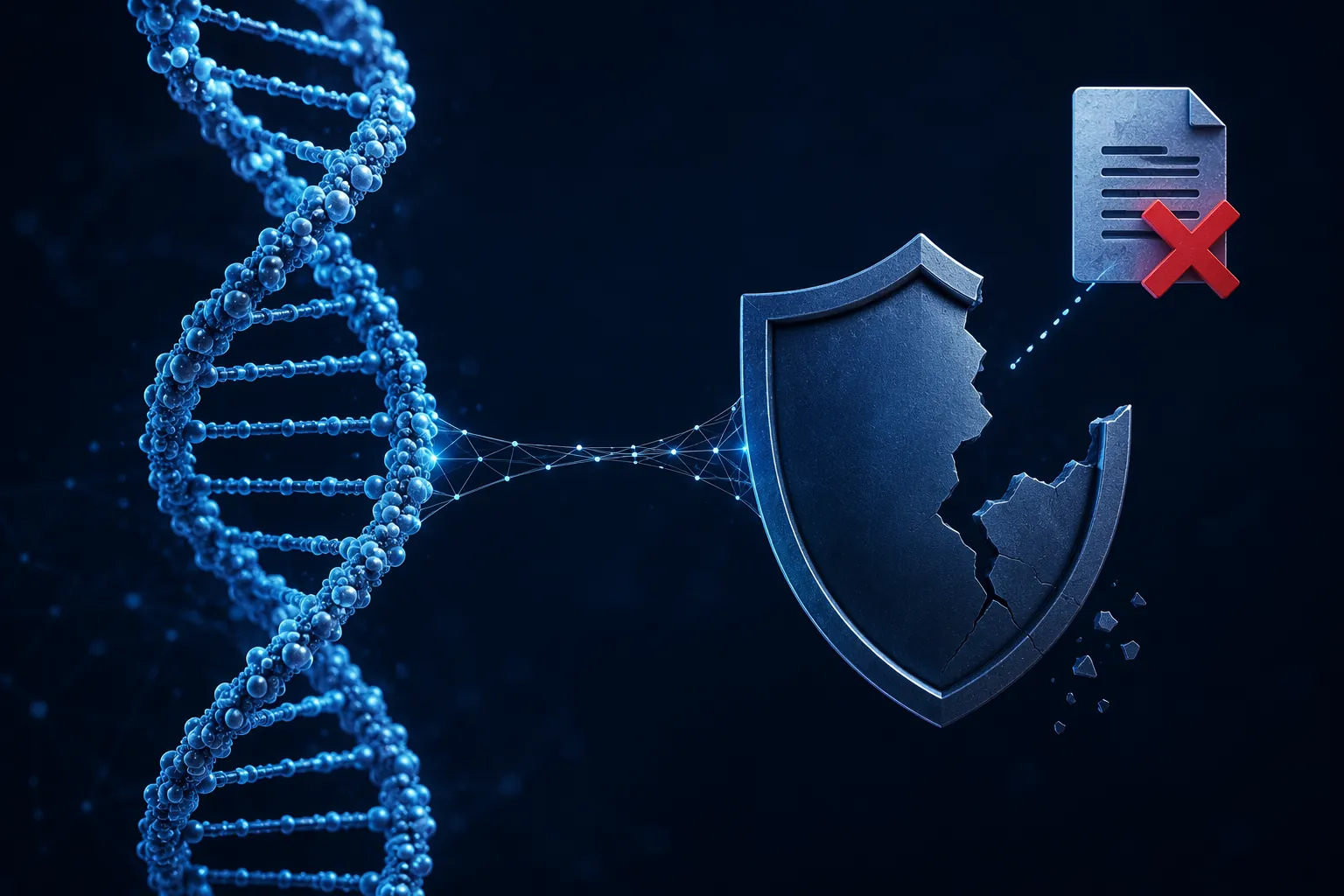
That does not establish that any prohibited biological-weapons work would occur. It does mean the usual nonproliferation baseline is weaker than it would be with a BWC party. For an internal legal team, the question becomes whether a project involves biological materials, enabling equipment, manufacturing processes, modeling tools, or know-how that could contribute to prohibited capabilities if used outside the stated defense purpose.
Manufacturing adds a second layer. A biotechnology collaboration may not transfer a pathogen, a weapon, or a finished military article. It may transfer process knowledge, quality-control methods, production tooling, specialized materials, or data useful for scaling. If the statutory text lacks explicit safeguards against contribution to biological-weapons programs, as the cited analysis says, the compliance burden shifts toward contract clauses, technology-control plans, end-use restrictions, and audit rights.[1]
This is the domain where “consistent with existing law” is least reassuring as a standalone answer. Export controls can restrict items and technical data. They do not make a non-party into a treaty party, and they do not automatically create the confidence-building, declaration, and political-accountability effects associated with treaty participation.
Data Fusion Turns Shared Inputs Into Shared Exposure
Network integration and data fusion deserve separate treatment because the legal risk is not the sensor by itself. It is the merge point. Human Rights Watch warned in June 2026 that Section 219’s data-fusion language could combine U.S. and Israeli sensor or intelligence feeds into a single targeting picture, and that Israeli-sourced data “may have been collected under problematic mass surveillance programs.”[4]

The warning is legally specific because it connects architecture to the War Crimes Act, 18 U.S.C. § 2441. HRW’s concern is that if fused data contributes to targeting decisions that result in unlawful civilian harm, U.S. actors could face exposure not because they fired a weapon, but because U.S. systems, feeds, personnel, or processes became part of the targeting chain.[4]
That does not mean every fused intelligence product creates liability. It means the design of the data environment matters. A lawyer reviewing a proposed integration would want to know whose data is included, how it was collected, whether collection complied with applicable law, whether the provenance remains visible after fusion, who may rely on the product, what confidence levels are displayed, and how decisions are logged.
The hard part is that data fusion often improves operational speed by reducing friction. Legal review often depends on preserving friction: source labels, caveats, dissemination limits, reliability warnings, and approval gates. If the architecture erases those controls in the name of a common operating picture, responsibility becomes harder to allocate after the fact.
Cyber, Electronic Warfare, and Directed Energy Sit Closer to Classification Than Procurement
Cyber and electronic warfare cooperation looks, on paper, like another defense-technology category. In practice, it can involve vulnerabilities, exploit chains, signals-intelligence methods, electronic order-of-battle data, jamming techniques, and platform signatures. Those are not ordinary deliverables. They are capabilities whose value often depends on secrecy.
The legal risk profile here is dominated by compartmentation and downstream use. A contractor may be asked to support interoperability without being told the full intelligence source. A subcontractor may receive a narrow technical task that reveals more than the prime intended. A shared test range may generate emissions or telemetry that becomes classified or export-controlled after collection. Section 219’s breadth makes these scenarios foreseeable even though the available public materials do not identify a cyber- or EW-specific safeguard.
Directed energy has a related but more hardware-centered profile. The sensitive items may be beam-control methods, power systems, thermal management, targeting integration, materials, or test results. The compliance file would need to distinguish collaboration on a defensive demonstrator from transfer of know-how that allows replication or operational deployment.
C-UAS, Anti-Tunneling, and Missile Defense Are Familiar Only Up to a Point
Counter-unmanned aircraft systems, anti-tunneling technologies, and missile defense are easier to frame as defensive cooperation. That framing may be accurate for many projects. It is still incomplete for legal review.
C-UAS cooperation can include sensors, command-and-control links, electronic attack, kinetic interceptors, defeat algorithms, training data, and field-performance lessons. Some of those elements are controlled articles; others are defense services; others are operational data that become sensitive because they reveal what a system can and cannot detect. The legal issue is less whether drones are a real threat and more whether the cooperation transfers the method of defeating them.
Anti-tunneling technologies raise geospatial, seismic, acoustic, mapping, and intelligence questions. A capability used to detect underground military infrastructure can also reveal collection methods, urban-surveillance assumptions, and databases about civilian terrain. Missile defense, meanwhile, may rely on longstanding U.S.-Israel cooperation channels, but Section 219’s placement inside a broader ten-domain mandate could widen the conversation from interceptors and batteries to software integration, supply chains, and shared industrial capacity.
Industrial Base Integration Is Where Safeguards Become Operational
Defense industrial base integration is not merely a procurement benefit or a political slogan. It decides which vendors are trusted, which facilities touch controlled work, which cybersecurity standards apply, which subcontractors receive flow-down clauses, and which components become single points of failure.
Supporters argue that Israeli defense technology strengthens U.S. capabilities and can benefit the U.S. defense industrial base.[5] That claim should not be dismissed simply because it is advocacy. Israel has mature defense firms and combat-tested systems. The legal question is what governance attaches when industrial integration moves beyond purchase, testing, or co-development into shared production, shared data environments, or shared supplier dependencies.
This is where the absence of a visible AUKUS-style counterintelligence and technology-security architecture matters most in day-to-day compliance. Industrial integration is implemented through vendor onboarding, facility clearance decisions, cyber assessments, software bills of materials, foreign ownership control review, incident reporting, audit clauses, and export markings. If those controls are not built into the cooperation framework, they have to be reconstructed project by project.
“Other Emerging Technologies” Is a Delegation Problem
The final category, other emerging technologies, is not harmless just because it is vague. It delegates the hardest threshold question: when does a new capability become part of the cooperation mandate?
For lawyers, vague catchall language creates two opposite risks. One office may treat the category narrowly and delay a program until the legal basis is clear. Another may treat it broadly and assume that statutory cooperation resolves questions that still belong to export-control, classification, privacy, procurement-integrity, or human-rights review. The public materials do not show which approach Section 219 would require.
A catchall also becomes more consequential when paired with Executive Agent precedence. If an Executive Agent is expected to drive cooperation across emerging fields, the practical boundary may be set by program demand before regulators, contractors, or congressional overseers have developed domain-specific safeguards.
The Legal Risk Is the Missing Architecture, Not the Word “Israel”
The strongest critique of Section 219 is not that U.S.-Israel defense cooperation is inherently unlawful, or that advanced defense technology should never be shared. It is that the provision appears to place multiple high-sensitivity domains under a statutory cooperation mandate without the counterintelligence, nonproliferation, and rights-protective architecture used or expected in comparable settings.
The pro-cooperation position answers part of the problem. It emphasizes Israeli technical capability, operational experience, and potential U.S. industrial benefit.[5] Those points go to utility. They do not by themselves answer who approves a transfer, who audits data provenance, how BWC-adjacent biotech work is bounded, how fused targeting data is logged, or whether human review survives integration pressure.
The more sweeping opposition language has its own limitation. Calling Section 219 a military merger may capture a political fear, but it can obscure the narrower compliance facts that are easier to test: statutory enumeration is not licensing approval; cooperation authority is not completed transfer; legal exposure is not established liability; and a missing safeguard is not the same as proof of misuse.
That narrower frame is enough. AI targeting, quantum security, autonomous systems, biotechnology with a BWC non-party, data fusion tied to possible War Crimes Act exposure, cyber and EW compartmentation, directed-energy transfer, C-UAS know-how, anti-tunneling intelligence, missile-defense integration, industrial-base dependency, and open-ended emerging technologies do not present one legal issue. They present a portfolio of different issues held together by one cooperation clause.
Until the official bill text and any conference changes are verified, Section 219 should be treated inside affected organizations as a moving compliance-risk object. The highest-priority reviews belong with programs touching AI-enabled targeting, biotech or bio-manufacturing, fused intelligence streams, cyber and electronic warfare, supply-chain integration, or export-controlled defense technology. The statute may change, but the architecture question does not depend on final numbering.
References
- The National Defense Authorization Act FY 2027 (Sec. 219 and Sec. 1217) — A New Policy Section-by-Section Analysis — A New Policy
- DoD Directive 5101.01
- H.R. 8800 — Congress.gov
- Congressional Proposal Could Deepen US Complicity — Human Rights Watch, June 16, 2026
- Israel Defense Tech is a Boon, Not Threat to U.S. — JINSA
- How Section 219, the US-Israel Military Merger, Would Thwart American Democracy — Common Dreams
Chronological incident history
No sanction cases have named this tool in the tracked record set to date. This does not imply the tool is safe — see Risk Digest for ongoing monitoring.
← Compare peer toolsReport a correction or tip
Spotted an outdated figure, a misstated fact, or a ruling this tool profile should reflect? Public comments are disabled for this content given the professional cost of a misreported case outcome, penalty amount, or rule text — use the structured correction channel instead.
Report a correction or tip for this record →