
What the Soldier's Secret Service Lawsuit Reveals About the FTCA
The Del Real v. Secret Service claim tests whether the FTCA's discretionary function exception shields agents from liability for bystander injuries during a dynamic threat response—an open question after the Supreme Court's Martin decision.
- Hallucination rate
- Not measured / undisclosed
At about 6 p.m. on May 23, 2026, a gunman opened fire near 17th Street and Pennsylvania Avenue NW, at a White House security checkpoint. Secret Service agents returned fire. Pfc. Benjamin Del Real Jr., a 23-year-old Army soldier stationed at Fort Belvoir and visiting Washington as a tourist, was hit by a bullet and, according to public reporting, underwent colon and small-intestine resections, with another surgery scheduled for Aug. 7 for a torn ACL.[1]
That is the part of the case that should not be treated as scenery. A young soldier did not walk away from an abstract “use of force” problem; he left with abdominal injuries that will shape the rest of his year, and probably more than that. But the remedial question starts with a fact the public still does not have as of July 23: ballistics results have not been publicly returned, and it remains unresolved whether Del Real was struck by a round fired by the gunman, Nasire Best, or by a Secret Service agent.[1]
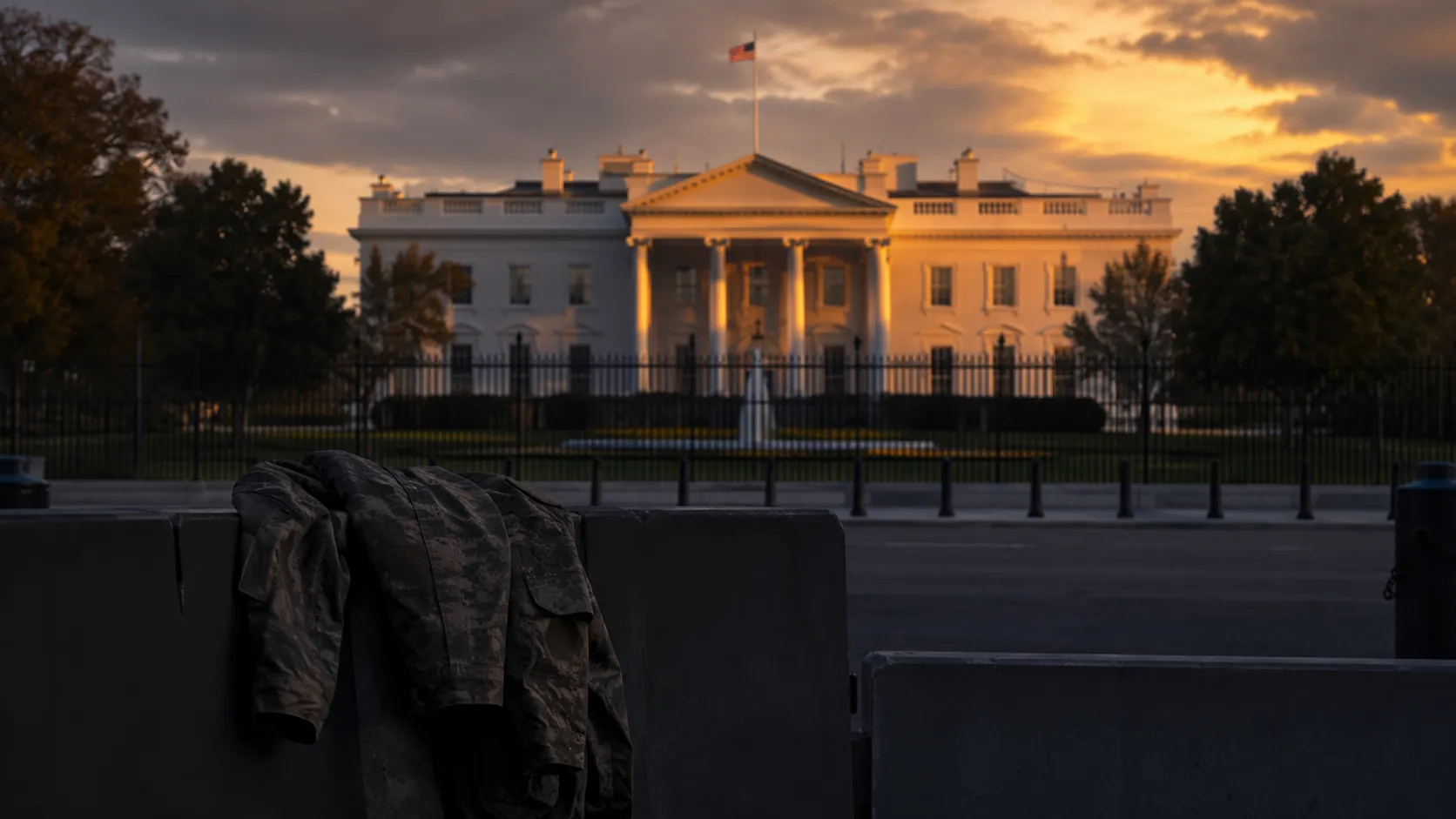
That uncertainty governs the legal implications of the soldier’s Secret Service White House shooting claim. The claim is plausible only if the facts support two linked premises: first, that a Secret Service round caused the injury; and second, that the challenged conduct can be characterized as operational negligence rather than protected discretionary judgment during a dynamic threat response. If ballistics point elsewhere, the claim becomes a different and harder case.
The Administrative Claim Chooses Operational Negligence
Del Real filed an FTCA administrative claim on July 21, 2026, seeking $25 million before any lawsuit could proceed in federal court.[2] The Secret Service has declined to comment on pending litigation, and the government has not yet had to put its jurisdictional defenses on paper.[3]
The wording of the claim matters. Del Real is not merely saying agents used force and someone innocent was hurt. His lawyers allege that agents failed to “take reasonable precautions to avoid striking innocent bystanders in a crowded public area.”[2] That is a deliberate attempt to place the case on the operational side of the FTCA line: not whether the Secret Service was wrong to respond to gunfire near the White House, but whether agents executed that response negligently in a way that foreseeably endangered a bystander.
The claim also leans on a contested factual assertion. Del Real’s attorney has said a confidential source confirms CCTV shows Best’s back was turned to Del Real when the shooting occurred.[2] That allegation may become important if video and ballistics line up with it. For now, it remains an attorney statement, not a public evidentiary finding. The Metropolitan Police Department’s Force Investigation Team is handling the use-of-force investigation, and public reporting has not supplied the ballistic answer that would let anyone responsibly treat causation as settled.[1]
A common FTCA trap is to assume that once a federal officer injures someone, the case turns mainly on reasonableness. It does not. The United States has waived sovereign immunity only on the terms Congress set, and the most important term here is the discretionary function exception in 28 U.S.C. § 2680(a). Sympathy for Del Real’s injuries does not waive that exception.
Why Martin Makes the Law Enforcement Proviso a Dead End
Before June 2025, plaintiffs in federal law-enforcement injury cases often tried to make the FTCA’s law enforcement proviso carry more weight than it could bear. The proviso in § 2680(h) allows certain intentional tort claims involving federal investigative or law enforcement officers. In Martin v. United States, the Supreme Court held unanimously that the law enforcement proviso does not override the discretionary function exception.[4]
Martin involved an FBI wrong-house raid, not gunfire at a White House checkpoint.[4] That factual distinction matters. But the holding matters more for Del Real’s threshold problem: if the challenged Secret Service conduct falls within § 2680(a), Del Real cannot escape by pointing to § 2680(h). For readers who have followed the same issue in other federal law-enforcement contexts, including the site’s analysis of legal recourse after ICE shootings, Martin is now the starting point, not a footnote.
The useful part of Martin for Del Real is not the majority holding. It is Justice Sotomayor’s concurrence, joined by Justice Jackson, which emphasized that “there is reason to think the discretionary-function exception may not apply” where the challenged conduct lacks “genuine policy-based decision-making.”[5] That language does not create liability. It does, however, give a careful plaintiff a way to argue that some law-enforcement conduct is not protected merely because it occurred during a dangerous operation.
The Real Fight Is Berkovitz and Gaubert
The discretionary function exception is usually analyzed under the two-part framework associated with Berkovitz v. United States and United States v. Gaubert. The first question is whether the challenged conduct involved an element of judgment or choice. The second is whether that judgment is the kind the exception was designed to protect because it is susceptible to policy analysis.[4]
That test is familiar, but it is easy to flatten. The first prong is often the easier one for the government. Unless a mandatory federal statute, regulation, or policy specifically told agents exactly how to position, aim, or fire under these circumstances, a court may find that the conduct involved judgment. The second prong is where Del Real’s theory has to do its hardest work.
The government’s argument will be straightforward. Secret Service agents responding to a gunman near the White House must make immediate protective judgments involving officer safety, public safety, presidential security, threat neutralization, fields of fire, and the risk of hesitation. That sounds exactly like judgment susceptible to policy analysis. If a court accepts that framing, § 2680(a) does not merely weaken the case; it removes jurisdiction.
Del Real’s answer has to be narrower. He cannot win by saying the Secret Service should have made a better policy choice in the middle of a gunfight. He needs to show that the injury resulted from negligent execution: a failure to account for bystanders, background, line of fire, training, communications, or positioning in a crowded public area, in circumstances that did not require a protected policy judgment to resolve.
That distinction is not semantic. A shoot/no-shoot decision made in seconds while a gunman is firing may look protected. A claim that agents violated non-discretionary training, ignored a known bystander location, fired without identifying a safe backdrop, or continued firing after the immediate threat posture changed would occupy different ground. The hard question is whether the evidence supports any of those narrower theories.
Venable’s post-Martin analysis identifies the unresolved issue: whether split-second tactical firing decisions by federal agents are “susceptible to policy analysis” or instead are operational acts governed by training and protocol. No circuit has squarely resolved that question for a Secret Service protective-response scenario.[5]
Ballistics May Decide Which Lawsuit This Really Is
If ballistics show that a Secret Service round struck Del Real, the claim remains difficult but coherent. The case would then ask whether a bystander injury from agent fire resulted from protected tactical judgment or from negligent execution that can be tested through video, ballistics, training materials, witness testimony, and use-of-force review.
If ballistics show that Best’s round struck Del Real, the current theory loses much of its force. Del Real might still explore failure-to-protect, crowd-control, checkpoint-design, training, or warning theories, but those theories bring their own FTCA problems. Decisions about how to secure a White House perimeter, deploy agents, and structure a checkpoint are likely to draw discretionary-function arguments even more naturally than a claim about negligent aim or negligent fire.
If ballistics remain inconclusive, the administrative claim may still preserve the issue, but any later complaint would have to plead around a causation gap. Federal courts do not require a plaintiff to prove the case at the pleading stage, but the United States can and often does challenge FTCA jurisdiction before merits discovery has fully developed. That procedural sequence can matter as much as the substantive tort theory.
| Fact Developed | Effect on Del Real’s FTCA Theory |
|---|---|
| Secret Service round caused the injury | Strengthens the operational-negligence theory but leaves the discretionary function exception as the central defense. |
| Best’s round caused the injury | Pushes the case toward failure-to-protect or security-design theories, likely with separate FTCA barriers. |
| Video shows bystander position was visible or knowable | Helps Del Real argue negligent execution rather than policy-level protective judgment. |
| Training or protocol required a specific firing precaution | Could weaken the first Berkovitz/Gaubert prong by reducing agent choice. |
| Record shows a fast, unresolved lethal threat | Helps the government characterize the conduct as protected tactical judgment. |
What Discovery Would Need to Find
If the claim survives the administrative stage and becomes a lawsuit, discovery will not simply be about whether the agents were brave, scared, careful, or careless. The documents and testimony would need to map facts onto the FTCA immunity framework.
- Ballistics: whose round struck Del Real, from what angle, and in relation to which agent position.
- Video: where Del Real, Best, agents, and other civilians were positioned as the agents fired.
- Use-of-force chronology: when Best fired, when agents returned fire, when the threat changed, and when shooting stopped.
- Training and protocols: whether any mandatory rule governed firing in a crowded public area near a checkpoint.
- Internal review materials: whether the agency treated the incident as compliant tactical judgment or identified preventable operational errors.
The CCTV allegation, if borne out, could matter less for the broad proposition that Best’s back was turned than for what it shows about fields of fire and bystander visibility. A turned back does not automatically make every return shot negligent. It may, however, help establish that the geometry of the scene was knowable and that a bystander’s location should have affected how agents fired.
The government will try to keep the inquiry at a higher level of generality: agents responding to armed violence at the White House perimeter exercised protected judgment in a security emergency. Del Real will try to bring it down to the actual mechanics of the shooting: who fired, from where, toward what, with what backdrop, and under what training constraints.
Other Defenses Are Available, but They Are Not the Center
The discretionary function exception is not the only defense the United States may raise. If the shooting is characterized as assault or battery, the government may argue about the intentional tort exception and the limits of the law enforcement proviso after Martin. The government might also attempt a combatant-activities argument, though applying that concept to a domestic White House checkpoint shooting would require careful scrutiny rather than label-driven acceptance.
Those defenses should not obscure the main sovereign-immunity contest. The case is likely to turn first on whether § 2680(a) bars judicial review of the challenged conduct. Martin makes that gatekeeping question unavoidable. It also prevents Del Real from treating the agents’ law-enforcement status as a shortcut around discretionary-function immunity.
The broader security backdrop may explain why the incident drew public attention. NPR reported that the May 23 shooting was the third gunfire incident near President Trump in one month, following an April 25 shooting near the White House Correspondents’ Dinner and a May 4 shooting near the Washington Monument.[6] That context may matter to public debate and agency review. It does not answer the FTCA question.
The Narrow Path Forward
Del Real’s strongest path is not to prove that the Secret Service made a bad policy choice. It is to prove that his injury came from agent conduct that lacked genuine policy-based judgment and amounted to operational negligence. That is where Sotomayor’s Martin concurrence has practical significance: it preserves room to argue that not every law-enforcement action inside a dangerous operation is automatically policy-susceptible discretionary conduct.
That path is real, but narrow. It depends on ballistics, video, training, and a record that lets a court separate negligent execution from protected protective judgment. If ballistics do not support a Secret Service round, the claim likely has to be rebuilt around different negligence theories with different FTCA obstacles. If a court treats split-second aim and fire decisions near the White House as policy-susceptible tactical judgment, Martin makes the sovereign-immunity barrier formidable.
References
- Soldier hit by stray bullet outside White House plans to sue Secret Service — AP News
- Clifford Law Offices Files Notice of Lawsuit Against Secret Service in Shooting of Tourist in Front of White House — Clifford Law Offices
- Soldier wounded near White House takes first step toward suing Secret Service — WTOP
- Supreme Court Decides Martin v. United States — Faegre Drinker
- Setting the Circuit Straight: The Scope of the FTCA's Law Enforcement Proviso after Martin v. U.S. — Venable LLP
- Suspect dead after opening fire near White House security checkpoint — NPR
Chronological incident history
No sanction cases have named this tool in the tracked record set to date. This does not imply the tool is safe — see Risk Digest for ongoing monitoring.
← Compare peer toolsReport a correction or tip
Spotted an outdated figure, a misstated fact, or a ruling this tool profile should reflect? Public comments are disabled for this content given the professional cost of a misreported case outcome, penalty amount, or rule text — use the structured correction channel instead.
Report a correction or tip for this record →