
How a Toy Head Fooled Tesla Autopilot and Opened a NHTSA Probe
A $15 doll head that tricks Tesla's cabin camera into thinking a driver is attentive has become a regulatory flashpoint. This article explains why the exploit matters beyond viral novelty and how it intersects with three active NHTSA investigations and the agency's push for formal driver monitoring standards.
- Hallucination rate
- Not measured / undisclosed
The object at the center of the latest Tesla driver-monitoring controversy is almost too small to carry the weight now being put on it: a cheap plastic doll head, fixed near the rearview mirror, facing the cabin camera as if it were a driver. In Wired's June 2026 reporting from China, the prop was used to satisfy Tesla's in-cabin driver monitoring while the human in the driver's seat looked away or was not visibly engaged; sellers claimed the device could allow up to 30 minutes of uninterrupted operation, though that duration has not been independently established across markets or vehicle configurations. [1]
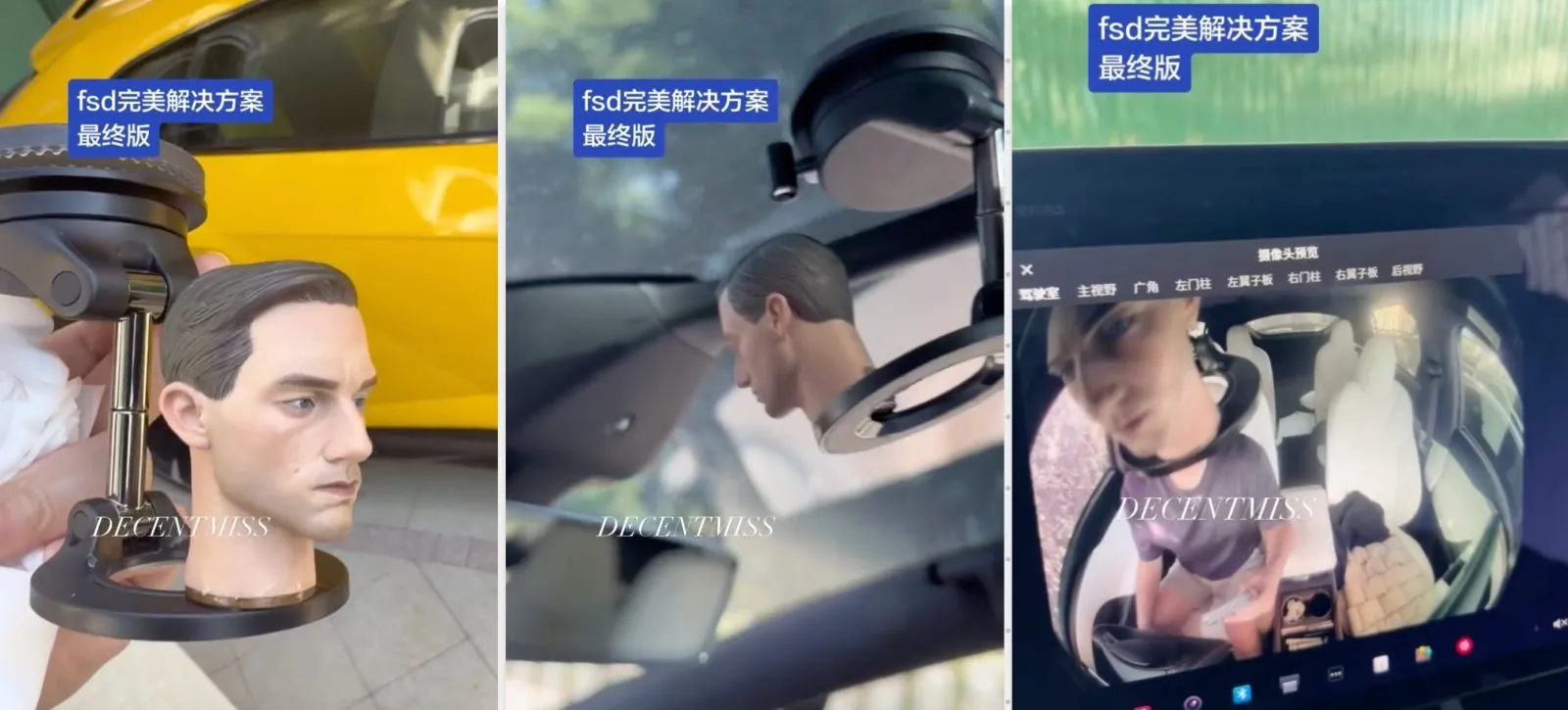
The obvious reaction is to treat the doll head as a prank product. That misses the useful part. If the camera can be satisfied by an object that approximates head size and position, then the safety question is not whether one vendor made a ridiculous accessory. It is what signal the vehicle is using to decide that a driver is available, and which signals it is not using.
That distinction matters because Tesla's driver engagement system is not merely a user-interface feature. It is part of the company's answer to a legal and regulatory problem: how a vehicle using advanced driver-assistance features ensures that a human remains ready to supervise. A system that recognizes a head-shaped object is different from one that establishes a live, responsive driver. The exploit does not prove that every Tesla system in every market can be defeated the same way. It does show why regulators are unlikely to be satisfied with vague assurances that a cabin camera is present.
What the Doll Head Appears to Expose
Electrek separately reported on the same class of doll-head devices, describing them as products sold to fool Tesla's self-driving safeguards, with pricing reported at roughly $30 in its coverage. [2] The important overlap is not the exact retail price. It is the apparent method: place a face-like object where the camera expects a driver's head, and the vehicle's attentiveness checks may continue to pass.
Tesla's own manual language points in the same direction. The owner's manual says, “The cabin camera does not require full visibility of the driver's eyes to monitor attentiveness.” [3] That sentence is doing a lot of work. It tells owners not to assume the camera depends on full eye visibility. It also suggests that the system is not built around continuous eye tracking as the decisive signal.
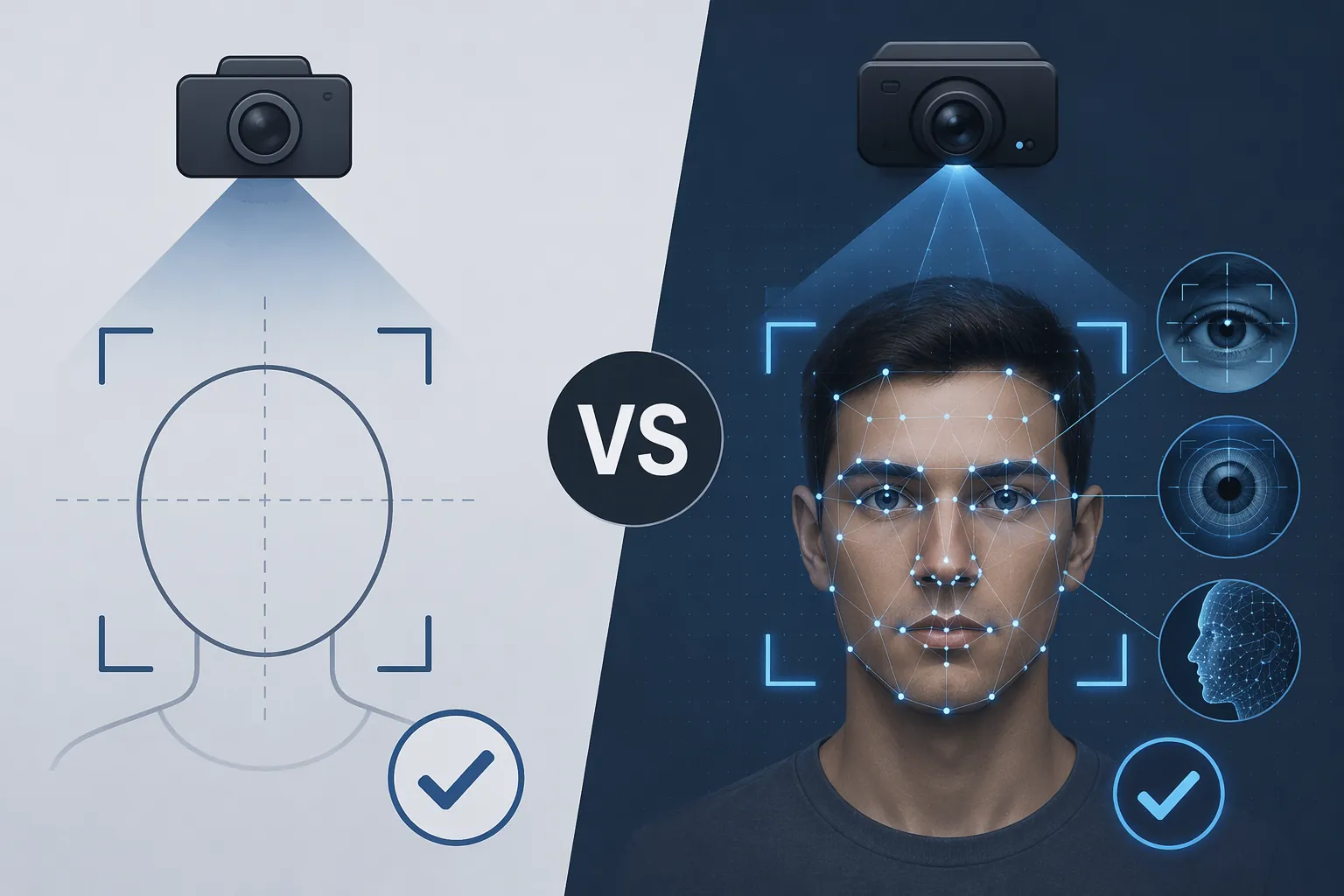
A coarse driver-monitoring design can still be useful. It can detect that something resembling a head is in the expected zone. It can combine that with steering-wheel torque, cabin camera outputs, nag timing, and other vehicle-state information. But it is a different safety claim from liveness detection: blinking, gaze direction, eye openness, facial dynamics, hand position, posture, or other signs that the human expected to supervise is actually present and behaviorally available.
The difference is not academic for compliance lawyers. A driver monitoring control can be evaluated as a warning interface, a misuse-prevention mechanism, an enforcement mechanism, or a safety-critical guardrail. The more a manufacturer relies on it to support supervised automation, the more regulators will ask whether the control detects the condition that actually matters. A doll head accepted as an attentive driver is evidence that the measured condition may be too far removed from the safety condition.
This is also why the China-market caveat should be kept in view without letting it dissolve the issue. The reported exploit is in China, where FSD Supervised is not yet available. That limits any direct conclusion about U.S.-market vehicles running the full FSD stack. Sellers reportedly claimed cross-market testing, but seller claims are not independent validation. [1] The defensible conclusion is narrower: in at least the reported configuration, Tesla's cabin monitoring accepted a nonhuman proxy, and that fact pattern is directly relevant to the way driver engagement is designed and represented.
This Was Already a Regulatory Question
The doll head did not create the driver-monitoring issue. It made it visible. In August 2022, NHTSA asked Tesla to explain the role of the in-car camera in enforcing driver engagement as part of an Autopilot investigation, including how the camera was used and how it affected driver attentiveness controls. [4] That request came after years of public debate over whether steering-wheel torque alone was an adequate proxy for driver supervision.
Consumer Reports had already found in 2021 that blocking Tesla's cabin camera produced no warning. Subsequent warnings were added, but not liveness detection. That sequence matters: a manufacturer can respond to a visible monitoring gap by warning when the camera is obstructed, yet still leave open the harder question of what the camera is actually confirming when it is not obstructed.
For a safety investigator, the relevant comparison is not between camera and no camera. It is between a camera that detects a usable proxy and a camera that detects the driver's real availability. The plastic head is irritatingly effective as evidence because it strips away brand loyalty, automation philosophy, and social-media theater. A nonliving object appears to satisfy a system whose regulatory function depends on distinguishing supervision from non-supervision.
How the Exploit Maps Onto NHTSA's Three Tesla Matters
NHTSA's current Tesla work is not one monolithic “Autopilot probe.” The three matters identified in available records ask different factual questions. The doll head is most directly a driver-monitoring example, but it also illustrates a broader compliance problem across all three: whether Tesla's systems detect the degraded condition, unsafe behavior, or reportable safety event that regulators need them to detect.
| NHTSA matter | Reported scope | Regulatory question sharpened by the doll head |
|---|---|---|
| Visibility degradation probe EA26002 | About 3.2 million vehicles; escalated in March 2026 | Can the system identify environmental conditions, such as sun glare, fog, and dust, that degrade safe operation? |
| Traffic violation probe PE25012 | More than 58 incidents | Can the system prevent or respond to unsafe behavior such as traffic-law violations while supervised automation is active? |
| Crash reporting inquiry | Open inquiry identified in the available record | Can regulators trust the system and manufacturer process to identify and report relevant safety events? |
The visibility degradation probe is the cleanest analogy. Electrek reported that NHTSA escalated EA26002 in March 2026, covering about 3.2 million vehicles, after finding that FSD fails under sun glare, fog, and dust. [5] That is not a driver-monitoring allegation. It is a perception and operational-design problem. But the structure is familiar: a system may continue to behave as if a condition is adequate after the real-world condition has degraded.
In the doll-head case, the degraded condition is not fog or glare. It is the absence of a live, attentive human signal. The common issue is whether Tesla's automation stack has enough contextual awareness to recognize that a prerequisite for safe use is missing. Regulators do not need the two problems to be technically identical for them to be compliance-relevant cousins.
The traffic violation probe raises a different version of the same concern. PE25012 reportedly covers more than 58 incidents involving traffic violations. [5] A driver monitoring system will not, by itself, make a vehicle obey a red light or choose a lawful path. But if a company describes the system as supervised, then unsafe automated behavior and weak driver engagement are linked in the legal analysis. The human supervisor is part of the mitigation story. If that supervisor can be represented by a plastic proxy, the mitigation story weakens.
The crash reporting inquiry is more procedural, but it belongs in the same frame. Crash reporting rules and inquiries depend on reliable identification of events, system states, and automation involvement. A monitoring architecture that relies on coarse proxies raises a documentation problem as well as a behavioral one: what did the vehicle know, what did it infer, and how confidently can the manufacturer or regulator reconstruct whether a human was actually supervising at the relevant time?
The June 10 Study Notice Gives the Doll Head Its Timing
NHTSA's June 10, 2026 notice is not a proposed rule, and it should not be treated as one. Hunton reported that the agency initiated a formal process to gather information for a contextual driver monitoring system study, with public comments due August 10, 2026. [6] That means the notice does not impose immediate design obligations on Tesla or any other manufacturer. It does, however, show where the agency's attention is moving.
The phrase “contextual driver monitoring” is the key. NHTSA is seeking input on an approach that fuses visual, physical, and external data sources. [6] That is a very different regulatory posture from asking whether a car has a camera pointed at the driver's seat. It asks whether the vehicle can understand enough about the driver, the vehicle, and the environment to assess whether supervised automation remains appropriate.
That is where the doll head becomes more than an embarrassing accessory. It is a concrete example of the gap between object recognition and contextual monitoring. A camera that accepts a fixed head-shaped object may be performing as designed under a limited attentiveness model. But the June 10 notice suggests NHTSA is studying a broader model: one that would be harder to satisfy with a static proxy because it would look across multiple signals rather than one coarse visual cue.
For counsel, the practical implication is not that NHTSA has already adopted a liveness-detection mandate. It has not, based on the cited notice. The implication is that companies relying on driver engagement systems should expect questions about what their systems actually measure. A compliance file that says “cabin camera present” is less useful than one that explains the monitored signals, the failure modes, the spoofing assumptions, the escalation logic, and the conditions under which the system disengages or refuses operation.
What Not to Overclaim
The strongest version of this story is also the narrowest. The available materials do not establish that every U.S. Tesla using FSD Supervised can be fooled by the same doll head. They do not include a public Tesla response. They do not independently verify the sellers' longest claimed operating time. And because the reported use is in China, market-specific software, feature availability, and regulatory configuration all matter.
Those caveats do not make the exploit irrelevant. They define what it proves. It proves, as reported by Wired and corroborated by later coverage, that a crude nonhuman proxy has been used to satisfy Tesla's cabin monitoring in at least the documented context. [1][2] It also aligns with Tesla's own manual language that full eye visibility is not required and with NHTSA's longer-running interest in how Tesla enforces driver engagement. [3][4]
That is enough to make the toy head legally interesting. Safety regulation often turns on mundane proxies: a warning light, a logged state, a torque input, a camera status, a disengagement threshold. The weakness of a proxy becomes serious when it is asked to carry more safety meaning than it can support.
The doll head does not prove a universal Tesla defect. It does provide a vivid, source-documented example of the kind of monitoring gap NHTSA is now studying: the gap between a system that sees something where a driver's head should be and a system that can determine whether a human is actually able to supervise. For legal and compliance readers, the important question is no longer whether the exploit is embarrassing. It is whether a driver monitoring system built around coarse attentiveness signals can satisfy the contextual monitoring expectations now taking shape.
References
- Chinese Drivers Are Using Tiny Plastic Heads to Fool Tesla's Autopilot Safeguards, Wired, June 2026
- Tesla's self-driving safeguards fooled by $30 doll heads, Electrek, June 15, 2026
- Tesla Owner's Manual, Tesla
- U.S. seeks information from Tesla on in-car camera in Autopilot probe, Reuters, August 2022
- Tesla is one step away from having to recall FSD in NHTSA visibility crash probe, Electrek, March 2026
- NHTSA Initiates the Process for a Contextual Driver Monitoring System Study, Hunton, June 2026
Chronological incident history
No sanction cases have named this tool in the tracked record set to date. This does not imply the tool is safe — see Risk Digest for ongoing monitoring.
← Compare peer toolsReport a correction or tip
Spotted an outdated figure, a misstated fact, or a ruling this tool profile should reflect? Public comments are disabled for this content given the professional cost of a misreported case outcome, penalty amount, or rule text — use the structured correction channel instead.
Report a correction or tip for this record →