
Compensation rights after United's technology outage
Explains what legal compensation rights passengers actually have after United Airlines' August 2025 Unimatic system outage, covering the absence of federal cash compensation mandates, the carrier's voluntary commitments under its customer service plan, and the formal withdrawal of the proposed DOT cash compensation rule.
- Hallucination rate
- Not measured / undisclosed
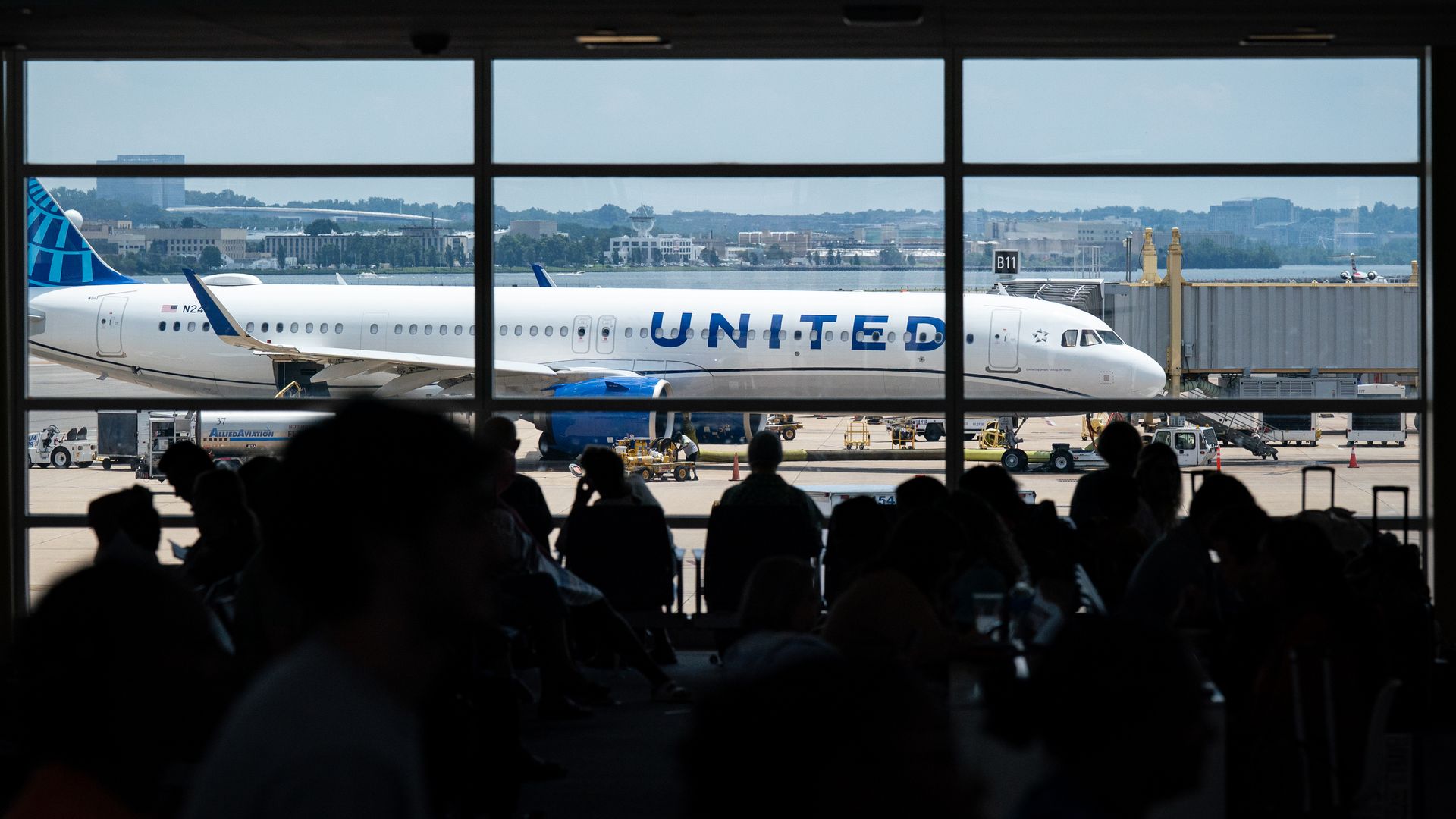
On Aug. 6, 2025, United Airlines' Unimatic system failed around 6:12 p.m. ET, and the disruption hit fast: contemporaneous reporting put the total at more than 1,000 delays and about 200 cancellations, with ground stops at five hubs.[1][2]
What the law actually gives passengers
That outage was carrier-controlled, but it did not create a federal right to cash compensation for the inconvenience of a delay. The live question is narrower and much more ordinary: what did United voluntarily promise when it treated the disruption as a controllable delay?
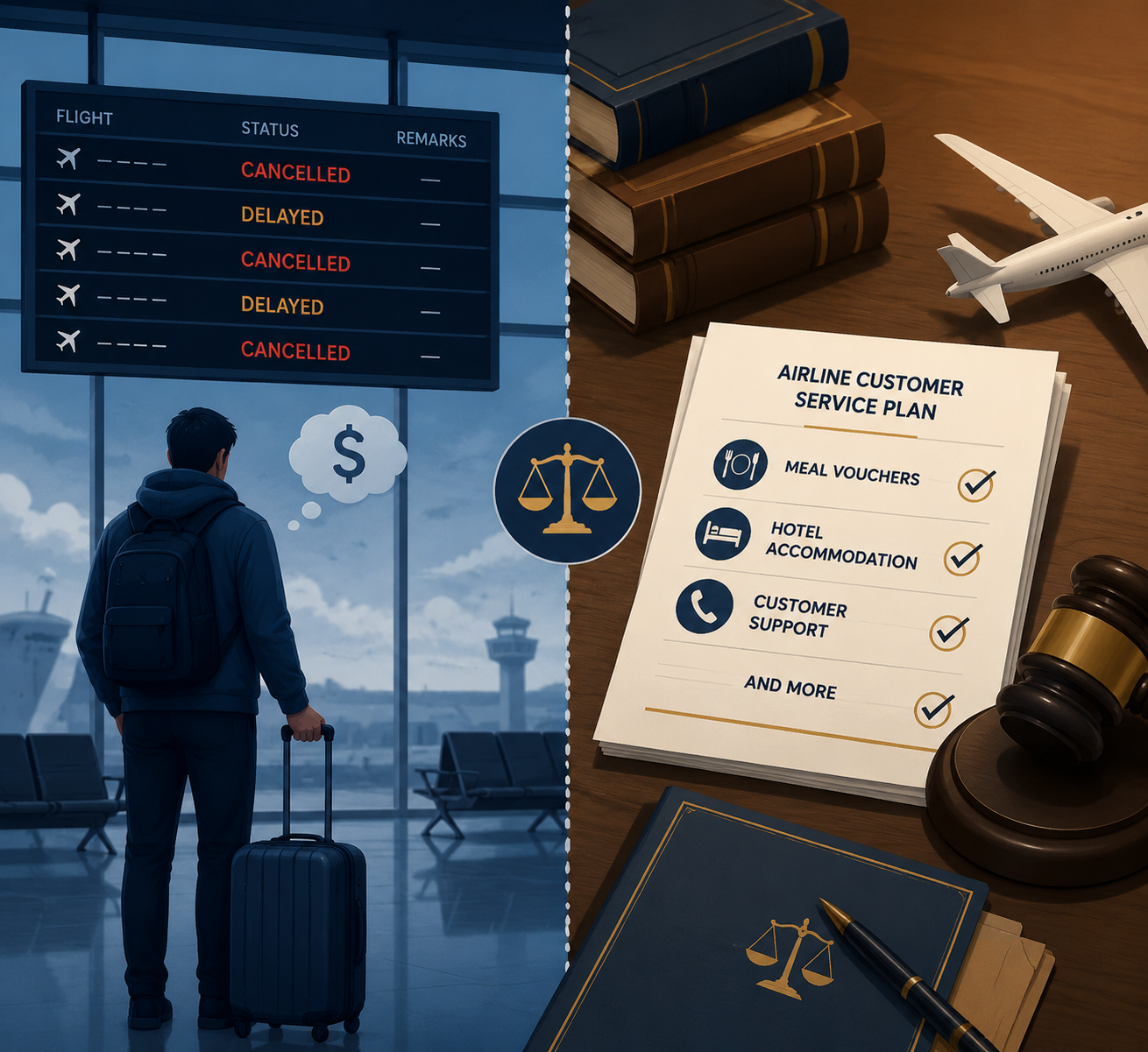
- Meal vouchers for delays of 3 or more hours [3]
- Hotel accommodation and ground transport for overnight delays [3]
- Rebooking assistance [3]
Those are real remedies, and they matter in practice, but they are voluntary commitments in United's customer service plan. They are not the same thing as a statutory cash award.
Refunds are different from compensation
The DOT's refund rules draw a separate line. A full cash refund is required when a flight is canceled or undergoes a significant schedule change, including a 3-hour domestic change under the automatic refund framework; that rule addresses nonperformance, not every miserable delay.[4] DOT's Fly Rights guidance makes the same distinction in consumer terms.[5]
The federal cash rule never took effect
DOT had also proposed a separate cash-compensation regime that would have set payments in roughly the $200 to $775 range, but that proposal was formally withdrawn on Nov. 17, 2025.[6] The withdrawal cited the deregulatory direction set by Executive Orders 14192 and 14219, which matters because it left no federal rule turning a controllable technology outage into mandatory cash compensation.
Why this outage was treated as a carrier event
Later technical reporting described Unimatic as a legacy system deployed in 1997 and already slated for replacement, which helps explain why the incident was treated as a United-controlled operational failure rather than weather or an air-traffic directive.[7][8] That distinction is what matters legally: the cause may be embarrassing and deeply disruptive, but the remedy still depends on the carrier's own commitments and the DOT's refund rules.
Where the policy climate stands now
A July 2026 Cozen O'Connor alert read the broader consumer-protection environment as still moving in a deregulatory direction, including DOT's final rule on unfair or deceptive practices and an enforcement-discretion extension for renumbered flights through 2027.[9] That is not a separate legal right or a new remedy; it is another reason not to expect a federal cash-compensation rule to appear in the near term.
For passengers affected by the Aug. 6 outage, the bottom line is plain: United's voluntary controllable-delay commitments and the DOT refund rules may supply a remedy, but federal law does not mandate cash compensation just because a technology failure wrecked the trip.
References
- United Airlines outage coverage, AP News, Aug. 2025,
- United Airlines outage coverage, CNN, Aug. 2025,
- Airline Cancellation and Delay Dashboard, U.S. Department of Transportation, Sep. 11, 2025,
- Refunds, U.S. Department of Transportation,
- Fly Rights, U.S. Department of Transportation,
- Withdrawal of Notice of Proposed Rulemaking and Advance Notice of Proposed Rulemaking, Federal Register, Nov. 17, 2025,
- Unimatic technical analysis, CyberWyoming, 2025,
- Unimatic technical analysis, Crain's Chicago Business, 2025,
- Cozen O'Connor alert on DOT consumer-protection developments, Jul. 16, 2026,
Chronological incident history
No sanction cases have named this tool in the tracked record set to date. This does not imply the tool is safe — see Risk Digest for ongoing monitoring.
← Compare peer toolsReport a correction or tip
Spotted an outdated figure, a misstated fact, or a ruling this tool profile should reflect? Public comments are disabled for this content given the professional cost of a misreported case outcome, penalty amount, or rule text — use the structured correction channel instead.
Report a correction or tip for this record →