
AI Contract Review Software: How It Works Under the Hood — RAG Architecture, Playbook Automation, and the Technical Difference Between Purpose-Built and General-Purpose AI
This technical deep-dive explains how AI contract review tools actually work, from document ingestion and RAG retrieval to playbook-driven analysis and character-level citation. Designed for legal operations leaders and technically-minded attorneys, it reveals why purpose-built architecture outperforms general-purpose LLMs by orders of magnitude and what technical factors separate reliable review from liability risk.
- Hallucination rate
- Not measured / undisclosed
Introduction: Why Architecture Determines Reliability in AI Contract Review
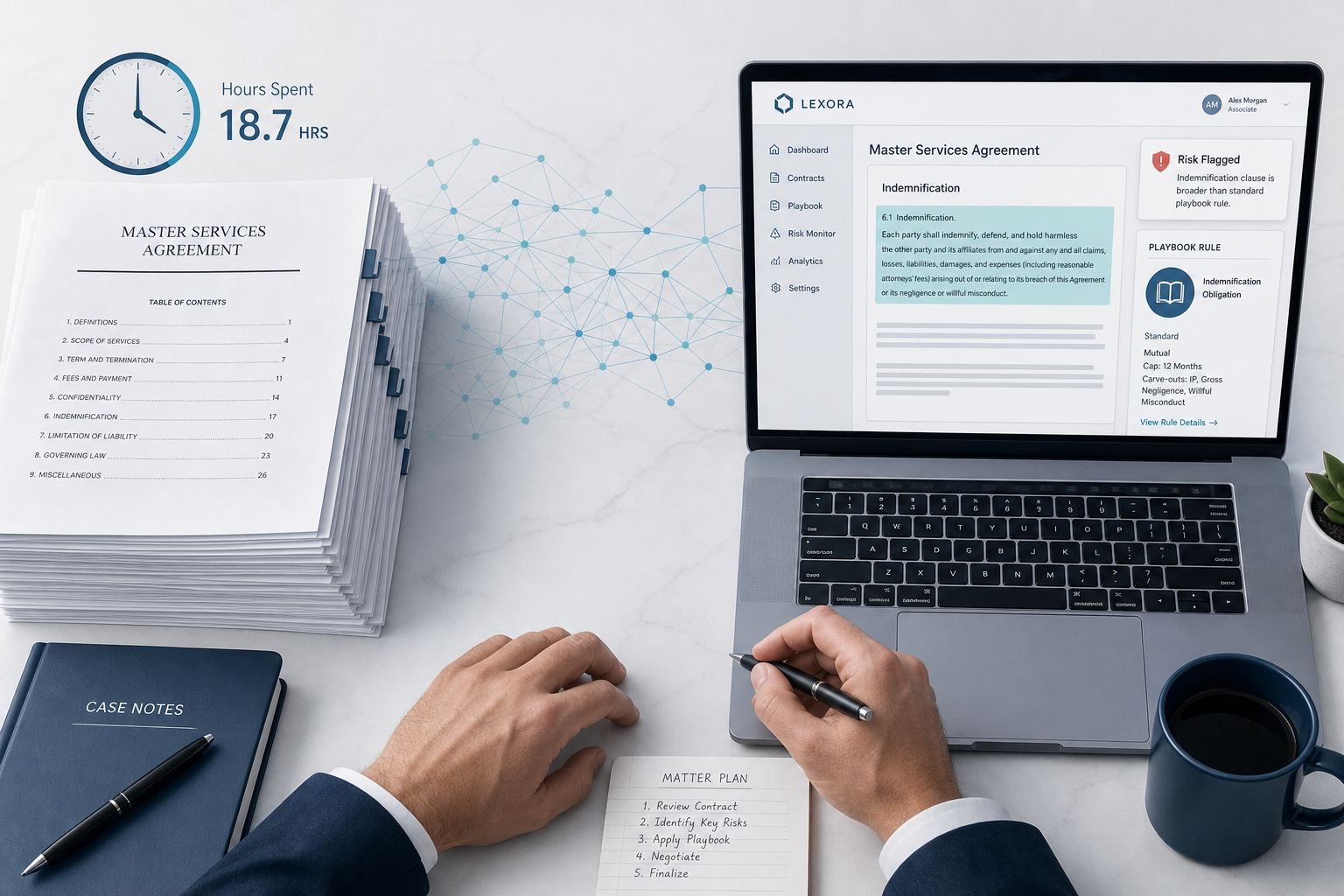
When a legal team evaluates an AI contract review tool, the natural instinct is to compare feature lists: Does it flag indemnification clauses? Can it handle NDAs? Does it integrate with Word? These questions matter, but they miss the decisive factor. The technical architecture underlying the tool — how it ingests documents, retrieves context, applies legal reasoning, and cites its sources — determines whether the output is reliable enough for professional use or creates unmanageable liability risk.
The stakes are high. Legal teams spend an average of three hours reviewing a single contract, and for departments handling 500 contracts annually, that translates to roughly 188 working days per year consumed by review alone, according to LegalOn's 2026 State of AI for In-House Legal survey. The global legal AI software market, valued at $5.21 billion in 2026, is projected to grow at a 29.4% compound annual rate to $40.94 billion by 2034, per Fortune Business Insights. As adoption accelerates, the gap between tools that augment attorney judgment and tools that introduce error is widening.
This article explains the five-layer architecture that powers purpose-built AI contract review tools, the mechanics of playbook-driven analysis, why general-purpose LLMs fail on contracts, and the technical factors — from character-level citation to security architecture — that separate reliable review from liability risk. It is written for legal operations leaders, law firm innovation partners, and attorneys who need to understand how these tools work under the hood before making procurement decisions.
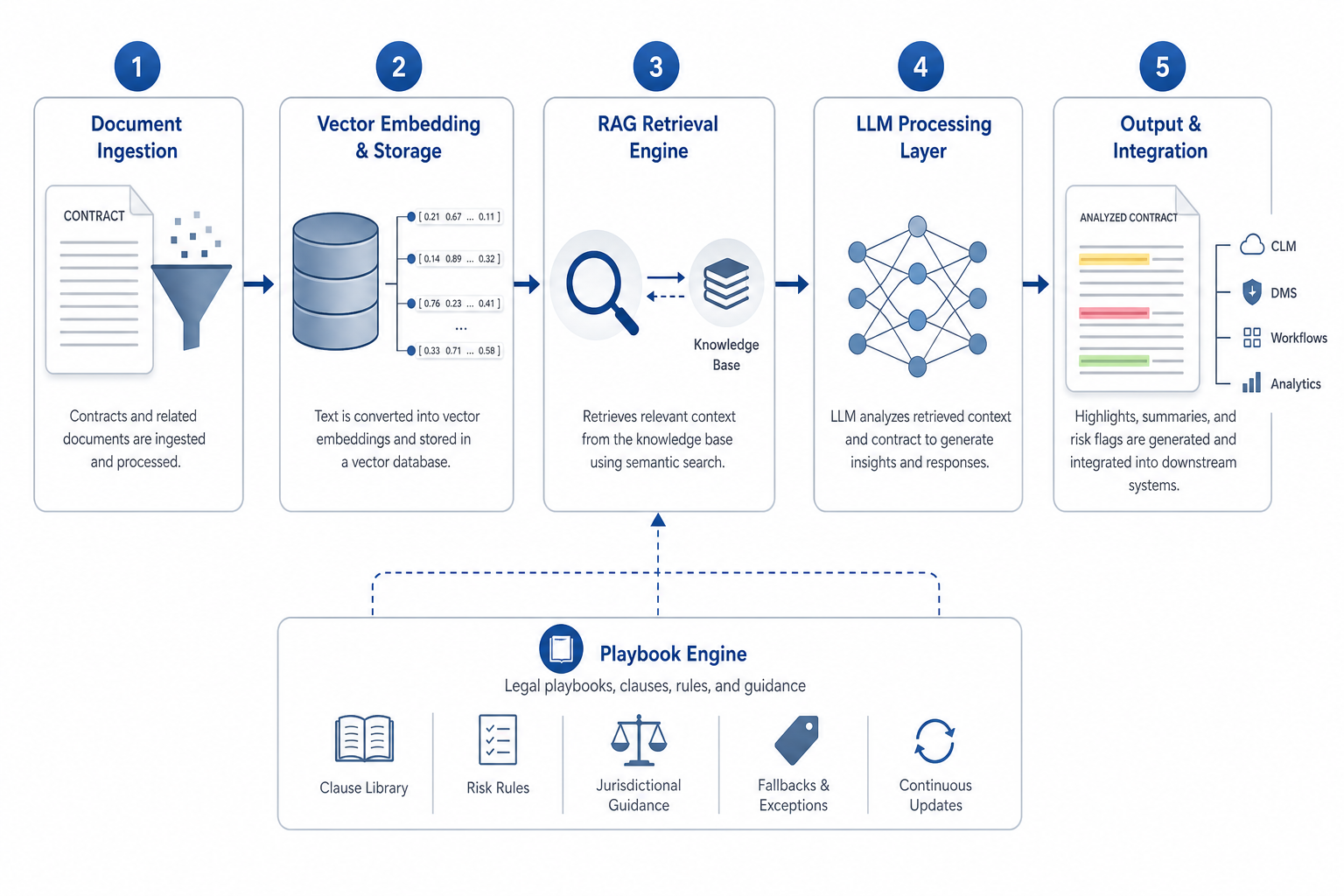
The Five-Layer Architecture of Purpose-Built AI Contract Review
Purpose-built AI contract review tools operate on a fundamentally different architecture than a general-purpose chatbot. Instead of a single prompt-response cycle, these systems execute hundreds to thousands of individual AI calls per contract, each grounded in retrieved context and governed by structured rules. The architecture can be understood as five distinct layers, each with a specific function.
Chronological incident history
No sanction cases have named this tool in the tracked record set to date. This does not imply the tool is safe — see Risk Digest for ongoing monitoring.
← Compare peer toolsReport a correction or tip
Spotted an outdated figure, a misstated fact, or a ruling this tool profile should reflect? Public comments are disabled for this content given the professional cost of a misreported case outcome, penalty amount, or rule text — use the structured correction channel instead.
Report a correction or tip for this record →