
A Mississippi noise complaint is testing AI infrastructure's legal limits
The xAI Southaven dispute is the first multi-front legal challenge to AI data center noise, testing nuisance law, Clean Air Act citizen suits, and national security preemption. This analysis examines why it sets the template for nationwide infrastructure litigation.
- Hallucination rate
- Not measured / undisclosed
At one Southaven, Mississippi home, the complaint begins at night. Jason Haley says the sound from xAI’s nearby facility does not arrive as ordinary industrial background noise, but as “high-pitched squealing, continuous engine roaring, low-frequency rumbling, tonal humming.” He also says he measured more than 60 decibels at 10:15 p.m. from his home, a figure that has not yet been tested through court-ordered acoustical evidence.[1]
That is the entry point for the Mississippi data-center noise dispute that AI-infrastructure lawyers are now watching. The case is not important because one homeowner says a data center is loud. It is important because three legal systems have been stacked on the same facility: a private nuisance class action, a Clean Air Act citizen suit, and a federal motion arguing that national security and Article II enforcement discretion should displace private environmental enforcement.
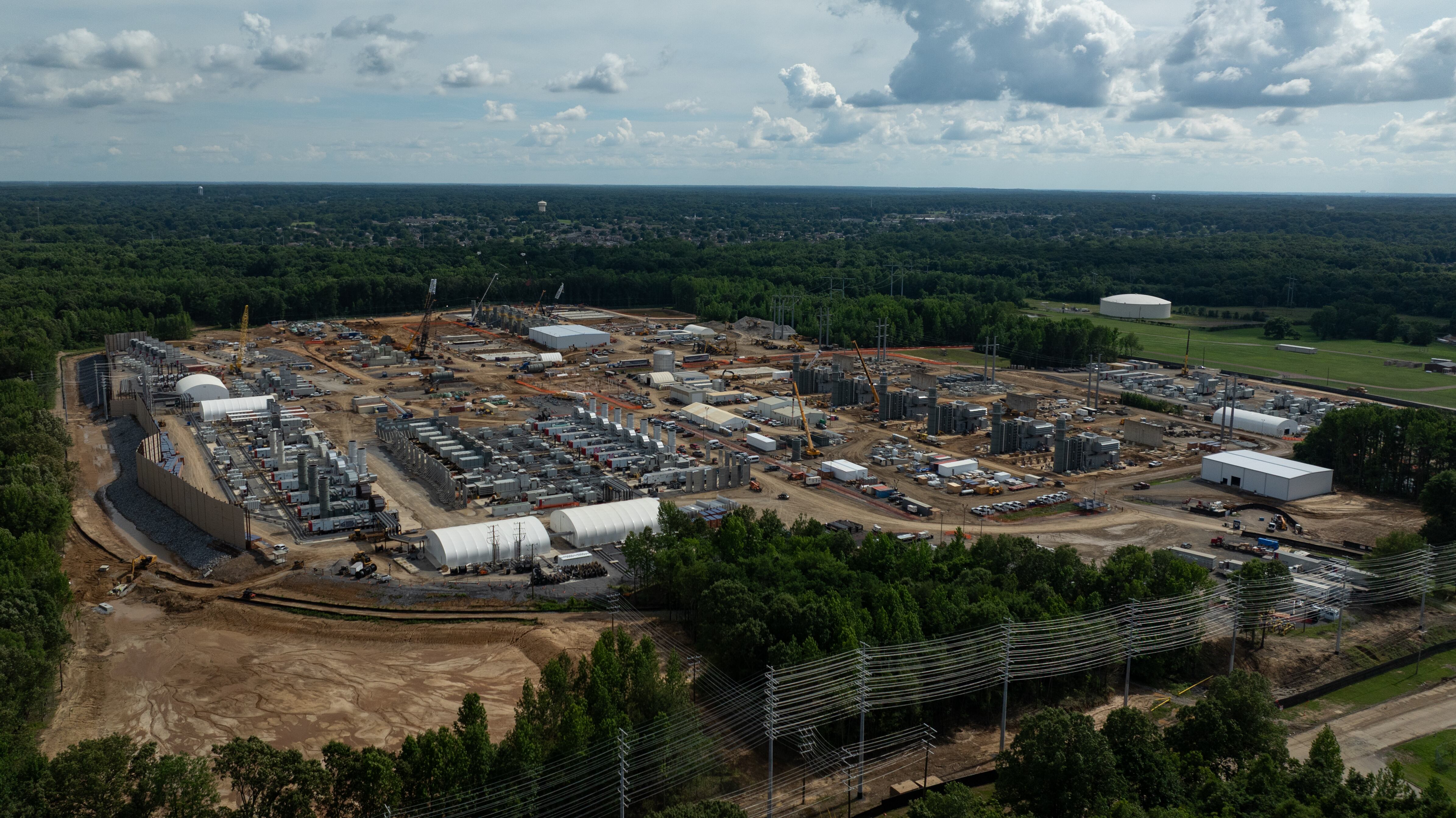
The private plaintiffs filed their putative class action on June 8, 2026. They allege that xAI secretly acquired a defunct power plant and expanded from three gas turbines to more than 57, creating a round-the-clock industrial noise source beside residential property. The complaint estimates a class of more than 10,000 people, but that number is only a pleading allegation unless and until a court certifies a class.[1][2]
The nuisance claim starts with ordinary home-life facts
Nuisance law often looks deceptively simple from a distance. A plaintiff says a use of land unreasonably interferes with the use and enjoyment of nearby property. The defendant answers with zoning, utility, economic necessity, compliance, causation, and reasonableness. In a conventional industrial dispute, those arguments at least have familiar grooves.
The Southaven allegations press on the seams of that framework because the asserted disturbance is continuous and tied to AI compute operations. The complaint does not describe an occasional backup generator, a temporary construction project, or a facility with limited operating hours. It describes tonal and low-frequency noise that allegedly continues through the night, when the legal and practical value of quiet is different from the value of quiet at noon.
That distinction matters. A 60-plus-decibel reading, if eventually supported by reliable monitoring, would not mean the same thing in every setting. A late-night measurement at a residence raises different questions than a daytime measurement at the fence line of an industrial parcel. The complaint’s number is therefore useful, but only in the disciplined sense: it tells us what the plaintiff says he observed, not what the court has found.[1]
The putative class allegation has the same status. A proposed class of more than 10,000 people signals the plaintiffs’ theory of geographic and community-wide impact. It does not establish numerosity, commonality, typicality, predominance, damages methodology, or any of the other questions that will decide whether a mass neighborhood grievance can become a certified class action.[1][2]
Those proof problems are not technicalities. They are the case. If different homes experience different sound profiles depending on distance, terrain, insulation, direction, time of day, or turbine operation, the class mechanism may become harder to sustain. If the plaintiffs can show a common source, common operating pattern, and common interference, the operator faces a very different litigation posture.
The turbine allegations make this more than a noise case
The environmental case arrived before the nuisance class action. In April 2026, the NAACP, represented with Earthjustice, filed a Clean Air Act citizen suit alleging that xAI operated at least 27 gas turbines without required permits and caused illegal pollutant emissions.[3][4]
That lawsuit is not a noise complaint dressed in environmental clothing. Its pressure point is permitting and emissions. The turbine counts differ across filings and reporting moments: the citizen suit alleges 27-plus turbines, while the later nuisance action alleges expansion to more than 57. The safest reading is not that one number magically resolves the other. It is that the facility’s alleged power configuration became a moving target during a rapid buildout.[1][3]
| Legal front | Core allegation | What has not yet been decided |
|---|---|---|
| Private nuisance class action | Continuous tonal, roaring, rumbling, and humming noise interferes with residential use and enjoyment | Class certification, reliable noise proof, causation, damages, and reasonableness |
| Clean Air Act citizen suit | Gas turbines allegedly operated without required permits and caused illegal pollutant emissions | Permit obligations, emissions facts, defenses, and remedy |
| DOJ intervention | Federal enforcement discretion and national security interests allegedly justify dismissal of the citizen suit | Whether a court will accept that theory in a private-defendant citizen suit |
This is where AI infrastructure becomes legally awkward. A data center may be marketed as digital infrastructure, but the Southaven claims pull the court’s attention toward physical equipment: turbines, stacks, emissions, sound, nearby homes, and nighttime use. The legal system does not experience compute demand as an abstraction. It sees land use, permits, neighbor impacts, and statutory enforcement.
The Clean Air Act theory also changes leverage. A nuisance action belongs primarily to private plaintiffs seeking relief for property and personal disturbance. A citizen suit invokes a federal environmental statute that Congress designed, under specified conditions, to let private parties enforce compliance when regulators have not already done so. That posture is what made the Department of Justice’s next move so consequential.
DOJ chose the door marked Article II
On June 15 and 16, 2026, the Department of Justice moved to intervene and dismiss the Clean Air Act citizen suit. DOJ argued that the lawsuit would hamper American AI innovation and security, invoking Article II enforcement discretion and national security interests.[5]
That is not a routine intervention. Beveridge & Diamond described the filing as the first time the United States has moved to dismiss a citizen suit against a private defendant on these grounds. Harvard’s Environmental & Energy Law Program likewise treated the filing as a major challenge with implications beyond the Southaven dispute.[6][7]
The government’s theory deserves careful handling because the stakes are larger than one set of turbines. Article II gives the executive branch authority over federal law enforcement priorities. Citizen suits, however, are a congressionally created tool that allows private plaintiffs to sue under environmental statutes when statutory prerequisites are met. DOJ’s position asks the court to treat this particular citizen suit as an intrusion on executive control over enforcement and national security policy.[5][6][7]
If accepted, that position could do more than end one environmental case. It could give federal lawyers a template for challenging citizen-suit leverage when private enforcement targets infrastructure the administration characterizes as strategically important. That category would not necessarily stop at AI data centers. Energy, semiconductor, defense, logistics, and communications facilities could all try to argue from the same neighborhood of necessity.
But none of that has happened yet. The intervention is an argument, not a ruling. No court has validated the government’s national security theory in this posture. The novelty cuts both ways: it may signal a doctrinally important conflict between citizen enforcement and executive control, or it may be an aggressive reading of a dispute still sitting near the courthouse threshold.
Why the national security framing is doing so much work
The national security argument arrives at the most favorable altitude for the operator and the least favorable altitude for neighbors. Up close, the dispute is about sleep, property, air permits, and turbines. From Washington, it becomes about AI capacity, strategic competition, and federal control over enforcement priorities.
Those higher-order interests are not imaginary. AI infrastructure does require power, land, equipment, and speed. The federal government can reasonably care about the capacity needed to run strategically important systems. The problem is the leap from importance to immunity. A facility can be nationally significant and still be subject to permits, nuisance claims, monitoring, mitigation, and judicial process.
DOJ’s filing reportedly invoked President Trump’s June 2026 executive order on AI and the Department of War’s use of Grok as part of its national security justification.[5][7] Those details may help the government tell a story about strategic dependence. They do not, by themselves, answer the statutory question: whether a private citizen suit authorized by Congress must yield because the executive branch says the lawsuit interferes with its enforcement discretion and security priorities.
That is the hinge. Courts have long dealt with federal preemption, primary jurisdiction, enforcement discretion, state nuisance remedies, and environmental citizen suits. Southaven is unusual because those doctrines are being forced into the same corridor by AI infrastructure. The judge does not need to decide the future of the data center industry to decide the motion, but the reasoning could still become useful to every lawyer drafting the next complaint, permit defense, intervention motion, or settlement term.
Southaven is not isolated, but it is more layered
Other data center disputes are already appearing around the country. Reported matters include Dowagiac, Michigan; Vineland, New Jersey; Mt. Pleasant, Wisconsin; Lowell, Massachusetts; North Tonawanda, New York; and Hood County, Texas, with filings or disputes reported from October 2024 through June 2026.[8][9]
Those matters should not be flattened into one national case. They involve different operators, facilities, claims, local politics, and procedural records. Their value here is comparative: they show that data center conflict is moving from planning-board friction into litigation, and that noise is one of the more legible ways residents translate infrastructure growth into a legal injury.
The background conditions make that unsurprising. The United States has more than 3,000 operational data centers, and data centers consumed an estimated 4.4% of U.S. electricity in 2023, with projections reaching 6.7% to 12% by 2028.[8][10] Those figures do not prove that any particular facility is unlawful or that any specific plaintiff can establish causation. They explain why more residents, regulators, and operators are encountering the same basic problem: compute infrastructure is local before it is national.
Noise data gives proportional context, though it cannot decide the Southaven claims. A Duquesne JOULE law review article has described internal server areas at 92 to 96 dB(A), cooling towers up to 85 dBA, and diesel generators up to 105 dB. The Environmental and Energy Study Institute has cited the World Health Organization’s nighttime guideline of less than 40 dB.[10][11] Those are not measurements from Haley’s house. They are a reminder that the equipment mix behind data centers can be acoustically serious, especially when industrial components operate near residences overnight.
The unresolved questions are procedural before they are political
The first unresolved question is whether the nuisance case can proceed as a class action. The proposed class size attracts attention, but certification will turn on proof. Plaintiffs will need to show that common issues can drive the litigation, not merely that many people dislike or fear the facility’s operations.
The second is whether the noise evidence can become litigation-grade. Self-reported readings and vivid descriptions can support a complaint. They rarely finish the work. Expect fights over measurement locations, equipment, time periods, frequency characteristics, baseline conditions, meteorology, turbine operations, and alternative sound sources.
The third is whether the Clean Air Act suit can establish the permit and emissions theory it pleads. The citizen-suit plaintiffs allege unpermitted turbine operation and illegal pollution. xAI and any aligned defendants can contest the factual premises, the statutory interpretation, the permitting posture, standing, notice, remedy, and the effect of any regulatory action.
The fourth is whether DOJ’s intervention changes the balance of power in citizen enforcement. If the court rejects the government’s theory narrowly, the Southaven environmental case may remain mostly a high-profile permitting dispute. If the court accepts it broadly, regulated entities and federal agencies will study the order for ways to narrow private environmental enforcement whenever infrastructure can be framed as strategically essential.
There is a fifth question, less doctrinal but just as practical: what operators learn from the filing sequence. A company that treats neighbors as background conditions during site selection, turbine deployment, and early operation may later discover that the record has already been written by the people living next to the equipment. Press releases do not erase nighttime measurements, complaint allegations, permit letters, or citizen-suit notices.
The template others will study
Southaven is a bellwether because of its structure, not because any party has won. The nuisance case tests whether older property doctrines can handle continuous AI-related industrial noise near homes. The Clean Air Act case tests whether gas-turbine-powered data center buildouts can be reached through citizen enforcement. The DOJ intervention tests whether national security and Article II arguments can cut across that enforcement before the merits are reached.
That combination is why the case is likely to travel. Plaintiffs will borrow the lived-injury framing if they can support it with better monitoring. Environmental groups will study the turbine and permit theory. Operators will look for compliance, siting, mitigation, and federal-alignment lessons. Government lawyers will watch whether the court treats strategic AI infrastructure as a reason to dismiss, a reason to coordinate enforcement, or no reason to disturb the citizen-suit structure Congress created.
For now, the only disciplined conclusion is the narrow one. The Southaven dispute has not proved that xAI is liable, that a 10,000-person class exists, that the alleged decibel readings are accurate, or that DOJ’s national security theory is valid. It has proved something else: when AI infrastructure lands beside homes, local nuisance, federal environmental enforcement, and national security preemption can collide in the same case.
References
- Southaven Residents Sue xAI, Mississippi Free Press
- Mississippi homeowners blame a noisy data center plant, CBS News
- Illegal Pollution from Data Center Power Plants Shouldn't Harm Our Communities, Earthjustice
- NAACP sues xAI over data center turbines in Southaven, Mississippi Today
- Justice Department Files to Intervene and Dismiss Lawsuit that Would Hamper America's AI Innovation and Security, U.S. Department of Justice
- DOJ Argues for Executive Control Over Citizen Suits, Beveridge & Diamond
- A Legal Challenge with Major Implications for Citizen Suits, Harvard Environmental & Energy Law Program
- Data Centers in Court, WilmerHale, 2026-07-13
- Data Center Lawsuits 2026, Consumer Notice
- Communities Are Raising Noise Pollution Concerns About Data Centers, Environmental and Energy Study Institute
- When the Hum Never Stops, Duquesne JOULE
Chronological incident history
No sanction cases have named this tool in the tracked record set to date. This does not imply the tool is safe — see Risk Digest for ongoing monitoring.
← Compare peer toolsReport a correction or tip
Spotted an outdated figure, a misstated fact, or a ruling this tool profile should reflect? Public comments are disabled for this content given the professional cost of a misreported case outcome, penalty amount, or rule text — use the structured correction channel instead.
Report a correction or tip for this record →