
AI Is Now a Reason Criminal Defense Attorneys Withdraw
AI-related sanctions and client demands for unverified AI filings are becoming a distinct class of withdrawal triggers in criminal cases. This record maps those triggers onto the mandatory and permissive grounds of ABA Model Rule 1.16 and spells out when courts will grant leave to withdraw once hallucinated citations break the attorney-client relationship.
- Applicable role
- Defense attorney
- Workflow stage
- post-filing
- Primary source
- ABA Model Rule 1.16; ABA Formal Opinion 512
The reported Las Vegas sanction against defense attorney Dean Kajioka is the kind of AI record that belongs in a withdrawal discussion. As reported by the Las Vegas Review-Journal/TNS through GovTech, Clark County District Judge Monica Trujillo sanctioned Kajioka $500, payable to the Clark County Law Library, and struck a habeas reply after prosecutors identified a citation to a nonexistent Nevada case, “Evans v. State, 123 Nev. 117, 159 P.3d 438 (2007).” The attorney reportedly conceded that AI “apparently” assisted with drafting, and the court found that “AI was misused.” The reported filing arose from a habeas matter connected to the Piero’s Italian Cuisine bombing case. Status flag: as of August 2, 2026 UTC, this article treats the Kajioka matter as a reported sanction, not as a record independently confirmed against the underlying court order. [1]
The new entry in the list of reasons defense attorneys withdraw from criminal cases is not “AI” in the abstract. It is the moment an AI-assisted filing produces a false citation, the lawyer’s certification becomes suspect, the client loses confidence, and the court must decide whether the lawyer can remain in the case without violating professional duties.

A $500 sanction is small until it is attached to a criminal-defense record. The practical problem is not the amount. It is the sequence that follows: the pleading is stricken, the citation trail fails, the lawyer must answer for the filing, and the client may now be represented by counsel whose credibility has been publicly impaired in the same court. Withdrawal doctrine is built for that kind of collision, even if the collision now arrives through a generative-AI workflow.
The withdrawal rule was already waiting for this problem
Defense lawyers have always withdrawn for ordinary reasons: conflicts, nonpayment, illness, discharge, a breakdown in communication, or client demands the lawyer cannot ethically carry out. AI does not replace that framework. It gives several old grounds a sharper and more public set of facts.
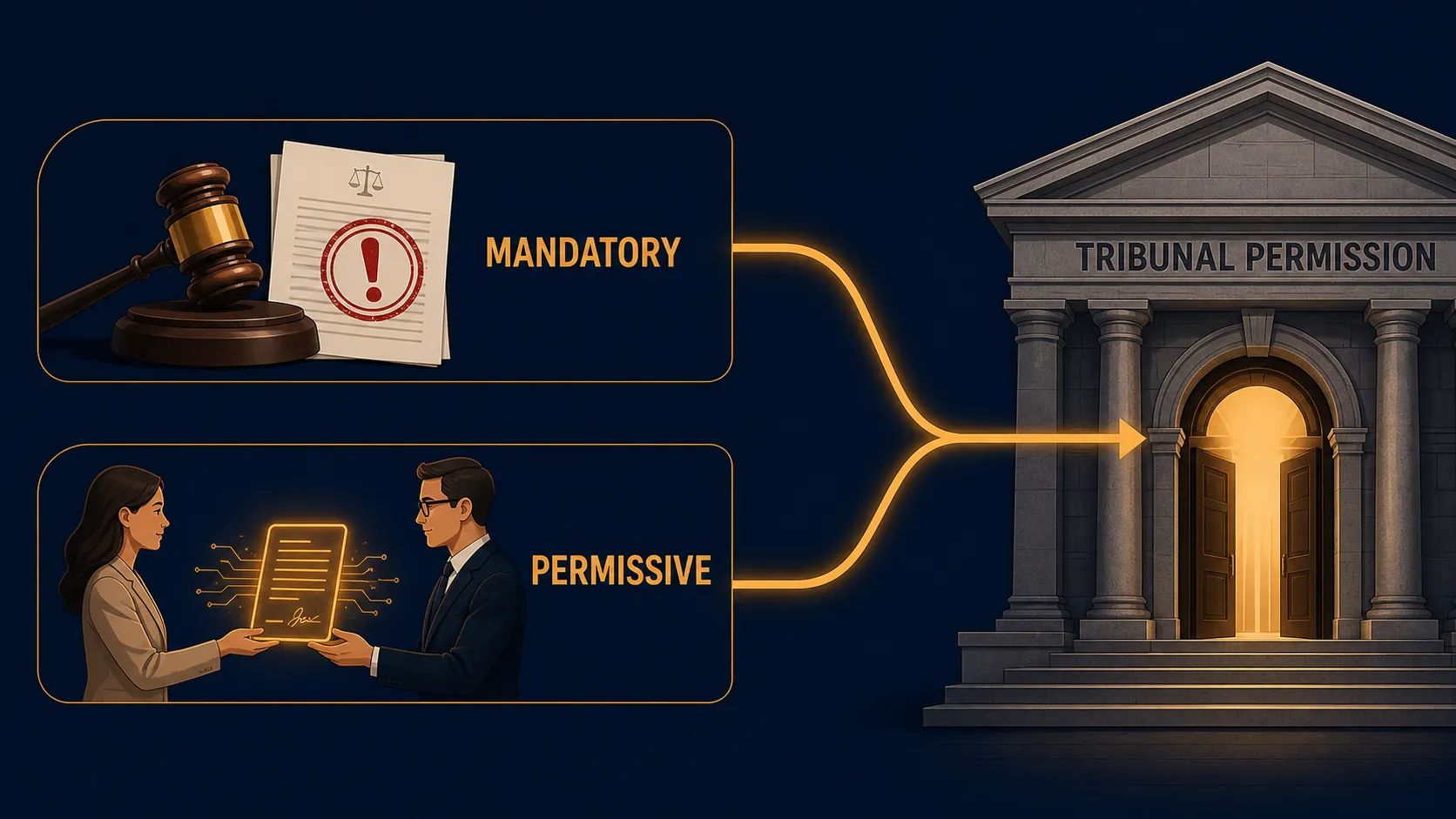
ABA Model Rule 1.16 separates mandatory withdrawal from permissive withdrawal. A lawyer must withdraw if representation will result in violation of the rules of professional conduct or other law, if the lawyer’s physical or mental condition materially impairs the lawyer’s ability to represent the client, or if the lawyer is discharged. The rule also permits withdrawal in several circumstances, including where the client insists on action the lawyer considers repugnant or with which the lawyer has a fundamental disagreement, or where other good cause exists. In a pending matter, Rule 1.16(c) adds the part too many withdrawal discussions treat as an afterthought: the lawyer must comply with applicable law requiring notice to or permission of a tribunal, and a court may order the lawyer to continue despite good cause for terminating the representation. [2]
| AI-implicated fact pattern | Rule 1.16 lane | Why it matters in a criminal case |
|---|---|---|
| Lawyer files or defends a brief containing fictitious AI-generated authority | Potential mandatory withdrawal under Rule 1.16(a)(1) if continued representation would violate professional duties; possible permissive withdrawal if trust and communication have collapsed | The lawyer may now have a candor, competence, and client-confidence problem in the same pending case. |
| Lawyer is suspended or otherwise disabled from practicing after AI-related discipline | Mandatory withdrawal under Rule 1.16(a)(1), and possibly Rule 1.16(a)(2) depending on the impairment | The lawyer cannot keep acting if the lawyer is no longer legally able to represent the defendant. |
| Client insists that counsel file AI-generated material the lawyer cannot verify | Permissive withdrawal under Rule 1.16(b)(4) or Rule 1.16(b)(6); in some jurisdictions, other provisions may apply depending on the client’s purpose | The lawyer may not be able to certify the filing, but withdrawal still requires attention to timing, prejudice, and court permission. |
| Client and lawyer disagree about using unverifiable AI arguments | Usually permissive, not automatic | Discomfort is not enough. The motion must show why the disagreement materially affects lawful, competent representation. |
| Pending criminal matter with court appearance dates, deadlines, or trial settings | Rule 1.16(c) | Even a strong withdrawal ground must pass through the tribunal, which may condition or delay withdrawal to protect the proceeding. |
The ABA’s generative-AI ethics guidance does not create a separate AI code. It ties AI use back to existing duties, including competence, confidentiality, communication, and reasonable fees. That matters for withdrawal because Rule 1.16(a)(1) is triggered by the lawyer’s inability to continue without violating professional obligations; the violation does not become less serious because the first draft came from software. [3]
Attorney-side AI misconduct: when the lawyer may have to get out
The cleanest mandatory-withdrawal case is a lawyer who is no longer permitted to practice. People v. Zachariah C. Crabill is the disciplinary example defense counsel should keep separate from the usual “AI hallucination” chatter: a lawyer was suspended after filing a motion containing ChatGPT-generated fictitious case law. Once suspension enters the record, Rule 1.16(a) stops being theoretical. The problem is no longer only whether the brief was false; it is whether the lawyer may lawfully continue representing anyone.
Short of suspension, attorney-side AI misconduct can still make withdrawal necessary or strongly advisable. A sanction order, grievance referral, or judicial finding that counsel defended false authority can affect competence, candor, communication, confidentiality, and fees. In a criminal case, the lawyer also has to ask whether the client can still receive loyal and effective representation from the same lawyer who must now explain, correct, or defend the defective filing.
That analysis should be concrete. Did counsel personally verify every cited case? Did counsel sign the filing after relying on AI output? Did the false authority affect a pending claim, deadline, or standard of review? Has the court ordered a response? Has the client been told enough to make decisions about the representation? Has the lawyer’s own exposure created a conflict between self-protection and the client’s interests? A withdrawal motion that says only “AI made an error” deserves little patience; the tool did not sign the pleading.
Fee issues should not be ignored. ABA Formal Opinion 512 treats reasonable-fee duties as part of the AI-use analysis. If a lawyer bills for AI-assisted work as though it were traditional research, charges the client for time spent cleaning up unverified AI output, or fails to communicate how the work was performed when that disclosure is necessary, the withdrawal question may sit beside a fee-disgorgement or client-protection question. [3]
Client-side AI pressure: when withdrawal is permitted, not automatic
The other AI-implicated path begins with the client. A defendant may arrive with AI-generated research, a jailhouse-style memorandum polished by a chatbot, or a proposed pro se argument loaded with citations counsel cannot locate. The lawyer does not get to wave that material into court because the client wants it filed. The lawyer also does not get to abandon the case simply because the client is difficult, distrustful, or overconfident in machine output.
Rule 1.16(b)(4) is the likely starting point when the client insists on a course of action the lawyer finds repugnant or with which the lawyer has a fundamental disagreement. Rule 1.16(b)(6) may supply the broader “other good cause” route when the client’s insistence on unverifiable AI material has made competent representation unworkable. Those provisions are permissive. They authorize a request to withdraw; they do not themselves release the lawyer from a pending criminal case. [2]
The harder cases are not the clients who ask counsel to file obviously fake law. They are the clients who demand aggressive arguments, supply plausible-looking AI research, and accuse the lawyer of disloyalty for refusing to use it. The defense lawyer still has to verify the law, preserve meritorious issues, and avoid prejudicing the client while deciding whether the relationship has crossed from disagreement into an ethical barrier.
One caution belongs here: Rule 1.16(a)(4), which addresses a client who seeks to use the lawyer’s services to commit or further a crime or fraud, reflects an ABA amendment from April 2020. State adoption varies. A motion that relies on that language without checking the local version of Rule 1.16 risks creating its own authority problem. [2]
What courts are reacting to after fake citations appear
The cases in the current record do not show courts punishing the mere use of generative AI. They show courts reacting to false legal authority, failure to verify citations, continued defense of nonexistent cases, and the institutional burden imposed when judges and opposing counsel must clean up the filing.
Ader v. Ader is useful because the misconduct did not stop with the first defective submission. The New York court sanctioned counsel after a “second wave of fake citations” appeared while counsel was defending against a sanctions motion, and the matter was referred to disciplinary authorities. The NLRG Lawletter summary quotes the court’s point in the form lawyers should not need to hear twice: “counsel’s duty of candor to the Court cannot be delegated to a software program.” Because that quotation is taken here from the secondary NLRG summary, the primary order should be checked before it is reused in a filing. [4][5]
Smith v. Farwell adds a supervision signal. The Massachusetts matter involved a $2,000 sanction and a public reprimand after AI-generated fictitious case citations. The reported lesson was not that every lawyer must ban AI; it was that attorneys are obligated to know whether AI technology is being used in their work. That is the part that travels directly into criminal-defense practice, where a lawyer cannot avoid responsibility by treating the drafting process as something that happened elsewhere. [6]
Whiting v. City of Athens, a Sixth Circuit sanctions matter, is not a criminal case, but it is a serious professional-responsibility warning for anyone building AI verification policies. The court imposed Rule 38 sanctions of double costs plus $15,000 per lawyer after more than 24 fake citations, and the appellate-blog account emphasizes that court-ordered AI-use disclosure and cite-checking did not violate privilege or work product. That privilege and work-product point should be handled carefully; it supports verification and disclosure protocols, not a general license to expose client confidences. [7]
Once a false-citation episode is in the record, courts are also evaluating relationship damage. If the client believes counsel poisoned the case, counsel believes the client is demanding filings counsel cannot certify, or the lawyer’s own disciplinary exposure has become entangled with strategic advice, leave to withdraw becomes more likely. Still, “more likely” is not the same as “automatic.” Rule 1.16(c) leaves the court with control over timing and permission in pending matters. [2]
The database numbers are context, not withdrawal statistics
The Charlotin AI Hallucination Cases Database is useful for scale, with limits. As of July 29, 2026, the database listed 1,811 decisions, including 1,252 from the United States, 53 in the criminal field, and 705 involving lawyer-party hallucination cases. Those figures describe decisions captured by the database’s methodology, not the frequency of withdrawal motions, the rate of sanctions, or the number of criminal-defense cases affected by AI. [8]
That distinction matters. A hallucination database can show that courts are encountering and naming the problem. It cannot, without more, prove how often defense attorneys withdraw, how often judges grant leave, or whether criminal courts are more tolerant or less tolerant than civil courts. For withdrawal purposes, the better use of the database is as an issue-spotting aid: check whether the jurisdiction has already dealt with AI-generated false authority before deciding how much explanation the motion needs.
Before moving to withdraw, build the record you wish already existed
The remedial burden starts before the motion. If AI-assisted work is in the file, counsel should be able to show who reviewed it, what sources were checked, which citations were verified in authoritative databases, and when the client was told about any material problem. A court evaluating withdrawal will care less about the brand of AI tool than about whether counsel can explain the filing history without shifting responsibility to the tool.
- Pull the governing version of Rule 1.16 in the jurisdiction, including local criminal rules and any court-approval requirement.
- Separate mandatory grounds from permissive grounds before drafting the motion.
- Identify whether the AI problem is lawyer-side, client-side, or both.
- Verify every cited case, statute, quotation, docket reference, and pinpoint citation in any AI-assisted filing.
- Preserve source links, database results, research logs, and human-review notes.
- Correct false authority promptly if it has already reached the court.
- Assess whether disclosure can be made without revealing privileged information or harming the client’s pending defense.
- Explain prejudice, timing, upcoming deadlines, and proposed transition steps if leave to withdraw is requested.
AI is now a recognizable withdrawal-level risk in criminal defense, but the old controls still decide the motion: the jurisdiction’s adopted rule, the verified source record, the lawyer’s own professional duties, the client’s pending interests, and the tribunal’s permission.
References
- Las Vegas Judge Sanctions Defense Attorney for Misusing AI, GovTech/Las Vegas Review-Journal, July 30, 2026.
- Rule 1.16: Declining or Terminating Representation, ABA Model Rules.
- ABA issues first ethics guidance on a lawyer's use of AI tools (Formal Opinion 512), ABA, July 29, 2024.
- ADER v. ADER JS LLC, 2025 NY Slip Op 51563(U), FindLaw.
- ATTORNEY ETHICS: How to Make a Bad Situation Worse, NLRG Lawletter Vol. 50 No. 4, January 5, 2026.
- Massachusetts Lawyer Sanctioned for AI-Generated Fictitious Case Citations, Maryland State Bar Association, March 4, 2024.
- Sixth Circuit Sanctions Attorneys for Fake Citations, Sixth Circuit Appellate Blog, Squire Patton Boggs.
- AI Hallucination Cases Database, Damien Charlotin.
Grounded in
This procedure is grounded in ABA Model Rule 1.16; ABA Formal Opinion 512, independent of any single documented case. See the Regulation tracker for the governing text.
Cases this step would have prevented
No cases have been explicitly linked to this checklist yet. See Risk Digest for documented incidents generally.
← Back to WorkflowsReport a correction or tip
Spotted an outdated figure, a misstated fact, or a ruling this workflow checklist should reflect? Public comments are disabled for this content given the professional cost of a misreported case outcome, penalty amount, or rule text — use the structured correction channel instead.
Report a correction or tip for this record →