
How Car Accident Settlement Value Is Determined
Learn the eight key factors that determine car accident settlement value, from injury severity and medical costs to liability rules and policy limits, to help you evaluate an insurance offer or build negotiation leverage.
- Applicable role
- attorney
- Workflow stage
- review
A car accident settlement value is not one number waiting to be found by a calculator. It is built from four questions: what damages can be documented, who can legally be blamed, what insurance money is available, and which state rules control the claim. The eight factors affecting car accident settlement value all fit somewhere inside that frame.
| Factor | What It Changes In The Offer |
|---|---|
| Injury severity | Sets the medical, permanence, and pain-and-suffering baseline |
| Medical expenses | Creates the economic foundation for the demand |
| Lost wages and earning capacity | Adds documented income loss and, in serious cases, future work limitations |
| Pain and suffering | Reflects non-economic harm, often argued through a multiplier |
| Liability clarity | Determines whether the insurer sees fault as clean, shared, or disputed |
| State negligence rules | Can reduce recovery or bar it entirely depending on the claimant’s fault |
| Insurance policy limits | May cap payment even when damages are much higher |
| Evidence quality and negotiation leverage | Controls how much room the adjuster has to discount the claim |
That is why a low offer is not answered well by saying, “The average case is worth more.” The better response is to sort the file: medical records, bills, wage proof, crash evidence, coverage information, and the fault rule that applies in the state where the claim is being handled.

Injury Severity Usually Sets The Settlement Range
The fastest realistic anchor is the diagnosis and what followed from it. A short course of conservative treatment for a soft-tissue injury sits in a different settlement world than a fracture requiring orthopedic care, a disc injury with lasting symptoms, or a catastrophic spinal cord injury. National figures show a spread from about $5,000 for minor soft-tissue claims to more than $1 million for catastrophic spinal cord injury, a range wide enough to make any single “average settlement” almost meaningless without the medical file behind it.[1]
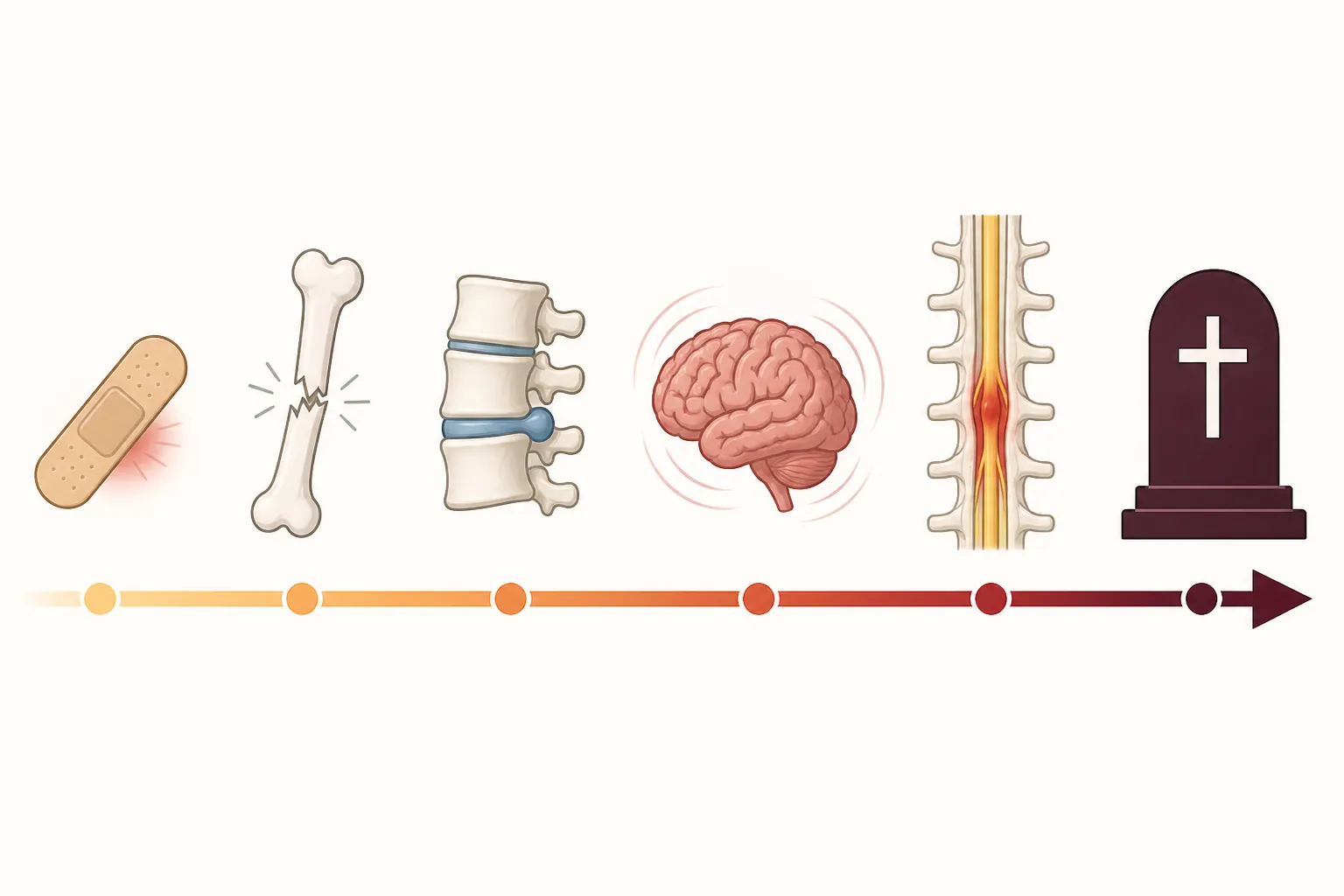
| Injury Category | Typical Settlement Reference | What Usually Needs To Be Documented |
|---|---|---|
| Minor soft tissue | About $5,000 at the low end; average references of $12,000–$18,950 | Diagnosis, treatment dates, therapy records, medication, symptom duration |
| Fractures | $75,000–$125,000 | Imaging, orthopedic records, casting or surgery, work restrictions, healing complications |
| Herniated disc | $75,000–$90,000 | MRI findings, radicular symptoms, injections or surgery, prior spine history |
| Traumatic brain injury | $200,000–$850,000 | Emergency records, neurology records, cognitive symptoms, work and daily-life impairment |
| Spinal cord injury | $1.1 million–$1.2 million; catastrophic cases can exceed $1 million | Permanent impairment, assistive care, life-care planning, future medical needs |
| Wrongful death | $1.5 million | Cause of death, beneficiaries, income support, household services, applicable death-damages law |
The diagnosis alone does not do all the work. A fracture with clean healing and little missed work is not valued the same as a fracture followed by surgery, hardware, complications, or a permanent lifting restriction. A herniated disc shown on imaging is stronger when the symptoms, treatment, and work limitations line up in time with the crash. A traumatic brain injury claim usually needs more than a frightening label; it needs records showing the cognitive, neurological, work, and daily-function consequences.
Pre-existing conditions do not automatically erase value. They do, however, change the proof burden. If a crash aggravates an old back problem, the claim is stronger when prior records, new imaging, treating-doctor opinions, and before-and-after testimony separate the old baseline from the new limitation. The eggshell skull principle may help in some cases, but its application varies by state case law, so it should not be treated as a universal shortcut.
Medical Bills Are The Foundation, Not The Finish Line
Medical expenses are the part of the claim most people can put in a folder. Emergency care, imaging, follow-up visits, physical therapy, injections, surgery, medication, durable medical equipment, and future care recommendations all give the settlement demand a measurable base. In at-fault states, medical expenses are commonly treated as recoverable economic damages dollar-for-dollar, while no-fault systems can route or limit early medical recovery through personal injury protection coverage.[1]
The number on a bill still needs context. Adjusters look at whether treatment was related to the crash, whether there were long gaps, whether care escalated for documented reasons, and whether the provider’s records support the level of pain being claimed. A large bill attached to thin notes may invite a discount. A smaller bill with clean diagnosis, consistent treatment, and a clear discharge or permanency opinion may carry more negotiation force than the total suggests.
Future medical expenses require a different level of proof. A treating physician’s recommendation for surgery, continuing injections, future therapy, medication, assistive devices, or a life-care plan gives the claim a basis for recovery beyond past bills. Without that medical support, future care can sound like a fear rather than a damage category.
Lost Wages And Earning Capacity Need Paper Trails
Lost wages are often easier to believe than to prove. The claim needs wage records, employer verification, tax documents for self-employed workers, disability notes, and dates tying the missed work to medical restrictions. If the person could not work because the car was unavailable, that is usually a different problem than being medically unable to work.
Diminished earning capacity is more serious and more demanding. A permanent impairment, reduced hours, forced job change, loss of a trade, or inability to return to physical work may require vocational expert testimony or economic analysis. The point is not simply that the injury made work harder. The settlement file has to show how the injury changed the person’s ability to earn money.
Pain And Suffering Multipliers Are Arguments, Not Magic
Pain and suffering is where online estimates often become too confident. The multiplier method is commonly used in settlement discussions, with ranges from 1.5x to 5x or more depending on injury severity, treatment, permanence, and documentation. Insurers may also use Colossus software in evaluating claims, although the specific trigger details discussed by practitioners are not public source code and should not be treated as a disclosed formula.[2]
A low multiplier is more likely when treatment is brief, records are sparse, symptoms are subjective, liability is disputed, or the claimant has major gaps in care. A higher multiplier is easier to defend when the records show objective findings, invasive treatment, long recovery, permanent impairment, visible disruption to work and home life, or credible testimony from people who observed the change.
For example, imagine two hypothetical claimants with the same amount of medical bills. One has several emergency and therapy visits, then no treatment for months and no work note. The other has imaging, consistent follow-up, physician-imposed restrictions, documented missed work, and a permanency rating. The bills may match, but the pain-and-suffering argument does not.
Liability Can Raise Value Or Make The Same Injury Hard To Collect
Clear liability changes the tone of a settlement conversation. A rear-end crash with supportive police findings, photos, witness statements, and consistent vehicle damage gives the insurer fewer places to hide. A lane-change dispute with no independent witness, conflicting statements, and unclear photos creates discount pressure even when the injury is real.
The state’s negligence rule can matter as much as the crash facts. Five jurisdictions—Alabama, Maryland, North Carolina, Virginia, and Washington, DC—apply contributory negligence rules that can bar recovery if the injured person is even 1% at fault. Ten states may still allow recovery even when the claimant is 99% at fault, though the award is reduced by the claimant’s percentage of responsibility.[3]
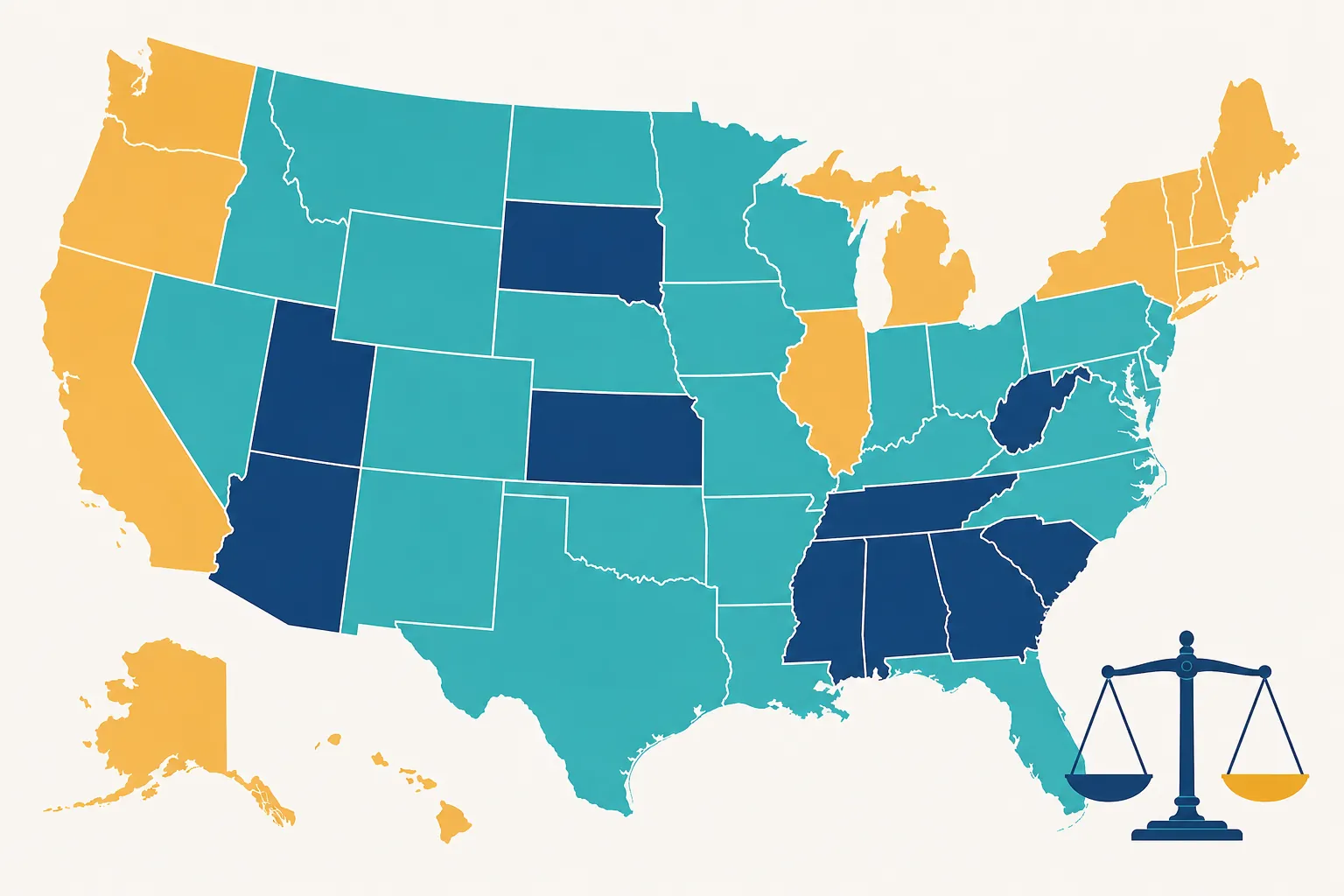
That jurisdiction contrast prevents a common mistake. The same medical file can produce very different settlement risk depending on where the claim is governed. In a contributory-negligence jurisdiction, a small factual dispute may become a complete defense. In a pure comparative-negligence jurisdiction, the dispute may reduce the number rather than end the claim.
Venue also affects expectations. SetCalc 2026 reports a New York average of $287,000 compared with a national average of $30,000, a 9.4x differential attributed to venue and tort rules.[4] That does not mean a New York claim is automatically worth nine times more than the same claim elsewhere. It means national averages are too blunt for evaluating a particular offer without state-law context.
Recent statutory changes make the same point. Florida’s HB 837 in 2023 and Louisiana’s Act 15/HB 431 in 2026 are reminders that settlement value is not frozen in place; changes to tort rules can shift bargaining positions, fault analysis, and expected recoveries.[5][6]
Policy Limits Can Cap A Strong Claim
A settlement value memo has two columns that people tend to collapse into one: damages and collectability. Damages may be high because the injuries, bills, lost income, and suffering are substantial. Collectability may be low because the at-fault driver carried limited insurance and has no realistic personal assets to pursue.
State minimum liability limits of $25,000/$50,000 are often exhausted before full damages are compensated.[7] That means a person with surgery, missed work, and a long recovery may still face a practical ceiling if the available liability coverage is small and there is no umbrella, commercial policy, rideshare coverage, employer responsibility, or underinsured motorist coverage.
Policy limits also affect timing. When damages clearly exceed coverage, the conversation may move from debating every line item to confirming available limits, preserving underinsured motorist rights, and deciding whether any additional defendant or policy exists. The strongest demand letter cannot collect insurance that is not there.
Evidence Quality Is Settlement Leverage
Evidence quality does not merely make a file look organized. It changes the insurer’s risk calculation. Medical records connect the diagnosis to the crash. Bills measure past treatment. Wage records prove income loss. Photos and repair records support crash force and point of impact. Police reports, witness statements, traffic-camera footage, and scene photos clarify fault. Gaps in any of those areas give the adjuster a reason to reduce the offer.
- Treatment gaps allow the insurer to argue that the injury resolved or came from something else.
- Missing wage documents make income loss look estimated instead of proven.
- Unclear crash proof turns a damages discussion into a fault dispute.
- Thin provider notes weaken pain-and-suffering arguments even when bills exist.
- Prior injuries require comparison records, not silence.
This is where the administrative burden after a crash becomes part of the claim. The person who is injured is also gathering records, calling providers, tracking missed work, and explaining the same facts repeatedly. The settlement system does not always value that labor directly, but the documents it produces can change the offer.
Legal Representation Affects Negotiation, But It Does Not Rewrite The Facts
Attorney involvement often changes how a claim is documented, valued, and pressured. IRC 2023 data reported by FairSettlement shows average settlements of $77,600 with an attorney compared with $17,600 without one, and states that 73% of unrepresented claimants accepted the first offer.[8]
Those figures are useful, but they should not be read as a guarantee that hiring counsel multiplies every case by 3.5. Representation may correlate with higher-value injuries, disputed claims, more complete documentation, willingness to litigate, or insurer perception of risk. A lawyer cannot turn a minor, well-documented sprain with low bills and clear policy limits into a catastrophic injury case. What representation can do is reduce preventable discounts, identify coverage, preserve deadlines, develop damages proof, and make the insurer account for trial risk when the facts support it.
How To Test An Insurance Offer
A settlement offer should be compared against the file, not against a national average. Start with the documented economic damages: medical bills, future care opinions, wage loss, and any earning-capacity evidence. Then look at the injury category, treatment duration, objective findings, permanency, and daily-life consequences that can be supported by records or testimony.
Next, separate value from recoverability. If liability is clean, that usually increases pressure on the insurer. If fault is disputed, the state negligence rule tells you whether the dispute is a percentage reduction or a possible complete bar. If damages exceed coverage, the policy limits may control the practical outcome unless another source of recovery exists.
| Question | Why It Matters |
|---|---|
| Are the injuries diagnosed and tied to the crash? | The offer usually tracks documented medical proof more than general descriptions of pain. |
| Are all medical bills and future care opinions included? | The economic base may be understated if records are missing. |
| Is wage loss supported by employer, tax, or medical restriction documents? | Unsupported income loss is easy for an adjuster to discount. |
| Is liability admitted, disputed, or shared? | Fault disputes can reduce or defeat recovery depending on state law. |
| What are the available policy limits? | Coverage may cap payment even when damages are higher. |
| Are there treatment gaps or prior conditions that need explanation? | Unexplained gaps and prior injuries often lower the multiplier. |
The practical question is not just “What is my case worth?” It is “Which parts of my case are documented, disputed, capped, or jurisdiction-dependent?” Injury severity, medical expenses, and clear liability usually drive the number upward. Comparative fault and policy limits often decide how much can actually be recovered.
References
Grounded in
This procedure is grounded in the cited rule or opinion, independent of any single documented case. See the Regulation tracker for the governing text.
Cases this step would have prevented
No cases have been explicitly linked to this checklist yet. See Risk Digest for documented incidents generally.
← Back to WorkflowsReport a correction or tip
Spotted an outdated figure, a misstated fact, or a ruling this workflow checklist should reflect? Public comments are disabled for this content given the professional cost of a misreported case outcome, penalty amount, or rule text — use the structured correction channel instead.
Report a correction or tip for this record →